Avoid common mistakes like overloading your truck beyond its capacity, unevenly distributing cargo, and neglecting proper securing methods. High loads and unbalanced weight can cause rollovers and harder handling, while unsecured cargo risks spills and accidents. Also, be mindful of cargo height and liquid sloshing, especially with hazardous materials. When you understand these risks and how to fix them, you’ll greatly improve safety on every load. Keep going to discover how these tips can keep you safer.
Key Takeaways
- Overloading beyond capacity and improper weight distribution increase accident and mechanical failure risks.
- High cargo placement and uneven load balancing elevate rollover dangers during transit.
- Failing to properly secure loads or using inadequate equipment can cause shifts, spills, and road hazards.
- Handling liquid or hazardous cargo without proper techniques can lead to instability and safety violations.
- Lack of knowledge about load principles results in unsafe imbalances and increased vehicle wear.

Rhino USA Integrated Cargo Magic Bed-Mounted Retractable Ratchet Straps for Ford Trucks (2015+ F-150 & 2017+ F-250) – BoxLink Compatible, Removable, 360° Swivel, Heavy-Duty Tie Downs
FORD BOXLINK COMPATIBLE (2015+ TRUCKS) Designed specifically for 2015+ Ford F-150 and 2017+ F-250 pickup trucks, this system…
As an affiliate, we earn on qualifying purchases.
As an affiliate, we earn on qualifying purchases.
Overloading the Truck Beyond Its Capacity

Overloading a truck beyond its maximum weight capacity might seem like a way to maximize efficiency, but it drastically increases the risk of accidents. When you overload, your truck’s maneuverability worsens, making turns and lane changes more dangerous. Braking distances also extend, giving you less time to react in emergencies. Excess weight causes faster wear on tires and brakes, heightening the chances of mechanical failures like blowouts or brake failure. It also puts added stress on the vehicle’s structure, risking component damage or total loss of control. Additionally, overweight loads violate federal and state laws, exposing you to legal liabilities. Understanding vehicle weight capacities is crucial for safe and legal truck operation. Properly managing your load according to recommended weight limits helps prevent these hazards and ensures safer journeys. Recognizing the importance of proper load distribution can further enhance safety during transport. Proper load management also involves considering center of gravity to maintain vehicle stability. Powered vehicles like Electric bikes are designed with weight limits in mind, emphasizing the importance of proper loading. Always comply with your truck’s weight limits to ensure safety, prevent costly repairs, and stay compliant with regulations.

VEVOR Truck Straps, 4" x30' Heavy Duty Tie Down w/Flat Hooks 18,000lbs Break Strength, WLL# 6000lbs, Cargo Straps tie Down for Flatbeds, Trucks, Trailers, Farms, Rescues, Tree Saver, Yellow(10 Pack)
Hold On Tight: Our 4 in x 30 ft winch straps (10-pack) are incredibly resilient. They are made…
As an affiliate, we earn on qualifying purchases.
As an affiliate, we earn on qualifying purchases.
Improper Cargo Distribution Leading to Instability
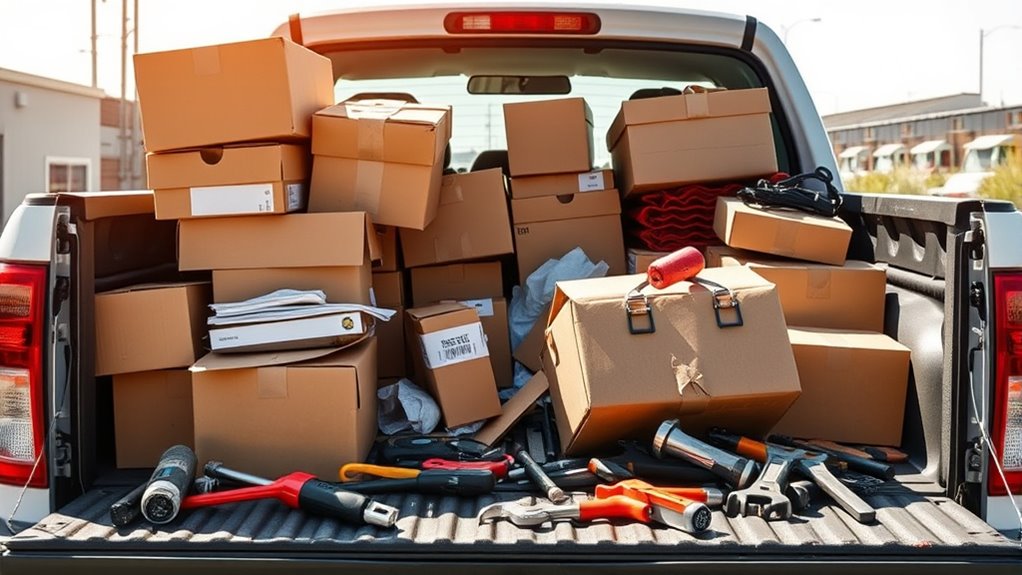
When you don’t distribute cargo evenly, it shifts the truck’s center of gravity and makes it more prone to rollovers. Uneven weight balance can also cause handling issues, especially during sharp turns or sudden stops. To keep your load stable, always guarantee weight is properly balanced across the bed. Implementing energy-efficient loading practices can further enhance safety and reduce environmental impact. Properly calibrated projector technology improves the accuracy of image reproduction, ensuring a better viewing experience.
Uneven Weight Balance
Uneven weight distribution can make your truck unstable and difficult to control, especially during sharp turns or sudden stops. When cargo isn’t balanced properly, it shifts unexpectedly, risking rollovers or jackknifes. To understand the impact, consider this table:
| Load Position | Effect on Stability | Potential Risk |
|---|---|---|
| Front-heavy | Reduced steering response | Difficult maneuvering |
| Rear-heavy | Increased axle stress | Tire blowouts, braking issues |
| Side-loaded | Lateral instability | Rollover during turns |
| High stacking | Raised center of gravity | Increased rollover risk |
| Unequal weight | Disrupted weight balance | Loss of control |
Proper cargo distribution guarantees stability, reduces stress on vehicle parts, and keeps you safe on the road. Always balance your load across axles and keep the center of gravity low. Understanding vehicle dynamics can help you make safer loading decisions. Additionally, ensuring the correct cargo placement can significantly improve truck stability and safety. Being aware of weight distribution principles is essential for optimal load management. Paying attention to proper load securing techniques further enhances safety during transport. Recognizing load capacity limits helps prevent overloading and potential accidents.
Center of Gravity Shift
A shift in the truck’s center of gravity caused by improper cargo distribution can dramatically reduce stability and control. When weight isn’t evenly spread, the truck becomes more prone to tipping during sharp turns or sudden stops. Placing too much weight high or towards one side raises the center of gravity, increasing rollover risks. Uneven load placement can also cause unpredictable handling, making steering difficult and braking less effective. This instability can lead to accidents, especially at highway speeds or during emergency maneuvers. To prevent this, always distribute cargo evenly across the truck bed, keeping heavy items low and centered. Proper load placement maintains a lower, balanced center of gravity, ensuring safer, more stable driving conditions.

CURT 17112 Weight Distribution Hitch Lift Handle
Allows for easy leveraging of weight distribution hookup brackets
As an affiliate, we earn on qualifying purchases.
As an affiliate, we earn on qualifying purchases.
Failing to Secure Loads Properly

Failing to properly secure loads can lead to dangerous shifts during transit that compromise vehicle stability and control. When loads aren’t tightly anchored, they can move or slide, especially during sudden stops, sharp turns, or uneven terrain. This shifting increases the risk of rollovers, jackknifing, or loss of control, endangering everyone on the road. Loose cargo can also fall off, creating road hazards and causing accidents or injuries to other drivers. Additionally, unsecured loads may shift in ways that damage the cargo or the truck itself. Properly securing your load with straps, chains, or tie-downs is critical. Always double-check your securing methods before hitting the road to prevent avoidable accidents and ensure safety for everyone. Understanding how to load balance your cargo can also help maintain vehicle stability and safety during transport. Using the right load distribution techniques ensures the weight is evenly spread, reducing the likelihood of dangerous load shifts and improving overall truck safety. Incorporating proper securing techniques can further enhance load stability and prevent accidents in transit. Furthermore, utilizing security devices can provide extra assurance that your cargo will stay in place throughout the journey.

Esco 20463C Truck Tire Balancing Beads, 10 oz, Case of 24 Bags
IMPROVE FUEL MILEAGE: ESCO Balancing Beads roll freely inside your tire which maintains proper balance as your tires…
As an affiliate, we earn on qualifying purchases.
As an affiliate, we earn on qualifying purchases.
Ignoring Cargo-Specific Loading Requirements

Ignoring cargo-specific loading requirements can lead to serious safety hazards because different cargo types have unique handling and securement needs. For example, hazardous materials require strict regulations to prevent spills or explosions, while liquid cargo can shift due to “sloshing,” destabilizing the truck. Oversized or high loads risk hitting overhead structures or causing accidents. To visualize, consider this:
| Cargo Type | Special Loading Considerations |
|---|---|
| Hazardous Materials | Use approved containers, follow strict regulations |
| Liquid Cargo | Secure to minimize movement and sloshing |
| Oversized/High Loads | Ensure proper clearance and balanced weight |
| Fragile Items | Use padding and stabilization to prevent damage |
Ignoring these needs increases the risk of accidents, injuries, and environmental hazards. Always follow cargo-specific guidelines to keep everyone safe.
Lack of Knowledge About Weight Distribution Principles

Many drivers and loaders lack a clear understanding of proper weight distribution principles, which can lead to dangerous imbalances on the truck. When weight isn’t evenly spread, it puts excessive stress on suspension components and tires, increasing the risk of mechanical failure. Improperly distributed loads raise the truck’s center of gravity, making it more prone to rollovers, especially during sharp turns or sudden stops. If weight is concentrated on one side or over the rear or front axles, steering and braking become unpredictable, reducing control. Additionally, unbalanced loads can cause uneven tire wear and reduce overall stability. Failing to follow weight distribution guidelines, such as those set by FMCSA, considerably raises the likelihood of accidents. Proper knowledge and application of these principles are essential for safe, stable transport. Moreover, advancements in AI detection methods can assist in monitoring compliance with load regulations and improve overall safety standards. Understanding load balance is crucial for maintaining vehicle safety and performance, especially since proper weight distribution minimizes stress on critical components and helps prevent accidents. Recognizing the importance of dynamic load handling can further enhance safety by accounting for shifting loads during transit.
Using Inadequate Securing Equipment

Using inadequate securing equipment can dramatically increase the risk of cargo shifting or falling off during transit, leading to accidents on the road. When you don’t use the proper straps, chains, or tie-downs, your load becomes unstable, especially during sharp turns or sudden stops. Cheap or worn-out securing devices may break under pressure, causing cargo to loosen or spill. Overlooking the correct amount of tension can also allow movement that affects vehicle handling. Always select equipment rated for your cargo’s weight and type. Make sure straps are tight, hooks are secure, and anchor points are solid. Proper securing equipment not only keeps your load stable but also protects other road users from falling debris or dangerous accidents. Incorporating technological tools like digital project management can help ensure your securing methods meet safety standards and prevent mishaps. Regularly inspecting your securing devices for wear and tear is essential, as maintenance practices play a crucial role in safety.
Loading Heights That Raise Rollover Risks

Loading cargo too high raises the truck’s center of gravity, making it much more prone to rollover accidents. When the load sits above the truck’s normal height, it shifts the weight upward, reducing stability during turns or sudden maneuvers. This elevated position makes the vehicle less able to resist tipping over under stressful conditions. To minimize this risk, keep cargo as low as possible within the truck bed, especially for tall or bulky items. Properly securing high loads is also essential, but the best strategy is to avoid stacking items too high in the first place. By maintaining a low load height, you improve stability, reduce rollover hazards, and keep your cargo and the roadways safer.
Overlooking the Effects of Liquid Cargo “sloshing

When you transport liquid cargo, you need to consider how its movement can shift the truck’s balance. The “sloshing” effect can make the vehicle unstable, especially during turns or sudden stops. Properly securing the cargo is essential to prevent dangerous shifts that could cause accidents or rollovers.
Impact of Liquid Movement
Liquid cargo can cause dangerous instability during transit if its movement isn’t properly managed. When liquids shift inside the tank or container, they create a “sloshing” effect that disrupts your truck’s balance. This movement can lead to sudden weight shifts, making steering and braking unpredictable. If you don’t account for this, your truck may sway or lurch unexpectedly, especially during sharp turns or abrupt stops. The risk increases on curves or uneven roads, where liquid movement amplifies instability. Without proper baffles, compartments, or loading techniques, the liquid’s momentum can cause the truck to sway or even roll over. Managing liquid movement is essential for maintaining stability, preventing accidents, and ensuring safe transport of liquid cargo.
Stability Challenges During Transit
Neglecting to account for the effects of liquid cargo “sloshing” can severely compromise your truck’s stability during transit. As liquids shift inside the tank, they create unpredictable lateral forces that can cause your truck to sway or become difficult to control, especially during turns or sudden maneuvers. This movement can lead to increased rollover risk, especially if your load isn’t evenly distributed or securely fastened. Without proper planning, these shifts can also impact braking performance, making stops more dangerous. You might feel your vehicle pulling or lurching unexpectedly, increasing the chance of accidents. Understanding how liquid movement affects your truck’s balance is critical. Proper loading techniques, such as baffling tanks or filling to recommended levels, can help reduce these stability challenges.
Proper Cargo Securing Methods
Proper cargo securing methods are essential to prevent dangerous shifts, especially with liquid cargo. Liquid “sloshing” can cause sudden shifts in weight, destabilizing the truck and risking accidents. To keep everything secure, follow these steps:
- Use appropriate barriers or baffles inside tanks to limit liquid movement.
- Ensure tanks are filled to recommended levels, avoiding overfilling that increases sloshing.
- Tie down or secure any loose parts or hoses that could shift during transit.
Neglecting Proper Handling of Hazardous Materials

Handling hazardous materials without following safety regulations can lead to serious accidents, injuries, and environmental damage. You need to understand and adhere to all federal, state, and industry-specific guidelines when loading hazardous cargo. Improper handling can cause spills, leaks, or explosions, especially if materials aren’t correctly identified, labeled, or contained. Always use designated containers and secure hazardous loads properly to prevent shifting during transit. Neglecting to wear appropriate personal protective equipment or skipping safety protocols increases the risk of exposure to toxic substances. If you’re unfamiliar with specific handling requirements, seek proper training. Failing to handle hazardous materials correctly jeopardizes everyone’s safety, risks legal penalties, and can cause catastrophic environmental consequences. Proper handling isn’t optional—it’s essential for safe, compliant transportation.
Unsafe Practices During Loading and Unloading Operations

Unsafe practices during loading and unloading operations can considerably increase the risk of accidents on the road. You need to follow proper procedures to prevent injuries and damage. Here are common mistakes to avoid:
- Not securing loads properly – Failing to tie down cargo increases the chance of shifting or falling, creating road hazards.
- Ignoring safety protocols – Skipping safety gear or bypassing equipment checks can lead to worker injuries or cargo accidents.
- Overloading or uneven loading during transfer – Excessive or unbalanced loads during loading/unloading can destabilize the truck, risking rollovers or drops.
Frequently Asked Questions
How Can I Tell if My Load Exceeds My Truck’s Weight Limit?
You can tell if your load exceeds your truck’s weight limit by checking the vehicle’s Gross Vehicle Weight Rating (GVWR), usually found on a sticker inside the driver’s door. Weigh your truck and cargo separately at a nearby scale, then add the weights. If the total surpasses the GVWR, your load is too heavy. Also, watch for signs like sagging suspension or difficulty steering, which indicate overload.
What Are the Best Methods for Evenly Distributing Cargo?
A stitch in time saves nine, so start by planning your cargo layout before loading. Place heavier items on the truck’s floor and center, evenly distributing weight across all axles. Use a scale to check weight distribution, ensuring nothing is too concentrated on one side. Secure everything tightly, avoiding shifts that could destabilize your vehicle. Regularly assess your load during transit to keep everything balanced and safe.
Which Securing Devices Are Most Effective for Different Load Types?
You should use ratchet straps for heavy, bulky loads like machinery or lumber, as they provide strong, adjustable tension. For lighter cargo, bungee cords or tie-downs work well, offering flexibility and quick adjustments. Cargo nets are ideal for securing loose or multiple items, preventing shifting during transit. Always choose devices rated for your load’s weight and verify they’re properly attached and tightened to keep your cargo safe and stable.
How Do I Handle and Transport Hazardous or Liquid Cargo Safely?
When transporting hazardous or liquid cargo, you need to picture the truck as a delicate balance. Secure hazardous materials with approved containers and follow strict regulations to prevent spills or leaks. For liquids, use baffles to reduce sloshing and ensure even weight distribution. Always wear proper safety gear, double-check securement, and adhere to legal guidelines. This way, you make sure everyone safe and avoid dangerous accidents on the road.
What Training Is Recommended for Safe Loading and Unloading Procedures?
You should undergo thorough training that covers proper loading techniques, securing cargo correctly, and understanding weight distribution principles. Focus on safety protocols for handling hazardous materials, using appropriate equipment, and inspecting loads before transit. Regularly update your knowledge on regulations and best practices through certified courses. By doing so, you’ll minimize risks, ensure compliance, and maintain safety for yourself and others during loading and unloading operations.
Conclusion
So, it’s no coincidence that many truck accidents happen during loading. By avoiding these common mistakes—like overloading, improper securing, or neglecting cargo specifics—you guarantee safety for yourself and others. Remember, a small oversight can lead to big trouble. Stay vigilant, follow proper procedures, and you’ll find that safe loading becomes second nature. After all, when you prioritize safety, you’re not just protecting your load—you’re protecting everyone around you.