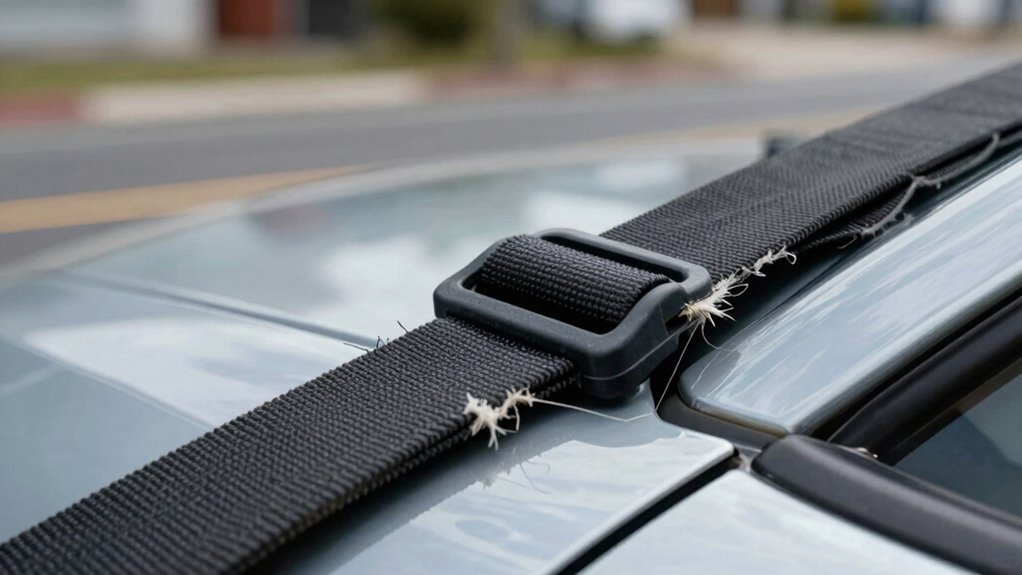

Most tie-down failures at speed happen because dynamic forces, vibrations, and sudden movements can quickly overwhelm your securing equipment. When you’re moving fast, loads shift, and stress on straps and anchors increases considerably, especially if they’re not inspected or properly tightened. Over time, this can cause straps to loosen, fray, or break, risking cargo safety. To understand how to better prevent these failures and keep your loads secure, keep exploring the key factors involved.

Get business pricing on garage and car supplies
- Business-only prices and quantity discounts
- Tax-exempt purchasing
- Multiple users, one account, clear invoices
Key Takeaways
- High speeds generate dynamic forces that can exceed the capacity of improperly secured or worn straps.
- Rapid accelerations and turns cause load shifts, stressing tie-downs beyond their rated strength.
- Insufficient or damaged equipment fails under increased stress during high-velocity transit.
- Poor load distribution and improper tensioning amplify the risk of strap failure at speed.
- Lack of regular inspection and maintenance leaves equipment vulnerable to sudden failure during fast movement.
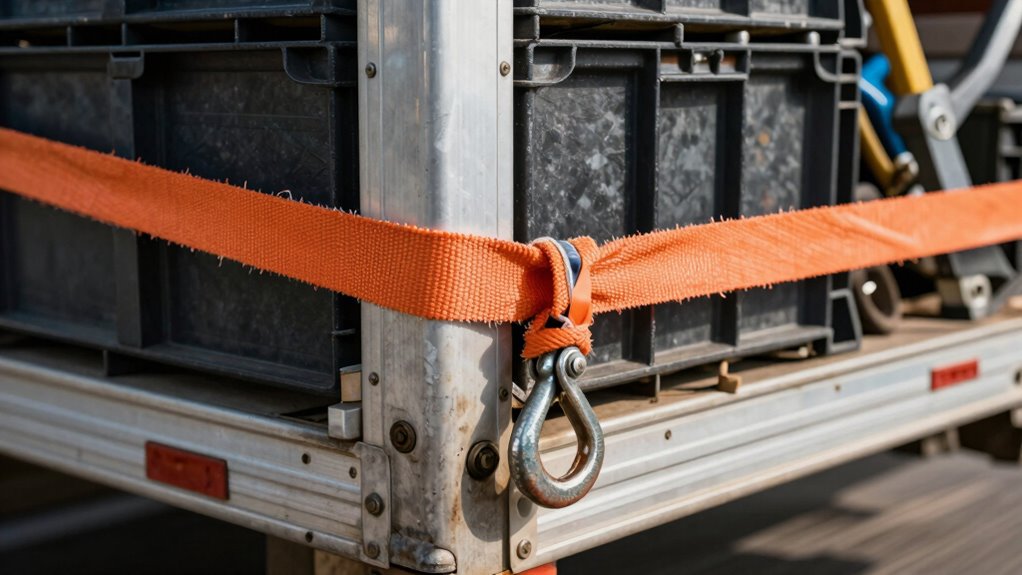
Most tie-down failures occur at speed because the increased forces exerted during motion can overwhelm even the most secure straps. When you’re transporting cargo at high velocities, the dynamic forces acting on your load multiply rapidly. If your cargo isn’t properly secured, it becomes vulnerable to shifting, which can lead to accidents, damage, or even injuries. That’s why cargo security isn’t just about tightening straps; it’s about understanding how those straps perform under the stress of movement. You need to confirm that every tie-down is rated for the load and condition you’re working with, and that you’ve applied them correctly. Overlooking this can be a costly mistake when speed comes into play.
Regular equipment inspection is key to preventing failures at high speeds. It’s tempting to assume that a strap that looks fine on the surface is still reliable, but the reality is that wear and tear can weaken even the most seemingly sturdy gear. You should inspect your straps, hooks, and anchors thoroughly before each trip. Look for fraying, cuts, or corrosion. Check that buckles and ratchets operate smoothly and lock securely. Damaged or worn equipment can’t withstand the forces generated during transit, increasing the risk of sudden failure. Incorporating a routine inspection into your pre-trip checklist ensures you catch potential issues early, giving you peace of mind that your cargo remains secure. Additionally, understanding the importance of proper load distribution helps prevent uneven stress on tie-downs, reducing the likelihood of failure under high-speed conditions. Proper load balancing can also contribute to safer and more stable transportation. A further consideration is the impact of jarring or vibrations, which can loosen straps over time if not properly checked. Regularly reviewing equipment maintenance schedules helps ensure all gear remains in optimal condition to handle the stresses of transit.
Understanding the importance of proper cargo security means recognizing that tie-downs are only as good as their maintenance and application. When you’re at speed, even a minor oversight — like an improperly tightened strap or a loose anchor point — can have serious consequences. It’s essential to double-check all tie-down points, ensuring they are tight and properly positioned. Use the right type of straps for your specific load, and don’t rely on a quick fix or assumptions about their strength. Remember, the forces exerted during acceleration, deceleration, and turns amplify the risk of failure, making thorough equipment inspection and correct application crucial. Furthermore, staying informed about emerging safety regulations can help you stay compliant and ensure your cargo remains secure during transit. Regular training and updates on industry standards can significantly improve overall safety practices. Ultimately, your goal is to prevent load shifts and secure cargo effectively at all speeds. By maintaining a strict routine of equipment inspection and understanding the limits of your tie-downs, you greatly reduce the chances of failure. Keep in mind that cargo security isn’t a one-time task — it’s an ongoing responsibility. When you prioritize safety, check your gear diligently, and secure your cargo with care, you’re less likely to face the costly consequences of tie-down failure during high-speed transit.
heavy-duty ratchet straps for cargo
As an affiliate, we earn on qualifying purchases.
As an affiliate, we earn on qualifying purchases.
Frequently Asked Questions
How Can I Tell if My Tie-Downs Are Properly Secured?
You can tell if your tie-downs are properly secured by checking cargo stability; it shouldn’t shift or wobble. Make sure the equipment compatibility matches your load, with appropriate straps and hooks. Tighten the tie-downs firmly, but avoid over-tightening, which can damage gear. Regularly inspect for wear, fraying, or damage, and test the stability by giving the cargo a gentle shake. Properly secured tie-downs keep your cargo safe at any speed.
Are Certain Types of Tie-Downs More Prone to Failure?
Certain types of tie-downs are more prone to failure, especially when you rely on alternative tie down materials like nylon straps or bungee cords. These materials can stretch or weaken under stress, making them less reliable than traditional ratchet straps or chains. Common failure causes include improper tension, worn-out components, or poor-quality materials. Always choose sturdy, high-quality tie-downs and inspect them regularly to prevent catastrophic failures on the road.
What Are the Best Practices for Inspecting Tie-Downs Before a Trip?
You should thoroughly inspect your tie-downs before each trip by checking for signs of wear, such as fraying or corrosion, to guarantee equipment maintenance is up to date. Make sure the straps are properly stored, avoiding exposure to elements that could weaken them. Tighten any loose fittings and replace damaged hardware. Regular inspections help you identify potential failures early, keeping your cargo secure and preventing accidents caused by tie-down failure at speed.
How Does Weather Affect the Integrity of Tie-Downs During Travel?
Weather impact can substantially weaken tie-downs during travel. Environmental factors like rain, snow, and UV rays cause corrosion, rust, and material degradation, reducing their strength. High winds and temperature fluctuations also strain the straps and anchoring points. You need to regularly check for signs of wear or damage caused by weather, ensuring your tie-downs stay secure and reliable throughout your journey, especially in challenging weather conditions.
What Safety Precautions Should I Take in Case of Tie-Down Failure?
If your tie-down fails, prioritize safety by maintaining equipment maintenance and ensuring secure anchoring. Quickly slow down and pull over to a safe spot, avoiding sudden movements. Check your straps and anchors for damage, and tighten or replace them if needed. Keep a safety kit handy, and stay alert for debris or hazards. These precautions help prevent accidents and protect your cargo and everyone on the road.
cargo tie-down straps with high load capacity
As an affiliate, we earn on qualifying purchases.
As an affiliate, we earn on qualifying purchases.
Conclusion
As you can see, the theory that most tie-down failures occur at speed isn’t just speculation—it’s backed by physics. When you’re driving fast, the forces on your load increase dramatically, making even a slight weakness in your tie-downs a recipe for disaster. So, if you want to keep your cargo safe, it’s essential to double-check your straps and slow down when necessary. Trust the science: slow and secure beats speed and regret every time.
inspection tools for cargo straps
As an affiliate, we earn on qualifying purchases.
As an affiliate, we earn on qualifying purchases.
cargo securement equipment for high speeds
As an affiliate, we earn on qualifying purchases.
As an affiliate, we earn on qualifying purchases.
Halloween Picks
halloween
As an affiliate, we earn on qualifying purchases.