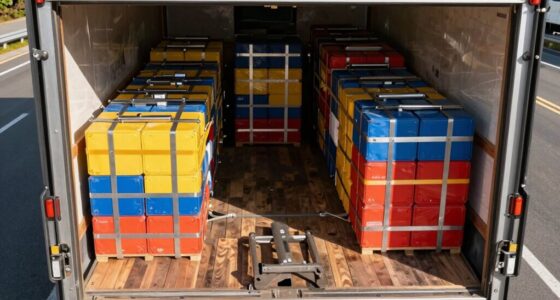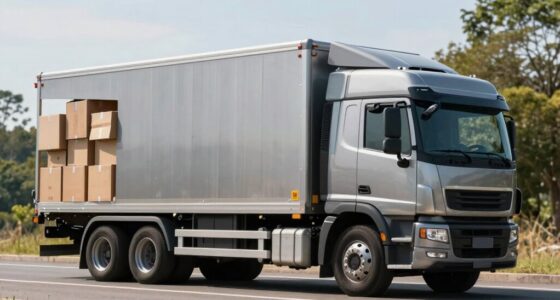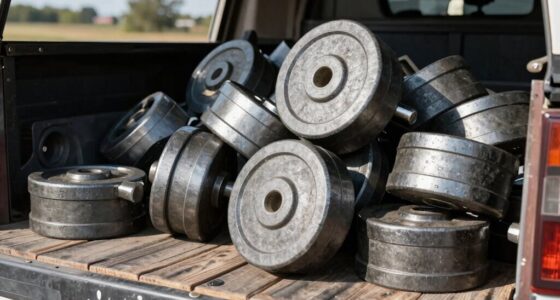
Your tie-down angles are more important than you might realize because they directly impact the stability and safety of your load. Proper angles help keep everything balanced, prevent shifting, and reduce strain on straps and anchor points. When angles are off, loads can slide, tip, or even cause damage, risking your safety and your cargo. Getting the angles right guarantees a secure journey. Keep going to discover how mastering this small detail can make a big difference.

Get business pricing on garage and car supplies
- Business-only prices and quantity discounts
- Tax-exempt purchasing
- Multiple users, one account, clear invoices
Key Takeaways
- Proper tie-down angles ensure load stability, preventing shifting and tipping during transit.
- Correct angles reduce strain on straps and anchor points, decreasing the risk of failure.
- Shallow or improper angles can cause load sliding or imbalances, risking damage or accidents.
- Optimized angles distribute forces evenly, maintaining load integrity over long distances.
- Small adjustments in tie-down angles significantly enhance overall transport safety.
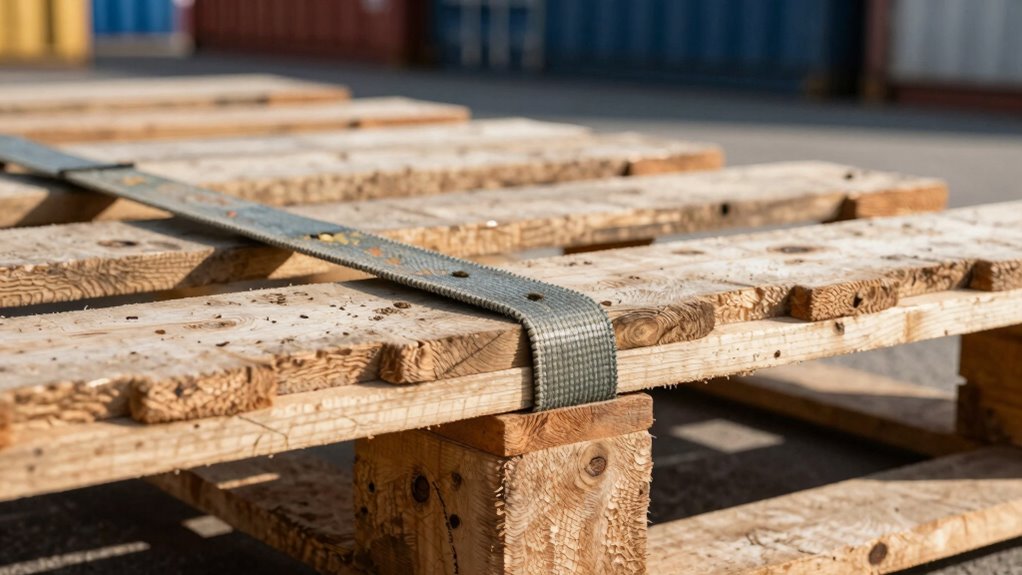
When securing loads, the angle at which you attach your tie-downs can make all the difference in safety and stability. It’s not just about pulling the straps tight—it’s about how that tension is applied and managed across the load. Proper tie-down angles influence load distribution, ensuring that the force exerted on your cargo is evenly spread out. If you attach your straps at the wrong angles, you risk uneven load distribution, which can lead to shifting, tipping, or even losing the load altogether. When the load isn’t evenly balanced, it puts unnecessary stress on certain points, increasing the chance of failure or damage. That’s why understanding and optimizing tie-down angles is critical for safe transport. Additionally, seasonal events and promotions can sometimes affect how carefully loads are secured, especially during busy periods.
Proper tie-down angles ensure load stability, prevent shifting, and promote safe, balanced transport.
Anchor point positioning plays a crucial role in achieving the right tie-down angles. The placement of your anchor points determines how the tension pulls on the load. If your anchor points are too close together or positioned improperly, your straps might be forced into awkward angles, reducing their effectiveness. Ideally, you want your anchor points to be spread out and positioned so that the tension pulls diagonally across the load, creating a stable, secure hold. This positioning helps maintain a consistent load distribution, preventing any one part of the cargo from bearing too much force. Properly positioning your anchor points and choosing the correct tie-down angles work together to create a balanced, secure hold that can withstand road vibrations and sudden stops. Achieving optimal tie-down angles is essential for maintaining load integrity over long distances.
The angle at which you connect your tie-downs influences both the load’s stability and the potential for strap failure. When straps are attached at shallow angles, closer to horizontal, they tend to exert more lateral force, which can cause the load to slide or shift. Conversely, attaching straps at steeper angles, ideally between 45 and 60 degrees, helps direct the force downward and inward, keeping the load firmly in place. This angle ensures better load distribution and minimizes strain on individual straps or anchor points. Properly positioning your anchor points and choosing the correct tie-down angles work together to create a balanced, secure hold that can withstand road vibrations and sudden stops.
In the end, paying attention to tie-down angles is about more than just following rules—it’s about ensuring your load stays secure and your journey remains safe. Load distribution and anchor point positioning are the foundation of effective tie-downs, and understanding their importance can save you time, money, and potential hazards. When you choose the right angles and placement, you’re actively preventing load shifts, reducing gear damage, and making sure everything arrives intact. It’s a small detail that makes a big difference in transportation safety.
cargo tie-down straps with adjustable angles
As an affiliate, we earn on qualifying purchases.
As an affiliate, we earn on qualifying purchases.
Frequently Asked Questions
How Do Tie-Down Angles Affect Load Stability During Transit?
Tie-down angles considerably impact load stability during transit by optimizing cargo security and transit safety. When you use proper angles, the force applied to secure the load directs correctly, preventing shifting or tipping. Improper angles can cause cargo to loosen or move, risking accidents. By ensuring the right tie-down angles, you improve overall safety, keep your cargo secure, and reduce the chance of damage or accidents on the road.
What Is the Ideal Tie-Down Angle for Different Cargo Types?
Think of tie-down angles as the steering wheel of cargo securing—you want just the right grip. For most cargo, aim for a 45-degree angle for maximum stability, like a well-balanced seesaw. Heavier or more delicate items might need steeper or shallower angles. When selecting anchor points, make sure they’re positioned to create these ideal angles, giving your cargo the strongest hold and preventing shifting during transit.
Can Improper Angles Cause Damage to the Cargo or Equipment?
Improper tie-down angles can definitely damage your cargo or equipment. When angles are too steep or too shallow, they can cause unnecessary stress, leading to dents, tears, or equipment failure. Maintaining correct angles guarantees better cargo protection and equipment safety by evenly distributing force and reducing strain. Always double-check your tie-down angles to prevent damage, keep your cargo secure, and avoid costly repairs or safety hazards during transit.
How Do Weather Conditions Influence Optimal Tie-Down Angles?
Weather impact, especially wind resistance, greatly influences your choice of tie-down angles. When facing windy conditions, you need steeper angles to improve stability and prevent cargo from shifting or being lifted. Conversely, calmer weather allows for more relaxed angles. Adjusting tie-down angles based on weather ensures your cargo remains secure, reducing risk of damage. Always monitor weather forecasts and adapt your tie-down strategy accordingly for safe transportation.
What Tools or Equipment Help Measure Correct Tie-Down Angles?
Think of measuring tie-down angles like tuning a guitar; precise calibration guarantees perfect sound. You can use a digital angle finder or a protractor to improve vehicle security. These tools help verify your straps are at the correct angle, preventing load shifting. Accurate measurements mean your cargo stays safe, and your equipment remains calibrated, reducing risk during transport. Invest in reliable tools, and you’ll secure loads with confidence and peace of mind.
heavy-duty ratchet straps for load securing
As an affiliate, we earn on qualifying purchases.
As an affiliate, we earn on qualifying purchases.
Conclusion
Remember that choosing the right tie-down angle isn’t just a technical detail—it’s the key to keeping your load secure. Think of it like steering a ship; a slight adjustment in angle can mean the difference between safe passage and disaster. When you understand the importance of proper angles, you’re not just securing cargo—you’re directing a safer course. So, next time you tighten those straps, keep the angles in mind, and steer your load to safety.
vehicle load anchor points and tie-downs
As an affiliate, we earn on qualifying purchases.
As an affiliate, we earn on qualifying purchases.
load stabilization straps for trucks
As an affiliate, we earn on qualifying purchases.
As an affiliate, we earn on qualifying purchases.
Halloween Picks
halloween
As an affiliate, we earn on qualifying purchases.