When your truck bed is full, its increased weight raises your vehicle’s momentum, making it harder to stop quickly. The extra mass means more kinetic energy (half the weight times speed squared) that must be dissipated through braking. This requires longer stopping distances because brakes need to absorb and convert this energy into heat. Factors like tire condition and road surface also matter. Understand these physics basics to improve safety—if you keep exploring, you’ll learn how to manage these risks effectively.
Key Takeaways
- Fully loaded truck beds increase mass, raising kinetic energy and requiring more braking force to stop effectively.
- Heavier loads extend stopping distance due to greater momentum, making timely braking more challenging.
- Increased vehicle weight demands more energy absorption during braking, lengthening the time and distance needed to halt.
- Proper tire pressure, brake maintenance, and reduced speed are essential to manage the physics of stopping a fully loaded truck.
- Higher speeds and lower friction conditions (wet or icy roads) significantly increase stopping distances for heavy loads.

Platform Truck with Brake System 2600lbs Capacity Heavy Duty Push Cart Dolly Foldable Flatbed Cart with 5'' Swivel Wheels Large Steel Platform Dolly Cart for Groceries, Garage, Warehouse (24" x 48")
【2600lbs Huge Carrying Capacity】2600 lbs steel solid thickened bearing structure +5'' metal and rubber wheels provide super carrying…
As an affiliate, we earn on qualifying purchases.
As an affiliate, we earn on qualifying purchases.
Understanding Stopping Distance and Its Components

Understanding stopping distance is essential because it determines how quickly your vehicle can come to a complete stop in different conditions. It’s made up of perception distance, reaction distance, and braking distance. Perception distance is how far you travel while recognizing a hazard. Reaction distance is the distance covered during your response time, usually about 1.5 seconds. Braking distance is the space needed to stop once you apply the brakes. Several factors influence these components, including your vehicle’s speed, weight, tire condition, and road surface. Heavier vehicles, like loaded trucks, have more momentum, meaning they need more distance to stop. Knowing how each component works helps you anticipate stopping needs and adjust your driving accordingly, especially in challenging conditions or when carrying extra load. Additionally, understanding the role of credit cards in managing expenses can help you budget for vehicle maintenance and emergencies effectively.
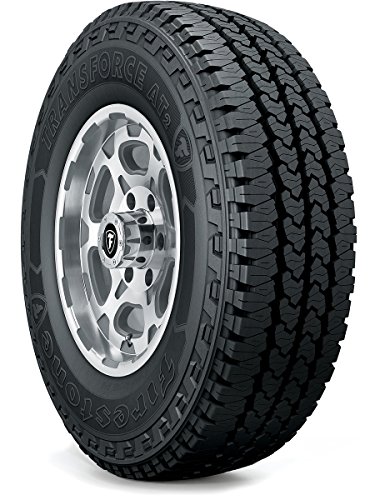
Firestone Transforce AT2 All Terrain Commercial Light Truck Tire LT235/80R17 120 R E C
Wherever The Job Is, Depend On Firestone To Get You There
As an affiliate, we earn on qualifying purchases.
As an affiliate, we earn on qualifying purchases.
How Vehicle Speed Impacts Stopping Ability

As your vehicle’s speed increases, its stopping ability decreases markedly because the kinetic energy that must be dissipated grows exponentially. The faster you’re going, the longer it takes to stop, even with good brakes. When your speed doubles, your stopping distance quadruples; at 65 mph compared to 55 mph, stopping distance increases considerably. Additionally, Free Floating systems can influence the handling and stopping performance, especially when the truck bed is full.
Higher speeds dramatically increase stopping distances due to exponential growth in kinetic energy.
Consider these impacts:
- More distance to react: Faster speeds mean more ground covered during perception and reaction times.
- Increased energy to absorb: Higher speeds generate more kinetic energy, demanding more braking force.
- Greater danger of accidents: Longer stopping distances reduce your ability to avoid collisions, especially with a full truck bed.
Understanding this relationship helps you drive more safely and anticipate longer stopping times at higher speeds.

BIT Air Scale 18-Wheeler Set – Bluetooth-Enabled Onboard Load Scale for Dedicated Trucks and Trailers
REAL-TIME MONITORING: Get accurate weight readings for total truck weight, cargo load, and individual axle weights directly through…
As an affiliate, we earn on qualifying purchases.
As an affiliate, we earn on qualifying purchases.
The Role of Vehicle Mass and Truck Bed Load
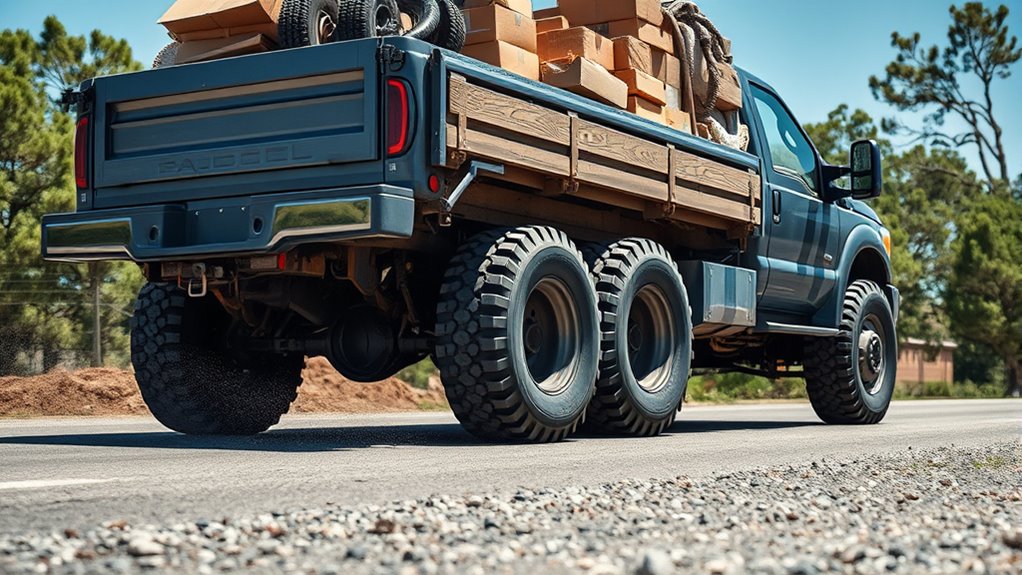
When you increase the vehicle’s mass, especially with a full truck bed, stopping becomes markedly more challenging. The added weight boosts your truck’s momentum, meaning more force is needed to bring it to a stop. This increased momentum directly impacts the stopping distance, making it longer as the vehicle’s kinetic energy rises. A fully loaded truck bed substantially boosts the total mass, making your vehicle harder to slow down quickly. Even if your brakes are in perfect condition, the increased momentum demands longer stopping distances. As your truck’s weight grows, so does the energy that needs to be absorbed by the braking system. Consequently, a fully loaded truck requires more space and a longer time to stop compared to an unloaded one.

Trailer Breakaway Switch, with 4 FT Coiled Trailer Brake Away Cable, Trailers Breakaway Kit with Pull Pin Steel Spring Towing Wire, Trailers Emergency Brake Cable for RV Travel Trailers Towing
Safety and Security: Trailer brake controller activates automatically upon separation from the tractor, preventing loss of control from…
As an affiliate, we earn on qualifying purchases.
As an affiliate, we earn on qualifying purchases.
The Physics Behind Kinetic Energy and Braking
Your truck’s kinetic energy depends on its mass and speed, meaning heavier and faster vehicles carry more energy that must be dissipated during braking. As the energy increases, more work is needed to slow the vehicle down safely. Understanding how braking transforms this energy is key to predicting stopping distances, especially when the truck bed is full. Additionally, the braking system plays a crucial role in converting kinetic energy into heat to bring the vehicle to a stop.
Kinetic Energy Fundamentals
Kinetic energy is the energy an object possesses due to its motion, and it plays a central role in understanding how vehicles stop. When your truck moves, it has a specific amount of kinetic energy based on its mass and speed. The faster you go or the heavier your truck, the more energy there is to dissipate during braking.
Consider these points:
- More speed means exponentially more energy to stop, increasing the stopping distance.
- A loaded truck’s energy is considerably higher, requiring more force and distance to bring it to a halt.
- Small changes in speed can dramatically increase the energy that needs to be absorbed by your brakes, making stopping more challenging.
Effect of Vehicle Mass
The mass of a vehicle directly influences its momentum, which in turn affects how much force is needed to bring it to a stop. The heavier your truck, the more momentum it carries at a given speed. Because momentum is proportional to mass, a fully loaded truck has considerably more than an empty one. This increased momentum means your brakes must work harder to dissipate the kinetic energy. According to the formula E = ½mv², energy increases with mass, so a heavier vehicle stores more energy that needs to be removed during braking. Consequently, as your truck’s weight increases, the stopping distance lengthens. This is why a fully loaded truck takes more time and space to stop than when it’s empty, especially at higher speeds. Additionally, braking efficiency can be affected by the vehicle’s weight and condition, further influencing stopping distances.
Energy Dissipation During Braking
When a vehicle brakes, it must convert its kinetic energy into other forms of energy to come to a stop. This energy dissipation occurs mainly through heat generated in the brake system. As you brake, friction between the brake pads and rotors or drums converts kinetic energy into thermal energy, which dissipates into the environment. You should be aware that:
- Heavier loads increase the energy that needs to be expelled, making braking harder.
- Friction efficiency impacts how quickly energy is converted, affecting stopping distance.
- Overheating brakes can reduce friction, prolonging stopping time and risking brake failure.
Additionally, brake system maintenance plays a crucial role in ensuring consistent friction performance and safety during braking.
Understanding this process highlights why trucks with full beds take longer to stop—more energy must be safely dissipated to bring you to a halt.
Factors That Affect Friction Between Tires and Road
Friction between tires and the road plays a essential role in a vehicle’s ability to stop safely, and several factors influence its effectiveness. First, the condition of your tires matters—worn or bald tires have less grip, increasing stopping distance. Tire composition and tread pattern also affect traction; high-quality tires with proper tread bite into the road better. Road surface quality influences friction, with dry asphalt offering more grip than wet, icy, or uneven surfaces. Weather conditions, such as rain or snow, reduce friction and extend stopping distances. Additionally, tire pressure impacts contact with the road; under-inflated tires have less surface area, decreasing friction. Proper tire maintenance and suitable tires for conditions are essential to maximize grip and shorten stopping distances. Regularly inspecting and replacing tires as needed ensures optimal tire performance and safety.
Reaction Time and Its Effect on Total Stopping Distance
Once your tires grip the road enough to begin braking, your reaction time determines how quickly you start decelerating. During this moment, you’re fundamentally losing critical distance, especially with a full truck bed. Your typical reaction time of about 1.5 seconds can add significant length to your stopping distance. Understanding modern vehicle safety features can help mitigate some risks associated with reaction delays. Consider these points:
- Every fraction of a second counts—delays mean more distance traveled before braking even starts.
- Heavy loads magnify the impact—more momentum requires even quicker reactions to minimize total stopping distance.
- In emergencies, quick reflexes save lives—reducing reaction time can be the difference between stopping in time or not.
Your reaction time directly influences safety, especially when hauling a fully loaded truck.
Calculating Braking Distance: The Formula and Variables

Calculating braking distance involves understanding the relationship between your vehicle’s speed, the road conditions, and the vehicle’s braking system. The key formula used is d = v² / (2μg), where d is the braking distance, v is your initial speed, μ is the coefficient of friction between tires and road, and g is gravity. Your speed directly influences the distance, with higher speeds requiring much longer stops. Road conditions affect μ; wet or icy surfaces reduce friction, increasing stopping distance. The vehicle’s braking system must be capable of dissipating the kinetic energy, which depends on the vehicle’s mass and velocity. When your truck is fully loaded, the increased momentum demands more force for the same stopping distance, making the calculation essential for safety. Additionally, understanding the role of brake systems can help in maintaining optimal performance under various load conditions.
Comparing Stopping Distances: Cars vs. Fully Loaded Trucks

When comparing stopping distances, you’ll notice that fully loaded trucks take considerably longer to stop than cars. The added weight increases their momentum, making it harder to bring them to a halt quickly. Understanding how load weight impacts stopping distance helps you grasp why trucks require more space and time to stop safely. Inverter generators can be a reliable power source during emergencies or outdoor activities, just as understanding vehicle physics is crucial for safe driving.
Stopping Distance Variance
Compared to cars, fully loaded trucks require considerably longer distances to come to a complete stop, even at the same speed. This variance stems from their increased mass and momentum, which demand more braking force and energy dissipation. As a result, your stopping distance can increase dramatically, risking safety if you don’t account for it. Consider these points:
- At 55 mph, a car stops in about 225 feet, while a loaded truck needs roughly 335 feet—a 49% increase.
- At 65 mph, your truck could need over 525 feet to stop, nearly double a car’s distance.
- In emergency braking, the added weight can cause your vehicle to skid longer, heightening crash risk.
Understanding this variance helps you stay alert and adjust your driving for safer stopping.
Impact of Load Weight
The load weight of a vehicle directly impacts its stopping distance, especially when comparing cars to fully loaded trucks. Heavier loads increase a vehicle’s momentum and kinetic energy, making it harder to stop quickly. For example, a fully loaded truck can weigh up to 80,000 pounds, over 20 times a typical car’s weight, markedly increasing its stopping distance. The added mass requires more force and energy dissipation through braking. Here’s a quick comparison:
| Vehicle Type | Approximate Stopping Distance |
|---|---|
| Car at 55 mph | 225 feet |
| Fully Loaded Truck at 55 mph | 335 feet |
| Fully Loaded Truck at 65 mph | 525 feet |
The heavier the load, the longer it takes to stop safely.
Real-World Data and Safety Implications for Truck Drivers

Real-world data shows that truck drivers face significant safety challenges due to the increased stopping distances required when their vehicles are fully loaded. This means you must be more alert and prepared to react quickly, especially at highway speeds.
Consider these critical points:
- 66% longer stopping distance at 65 mph compared to cars, increasing crash risk.
- 23% of truck crashes involve rear-ending, often due to insufficient stopping distance.
- Fully loaded trucks weighing up to 80,000 pounds require hundreds of feet to stop, making sudden stops deadly.
These statistics highlight the importance of maintaining safe following distances and adjusting driving habits when hauling full loads. Not recognizing these dangers can lead to catastrophic accidents, injuries, or fatalities.
Tips for Reducing Stopping Distance When Carrying a Full Load

To reduce your stopping distance when carrying a full load, you should start by maintaining proper tire pressure, which guarantees maximum grip and ideal braking. Next, adjusting your driving speed to suit road conditions and vehicle weight can make a significant difference. Finally, keeping your brake system well-maintained ensures it performs reliably when you need it most.
Maintain Proper Tire Pressure
Maintaining proper tire pressure is essential for reducing stopping distance when carrying a full load because underinflated tires decrease grip and increase braking efficiency. When tires aren’t inflated correctly, they can’t maximize friction with the road, making your truck harder to stop. Properly inflated tires ensure the full contact patch remains effective, giving you better control.
To improve safety, focus on these three key points:
- Check tire pressure regularly—don’t wait for a flat; underinflation can silently increase stopping distance.
- Follow manufacturer recommendations—use the correct PSI for your load and conditions.
- Inspect for damage or uneven wear—damaged tires can reduce grip, lengthening your stopping distance.
Keeping tires properly inflated enhances grip, reduces braking distance, and keeps you safer on the road.
Adjust Driving Speed
Adjusting your driving speed is one of the most effective ways to reduce stopping distance when carrying a full load. The faster you go, the longer it takes to stop because kinetic energy increases with speed. Lower your speed when hauling a heavy load, especially in high-traffic or hazardous conditions. For example, driving at 55 mph instead of 65 mph can considerably cut your stopping distance, decreasing the risk of rear-end collisions. Keep in mind that even small reductions in speed can make a big difference in stopping performance. Always adapt your speed to road and weather conditions, and give yourself extra margin when your truck bed is full. Slowing down provides more control and allows your brakes to dissipate energy more effectively.
Keep Brake System Well-Maintained
Properly maintaining your truck’s brake system is essential for reducing stopping distances, especially when your vehicle is fully loaded. A well-kept brake system ensures maximum efficiency when you need to stop quickly.
To keep your brakes in top shape, focus on these key areas:
- Regular inspections: Catch worn or damaged brake components early before they fail when you need them most.
- Brake fluid checks: Ensure fluid levels are ideal and replace old fluid to prevent brake fade and loss of stopping power.
- Pad and rotor maintenance: Replace worn pads and resurfacing rotors to maintain proper friction and prevent overheating.
Frequently Asked Questions
How Does Road Condition Deterioration Affect Stopping Distances for Loaded Trucks?
When road conditions deteriorate, your loaded truck’s stopping distance increases markedly. Wet, icy, or uneven surfaces reduce tire friction, making it harder for your brakes to grip the road. As a result, you’ll need more space and time to stop safely. Always slow down on poor roads, maintain your brakes, and increase your following distance, especially when carrying a heavy load, to compensate for reduced friction and prevent accidents.
What Are the Safety Implications of Overloading a Truck Bed?
Think of your truck as a mighty ship; overloading it is like adding too much cargo, risking a dangerous storm. When you overload, you increase its weight and momentum, making it harder to stop safely. This raises the risk of accidents, especially in emergencies. You might think more cargo means more power, but it actually diminishes control, putting yourself and others in danger. Always load within safe limits to steer clear of disaster.
How Does Tire Wear Influence Braking Performance in Loaded Vehicles?
Tire wear greatly impacts braking performance in loaded vehicles because worn tires have less grip, reducing friction between the tires and the road. This lower traction means your vehicle takes longer to stop, especially when carrying extra weight. When tires are worn, you’ll notice increased stopping distances, making it harder to brake effectively. Regularly inspecting and replacing tires helps maintain ideal grip and ensures safer, more reliable braking, even when your truck is fully loaded.
Can Advanced Braking Systems Compensate for Increased Truck Mass?
Advanced braking systems can help offset the challenges of increased truck mass, but they can’t completely eliminate the effects. You’ll find that technologies like anti-lock brakes and electronic stability control help maintain better control and reduce stopping distances under certain conditions. Still, the heavier your truck, the more you’ll need to be cautious, especially on slick or uneven surfaces, since physics still plays a significant role in stopping performance.
How Does Weather Impact Friction and Stopping Distance for Fully Loaded Trucks?
Weather substantially impacts friction and stopping distance for fully loaded trucks. When roads are wet, icy, or snowy, friction between your tires and the surface decreases, making it harder to stop quickly. You’ll need much more distance to come to a complete stop, especially with the added weight of a full truck bed. Always slow down in adverse weather conditions and increase your following distance to stay safe.
Conclusion
Remember, your truck is like a ship steering a storm—full loads make the waters rougher, demanding sharper awareness. When your bed’s heavy, stopping becomes a delicate dance between physics and caution. By understanding these forces, you become the steady captain steering through unpredictable currents. Stay alert, keep your distance, and respect the weight you carry—because in this journey, control is your most powerful anchor.