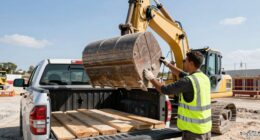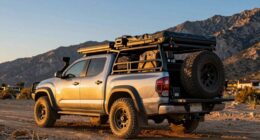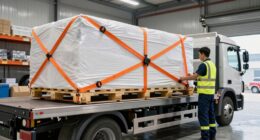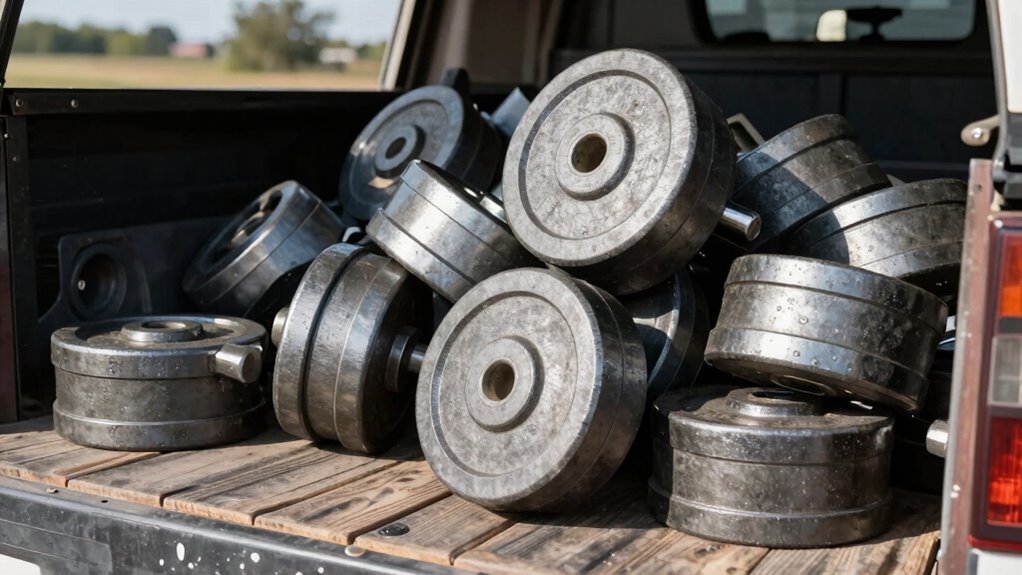
You should never stack weight too high in a truck bed because it affects your vehicle’s stability and safety. High stacks raise the center of gravity, increasing the risk of tipping or rolling over during sharp turns or sudden stops. It also obstructs your rear view, making driving more dangerous, and puts extra strain on the suspension and tires, leading to faster wear and potential mechanical failures. To stay safe, more details wait just ahead.
Key Takeaways
- High stacking raises the truck’s center of gravity, increasing rollover and tipping risks during turns or sudden maneuvers.
- Overloading and tall stacks impair vehicle handling, making control difficult and increasing the likelihood of accidents.
- Excessive height causes uneven tire wear and puts strain on suspension and vehicle components, reducing lifespan.
- Obstructed rear view from tall stacks hampers visibility, raising the chance of collisions and accidents.
- Improper load height compromises safety, stability, and vehicle performance, emphasizing the importance of balanced, low stacks.
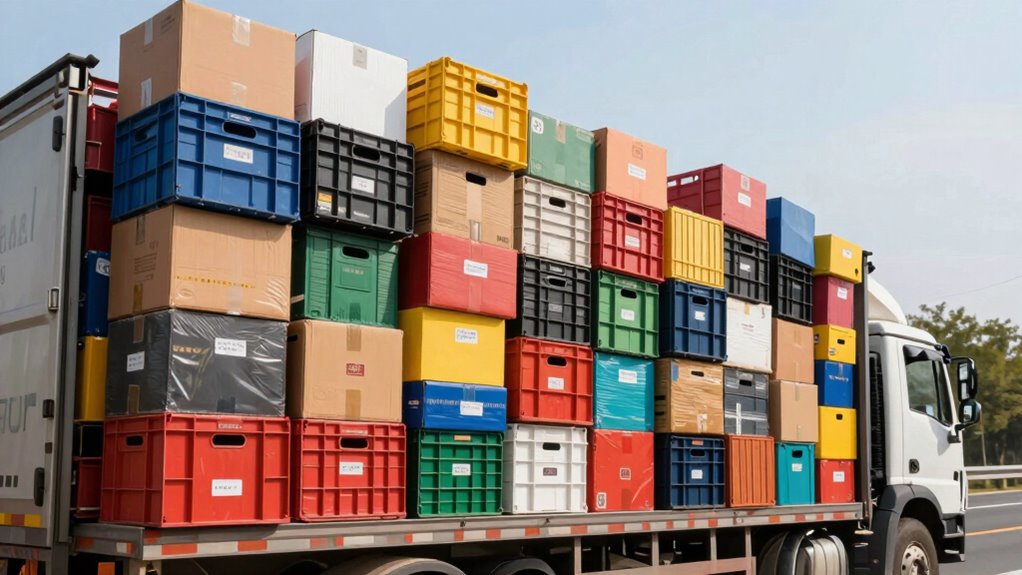
Stacking weight too high in a truck bed might seem like a way to maximize space, but it can pose serious safety risks. When you load your truck this way, you disrupt the balance of load distribution and raise the vehicle’s center of gravity, making it more prone to tipping or losing control. Proper load distribution is crucial; if weight is unevenly spread or piled too high, it puts unnecessary strain on certain parts of your truck and affects overall stability. You want the weight to be distributed evenly from side to side and front to back to maintain control, especially during turns or sudden stops.
The center of gravity plays a vital role in your vehicle’s handling. When you stack heavy objects high, you elevate the truck’s center of gravity, which can significantly compromise stability. A higher center of gravity means your truck is more likely to roll over if you take sharp turns or encounter uneven terrain. This risk isn’t just theoretical — it’s backed by physics. As you pile weight upward, the leverage effect increases, making the vehicle more susceptible to tipping over. You may feel confident with your load initially, but the danger becomes clear once you hit a curve or need to swerve to avoid an obstacle. Additionally, electric dirt bikes and other equipment are often carried in truck beds, and improper stacking can damage delicate components or reduce their lifespan.
You might think that stacking high saves space, but it’s a false economy. Overloading the bed vertically shifts the load’s center, making your truck harder to control. It also puts stress on the suspension and tires, which aren’t designed to carry top-heavy loads. This imbalance not only affects handling but can also lead to uneven tire wear or mechanical failures over time. Additionally, high stacks can obstruct your rear view, reducing visibility and increasing the likelihood of accidents. Implementing proper load management techniques can significantly enhance safety and vehicle performance. Furthermore, understanding load distribution principles can help prevent unnecessary strain on your vehicle’s components, extending its lifespan.
To stay safe, keep your load low and well-balanced. Use tie-downs to secure items and ensure they don’t shift during transit. If you need to carry a lot of weight, consider distributing it across the bed evenly and keeping the load as low as possible. This practice helps maintain a lower center of gravity, improving stability and reducing the risk of rollover. Proper load management is essential for safe driving and vehicle longevity. Remember, your safety and that of others depend on how well you manage your load. Never sacrifice stability for extra space — it’s simply not worth the danger.

VEVOR Cargo Bar, Truck Bed Bar Adjustable from 40" to 73", Heavy-Duty Steel Cargo Stabilizer Bar with 220 lbs Capacity, Truck Load Bar Stop Sliding for Pickup Truck Bed, SUV
Wide Adjustable Range: With a 3-inch longer length compared to other market products and an adjustable range of…
As an affiliate, we earn on qualifying purchases.
As an affiliate, we earn on qualifying purchases.
Frequently Asked Questions
Can Stacking Higher Improve Truck Bed Capacity?
Stacking higher doesn’t improve your truck bed capacity and can compromise cargo stability. When you elevate the load, it becomes harder to secure properly, increasing the risk of shifting or falling during transit. Focus on evenly distributing weight and using proper load securing techniques. Keeping the load lower and balanced guarantees safety, prevents damage, and maintains better control, ultimately making your trip safer and more efficient.
What Are the Legal Weight Limits for Truck Beds?
You need to follow load securing and weight regulations when loading your truck bed. Legally, weight limits vary by vehicle and jurisdiction, typically ranging from 1,500 to 3,000 pounds for standard pickups. Exceeding these limits can lead to fines and safety issues. Always check your vehicle’s manual and local laws to make certain you stay within legal weight limits, properly secure your load, and prevent accidents.
Does Stacking Height Affect Fuel Efficiency?
You bet stacking height impacts fuel efficiency—it’s a classic case of “cutting off your nose to spite your face.” When you stack too high, you disrupt your truck’s aerodynamics, increasing air resistance and fuel consumption. The higher load creates more drag, forcing your engine to work harder. Keep your cargo low and balanced to optimize aerodynamics, save fuel, and keep your wallet happy.
How Does Weight Distribution Impact Driving Safety?
Poor weight distribution impacts driving safety by destabilizing your load. When you don’t balance weight properly, your truck’s load stability decreases, and the center of gravity shifts higher, making it easier to tip over or lose control. To stay safe, keep the load evenly distributed and low in the truck bed. Proper weight distribution guarantees better handling, reduces risks of accidents, and keeps you in control on the road.
Are There Specific Materials Better for Heavy Stacking?
For heavy stacking, choose materials with high durability and stability, like steel or heavy-duty plastic. These materials resist crushing and shifting, maintaining stacking stability during transit. Avoid flimsy or brittle materials that can collapse or cause imbalance. By selecting durable materials designed for heavy loads, you guarantee safer transport, reduce the risk of accidents, and protect your cargo from damage. Always prioritize material strength to keep your load secure.

Rhino USA Integrated Cargo Magic Bed-Mounted Retractable Ratchet Straps for Ford Trucks (2015+ F-150 & 2017+ F-250) – BoxLink Compatible, Removable, 360° Swivel, Heavy-Duty Tie Downs
FORD BOXLINK COMPATIBLE (2015+ TRUCKS) Designed specifically for 2015+ Ford F-150 and 2017+ F-250 pickup trucks, this system…
As an affiliate, we earn on qualifying purchases.
As an affiliate, we earn on qualifying purchases.
Conclusion
Stacking weight too high in your truck bed might seem efficient, but it’s like building a tower of cards on a windy day—fragile and risky. The thrill of extra cargo quickly turns into a nightmare of shifting loads and potential accidents. Keep your load low and balanced; think of your truck as a sturdy ship rather than a fragile skyscraper. Stability isn’t just about safety—it’s about ensuring your journey ends safely, not in a toppled disaster.

Rough Country Slide-Out Truck Bed Cargo Tray – Long Bed Organizer for 5'7"+ Beds, Heavy-Duty Polyethylene, UV-Protected, Easy Tailgate Access
Maximize Bed Storage: Optimize your truck bed's space with ample storage for tools, gear, golf clubs, and weekend…
As an affiliate, we earn on qualifying purchases.
As an affiliate, we earn on qualifying purchases.

Muslogy Truck Bed Cargo Net Trunk Netting Compatible with 2013-2026 Chevy Silverado & GMC Sierra 1500/2500HD/3500HD Accessories, Pickup Cargo Organizer SUV Sedan Storage Net w/Heavy Duty Carabiners
Custom Fit: Designed according to the laser scanning data to make it fit your 2013-2024 2025 Silverado/Sierra 1500/2500HD/3500HD…
As an affiliate, we earn on qualifying purchases.
As an affiliate, we earn on qualifying purchases.