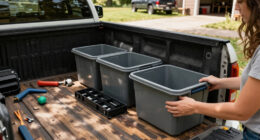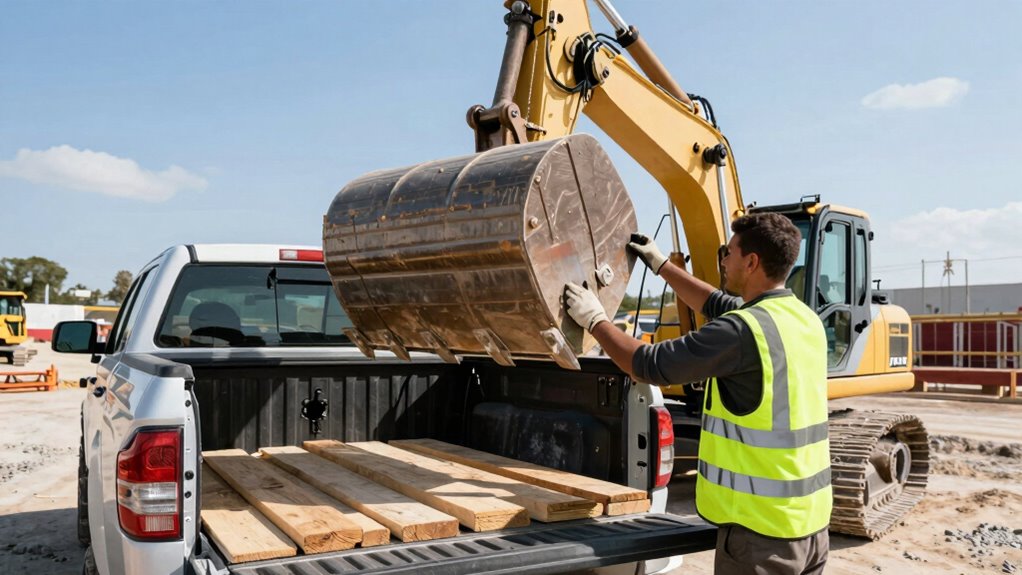

When loading heavy equipment into a pickup bed, guarantee your vehicle is ready and the bed is clean and non-slip. Use proper lifting techniques, such as bending your knees and lifting with your legs, and seek help or mechanical aids if needed. Secure the equipment with high-quality straps and double-check everything during transport. Prioritize safety at all times by wearing gloves and keeping others clear. Keep going to discover essential tips to make the process safer and easier.
Key Takeaways
- Check vehicle weight capacity and ensure proper weight distribution before loading heavy equipment.
- Use ramps, hoists, or winches to lift equipment safely, avoiding manual lifting when possible.
- Secure equipment with rated straps, chains, or ropes, tightening firmly without over-tightening.
- Balance and center the load in the pickup bed; use wheel chocks and engage the parking brake.
- Wear appropriate safety gear, communicate clearly with helpers, and inspect restraints during transit.

Loading heavy equipment into a pickup bed requires careful planning to guarantee safety and prevent damage. You want to avoid accidents and assure the equipment stays secure during transport, so understanding proper lifting techniques and safety precautions is crucial. Before you begin, inspect both the equipment and your vehicle. Check that the pickup bed is clean, free of debris, and has a non-slip surface to prevent slipping. Confirm that your vehicle’s weight capacity can handle the load to avoid overloading, which could compromise stability.
Ensure safe loading by inspecting your equipment and vehicle, checking weight capacity, and maintaining a slip-resistant surface.
When it’s time to lift, use correct lifting techniques to protect yourself and keep the equipment intact. Always bend your knees, keep your back straight, and lift with your legs, not your back. This approach minimizes strain and reduces the risk of injury. If the equipment is too heavy or awkward to lift alone, don’t hesitate to ask for help or use mechanical aids like a winch, ramp, or hoist. Secure a sturdy ramp or platform to create a safe pathway for rolling or sliding heavy items into the bed. Never attempt to lift or move heavy equipment in a way that puts your body at risk or causes you to lose control.
Proper loading techniques are essential to ensure safety and prevent damage during transportation. Safety precautions extend beyond lifting. Make sure the equipment is properly balanced and centered in the pickup bed to prevent shifting during transit. Use high-quality tie-down straps, chains, or ropes rated for the weight you’re securing. Tighten these restraints firmly but avoid over-tightening, which could damage the equipment or straps. Double-check all tie-downs to ensure they’re secure, and regularly inspect them during transit, especially on long trips. Consider using wheel chocks or blocks to prevent rolling, and always engage your vehicle’s parking brake before loading or unloading. Additionally, understanding the weight capacity of your vehicle is vital to avoid overloading and potential safety hazards. Knowing the load distribution can also help prevent uneven stress on your suspension and tires, ensuring safer transportation. Being aware of your vehicle’s environmental impact and how to minimize it can contribute to more responsible and sustainable transportation practices. It’s wise to familiarize yourself with the relevant safety standards to ensure all equipment and procedures comply with regulations and best practices.
Remember that your awareness and caution are your best tools. Wear gloves to enhance grip and protect your hands, and use proper footwear with good traction. Keep bystanders clear of the loading area, and communicate clearly with anyone helping you. Never rush the process; patience and attention to detail are crucial. By following these safety precautions and applying correct lifting techniques, you reduce risks and make sure your heavy equipment is loaded safely and securely into your pickup bed. This careful approach not only protects you but also preserves the integrity of your equipment and the safety of everyone on the road.
As an affiliate, we earn on qualifying purchases.
Frequently Asked Questions
What Types of Equipment Are Safest to Load in a Pickup Bed?
You should prioritize loading lighter and stable equipment, like hand tools, small machinery, or equipment with secure handles, for safer equipment storage. Use proper loading techniques by securing items with straps or tie-downs to prevent shifting during transit. Avoid loading excessively heavy or unbalanced equipment that could compromise stability or cause damage. Properly distributing weight and ensuring everything is tightly secured helps maintain safety and prevents accidents while driving.
How Do I Secure Uneven or Irregularly Shaped Loads?
You might worry about the load shifting unexpectedly, risking injury or damage. To secure uneven or irregularly shaped loads, focus on proper load distribution first, positioning the heaviest parts low and centered. Use securing methods like ratchet straps, tie-downs, or custom anchor points, ensuring they’re tight and crisscrossed for stability. Regularly check and tighten your securing methods during transit to prevent shifting and keep everyone safe.
Are There Weight Limits I Should Be Aware of for My Pickup?
Yes, you should be aware of your pickup’s weight limits. Check your vehicle’s owner’s manual for maximum payload capacity, which includes weight distribution and load balancing considerations. Overloading can strain your suspension, brakes, and frame, risking damage or accidents. Always distribute weight evenly across the bed to maintain stability. If your load approaches the limit, consider using a trailer or splitting the load to guarantee safety and vehicle integrity.
How Can I Protect My Truck’s Bed From Damage During Loading?
Think of your truck bed like a knight’s armor—protect it fiercely. Use truck bed liners to shield the surface from scratches and dents. Guarantee proper load distribution so weight isn’t concentrated in one spot, reducing damage risk. When loading heavy equipment, place heavy items on the bed’s center and avoid dragging items across the bed. This way, you keep your truck looking new, even after hauling heavy loads.
What Safety Gear Should I Wear When Loading Heavy Equipment?
When loading heavy equipment, you should wear safety gear like gloves, steel-toed boots, and a hard hat to protect yourself. Use proper lifting techniques to avoid injury, keeping your back straight and lifting with your legs. Safety harnesses can be essential if you’re working at height or on unstable surfaces. Always make certain your gear fits well and is in good condition, and stay alert to prevent accidents during the loading process.
As an affiliate, we earn on qualifying purchases.
Conclusion
Loading heavy equipment correctly keeps you safe and your vehicle in top shape. Did you know that improper loading causes over 25,000 accidents annually? By following proper lifting techniques, securing your load, and evenly distributing weight, you not only protect yourself but also extend your truck’s lifespan. Remember, careful loading isn’t just about avoiding fines—it’s about ensuring your safety and that of everyone around you. Stay cautious, and load smart every time.
As an affiliate, we earn on qualifying purchases.
As an affiliate, we earn on qualifying purchases.