To secure cargo like a professional driver, start with a thorough inspection to identify weak spots and guarantee proper packing. Distribute weight evenly, placing heavier items low and centered for balance. Use strong restraints such as straps and tie-downs attached to secure anchor points, tightening them just enough to prevent movement. Fill empty spaces with blocking and padding, and regularly re-check restraints during transit. Keep practicing these techniques, and you’ll master the skills needed for safe, professional cargo securement.
Key Takeaways
- Inspect and prepare cargo thoroughly, checking for damage and proper packaging before loading.
- Distribute weight evenly, placing heavier items low and near the trailer’s center for stability.
- Use appropriate restraints like straps and load bars, attaching to strong anchor points with proper tension.
- Fill empty spaces with blocking and bracing, and protect fragile items with padding and edge protectors.
- Drive cautiously, adhere to weight and securement regulations, and regularly re-inspect cargo during transit.
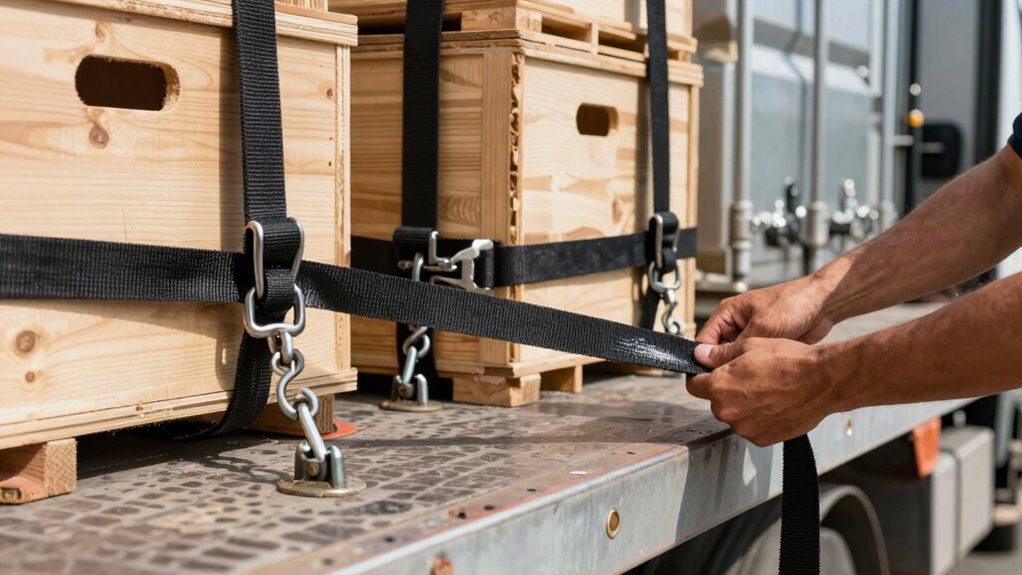
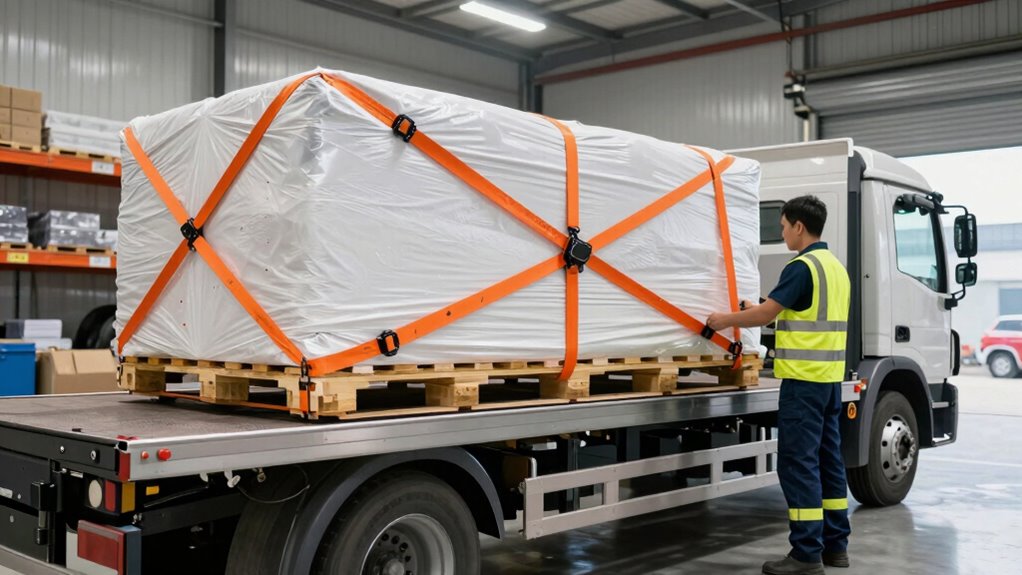
Have you ever wondered how to prevent your cargo from shifting or falling during transit? The key is understanding proper cargo security techniques, starting with thorough cargo inspection and careful weight distribution. Before you even hit the road, take the time to inspect your cargo. Look for any loose items, damaged packaging, or uneven surfaces that could compromise stability. Making sure everything is in good condition and properly packed minimizes the risk of movement during transit. Once you’ve completed your cargo inspection, focus on ideal weight distribution. Distribute the load evenly across the trailer, placing heavier items on the bottom and closer to the trailer’s center to maintain balance. Proper weight distribution reduces strain on vehicle components, improves handling, and lessens the likelihood of cargo shifting. When loading, use appropriate restraints, such as straps, tie-downs, and load bars, to secure items firmly in place. Attach restraints at strong anchor points, making certain they are tight enough to prevent movement but not so tight as to damage the cargo. Remember that tensioning the restraints correctly is essential—too loose, and they won’t hold; too tight, and they might cause damage or weaken the restraint material. As you secure your cargo, continually check for potential weak spots or loose restraints, especially after hitting rough roads or sharp turns. Regularly inspecting your load during transit allows you to catch any shifting early and make necessary adjustments. Incorporating proper restraint tensioning techniques can significantly improve cargo stability and safety. Additionally, understanding load securement regulations can help ensure compliance and avoid penalties. Using blocking and bracing techniques to fill empty spaces within the trailer can further prevent movement and enhance stability. Consider using blocking and bracing techniques to fill empty spaces within the trailer, preventing items from sliding around. Additionally, use edge protectors and padding to safeguard fragile items and reduce the risk of damage if movement occurs. Incorporating water safety principles into your cargo securement practices can further enhance stability, especially when transporting items near bodies of water or in humid environments. A thorough understanding of load distribution can also help in planning your load placement for maximum stability. When you’re on the road, drive cautiously, especially around turns and over bumps, as sudden movements can cause unsecured cargo to shift unexpectedly. Remember that adhering to weight limits and proper securement practices is not just about safety but also about compliance with regulations. Proper cargo inspection, combined with effective weight distribution and restraint techniques, creates a secure environment for your load. This not only protects your cargo but also ensures your safety and that of everyone on the road. Taking these steps might seem meticulous, but they’re vital for professional-grade cargo security. When you develop a routine for inspecting, balancing, and securing your cargo, you’ll find that your trips become smoother, safer, and more efficient. Proper cargo security isn’t just a task; it’s an essential part of responsible driving that keeps your cargo intact and your journey hassle-free.
cargo tie down straps
As an affiliate, we earn on qualifying purchases.
As an affiliate, we earn on qualifying purchases.
Frequently Asked Questions
What Are the Legal Requirements for Cargo Securement?
You must follow securement regulations to meet legal requirements and reduce cargo liability. These regulations specify the type, amount, and placement of tie-downs, ensuring your cargo stays safe during transit. Failing to comply can lead to fines, accidents, or cargo loss. Always inspect your securement methods before departure, stay updated on the latest rules, and use appropriate equipment to keep your cargo secure and avoid legal issues.
How Often Should Cargo Securement Equipment Be Inspected?
Think of your cargo securement equipment as your trusted allies—they need regular check-ins. You should inspect cargo straps and securement methods before each trip and at least every 150 miles or when switching drivers. This routine guarantees your cargo stays safe and compliant. By proactively maintaining your securement equipment, you prevent accidents and keep your cargo firmly in place, turning safety into second nature.
What Are Common Mistakes to Avoid When Securing Cargo?
You should avoid overloading hazards and improper tie downs when securing cargo. Overloading can compromise vehicle stability, and improper tie downs might fail during transit. Always double-check weight limits and confirm straps are tight and secure. Don’t forget to evenly distribute weight to prevent shifting. Ignoring these mistakes can lead to accidents or damage. Stay vigilant, follow safety protocols, and regularly inspect your securements for a safe journey.
How Does Weather Affect Cargo Securement Strategies?
Did you know that over 25% of cargo securement failures are caused by weather issues? Weather considerations are essential because rain, snow, and wind can compromise cargo stability. You must adjust your securement strategies by using waterproof straps, extra tie-downs, or anti-slip mats. Always check weather forecasts before departure and adapt your methods accordingly, ensuring your cargo remains safe and stable no matter what weather conditions you face.
What Training Is Recommended for Securement Best Practices?
You should pursue specialized training in securement techniques, focusing on proper use of cargo straps and understanding weight distribution. Look for courses from reputable organizations that cover regulations and best practices. Hands-on practice with securement techniques helps you master the correct tension and placement of cargo straps. Staying updated on industry standards guarantees you consistently secure loads effectively, reducing the risk of accidents or cargo loss during transit.
load bar for trucks
As an affiliate, we earn on qualifying purchases.
As an affiliate, we earn on qualifying purchases.
Conclusion
Securing cargo is your shield against chaos on the road, turning your truck into a fortress rather than a sinking ship. When you double-check straps, balance weight, and use proper techniques, you’re weaving a safety net that catches surprises before they happen. Think of your cargo like a tightly packed puzzle—every piece in its right place keeps the whole picture intact. Stay vigilant, stay secure, and let your professionalism steer you to safe horizons.
cargo securing straps with hooks
As an affiliate, we earn on qualifying purchases.
As an affiliate, we earn on qualifying purchases.
edge protectors for cargo
As an affiliate, we earn on qualifying purchases.
As an affiliate, we earn on qualifying purchases.