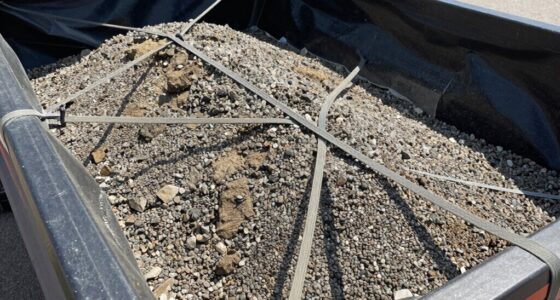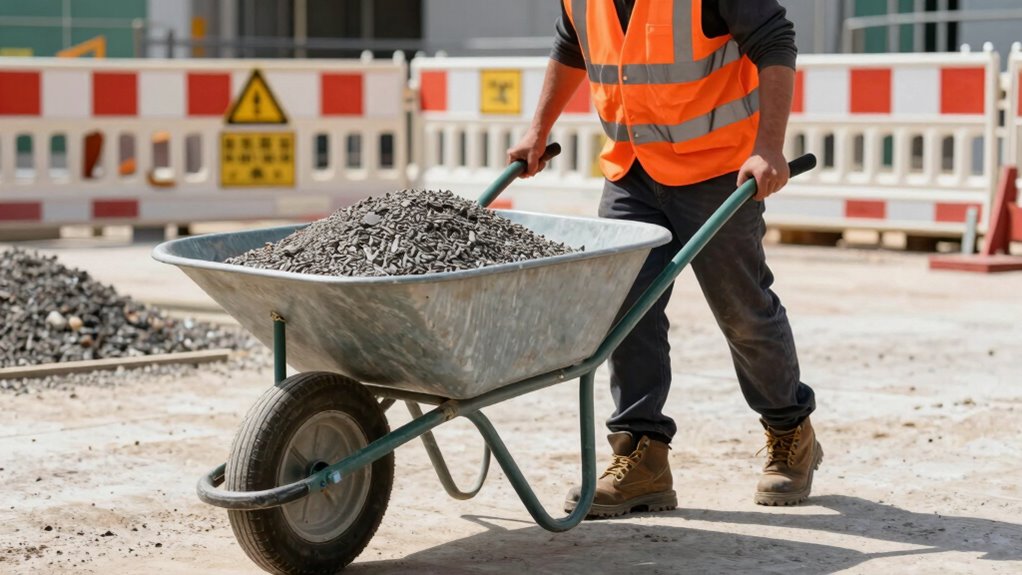

To stay safe when carrying loose materials, always use proper lifting techniques like lifting with your legs and distributing weight evenly. Wear protective gear such as gloves, steel-toed boots, and eye protection to prevent injuries. Keep your work area clean and free of obstacles to avoid trips and falls. Stay aware of your surroundings and control your movements, especially on uneven ground. For more tips on how to work safely, continue exploring these key practices.

Get business pricing on garage and car supplies
- Business-only prices and quantity discounts
- Tax-exempt purchasing
- Multiple users, one account, clear invoices
Key Takeaways
- Use proper lifting techniques, such as lifting with your legs and avoiding overloading to prevent injuries and spills.
- Distribute weight evenly when carrying materials to maintain balance and reduce the risk of tipping.
- Wear appropriate personal protective equipment, including gloves and safety goggles, to safeguard against dust and debris.
- Clear pathways of obstacles and debris to prevent trips, slips, and falls while transporting loose materials.
- Ensure tools and containers are in good condition to facilitate safe handling and prevent accidental spills.
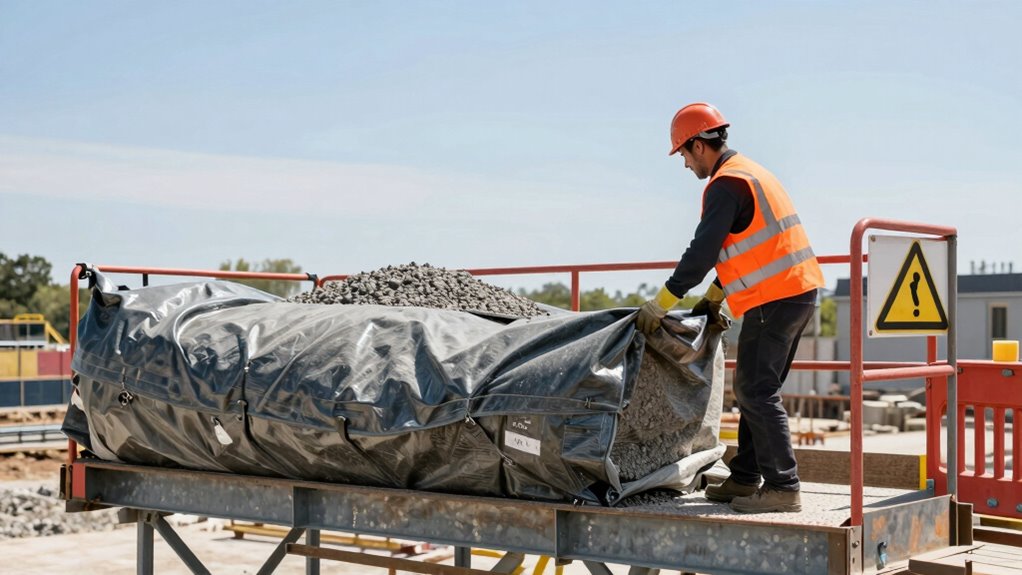
Carrying loose materials can pose significant safety risks if not handled properly. When you’re managing materials like gravel, sand, or other bulk items, the danger lies in slips, falls, and potential injuries from falling debris. To minimize these risks, it’s essential to wear appropriate protective gear. Hard hats protect your head from falling objects, while gloves prevent cuts and abrasions. Steel-toed boots provide stability and safeguard your feet if something drops. Safety goggles shield your eyes from dust and debris, which are common when handling loose materials. Wearing high-visibility clothing helps you stay seen by others in busy work areas, reducing the chances of accidents.
Always wear proper protective gear when handling loose materials to prevent injuries and ensure safety.
Equally important is mastering correct loading techniques. Properly loading materials ensures they stay secure during transport, reducing the chance of spillage or imbalance. When loading, distribute the weight evenly to prevent shifting that could cause slips or tipping. Use tools like shovels or scoops instead of bare hands to maintain control and reduce strain. Always lift with your legs, not your back, to avoid injuries. If you’re using a wheelbarrow or cart, ensure it’s not overloaded. Overloading makes handling difficult, increasing the risk of tipping over or losing control. When stacking loose materials, do so in stable, manageable piles rather than high, unstable stacks that could collapse unexpectedly. Additionally, understanding hazard prevention strategies can further reduce the risk of accidents when working with loose materials.
Handling loose materials also requires attention to your environment. Clear the area of obstacles that could trip you up or cause you to fall. Keep pathways free of debris and wet surfaces that could be slippery. When moving materials, take deliberate, controlled steps to maintain your balance. If you’re working on an incline or uneven ground, adjust your loading techniques to account for the terrain, and proceed with extra caution. Use barriers or warning signs if necessary to keep others away from your work zone.
Additionally, always inspect your equipment and protective gear before starting work. Worn-out gloves or damaged boots can compromise your safety. Ensuring your tools are in good condition makes handling materials easier and safer. Remember, safety isn’t just about reacting to hazards—it’s about proactively reducing risks through proper gear, techniques, and awareness. When you follow these simple but effective precautions, you create a safer environment for yourself and everyone around you, making every task not only easier but also safer.
As an affiliate, we earn on qualifying purchases.
Frequently Asked Questions
What Are the Common Causes of Accidents When Carrying Loose Materials?
You might experience accidents when carrying loose materials due to improper load securing or equipment failure. Overloading, uneven weight distribution, or unsecured loads can cause spills or falls. Additionally, neglecting proper equipment maintenance increases the risk of malfunction. Always guarantee loads are securely fastened, balanced, and that your equipment is well-maintained. These steps help prevent accidents, protect you, and promote a safer working environment.
How Do Weather Conditions Affect Safety During Material Transport?
Weather woes can worsen safety during material transport. Weather hazards like rain, snow, or fog make road conditions slick, slippery, and less visible. You might find yourself struggling with reduced traction, increased stopping distances, or skidding. Always check weather forecasts before traveling, adapt your driving to current conditions, and guarantee your vehicle’s tires and brakes are in top shape. Staying vigilant helps prevent mishaps caused by unpredictable weather and treacherous road conditions.
Are There Specific PPE Requirements for Carrying Loose Materials?
Yes, there are specific PPE requirements for carrying loose materials. You should wear personal protective equipment like gloves, safety goggles, and dust masks to protect against dust, debris, or splashes. Protective clothing such as coveralls or high-visibility vests also help prevent injuries and guarantee you’re seen. Always assess the material you’re handling to determine the appropriate PPE, and follow your workplace safety protocols to stay protected.
What Training Is Recommended for Workers Handling Loose Materials?
You should undergo thorough training on handling regulations and safety protocols, as studies show that proper training reduces accidents by up to 50%. This training should cover safe lifting techniques, proper use of PPE, and hazard identification. By actively participating, you’ll understand how to prevent spills, falls, and injuries. Regular refreshers guarantee you stay informed about safety updates, ultimately creating a safer work environment when handling loose materials.
How Can Technology Improve Safety in Transporting Loose Materials?
You can improve safety in transporting loose materials by utilizing technology like automated monitoring systems and smart sensors. These tools actively track load stability, detect leaks, or shifts in real-time, alerting you to potential hazards before accidents occur. By integrating this technology, you reduce risks, enhance response times, and guarantee safer handling. Embracing automation and smart sensors makes your transportation process more reliable and safer for everyone involved.
As an affiliate, we earn on qualifying purchases.
Conclusion
By prioritizing safety when carrying loose materials, you protect yourself from potential hazards and keep accidents at bay. It’s easy to overlook precautions in a rush, but the consequences can be severe. Think of safety gear and proper techniques as your armor in a battlefield—essential and empowering. Remember, rushing might save seconds, but it can cost you much more. Stay vigilant, and your careful approach will turn risky tasks into safer, smoother experiences.
As an affiliate, we earn on qualifying purchases.
As an affiliate, we earn on qualifying purchases.
Halloween Picks
halloween
As an affiliate, we earn on qualifying purchases.