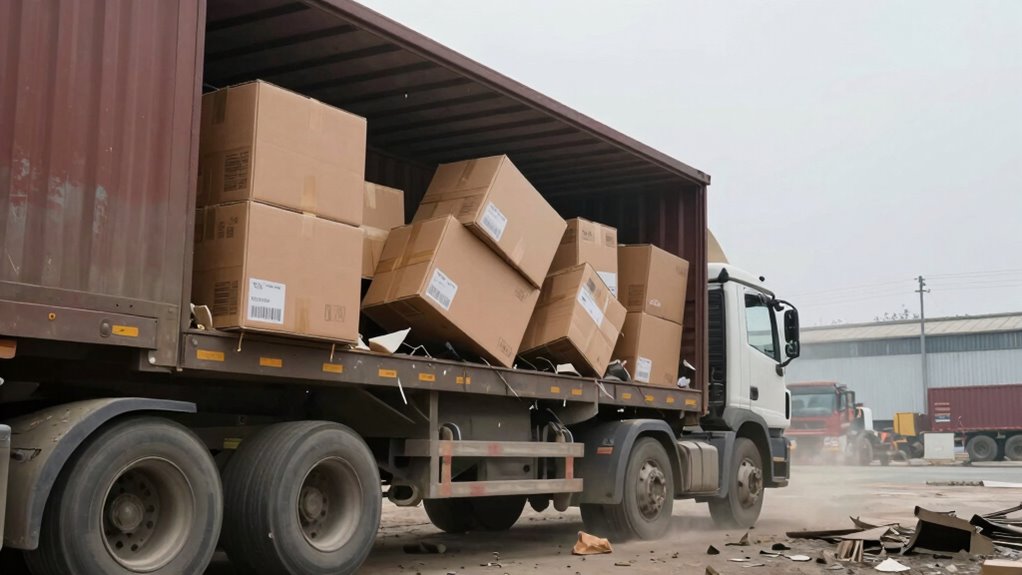

Improper loading causes accidents because shifting cargo can destabilize your vehicle, especially during sharp turns or sudden stops. When weight isn’t evenly distributed or cargo isn’t securely fastened, it increases the risk of rollovers, loss of control, or mechanical failures. Overloading the back or front can make handling difficult, leading to dangerous situations on the road. Understanding how proper load arrangement promotes safety is essential—keep going to discover more about preventing these risks.

Get business pricing on garage and car supplies
- Business-only prices and quantity discounts
- Tax-exempt purchasing
- Multiple users, one account, clear invoices
Key Takeaways
- Cargo shifting due to improper loading can cause vehicle instability and loss of control.
- Uneven weight distribution increases the risk of rollovers and mechanical failures.
- Unsecured cargo may fall or become projectiles, leading to accidents and injuries.
- Overloading or improper weight placement impairs steering, braking, and handling.
- Neglecting proper loading practices raises the likelihood of accidents and regulatory violations.

Improper loading is a common yet serious cause of accidents on the road, often overlooked until disaster strikes. When you load a vehicle, how you arrange and secure your cargo directly impacts cargo stability and overall safety. If your cargo isn’t properly balanced, it can shift unexpectedly during transit, leading to dangerous situations like rollovers or loss of control. Proper weight distribution is essential because uneven loads put extra strain on certain parts of your vehicle, increasing the risk of mechanical failure or accidents. You might think that simply piling everything in will do, but poor cargo stability can cause your load to shift, especially during sharp turns, sudden stops, or rough roads.
Improper loading causes accidents; proper balance and securement are vital for safety and vehicle stability.
You need to think about how weight is spread across your vehicle. If most of the load is concentrated at the back, your vehicle might become unstable, making steering difficult and increasing the likelihood of a rollover. Conversely, if too much weight is in the front or unevenly distributed, your tires may wear unevenly, and braking efficiency can decrease. Proper weight distribution helps keep your vehicle balanced, improving handling and reducing the chances of accidents. It’s not just about making sure the load is heavy enough; it’s about making sure it’s arranged in a way that maintains stability throughout your journey. Additionally, understanding cargo stability is crucial because it directly affects how safely your load can be transported. Ensuring your cargo is properly secured is key to preventing shifting and potential accidents. Incorporating industry best practices can further enhance safety and ensure compliance with regulations. Regularly reviewing your loading procedures can help identify potential hazards before they lead to incidents.
Cargo stability is another critical factor. When your cargo isn’t secured properly, it can shift or fall during transit, which can cause your vehicle to become unbalanced and difficult to control. Loose or unsecured items can also become projectiles in the event of a sudden stop or crash, increasing the risk of injury or damage. To prevent this, you should always use appropriate restraints, like straps or nets, and ensure that the load is evenly distributed and tightly secured. Properly loading your vehicle means considering how different types of cargo react to movement and ensuring everything is anchored to prevent shifting. Furthermore, regularly inspecting your securing methods is essential to maintain safety during your trip. Failing to do so can compromise the cargo security and lead to preventable accidents.
Ultimately, neglecting proper loading procedures can have severe consequences. It’s not just about following regulations; it’s about protecting yourself, other drivers, and pedestrians. By paying attention to cargo stability and weight distribution, you significantly reduce the risk of accidents caused by improper loading. Always take the time to load your vehicle carefully, double-check your securing methods, and be mindful of how your cargo affects your vehicle’s balance. Doing so can make the difference between a safe trip and a preventable tragedy.
As an affiliate, we earn on qualifying purchases.
Frequently Asked Questions
How Can I Identify if a Load Is Improperly Secured?
You can identify if a load is improperly secured by checking its load distribution—if it’s uneven or shifting, it’s a sign of improper securing. Use proper securing techniques, like straps and chains, to keep everything in place. Before moving, test the load’s stability by gently shifting or applying pressure. If anything moves or looks loose, re-secure it to prevent accidents and guarantee safety during transport.
What Are the Legal Consequences of Improper Loading?
You face severe legal consequences if you improperly load cargo, risking catastrophic accidents that could devastate lives. Your liability insurance might skyrocket or become invalid, leaving you financially exposed. Authorities could impose hefty fines or even suspend your license. Courts may hold you accountable for damages caused by cargo instability, making you personally liable. These consequences underline the importance of proper loading to protect everyone and guarantee compliance with safety regulations.
How Often Should Loading Equipment Be Inspected?
You should inspect loading equipment daily before each use to verify load stability and maintain equipment safety. Regular inspections help identify issues like worn-out parts or damage that could compromise stability during transport. Additionally, schedule thorough inspections as recommended by the manufacturer or regulatory standards, typically weekly or monthly. Consistent checks prevent accidents caused by equipment failure, protecting both personnel and cargo, and ensuring safe, efficient operations.
Are There Specific Industries More Prone to Improper Loading?
Certain industries, like construction, manufacturing, and shipping, are more prone to improper loading because of complex cargo stacking and challenging weight distribution. You need to pay close attention to how cargo is stacked and evenly distributed to prevent accidents. When these elements are ignored, it increases the risk of shifting loads or tipping, which can lead to serious injuries or equipment damage. Proper training and adherence to loading protocols are essential.
What Training Is Required for Proper Load Management?
You’d think proper load management is obvious, but it’s actually a skill you must learn. You need training in load stability and securing techniques to prevent accidents. This includes understanding weight distribution, using the right restraints, and checking load security regularly. By mastering these skills, you guarantee safety for everyone on the road or site. Ironically, what seems simple requires precise training to avoid disaster.
As an affiliate, we earn on qualifying purchases.
Conclusion
So, don’t overlook proper loading procedures. It might seem like a small detail, but improper loading can lead to serious accidents that could have been easily avoided. Some might think it’s just extra effort, but safety should always come first. Taking the time to load correctly not only protects you and others but also saves you from costly damages and legal trouble. Remember, a little caution goes a long way in preventing accidents.
cargo load distribution weight scale
As an affiliate, we earn on qualifying purchases.
As an affiliate, we earn on qualifying purchases.
As an affiliate, we earn on qualifying purchases.
Halloween Picks
halloween
As an affiliate, we earn on qualifying purchases.