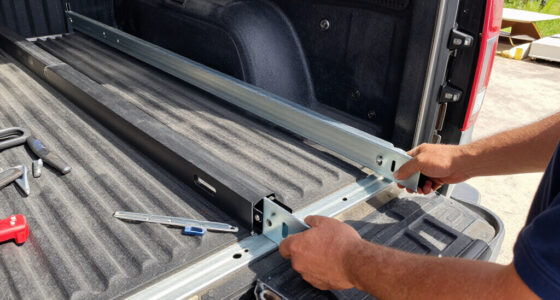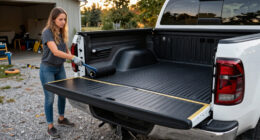

To safely carry long loads beyond the bed, you’ll want to use high-quality tie-downs and secure the load to your vehicle’s anchor points, rechecking tension before departure. Plan your route to avoid narrow or low-clearance areas, and display warning flags or lights if your load extends beyond legal limits. Regularly inspect your restraints during transit and guarantee the load stays balanced. If you keep these tips in mind, you’ll increase safety and compliance—more detailed steps can help you master this process.

Get business pricing on garage and car supplies
- Business-only prices and quantity discounts
- Tax-exempt purchasing
- Multiple users, one account, clear invoices
Key Takeaways
- Verify load length complies with legal overhang limits and attach visible warning flags or lights if exceeded.
- Use appropriate high-quality tie-downs and secure all load points to prevent shifting.
- Distribute weight evenly and double-check tension before departure and during transit.
- Plan the route to avoid narrow roads, low bridges, and areas with tight turns or obstacles.
- Regularly inspect and resecure the load, especially after rough terrain or stops.
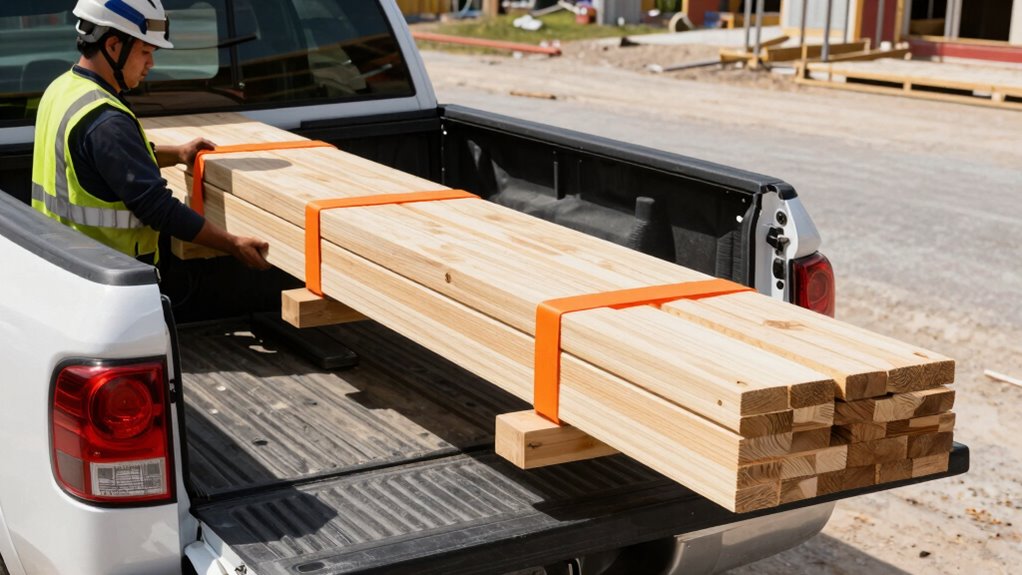
Transporting long loads beyond your truck bed can be risky if not done correctly, but with proper planning and safety measures, you can prevent accidents and damage. The key is ensuring your load is securely fastened and compliant with legal regulations. When extending your cargo past the bed, you must prioritize load securing to prevent shifting or falling during transit. Use high-quality tie-downs, straps, or chains designed to handle the weight and length of your load. Make sure they’re tightly secured to anchor points on your vehicle, and double-check their tension before hitting the road. Also, distribute the weight evenly across the truck bed to maintain balance and stability.
Securely fasten and evenly distribute long loads to ensure safe, stable transport beyond your truck bed.
Understanding and following legal regulations is essential when carrying long loads. Many jurisdictions specify maximum overhang lengths and require visible flags, lights, or reflective markers if your load extends beyond certain limits. For example, in some areas, a red or orange flag must be attached to the end of the load if it sticks out more than a specified distance. Additionally, if your load protrudes considerably, you might need to display warning lights or reflective tape, especially when driving at night or in low visibility conditions. Failing to adhere to these regulations can lead to fines, vehicle impoundment, or even accidents caused by other drivers not aware of your extended load. Proper load securing also involves understanding the parts of the load that need special attention to prevent shifting. Properly understanding load distribution can help maintain stability and safety during transport.
Before you set out, inspect your load securing equipment thoroughly. Check for any signs of wear, fraying, or damage and replace compromised straps or chains. Consider using additional safety features like netting or tarps to contain loose materials. It’s also wise to place warning flags or signs on the overhanging parts of your load, alerting other drivers to exercise caution. Remember to regularly stop and recheck your load during the journey, especially after driving over rough terrain or hitting bumps. Proper load securing isn’t just about compliance; it’s about ensuring everyone’s safety on the road.
Finally, plan your route carefully. Avoid narrow roads, sharp turns, or areas with low bridges that could pose clearance issues with your extended load. Communicate with local authorities if necessary, especially if your load exceeds standard legal limits. By combining secure load fastening, adherence to legal regulations, and vigilant inspection, you can transport long loads beyond your truck bed safely and confidently. Proper preparation and awareness are your best tools for preventing accidents and ensuring a smooth journey.
Products Worth Considering

Milwaukee M18 Impact Wrench BT 2863-20

Nextbase iQ 4K Smart HD Dash Cam Pro with 64GB microSD Card – Front and Rear View, 1440p, Smart Sense Parking, Emergency SOS, Roadwatch AI

VIOFO A229 Plus 2K Front and Rear Dash Cam with Dual STARVIS 2 Sensors and HDR
As an affiliate, we earn on qualifying purchases.
Frequently Asked Questions
Can I Carry Long Loads Without Special Permits?
You generally can’t carry long loads beyond the bed without special permits, as regulations vary by location. To stay compliant, plan your route carefully, avoiding restricted roads, and guarantee proper load balancing to prevent accidents. Always check local laws, and if your load extends beyond standard limits, obtain the necessary permits. This way, you ensure safety and avoid fines or penalties while transporting long loads.
What Are the Legal Length Limits for Overhanging Loads?
Like a tightrope walker balancing carefully, you must respect overhanging regulations. Typically, the legal length limit for overhanging loads is 3 feet beyond the trailer or bed. Beyond this, load extension restrictions kick in, requiring proper signage, flags, or lights. Always check local laws, as overhanging regulations vary by state or jurisdiction. Staying within these limits keeps you safe and avoids fines or accidents.
How Do Weather Conditions Affect Transporting Long Loads?
Weather conditions considerably impact transporting long loads. Rain, snow, or fog can reduce visibility and make roads slippery, increasing your risk of accidents. Wind can sway long loads, making them harder to control. To stay safe, prioritize weather safety by checking forecasts before setting out. Be prepared to make load adjustments, such as securing or reducing the load, and consider postponing your trip if conditions are severe.
Are There Specific Vehicle Requirements for Carrying Long Loads?
Vehicle requirements for carrying long loads demand diligent modifications and proper load distribution. You should equip your vehicle with extended beds, reinforced frames, and secure tie-downs. Ensuring balanced load distribution helps prevent accidents and maintains control. Vehicle modifications like trailer hitches or specialized beams are often necessary to support extended cargo. Always check local regulations to confirm your vehicle’s capacity and compliance, making every journey safe, secure, and smoothly sailing beyond standard vehicle limits.
How Should I Secure Long Loads for Safety During Transit?
To secure long loads safely, start by using sturdy load padding to prevent shifting or damage. Fasten the load tightly with appropriate straps, ensuring even tension. Use traffic signage, like warning flags or lights, to alert other drivers of the extended load. Regularly check the straps and padding during transit to maintain security. This approach keeps your load stable and safe for both you and other motorists.
Conclusion
By following these simple tips, you’ll master the art of safely transporting long loads beyond your truck bed. Remember, a little caution goes a long way—think of it as your secret weapon against accidents and chaos on the road. With proper planning and securement, you’re not just carrying a load; you’re conquering the highways like a true transportation hero. Stay vigilant, stay safe, and keep those long loads flying high without a single hiccup!