Most cargo fails during turns because of improper load management rather than braking forces. When loads aren’t properly balanced or secured, lateral forces from a turn make them slide or topple. Uneven load distribution causes the center of gravity to shift, increasing the risk of cargo movement. Securing cargo alone isn’t enough—how you load it matters. Understanding these factors helps keep your cargo safe. Keep exploring to learn more about preventing cargo failures during turns.
Key Takeaways
- Cargo shifts due to lateral forces exceeding securing capacity during sharp or quick turns.
- Improper load distribution causes uneven weight, increasing the likelihood of cargo movement during turns.
- Unsecured or poorly secured cargo is more prone to sliding or toppling when lateral forces act on it.
- High center of gravity loads amplify instability and movement during turns.
- Lack of proper load planning and balancing leads to increased risk of cargo failure during turns.

Have you ever wondered why cargo often shifts or falls during turns? It’s a common problem, and understanding the basics of cargo stability and load distribution can help you prevent it. When your vehicle makes a turn, the forces acting on the cargo change drastically. If your cargo isn’t properly secured or if the load isn’t evenly distributed, these forces can cause everything to shift. Proper load distribution is key to maintaining cargo stability, especially during sharp or quick turns. If the weight isn’t balanced correctly, the cargo’s center of gravity shifts, making it more likely to topple or slide.
Proper load distribution prevents cargo shifts and ensures safety during turns and transportation.
You need to think about how weight is spread inside your vehicle or container. When the load is uneven, the side with more weight exerts greater force during a turn, increasing the risk of movement. For example, if heavy items are loaded on one side without proper securing, they’ll want to lean or slide outward when you change direction. This isn’t just about safety; it’s also about compliance with transportation regulations that require secure and balanced loads. Proper load distribution involves placing heavier items low and centered, which lowers the overall center of gravity and enhances cargo stability. If the load is stacked haphazardly or unevenly, the risk of shift or fall rises significantly. Additionally, understanding cargo stability can help you anticipate how different load configurations behave during maneuvers.
Furthermore, load securing techniques are vital to prevent cargo movement, especially in dynamic driving conditions.
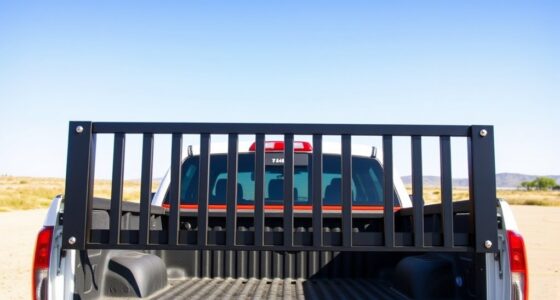
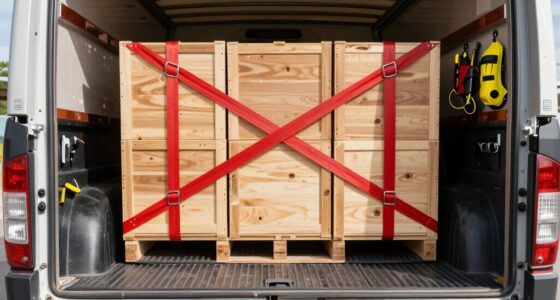
Securing your cargo with appropriate restraints is crucial. Tie-downs, straps, and barriers are your first line of defense against cargo movement. But even the best restraints won’t fully compensate if the load isn’t distributed properly. Think of it like balancing a scale—if one side is heavier, the entire system becomes unstable. When you’re planning your load, consider how the cargo will behave during turns, not just when stationary. Proper load distribution minimizes lateral forces that push cargo outward, helping everything stay in place. Remember, a well-balanced load allows your vehicle to turn smoothly without causing unnecessary stress on securing devices or risking cargo loss.
Ultimately, understanding and applying principles of cargo stability and load distribution protect your cargo and improve safety on the road. It’s not just about preventing damage; it’s also about ensuring your entire journey remains secure. When you pay attention to how your load is arranged and secured, you create a safer environment for yourself and everyone around you. Proper planning and secured cargo mean fewer surprises during turns, making your deliveries smoother and your trips safer. Additionally, proper load management is essential for maintaining compliance with transportation safety standards and avoiding legal issues.
cargo load straps
As an affiliate, we earn on qualifying purchases.
As an affiliate, we earn on qualifying purchases.
Frequently Asked Questions
How Can Cargo Be Securely Fastened for Turns?
To securely fasten cargo for turns, you should use cargo netting to keep items in place and prevent shifting. Make certain proper load distribution, placing heavier items on the bottom and toward the center of the vehicle, to maintain balance. Tighten all straps and ties, double-checking that everything is secure. Properly fastened cargo with netting and balanced load distribution minimizes movement, reducing the risk of cargo failure during turns.
Do Different Cargo Types Have Unique Stability Challenges?
Of course, different cargo types face unique stability challenges—who knew? Fragile items like glassware demand gentle handling, while heavy machinery needs secure mounting to prevent shifting. Liquid loads, with their liquid charm, can slosh around, testing your patience and restraint. You must adapt your securing techniques to each cargo type, ensuring their stability challenges are met head-on. Because, after all, a one-size-fits-all approach isn’t just inefficient—it’s a recipe for disaster.
What Role Does Vehicle Speed Play in Cargo Stability?
Speed influence markedly impacts cargo stability, as higher speeds increase momentum effects, making cargo more prone to shifting during turns. When you drive faster, the vehicle’s momentum pushes cargo outward, risking tipping or falling. To prevent this, you should reduce speed before turning, allowing for smoother, controlled maneuvers. Lower speeds help maintain stability, minimize cargo shift, and ensure safer transport, especially during sharp or unexpected turns.
Are There Specific Turn Angles That Increase Cargo Risk?
Certain turn angles, especially sharp or 90-degree turns, notably increase cargo risk because they challenge your load distribution and center of gravity. When you take such turns, the cargo shifts if not properly secured, risking tipping or falling. To minimize this, make sure your load is evenly distributed and your center of gravity remains low. Smooth, gradual turns help maintain stability and prevent cargo failure during transit.
How Does Cargo Placement Affect Its Likelihood to Shift?
A chain is only as strong as its weakest link. Your cargo’s placement impacts its likelihood to shift because proper load distribution and cargo uniformity keep everything stable. When you distribute weight evenly and secure items to prevent movement, you reduce the risk of shifting during turns. Proper placement guarantees cargo stays put, no matter how sharp the turn, helping you avoid accidents and damage.
vehicle cargo tie-downs
As an affiliate, we earn on qualifying purchases.
As an affiliate, we earn on qualifying purchases.
Conclusion
So, next time you’re securing cargo, ask yourself: are you accounting for the forces at play during turns? Remember, most cargo fails because of lateral forces, not braking. Properly distributing weight and using the right restraints can make all the difference. Don’t wait until it’s too late—are you confident your cargo can handle the sharpest turn? Staying vigilant and prepared keeps your load safe and your journey smooth.
cargo securement barriers
As an affiliate, we earn on qualifying purchases.
As an affiliate, we earn on qualifying purchases.
load balancing tools for trucks
As an affiliate, we earn on qualifying purchases.
As an affiliate, we earn on qualifying purchases.