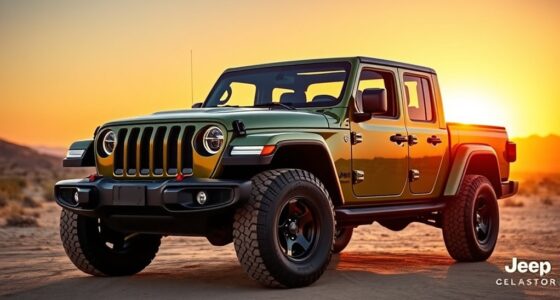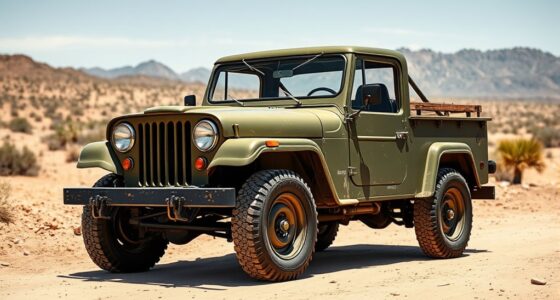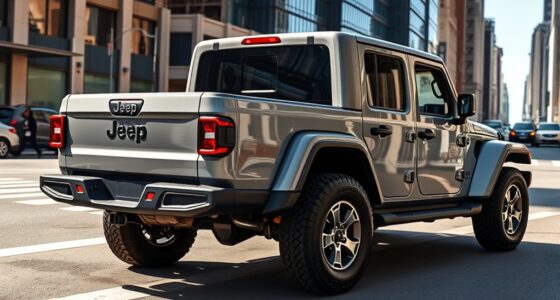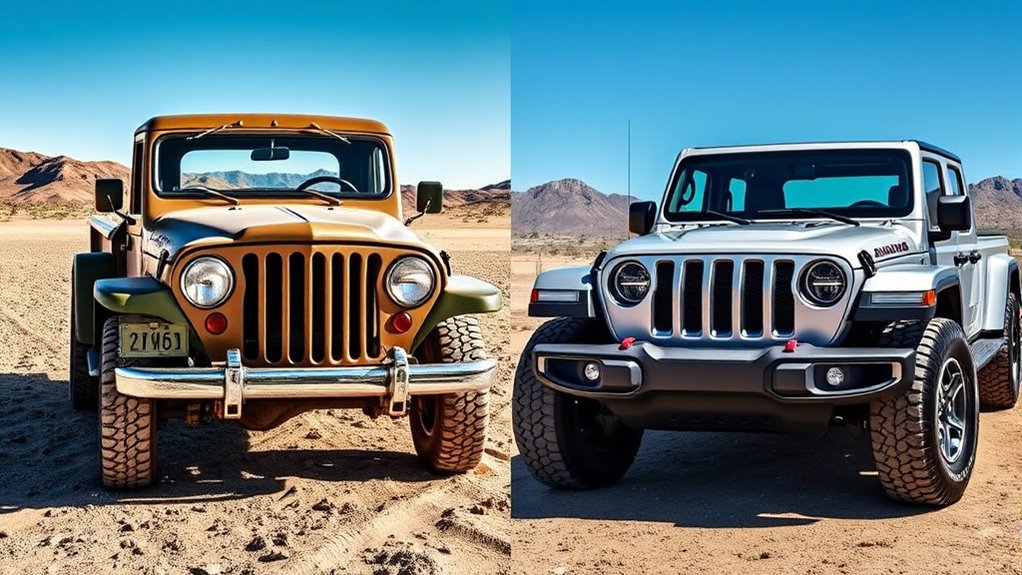

The history of Jeep trucks starts with the rugged Willys-Overland pickups introduced in 1947, pioneering four-wheel drive trucks long before others like Chevrolet and Ford adopted it. In the early 1960s, Kaiser Jeep launched the Gladiator, blending off-road capability with versatility. After ownership changes to AMC and later discontinuation in 1988, Jeep’s truck lineup evolved with smaller models. The full-size Jeep pickup was revived as the modern Gladiator in 2020, combining classic toughness with contemporary features. Explore further to uncover the full story.
Key Takeaways
- Jeep trucks began with the 1947 Willys-Overland Jeep pickup, pioneering four-wheel drive in trucks.
- The Kaiser Jeep Gladiator (1962-1963) succeeded Willys models, emphasizing durability and off-road capability.
- AMC’s acquisition in 1970 improved Jeep truck design with engine upgrades and stronger chassis.
- Market decline led to the discontinuation of full-size Jeep trucks by 1988, replaced by smaller models like the Jeep Comanche.
- Jeep revived the Gladiator in 2020, blending rugged off-road features with modern technology and versatility.
The Birth of the Willys-Overland Jeep Pickup (1947)
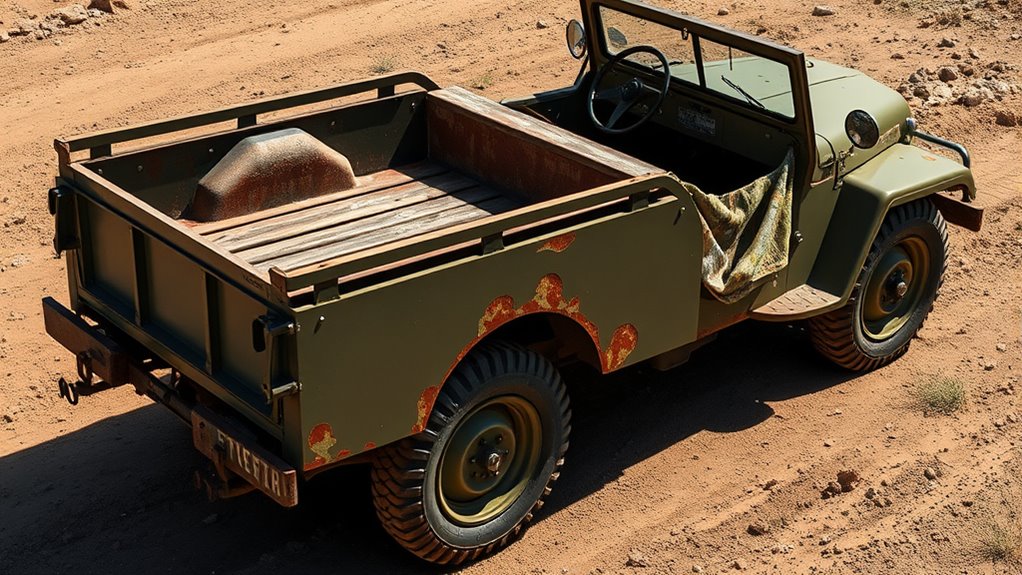
The Willys-Overland Jeep pickup was introduced in 1947, marking the beginning of Jeep’s long-standing reputation for rugged, versatile trucks. You now have a vehicle built for tough jobs, with a one-ton four-wheel-drive setup available as a pickup, platform stake, chassis cab, or bare chassis. The truck’s design prioritized durability, making it perfect for off-road adventures and demanding work environments. In 1949, Willys added a three-quarter ton two-wheel-drive model, broadening its appeal. Significantly, this Jeep pickup pioneered four-wheel drive in trucks, long before competitors like Chevy and Ford adopted it in the late 1950s. Its simple, robust engineering set the stage for decades of Jeep truck innovation, cementing its status as an all-purpose, dependable workhorse. Additionally, the introduction of four-wheel drive in trucks revolutionized off-road capabilities and vehicle versatility across the industry.
Early Innovations and Variations in the Willys Pickup Line

Early innovations in the Willys pickup line set it apart as a pioneering force in truck design. You notice how Willys introduced versatile configurations, like one-ton four-wheel drive trucks, soon after the line’s debut in 1947. These models offered options such as pickups, stake beds, and chassis cabs, giving you flexibility for work or recreation. Significantly, Willys’ four-wheel-drive became available before its competitors, setting a new standard. The table below highlights key innovations:
| Year | Innovation | Impact |
|---|---|---|
| 1949 | ¾-ton 2WD model | Expanded options for lighter duty use |
| 1952 | Willys F-head engine | Improved power and reliability |
| 1957 | 115-hp inline-six | Enhanced performance |
| 1960 | Variations in configurations | Increased customization |
These early steps built a foundation for future innovations in Jeep trucks. Additionally, the development of wave and wind technology contributed to the durability and robustness of these vehicles in diverse environments.
The Launch of the Kaiser Jeep Gladiator (1962-1963)
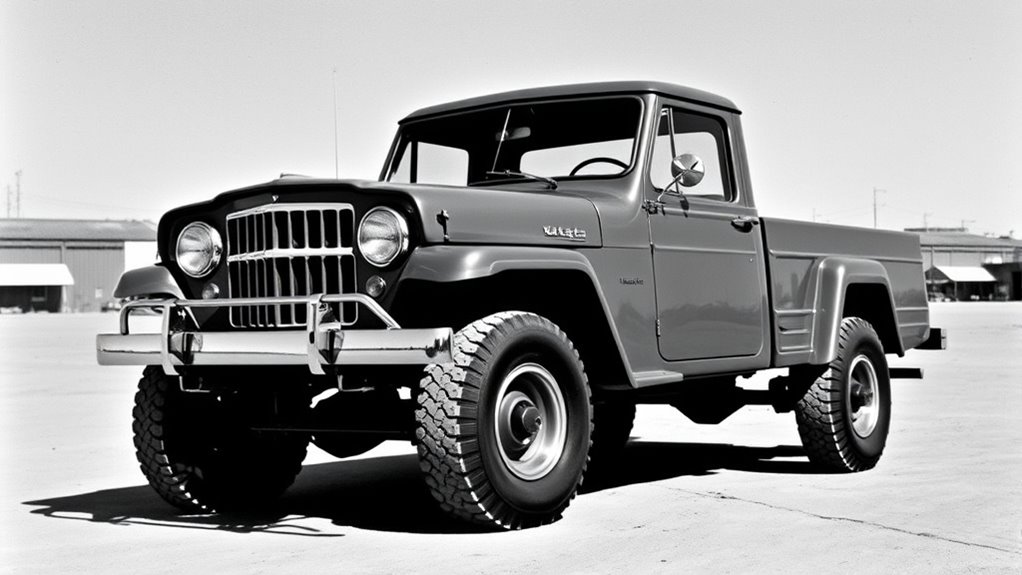
Amidst a period of brand shift, Kaiser Jeep introduced the Gladiator in 1962 as a successor to Willys’ truck lineup, aiming to combine rugged off-road capability with improved versatility. You’ll notice it was built on the frame of the Wagoneer station wagon, reflecting a conventional body-on-frame design. The Gladiator hit the market for the 1963 model year, marking Kaiser Jeep’s entry into a new era. Early development began around May 1960, with the first development mule in operation. During this transitional phase, the company aimed to retain Jeep’s legendary toughness while modernizing the truck’s appearance and functionality. The Gladiator’s launch represented a strategic move to appeal to both utility-focused users and those seeking a more refined driving experience.
Design Features and Capabilities of the Gladiator
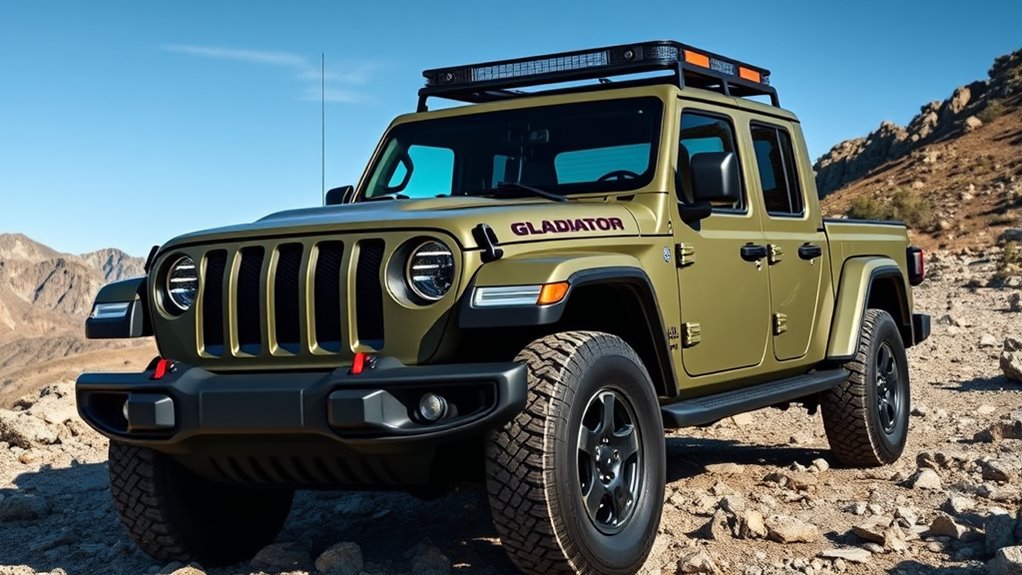
Built on the frame of the Wagoneer station wagon, the Gladiator features a conventional body-on-frame design that emphasizes durability and versatility. You’ll notice its robust construction, with a high ground clearance and a low roofline for better maneuverability. It offers impressive off-road capabilities thanks to Dana 44 axles and a Dana 20 transfer case. The three-piece detachable top transforms it into a convertible, perfect for open-air adventures. To help you visualize:
| Feature | Details |
|---|---|
| Frame | Wagoneer-based, durable, body-on-frame |
| Engine Options | Inline-six, AMC V8s |
| Axles | Dana 44 front and rear |
| Top Design | Detachable three-piece top |
| Ground Clearance | High, for off-road obstacles |
This blend of ruggedness and adaptability makes the Gladiator a capable, road-friendly truck.
Transition of Ownership: From Kaiser to AMC
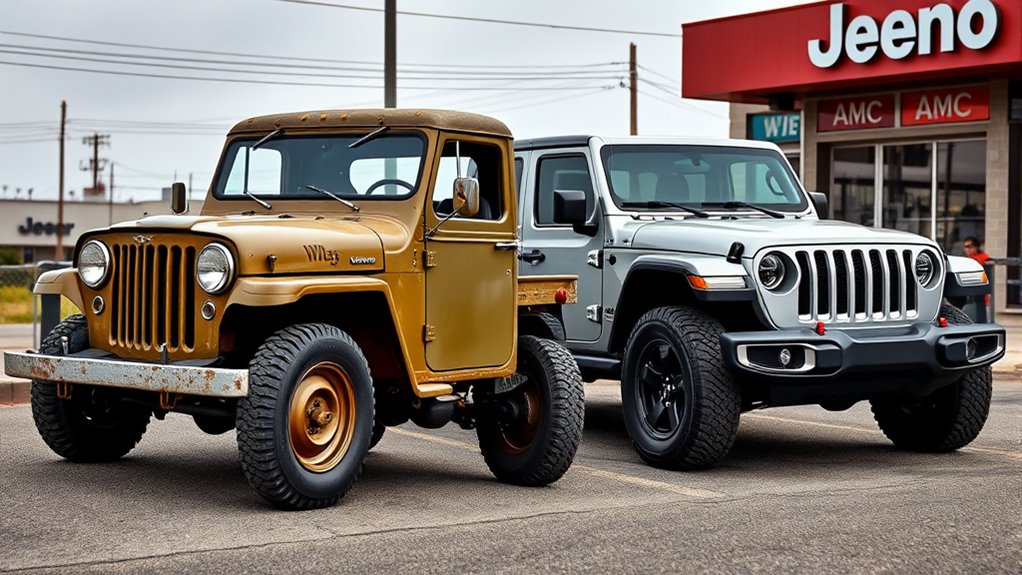
In 1970, Kaiser Jeep was acquired by American Motors Corporation (AMC), marking a significant shift in ownership. This change allowed Jeep trucks to benefit from AMC’s broader resources and engineering expertise. You’ll see how the transition led to notable updates and a wider market reach.
- AMC standardized Jeep truck engines, replacing Buick engines with AMC V8s
- The Jeep brand remained strong, maintaining its rugged reputation
- The Gladiator name was phased out in 1971, replaced by Jeep pickup models
- Ownership change introduced new styling cues, like the Wagoneer-inspired grille in 1970
- Production continued under AMC until Chrysler’s acquisition in 1987
This ownership shift set the stage for Jeep’s future evolution and expanded its off-road legacy.
Evolution of the J-Series and Its Impact on Jeep Trucks
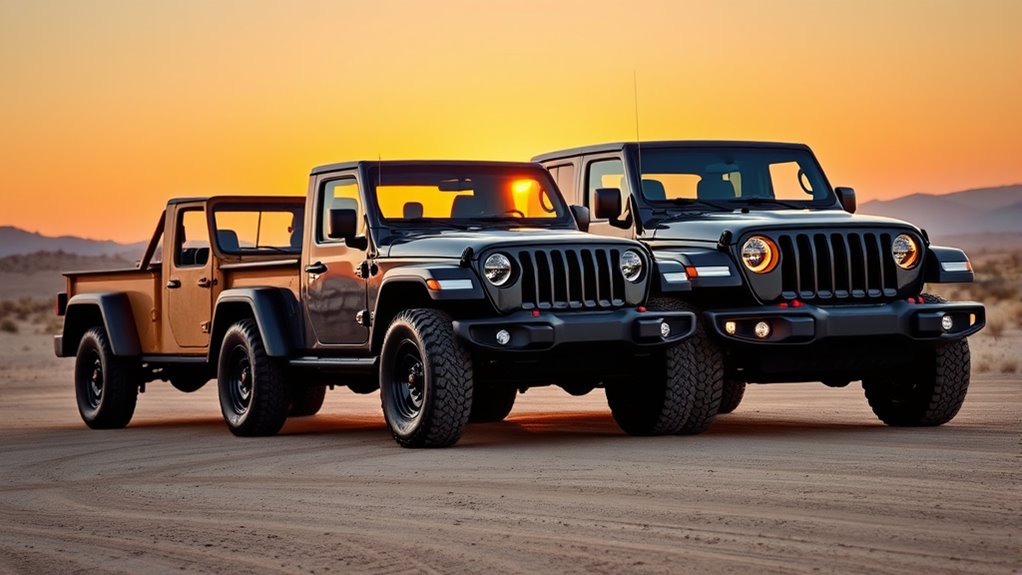
The evolution of the J-Series transformed Jeep trucks through key design and engineering updates that improved durability and versatility. Engine and performance upgrades, like the switch to AMC V8s, boosted power and reliability. These changes also enhanced off-road capability, making Jeep trucks more competitive in rugged terrains. Additionally, the incorporation of economic principles considerations in design helped optimize vehicle performance and customization options. The emphasis on cost efficiency in manufacturing processes contributed to more accessible pricing and wider adoption of Jeep trucks. Furthermore, these advancements reflected a broader understanding of market demand for durable and adaptable vehicles in various environments. Incorporating sustainable practices in manufacturing has also become increasingly important to meet environmental standards and consumer expectations.
Design and Engineering Changes
As the Jeep J-series evolved over its 26-year production run, significant design and engineering changes transformed its performance and versatility. You’ll notice updates like a more durable frame, improved suspension systems, and the switch to AMC engines, which boosted power and reliability. The introduction of heavier-duty axles, such as Dana 44s, enhanced off-road capability, while the redesign of the front grille gave it a modern look. The shift to a more rigid chassis increased payload capacity and towing strength. Additionally, the move to a standardized platform allowed easier customization and repairs, making the trucks more practical for various uses. Incorporating styling elements from contemporary designs also helped modernize the truck’s appearance. These engineering enhancements, driven by technological advancements, contributed to the truck’s reputation for durability and adaptability across different environments. Moreover, ongoing innovations in vehicle manufacturing techniques played a significant role in refining the overall quality and longevity of the Jeep trucks, ensuring they remain popular among enthusiasts and professionals alike.
Engine and Performance Upgrades
Throughout its 26-year production run, the Jeep J-series saw significant engine upgrades that boosted performance and solidified its reputation off-road. Initially equipped with Willys F-head four-cylinder engines, later models shifted to more powerful AMC V8s, including 360 and 401 cubic inch options. These upgrades increased horsepower and torque, enhancing towing capacity and overall performance. The move to AMC engines also improved reliability and simplified maintenance. Additionally, the transition to more modern engine designs reflected the evolution of automotive technology, which helped keep the Jeep trucks competitive in their segment. The integration of advanced fuel systems further improved efficiency and emissions standards. These fuel systems incorporated electronic controls, enabling better management of fuel delivery and combustion. Throughout the years, engine choices evolved to meet increasing demands for power, while the chassis received enhancements for durability. These performance upgrades allowed the J-series to excel in tough terrains and demanding work environments, making it a versatile and dependable truck that kept pace with industry advancements. The engine evolution played a crucial role in shaping the truck’s reputation for durability and off-road capability. Moreover, ongoing technological improvements ensured that Jeep trucks remained reliable and efficient in diverse conditions.
Off-Road Capability Enhancements
Off-road capability became a key focus as Jeep evolved its J-series trucks, with improvements in axles, suspension, and drivetrain design considerably boosting their performance on tough terrains. You’ll notice features like heavy-duty axles, upgraded suspensions, and advanced transfer cases that enhance traction and durability. These enhancements allow you to navigate challenging trails with confidence. Key off-road upgrades include:
- Dana 44 axles for increased strength
- Heavy-duty leaf springs for better articulation
- Locking differentials for improved traction
- High ground clearance with reinforced skid plates
- Advanced transfer case options for low-range gearing
These improvements made Jeep trucks more capable than many competitors, solidifying their reputation as reliable off-road performers and enabling you to conquer rough terrains with ease. Additionally, these enhancements contributed to the off-road performance that set Jeep trucks apart and made them iconic among adventure enthusiasts.
Powertrain Changes and Performance Improvements
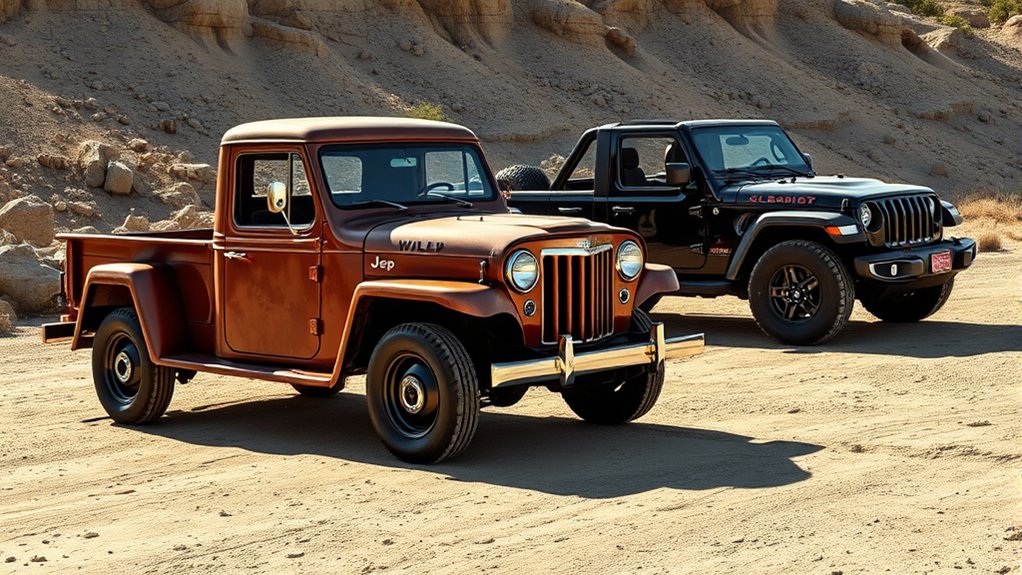
Powertrain improvements played a crucial role in enhancing the performance and versatility of Jeep trucks over the years. Early models used Willys’ F-head four-cylinder engines, offering reliable power for their time. In 1957, Jeep upgraded to an 115-hp inline-six engine, boosting performance and towing capacity. When Kaiser took over, they replaced the Buick engines with AMC V8s, including 360 and 401 cubic-inch options, markedly increasing horsepower and torque. These V8s improved acceleration and hauling ability, making the trucks more capable off-road and on the road. Throughout production, Jeep also introduced more advanced transfer cases and axle upgrades, further improving power distribution and durability. These powertrain changes allowed Jeep trucks to maintain rugged performance while adapting to evolving demands and driving conditions. Off-road capabilities continued to improve with each engine upgrade, ensuring the trucks met the needs of adventurous drivers and work applications alike.
The Decline of Full-Size Jeep Pickups (1988)
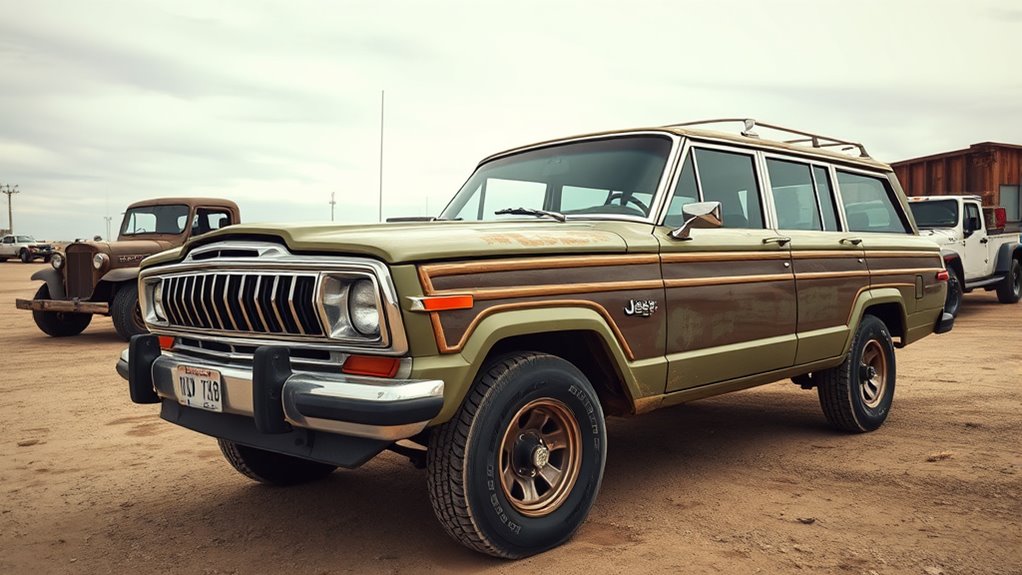
By 1988, the market dynamics and corporate strategies led Jeep to discontinue its full-size pickup trucks, marking the end of an era for these rugged vehicles. The decline was driven by shifting consumer preferences, increased competition, and a focus on smaller, more versatile models. Chrysler’s acquisition of Jeep in 1987 prompted a reevaluation of product lines, leading to the decision to end the full-size J-series trucks. This move aimed to streamline offerings and reduce overlap with other Chrysler brands. As a result, Jeep shifted its focus to the compact and more profitable models like the Comanche. Despite their rugged reputation, full-size Jeep pickups struggled to adapt to the changing market landscape, ultimately making their discontinuation inevitable.
- Market shift toward smaller trucks
- Increased competition from Ford, GM, and Dodge
- Chrysler’s strategic realignment
- Focus on off-road and sport-utility vehicles
- Decline in sales and profitability
The End of an Era: Discontinuation and the Rise of the Comanche
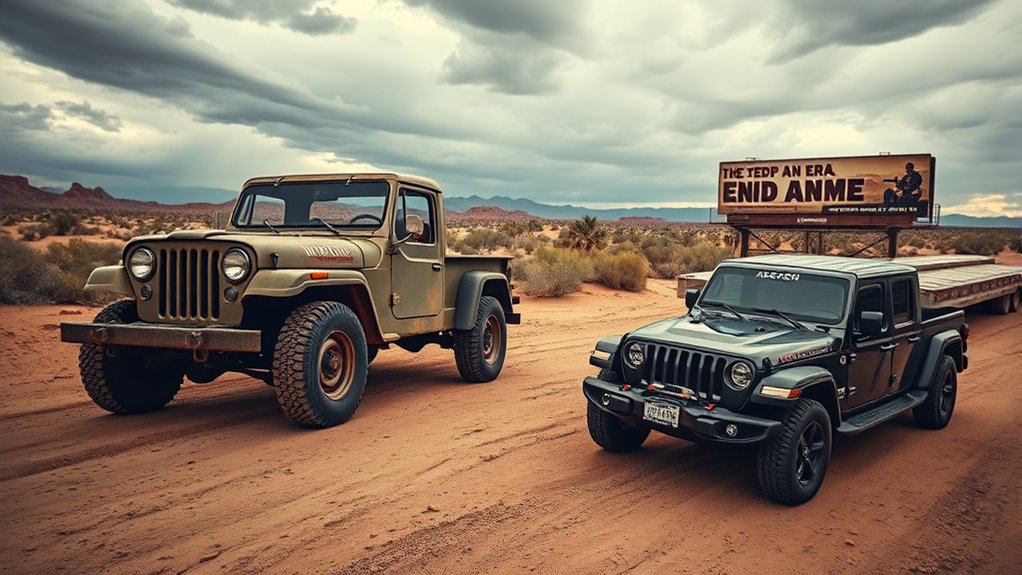
As the 1980s drew to a close, Jeep’s full-size pickups faced mounting challenges that ultimately led to their discontinuation. Market demands shifted toward smaller, more fuel-efficient vehicles, and stiff competition from other brands made it hard for Jeep to stay competitive. In 1988, Chrysler decided to end the full-size Gladiator-style trucks to avoid competing with Dodge’s lineup. However, Jeep wanted to keep a foothold in the pickup market, which led to the introduction of the Comanche in 1986. This compact pickup was based on the Cherokee platform, offering better fuel economy and maneuverability. The Comanche filled the gap left by the full-size trucks, but sales couldn’t sustain the segment long-term. Jeep’s focus shifted, and the era of full-size Jeep trucks came to a close.
The Modern Revival: Jeep Gladiator Reborn (2020)
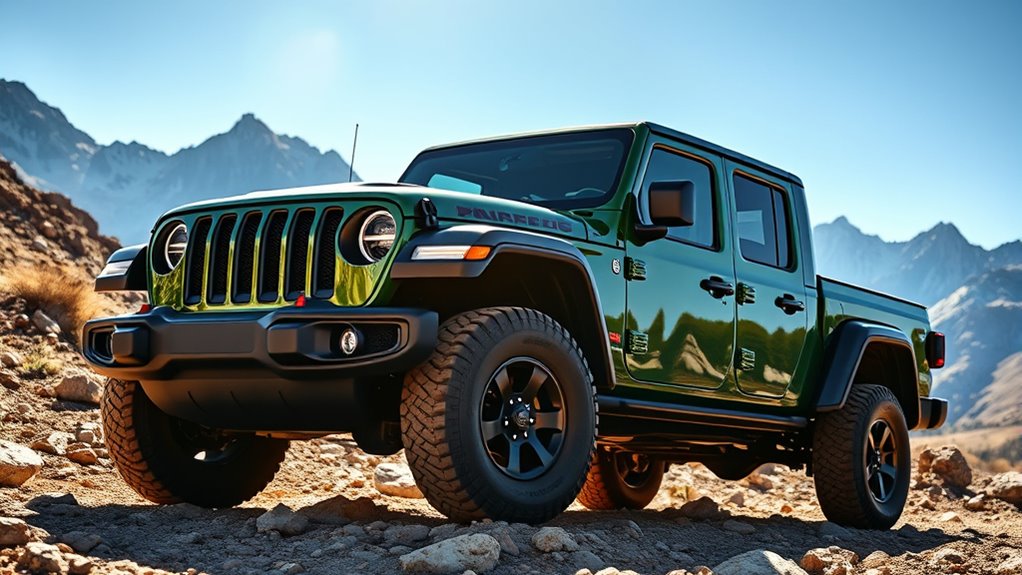
After nearly three decades without a full-size Jeep pickup, the brand made a bold return to the market in 2020 with the reintroduction of the Jeep Gladiator. This modern version combines legendary off-road capability with daily practicality, appealing to adventure enthusiasts and truck lovers alike. It features a rugged design, advanced technology, and versatile bed options, making it suitable for work and play. You’ll enjoy its impressive towing capacity and trail-ready features, such as skid plates and locking differentials. The Gladiator also offers a comfortable interior with modern amenities, blending tradition with innovation. Cultural significance is evident in its design, paying homage to Jeep’s storied history and commitment to off-road excellence. Classic Jeep styling with modern updates enhances its appeal, complemented by superior off-road features like Trail Rated status. Multiple engine choices, including a 3.6L V6 and 3.0L diesel, provide versatility for different needs. Removable top and doors allow for open-air driving experiences, and advanced safety and connectivity options ensure a modern, secure ride.
Frequently Asked Questions
What Distinguishes the Willys-Overland Jeep Pickup From Its Competitors?
You’ll notice the Willys-Overland Jeep pickup stands out because it offered four-wheel drive earlier than competitors, starting in 1947. Its rugged design, versatile configurations, and durable Willys F-head engine made it highly capable off-road and reliable for tough jobs. Unlike Chevy or Ford trucks, it prioritized off-road performance and simplicity, making it a favorite for those needing a tough, dependable vehicle that could handle challenging terrains and tasks.
How Did the Gladiator’s Design Influence Later Jeep Trucks?
You notice that the Gladiator’s design, with its durable frame, low roofline, and detachable top, influenced later Jeep trucks by emphasizing versatility and off-road capability. Its traditional body-on-frame construction set a standard for ruggedness, inspiring modern models like the 2020 Gladiator. The focus on maneuverability and adaptability helped shape subsequent Jeep pickups, making them more practical for both work and recreation, while maintaining the iconic Jeep appearance and off-road prowess.
Why Was the Jeep Gladiator Discontinued in 1988?
You see, Jeep discontinued the Gladiator in 1988 mainly because it faced stiff competition from Chrysler’s Dodge trucks. They wanted to avoid internal brand competition and streamline their lineup. Additionally, sales were declining, likely due to changing market preferences and increasing competition. By ending the full-size Gladiator-style pickup, Jeep shifted focus to smaller models like the Comanche, which continued until 1992, before the brand paused truck production altogether.
What Were the Key Performance Improvements Under AMC Ownership?
When AMC took the wheel, they turbocharged Jeep trucks like a seasoned driver hitting a new gear. You’d see improvements like stronger axles that grip the road and off-road terrain better, making your ride more rugged and reliable. Upgraded engines, including AMC V8s, offered more power and torque, transforming your truck into a true workhorse. These enhancements made Jeep trucks more capable, durable, and ready to conquer any adventure you threw their way.
How Does the Modern Jeep Gladiator Compare to Vintage Models?
You’ll find the modern Jeep Gladiator offers significant upgrades over vintage models, including advanced off-road technology, modern safety features, and improved comfort. Its engine options deliver better performance and fuel efficiency, while the towing capacity surpasses older models. The redesigned interior provides modern amenities, and its construction benefits from recent engineering innovations. Overall, the new Gladiator combines classic Jeep ruggedness with contemporary performance and convenience, making it a versatile and capable vehicle.
Conclusion
Think of Jeep trucks as a rugged river that’s carved its way through history—sometimes calm, sometimes wild, but always persistent. From the Willys pickup to the Gladiator’s rebirth, each chapter adds a new twist to the current’s flow. As you navigate this journey, remember that like a river, Jeep’s legacy keeps moving forward, shaping the landscape of adventure and capability for generations to come.