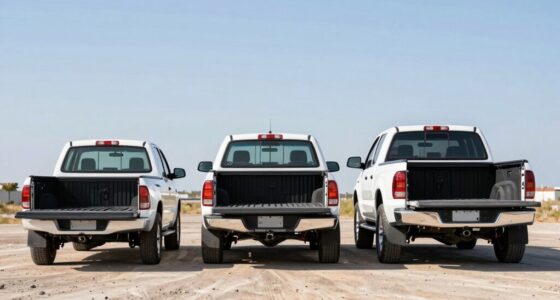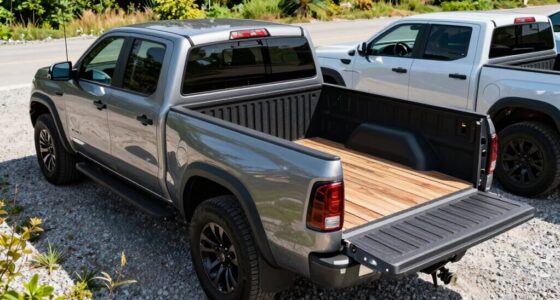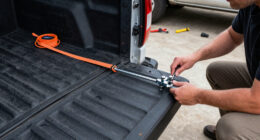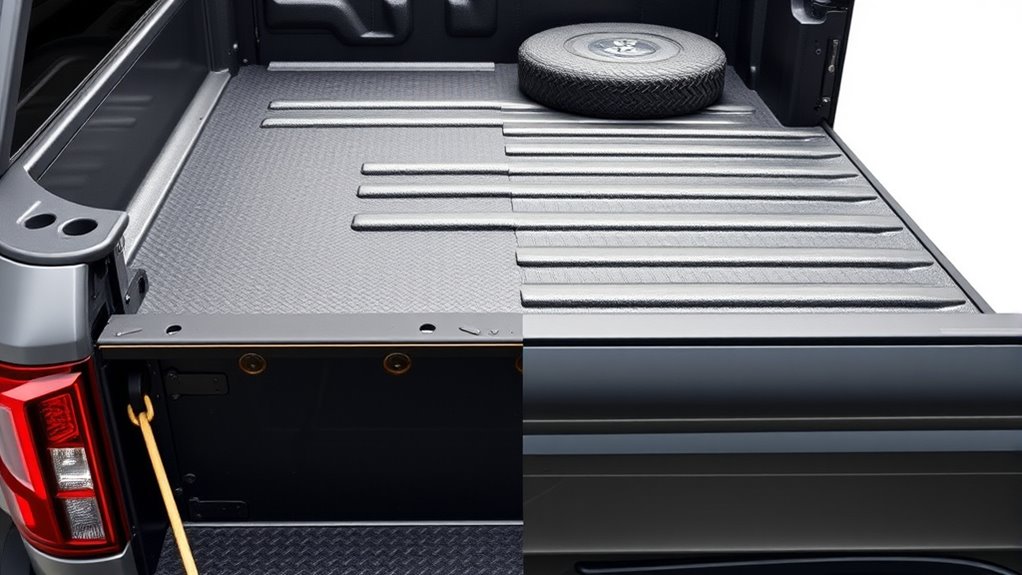

A work truck bed differs from a regular pickup bed because it’s built with stronger materials like reinforced steel or aluminum and features structural upgrades for heavy loads and tough environments. It often includes reinforced corners, crossmembers, and heavy-duty suspension systems to handle over 3,000 pounds. These beds also offer customization options, such as tool storage, mounting points, and industry-specific features. To discover how these elements work together, keep exploring what makes work truck beds stand out.

Get garage and car supplies delivered free — and shop member deals
- Fast, free delivery on millions of items
- Access to Prime Big Deal Days deals on October 6–7
- Prime Video, Amazon Music and more included
Key Takeaways
- Work truck beds are constructed with reinforced steel or aluminum for increased durability and resistance to damage and corrosion.
- They support higher load capacities, often exceeding 3,000 lbs, with reinforced frames and heavy-duty suspensions.
- Designed for industry-specific needs, they feature customizable options like tool storage, removable sides, and mounting points for accessories.
- Work truck beds are compatible with heavy-duty upfits such as service bodies, dump beds, and crane mounts due to standardized frame and mounting features.
- They incorporate additional reinforcements like crossmembers and reinforced corners, making them more robust than standard pickup beds.
As an affiliate, we earn on qualifying purchases.
Construction and Material Differences

Construction and materials are the key factors that set work truck beds apart from regular pickup beds. You’ll notice that work truck beds are built with reinforced steel or aluminum, making them much tougher and longer-lasting. These materials help resist dents, damage, and corrosion, especially when handling heavy loads regularly. In contrast, standard pickup beds typically use lighter gauge steel or composite materials, which are sufficient for everyday hauling but less durable under intense use. Work beds also feature additional crossmembers, frame supports, and reinforced corners to withstand tough conditions. This sturdy construction guarantees your work truck can handle demanding jobs, heavy equipment, and rough terrains without sacrificing integrity. The choice of rugged materials and reinforced design is what truly separates work truck beds from their lighter, more general-purpose counterparts. Durable construction methods are essential for ensuring longevity and performance in demanding environments.
As an affiliate, we earn on qualifying purchases.
Cargo Space and Customization Options
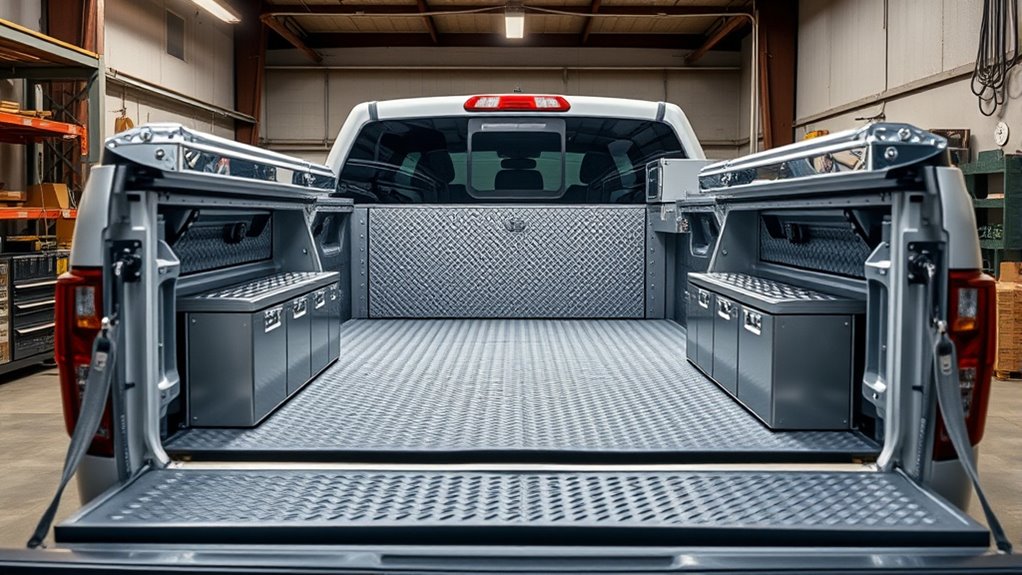
When it comes to cargo space and customization, work truck beds offer flexible load configurations that can be tailored to your specific needs. You’ll find features like additional storage compartments, removable sides, and specialized mounts that boost versatility. Depending on your industry, you can customize your bed with tools, racks, or other accessories to maximize efficiency. Additionally, understanding truck bed design can help you choose the most functional setup for your tasks.
Flexible Load Configurations
Have you ever wondered how different truck beds can adapt to your specific cargo needs? Work truck beds are designed for maximum flexibility, offering various configurations to suit your tasks. You can choose flatbeds for open, unobstructed cargo space or utility bodies with compartments for tools and equipment. Some beds feature removable sides or tailgates, making loading bulky or irregular items easier. Customizable tie-down points, stake pockets, and built-in tie rails help secure varied loads securely. Certain models include integrated racks or specialized mounts for ladders, cranes, or other gear. This versatility guarantees your truck can handle everything from construction materials to landscaping equipment, making it a truly adaptable platform for your unique workload. Innovative design features in modern work truck beds further enhance their adaptability, ensuring they meet the evolving needs of various industries.
Additional Storage Features
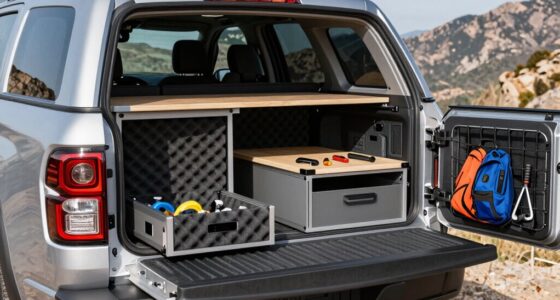
Work truck beds excel in providing a variety of storage options that enhance organization and efficiency. You’ll find features like built-in compartments, toolboxes, and stake pockets that allow you to secure and organize tools and equipment easily. Many work beds offer customizable options, such as removable sides or tailgates, giving you quick access to large or irregularly shaped loads. Some models include integrated lighting or ladder racks, boosting visibility and versatility. You can also add lockable storage boxes or specialized compartments tailored to your industry needs. These features maximize cargo capacity while keeping your gear protected from theft and the elements. Additionally, understanding the auditory processing aspects can help optimize communication on job sites where hearing safety is critical. Overall, the additional storage features in work truck beds are designed to streamline your workflow and adapt to demanding job site requirements.
Industry-Specific Customization
Industry-specific customization transforms cargo space to meet unique job site demands, allowing you to tailor your truck bed for maximum efficiency. You can choose from flatbeds, utility bodies, or skirted beds built with reinforced materials for durability. These options often include removable sides, specialized compartments, or built-in tool storage to suit your trade. Mounting points, pre-drilled holes, and accessory brackets make upfitting straightforward, enabling you to add ladder racks, cranes, or extra lighting easily. Custom configurations optimize cargo capacity and organization, so your equipment and materials stay secure and accessible. Whether you work in construction, agriculture, or utilities, this level of customization guarantees your truck bed aligns with your specific operational needs, boosting productivity and reducing downtime.
truck bed tool storage compartments
As an affiliate, we earn on qualifying purchases.
As an affiliate, we earn on qualifying purchases.
Mounting and Upfitting Compatibility
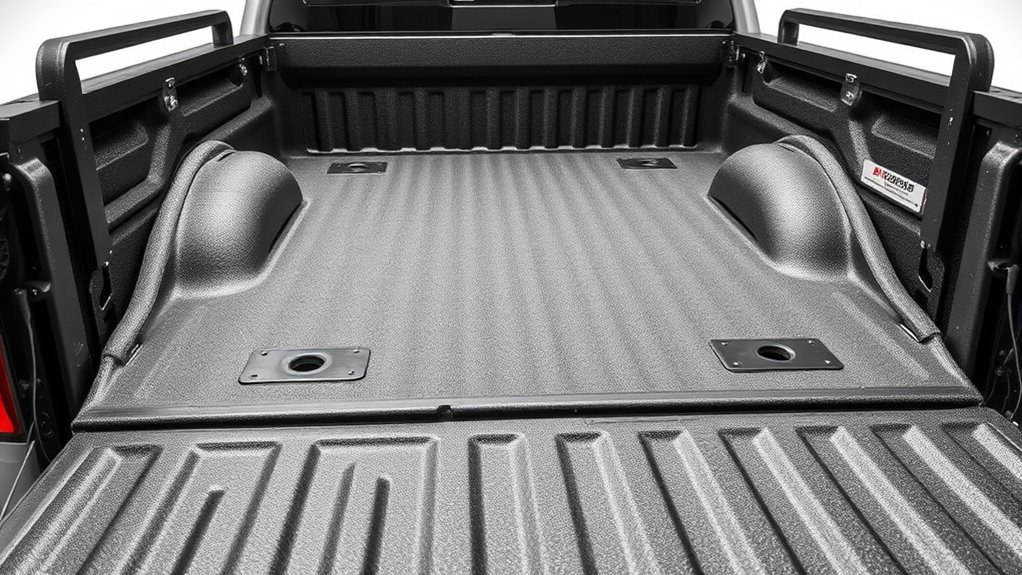
Mounting and upfitting compatibility play a crucial role in confirming your truck bed can be tailored to meet specific job requirements. Work truck beds are built with standardized frame rails, typically spaced 37 inches apart, making it easier to attach aftermarket bodies like service or dump beds. They often come with pre-drilled holes and dedicated mounting points for accessories such as toolboxes, ladder racks, or crane mounts. This design allows for quick, secure installation and customization. In contrast, regular pickup beds have narrower frames, usually 34 inches apart, limiting their compatibility with specialized equipment. The robust construction of work beds ensures they support heavy-duty upfits, enabling you to adapt your truck to various industry-specific tasks efficiently. Additionally, the use of essential oils in maintenance or enhancement processes can aid in preserving the integrity of the materials used in work truck beds.
customizable work truck bed accessories
As an affiliate, we earn on qualifying purchases.
As an affiliate, we earn on qualifying purchases.
Suspension and Load-Bearing Capacity

Your work truck’s suspension system is built with heavy-duty springs, like 4-6 leaf springs, to handle bigger loads. These trucks also feature reinforced axles and higher Gross Vehicle Weight ratings, ensuring they can support demanding tasks. In contrast, regular pickup beds have lighter suspensions optimized for comfort, limiting their load capacity. Additionally, nanotechnology advancements are beginning to influence the development of more durable and lightweight materials for truck beds, potentially enhancing load-bearing capabilities in future designs.
Heavy-duty Spring Systems
Heavy-duty spring systems are essential for supporting the substantial loads carried by work truck beds, especially when hauling heavy equipment or materials. These systems typically feature 4-6 leaf springs, providing increased strength and durability compared to standard suspensions. They help distribute weight evenly, reducing wear on the chassis and enhancing stability during heavy loads. Reinforced axles and higher GVWR ratings work together with these springs to maximize load capacity. You’ll notice that work trucks often have heavier, more robust suspension components designed for frequent heavy-duty use and rough terrain. This setup ensures your vehicle can handle demanding jobs without compromising ride quality or safety. Without heavy-duty springs, your truck wouldn’t be able to support the demanding tasks that make work truck beds essential. High load capacities are a key factor in maintaining vehicle performance under tough conditions.
Higher Gross Vehicle Weight
Higher gross vehicle weight (GVW) is a key factor that distinguishes work truck beds from standard pickups. This increased GVW signifies your vehicle can handle heavier loads without compromising safety or performance. Work trucks are equipped with heavy-duty suspensions, often with 4 to 6 leaf springs, to support frequent, substantial cargo. Their reinforced frames, axles, and chassis allow for load capacities that can surpass 3,000 pounds. Unlike regular pickups, which are optimized for comfort and lighter hauling, work trucks prioritize durability and strength. This setup ensures your vehicle remains stable and reliable under demanding conditions. The higher GVW also means you can carry more equipment and materials, making your work more efficient and less limited by weight restrictions. heavy-duty suspensions are essential components that enable these trucks to manage increased loads effectively.
Reinforced Axle Design
Reinforced axle design is vital for supporting the increased load-bearing demands of work truck beds. These axles are built with heavier-duty components, such as thicker tubes and stronger bearings, to handle frequent heavy loads and rough terrain. You’ll notice they often feature reinforced housings and upgraded suspension mounting points, which help distribute weight more effectively. This design provides increased durability and stability, reducing the risk of axle failure under stress. Work trucks typically pair these axles with heavy-duty suspensions, like 4-6 leaf springs, to maximize capacity. With higher Gross Vehicle Weight Ratings (GVWR), reinforced axles ensure your truck can carry and tow larger loads reliably, making them indispensable for intensive work environments where durability and load capacity are non-negotiable.
Bed Styles and Practical Features

When choosing between work truck beds and regular pickup beds, the variety of styles and practical features plays a key role in meeting your specific needs. Work truck beds come in flatbeds, utility bodies, and skirted designs, each tailored for heavy-duty tasks and added storage. These beds often include stake pockets, tie-down points, and integrated lighting to enhance functionality. Regular pickup beds prioritize versatility and comfort, with simpler features suited for personal use. Here’s a quick comparison:
| Bed Style | Features | Industry Focus |
|---|---|---|
| Flatbed | Open space, customizable options | Construction, farming |
| Utility Body | Tool storage, compartments | Maintenance, landscaping |
| Skirted Bed | Extra enclosed storage | Utility, service work |
These styles help you optimize your work or personal tasks efficiently. Additionally, understanding the bed configuration options can help you select the best setup for your specific work environment.
Industry-Specific Uses and Applications
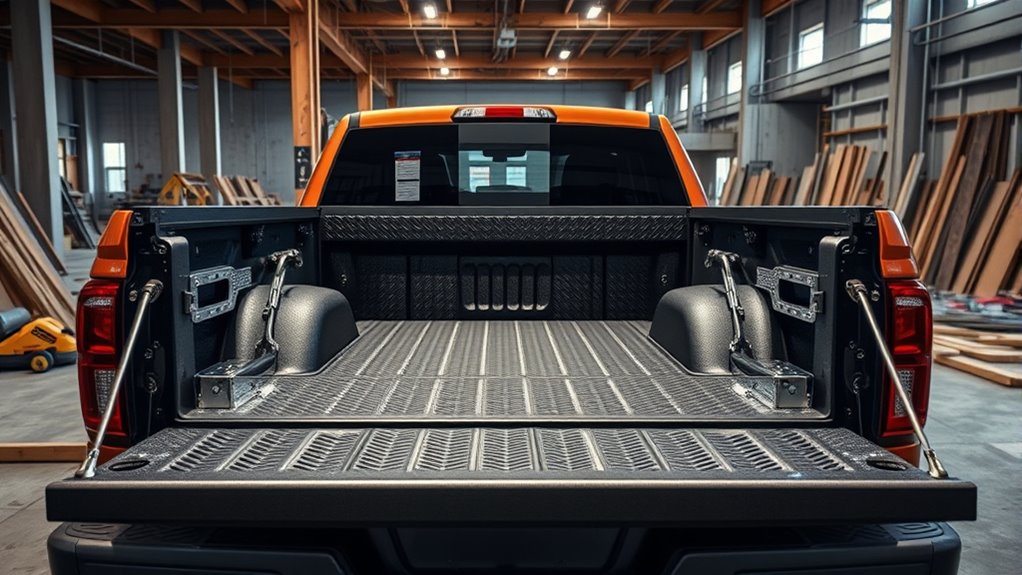
Industry-specific applications determine whether a work truck bed or a regular pickup bed best suits your needs. If you’re in construction, landscaping, or utility services, a work truck bed offers durability, specialized features, and maximum cargo capacity for heavy tools and equipment. These beds are designed to withstand tough conditions and frequent use, often customized with toolboxes, ladder racks, or crane mounts. Agriculture professionals benefit from flatbeds or utility bodies, which provide open space for equipment and supplies. Conversely, if your tasks involve light hauling, personal projects, or recreational use, a standard pickup bed offers flexibility and comfort. Choosing the right bed depends on your industry’s demands for durability, storage, and equipment compatibility, ensuring your truck supports your specific workload efficiently.
Durability and Reinforcements
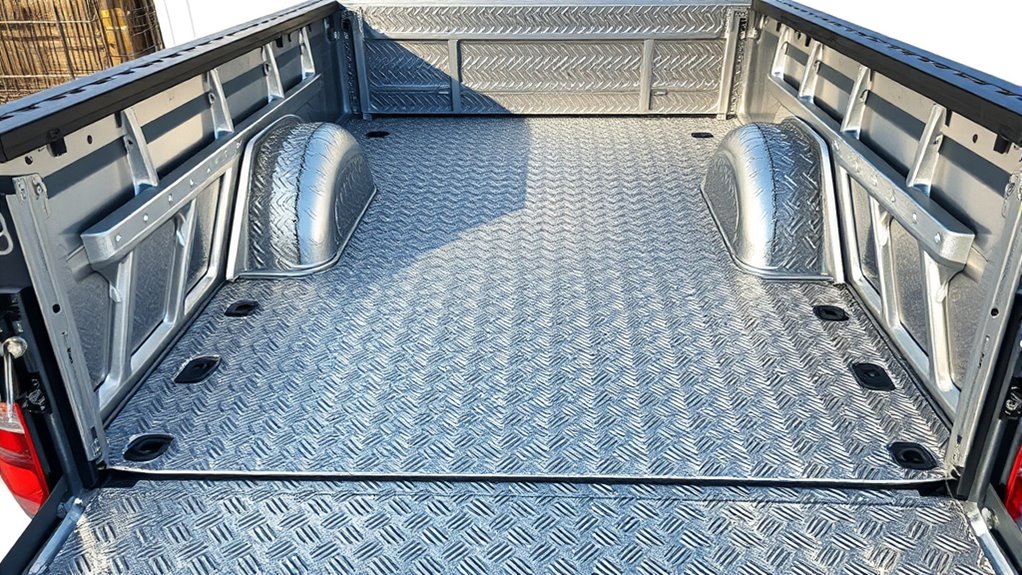
Work truck beds are built to withstand tough conditions by using stronger materials like reinforced steel or aluminum, which provide higher durability than standard pickup beds. These materials resist dents, corrosion, and heavy impacts, making them essential for demanding jobs. Additional reinforcements such as crossmembers, extra frame supports, and reinforced corners help distribute loads evenly and prevent structural damage. Edges and corners are often reinforced to resist wear from heavy tools and equipment. Unlike regular pickup beds, which use lighter materials, work truck beds are designed for longevity and resilience in harsh environments. This robust construction ensures your bed can handle repetitive heavy-duty use, reducing the risk of damage and avoiding costly repairs over time. Incorporating field‑of‑view considerations in the design can also enhance accessibility and durability in demanding situations.
Frequently Asked Questions
How Do Work Truck Beds Impact Overall Vehicle Fuel Efficiency?
Work truck beds can slightly reduce your vehicle’s fuel efficiency because they’re built with heavier materials like reinforced steel or aluminum, adding weight. Their durable, reinforced construction means more mass to move, especially when fully loaded. Additionally, their larger size and specialized features may cause increased aerodynamic drag. All these factors combined mean your vehicle works harder, leading to a modest decrease in fuel economy compared to standard pickup beds.
Can Regular Pickup Beds Be Upgraded to Match Work Truck Durability?
You can upgrade regular pickup beds to improve durability, but they won’t fully match a work truck bed’s strength. Adding heavy-duty liners, reinforcing the frame, and installing custom supports help, but the original construction materials and design limits remain. To truly match a work truck’s durability, you’d need a bed built with reinforced steel or aluminum, stronger frame supports, and features designed for heavy loads and harsh conditions.
Are Work Truck Beds More Expensive Than Standard Pickup Beds?
Think of work truck beds as the heavy-duty bulldozers of the pickup world—they cost more upfront because they’re built tougher and more durable. Yes, they’re generally more expensive than standard beds, thanks to reinforced materials, specialized features, and heavy-duty suspension systems. This investment pays off if you need a bed that can withstand the rigors of demanding industries, offering longevity and reliability where lighter, standard beds might falter under pressure.
What Are the Maintenance Requirements for Reinforced Work Truck Beds?
You need to regularly inspect your reinforced work truck bed for dents, cracks, or rust, especially around reinforced corners and edges. Keep it clean to prevent corrosion, and tighten any loose bolts or mounting points. Lubricate moving parts like tailgate hinges and tie-down points. Avoid overloading beyond the bed’s weight capacity, and promptly repair any damage to maintain its durability and guarantee safe, long-lasting performance.
How Do Warranty Terms Differ Between Work Truck Beds and Standard Pickup Beds?
You’ll find warranty terms for work truck beds tend to be more thorough, covering heavy-duty components, reinforcement, and specialized features, unlike standard pickup beds which often have limited coverage. Manufacturers usually offer longer warranties on work beds due to their durability and industrial use, ensuring you’re protected against repairs from heavy loads and wear. This extended coverage supports your work needs, providing peace of mind and reducing maintenance costs over time.
Conclusion
So, there you have it—your quick guide to distinguishing a work truck bed from a regular pickup. Because, obviously, when you’re hauling heavy-duty gear or braving the toughest jobs, a standard bed just won’t cut it. After all, who needs comfort or style when you can have reinforced materials, custom mounts, and industry-grade durability? It’s only your livelihood on the line—no big deal.
Halloween Picks
halloween
As an affiliate, we earn on qualifying purchases.