If you’re looking at a Jeep Gladiator, watch out for common issues like electrical glitches, transmission problems, and suspension wear. Reliability varies, with many owners reporting electrical failures, sluggish infotainment, and costly repairs. Off-road use can accelerate suspension and brake wear, affecting long-term durability. Interior comfort is often sacrificed for toughness, and some models face fuel system quirks. To get a full picture of challenges and how to handle them, there’s more you should know.
Key Takeaways
- Electrical system failures, including infotainment crashes and warning light issues, are common and can be costly to repair.
- Transmission and drivetrain problems, such as harsh shifting and overheating, may lead to expensive repairs if not addressed promptly.
- Off-road use accelerates suspension, brake, and steering component wear, increasing maintenance needs and repair costs.
- Interior quality is often subpar, with cheap materials, rough ride, and outdated infotainment systems affecting comfort and durability.
- Reliability ratings are below average, with frequent reports of electrical, engine, and transmission issues impacting long-term ownership.
Reliability Concerns and Owner Experiences

While the Jeep Gladiator offers impressive off-road capabilities, many owners report reliability concerns that can impact daily driving. You might notice frequent repairs, especially with electrical systems, engine, and transmission. Consumer Reports and J.D. Power rate its reliability below average, citing issues like infotainment failures, faulty sensors, and transmission jerks. Routine maintenance is comparable to other trucks, but major repairs—particularly electrical and engine-related—can be costly. Some owners find the ride rough and interior cramped, affecting comfort and value. The complexity of the vehicle’s design means you may face repeated visits to the shop. Despite its rugged appeal, these reliability concerns can cause frustration, especially if you rely on your Gladiator for daily use. Staying aware of these issues helps you prepare for potential repairs. Additionally, projector technology in vehicle dashboards can influence the overall user experience and vehicle integration. It’s also worth noting that outdoor activities like off-roading can put extra strain on certain components, increasing the likelihood of issues over time. Regular diagnostic checks are recommended to catch problems early and maintain optimal performance. Furthermore, understanding the vetted quality of parts and repairs can help mitigate some recurring issues and ensure better longevity. Being aware of common body component problems can also assist in early detection and preventive maintenance.
Common Electrical System Problems
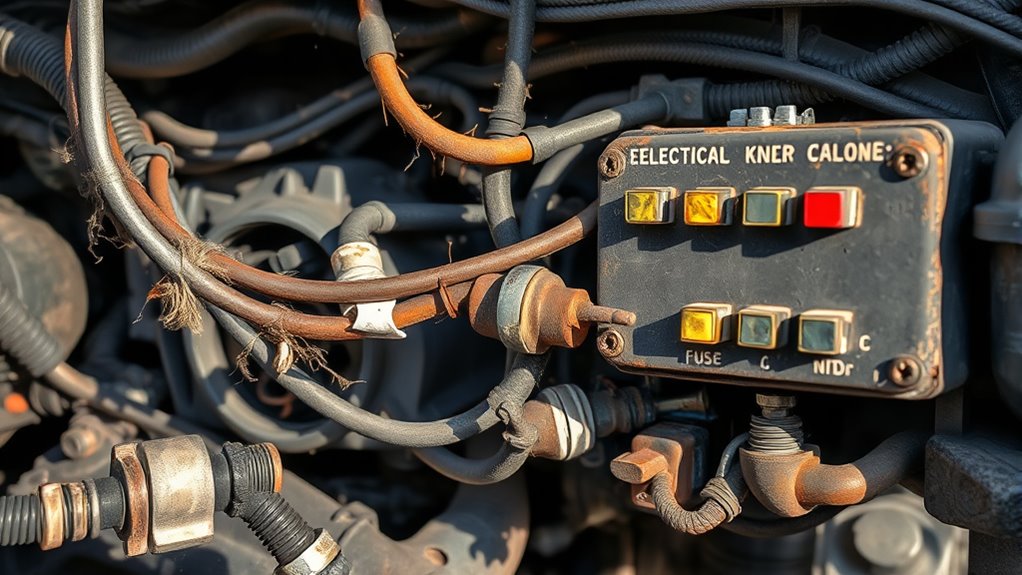
Electrical system problems are among the most common issues reported by Gladiator owners, often leading to frustrating failures and unpredictable behavior. You might experience infotainment crashes, Bluetooth disconnects, or warning lights flickering unexpectedly. You could also notice intermittent system resets, which can be quite perplexing for users. Power windows and keyless entry systems are prone to malfunctions, causing inconvenience. Fuses and relays can become loose or fail, especially in EcoDiesel models, triggering random failures. Over 60 technical bulletins address these glitches, but issues persist. Understanding electrical system complexities can help in diagnosing and preventing these issues effectively. Recognizing the role of vehicle electrical architecture can also provide insight into troubleshooting persistent problems. Additionally, wire harnesses may degrade over time, contributing to intermittent failures and system malfunctions. Regular inspections and maintenance of electrical components are essential to minimize these problems.
Transmission Troubles and Drivetrain Challenges
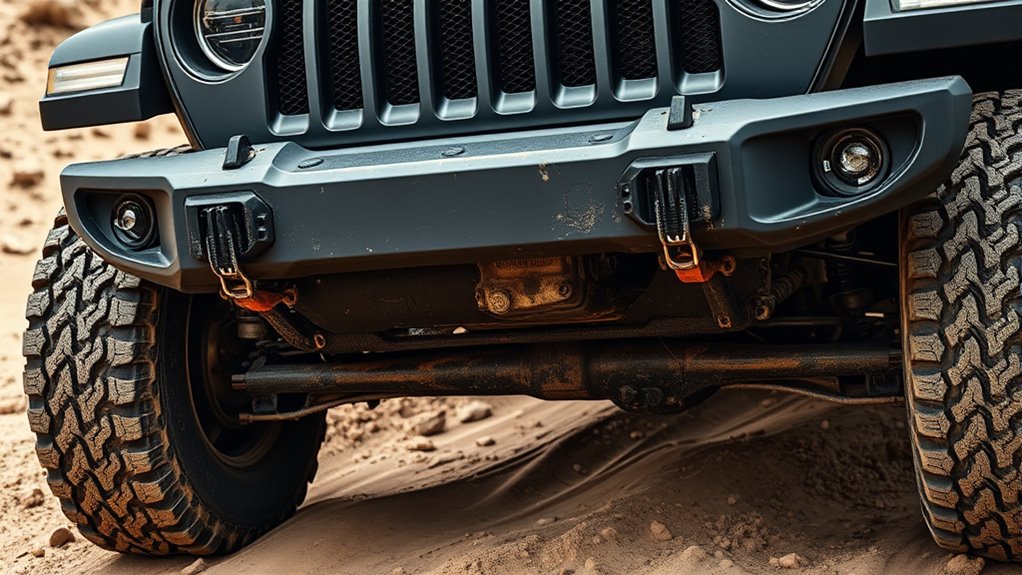
Transmission and drivetrain issues are among the most frequently reported concerns by Gladiator owners, often disrupting normal driving and off-road performance. You might notice slow or harsh shifting, especially during acceleration or deceleration. Overheating transmission fluid can lead to fluid leaks, causing the system to go into limp mode or fail altogether. Some owners experience jerking or shuddering during gear changes, which impacts driving comfort and safety. Additionally, recall repairs have addressed clutch pressure plate failures affecting drivability. The four-wheel-drive system can also develop electrical or mechanical faults, leading to vibration or engagement problems. In severe cases, drivetrain failures may require costly repairs or replacements, so staying alert to these symptoms can help you prevent major breakdowns. Regular maintenance and early diagnosis are key to avoiding serious drivetrain challenges. Proper wiring basics and electrical system checks can also help identify faults before they cause functional issues. Understanding diagnostic procedures can also assist in pinpointing specific problems more effectively. Addressing wear and tear through timely inspections can significantly extend the lifespan of your drivetrain components. Incorporating glycolic acid in regular maintenance routines may also help improve overall engine and transmission health by reducing buildup and corrosion.
Suspension and Steering Woes
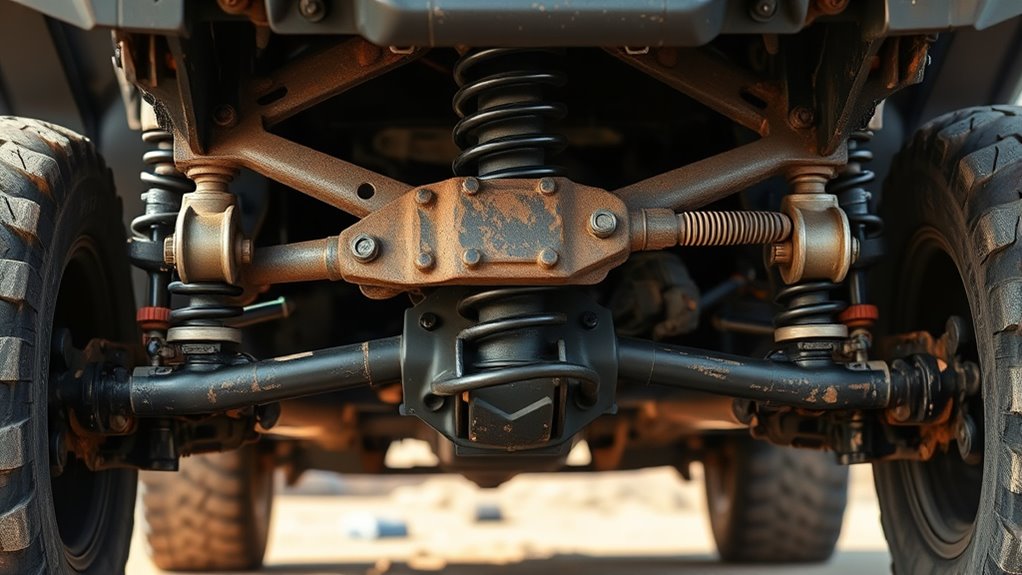
Suspension and steering issues are common concerns for Jeep Gladiator owners, especially those who take their trucks off-road frequently. Off-road driving accelerates wear on suspension bushings, shocks, struts, and ball joints, leading to clunking or rattling noises. The vehicle’s design prioritizes off-road capability, often resulting in a softer ride and increased body roll compared to competitors. Steering linkage problems can cause numb steering at high speeds and stability concerns, particularly when combined with the known death wobble phenomenon. This violent oscillation often stems from issues with the steering box and suspension alignment. Additionally, brake components like pads, rotors, and calipers may wear prematurely, creating vibrations and squeaking. If you notice these symptoms, it’s vital to address them early to maintain safety and ride quality. Regular inspections of suspension components and proper maintenance can help prevent costly repairs and ensure optimal performance. Being aware of common issues can help owners take proactive steps to extend their vehicle’s lifespan and safety. Incorporating advanced diagnostic tools can aid in early detection of suspension and steering problems, potentially saving money and preventing accidents. Moreover, understanding the wear patterns associated with off-road driving can help in planning timely replacements and avoiding unexpected failures. Utilizing modern diagnostic technologies allows for more precise assessments and quicker troubleshooting of suspension and steering concerns.
The Reality of Ride Comfort and Interior Quality

While the Jeep Gladiator offers impressive off-road capabilities, its ride comfort and interior quality often fall short of expectations. You might notice a rough ride, especially on uneven surfaces, due to its softer suspension tuned for off-road use. The interior materials feel cheap and lack refinement, which can diminish your driving experience. Here are four issues to watch out for:
The Gladiator’s off-road prowess comes with a rough ride and cheap interior materials.
- Harsh ride quality on rough terrain, leading to discomfort during daily driving. This is partly because the suspension prioritizes off-road performance over ride smoothness, which can be a concern for daily commuters seeking comfort. Additionally, the suspension tuning can lead to a less comfortable ride on paved roads. The vehicle’s design can also contribute to increased road noise, further impacting ride comfort. Moreover, the ride quality may be affected by the vehicle’s weight distribution and chassis design, which are optimized for off-road durability rather than comfort.
- Cramped interior space, making long trips less comfortable. The compact design can limit legroom and cargo capacity, affecting overall usability.
- Outdated infotainment system with slow response times and limited features. Many users find the technology lacks modern connectivity options, impacting convenience.
- Poor interior materials, with cheap plastics and inconsistent fit and finish. The use of low-cost materials can give the cabin a cheap feel and reduce overall perceived quality. Regular use can accelerate wear and tear due to lower-grade components. Furthermore, the interior’s ergonomics may not support long-term comfort for all drivers.
EcoDiesel Fuel System and Engine Issues

If you own or are considering the EcoDiesel Gladiator, you should be aware of some common engine issues. High-pressure fuel pump failures are a notable concern, often caused by diesel fuel incompatibility, which can lead to expensive repairs. Additionally, engine overheating during towing or hot weather can affect performance and durability.
High-Pressure Fuel Pump Failures
High-pressure fuel pump failures are a significant concern for Jeep Gladiator EcoDiesel owners, as these pumps are essential for delivering fuel at high pressure to the engine. When they fail, your vehicle can experience hard starting, stalling, or poor acceleration. You should watch out for these warning signs:
- Difficulty starting the engine or extended cranking time
- Loss of power during acceleration or towing
- Engine warning lights related to fuel or emissions
- Excessive noise from the fuel pump area
These issues often stem from the pump’s incompatibility with American diesel fuel, which reduces lubricity and causes premature wear. Multiple recalls and repairs have been issued for EcoDiesel models, so staying alert to these symptoms can help you avoid costly breakdowns.
Diesel Fuel Compatibility Issues
Jeep Gladiator EcoDiesel models face notable challenges related to diesel fuel compatibility that can impact engine performance and reliability. Many owners report that the EcoDiesel engine’s high-pressure fuel system, especially the CP4 pump, is vulnerable to poor-quality or incompatible diesel fuel. This can cause premature pump failures, leading to costly repairs and multiple recalls. Additionally, the diesel engine is prone to overheating under heavy towing or hot weather, partly due to restricted airflow at the front. Some owners also experience exhaust leaks and catalytic converter issues, which can further degrade performance. Fuel quality directly affects the EcoDiesel’s longevity, so using the recommended fuel is vital. Ignoring these compatibility issues increases the risk of engine damage and frequent, expensive repairs.
Engine Overheating Concerns
Engine overheating is a common concern among Gladiator EcoDiesel owners, especially during heavy towing or hot weather. If you notice your engine running hotter than normal, it’s likely due to specific issues.
Here are four key concerns to watch out for:
- CP4 high-pressure fuel pump failures that can cause engine knocking and overheating, often linked to fuel quality.
- Limited airflow to the radiator due to front-end design, which hampers cooling during strenuous use.
- Exhaust leaks and heat shield problems that increase engine bay temperatures, risking further damage.
- Electronic engine component failures that can disrupt cooling system sensors, leading to inaccurate temperature readings.
Stay alert for signs of overheating, and address issues promptly to avoid costly repairs.
Brake System Premature Wear and Maintenance

Premature wear of brake components is a common concern among Gladiator owners, often requiring more frequent maintenance than expected. You might notice your brake pads wearing down quickly, leading to increased replacement costs. Warped rotors are also frequent, causing vibrations and squealing when braking. Heavy off-road use or towing can accelerate brake wear, as the system works harder to stop the vehicle. Regular inspections are essential to catch issues early and prevent further damage. If you experience reduced braking performance or unusual noises, don’t delay repairs. Maintaining proper brake fluid levels and replacing fluid periodically helps preserve braking efficiency. Upgrading to high-quality brake pads or rotors can extend lifespan, but staying vigilant about wear signs is vital to guarantee safety and avoid costly repairs.
Off-Road Use and Wear-Related Repairs

When you take your Gladiator off-road, you’ll notice that suspension components like bushings, shocks, and ball joints wear faster and may develop clunking sounds. Steering and alignment issues can also crop up, leading to numb steering feel and stability concerns. Regular inspections and maintenance are essential to keep your truck performing safely in rugged conditions.
Suspension Wear and Damage
Off-road use markedly accelerates suspension wear on the Jeep Gladiator, leading to costly repairs and reduced ride quality. The vehicle’s design prioritizes off-road capability, but this means components like bushings, shocks, and ball joints endure extra stress. You’ll notice issues such as clunking noises, body roll, and a bumpier ride over time. To keep your Gladiator performing well, watch out for:
- Premature wear of suspension bushings and shocks
- Loose or worn ball joints affecting steering and stability
- Alignment problems causing uneven tire wear
- Increased rattling or knocking sounds during off-road driving
Regular inspections and timely replacements are essential to prevent more severe damage and maintain safe handling. Neglecting suspension maintenance can lead to expensive repairs and compromised off-road performance.
Steering and Alignment Issues
Steering and alignment issues are common concerns for Jeep Gladiator owners, especially after off-road adventures that put extra strain on the vehicle’s suspension components. Off-road use accelerates wear on steering linkages, bushings, and suspension parts, leading to loose steering, wandering, or uneven tire wear. Many owners report a numb or vague steering feel at higher speeds, making handling less responsive. The notorious death wobble is linked to worn steering components and misalignment, posing safety risks during highway driving. Additionally, frequent off-road driving can cause alignment shifts, resulting in pulling or uneven tire wear. Regular inspection of steering linkages, suspension bushings, and alignment adjustments are essential to maintain stability and safe handling in your Gladiator.
Infotainment System Limitations and Software Glitches

The Jeep Gladiator’s infotainment system is plagued by limitations and persistent software glitches that frustrate owners. These issues can disrupt daily driving and connectivity. Here are some common problems to watch out for:
The Gladiator’s infotainment system suffers from glitches and outdated performance, frustrating daily use and connectivity.
- Freezing and unresponsiveness during use
- Bluetooth connectivity drops unexpectedly
- Random crashes and system resets
- Slow response times when steering through menus
These glitches often require software updates or resets, but they can still persist after repairs. The system’s outdated interface and laggy performance make it difficult to operate smoothly, especially compared to newer infotainment platforms. Electrical gremlins, such as malfunctioning touchscreens or warning lights, compound the frustration. If you rely heavily on your infotainment for guidance, music, or hands-free calls, these limitations could impact your driving experience considerably.
Cost of Repairs and Long-Term Ownership Considerations
Owning a Jeep Gladiator can mean facing higher repair costs over time, especially with electrical and engine issues that often require expensive fixes. Routine maintenance for off-road use adds up quickly, as wear and tear on suspension and drivetrain parts demand frequent attention. Considering these long-term expenses helps you decide if the truck’s capabilities outweigh potential ownership costs.
Repair Costs Over Time
Long-term ownership of a Jeep Gladiator can be costly due to its frequent need for repairs and maintenance, especially as the vehicle ages. Expect costs to rise markedly with certain issues. Here are some key areas that impact your wallet:
- Electrical system repairs, including infotainment and wiring issues, can cost $500–$2,000 per incident.
- Transmission problems, such as overheating and clutch failures, often lead to $2,000–$4,000 repairs.
- Suspension wear, especially from off-road use, may require $1,000–$3,000 in shocks, bushings, and steering components.
- EcoDiesel fuel pump failures can cost over $8,000 in repairs, making long-term ownership particularly expensive for diesel models.
Maintenance for Off-Roading
Off-road adventures subject your Jeep Gladiator to increased stress on its suspension, drivetrain, and steering components, leading to higher maintenance costs over time. You’ll need to regularly inspect and replace worn bushings, shocks, and ball joints to maintain safe handling and ride quality. Off-roading accelerates wear on brake components and can cause suspension rattles or clunking noises. Long-term, expect more frequent repairs for steering linkage and suspension parts, especially if you push your truck hard. Here’s a quick look at potential costs:
| Maintenance Item | Estimated Cost |
|---|---|
| Suspension bushings | $200–$400 per axle |
| Brake pad replacement | $150–$300 per axle |
| Steering linkage | $300–$600 |
| Shocks and struts | $300–$700 for set |
Staying on top of these will help reduce surprises and keep your Gladiator performing off-road.
Frequently Asked Questions
How Often Do Electrical Issues Typically Occur in Jeep Gladiator Models?
Electrical issues in your Jeep Gladiator happen relatively often, especially across different models. You might experience infotainment system failures, Bluetooth connectivity problems, or warning light glitches frequently. Power window malfunctions and loose fuses are common too. These problems often result from wiring, relay faults, or software glitches, prompting multiple technical service bulletins. Expect electrical gremlins, especially in EcoDiesel models, and be prepared for occasional repairs to keep your truck running smoothly.
Are Transmission Failures Common After Certain Mileage Thresholds?
Sure, your Jeep Gladiator’s transmission might give up the ghost right around 25,000 to 30,000 miles—just in time for that big road trip. While some owners dodge failures, many report slow shifting, jerking, or overheating after hitting this mark. So, if you’re planning to push past those miles, brace yourself for potential costly repairs or recalls, because your trusty truck might just decide it’s had enough.
What Specific Suspension Parts Are Most Prone to Wear and Failure?
You should watch out for suspension bushings, shocks, struts, and ball joints, as these parts are most prone to wear and failure on your Jeep Gladiator. Off-road driving accelerates their deterioration, causing clunking, rattling, and reduced ride quality. Regular inspections are essential, especially after rugged use, to catch issues early. Replacing worn components promptly helps maintain stability, safety, and overall vehicle performance.
Does Interior Quality Decline Significantly Over Years of Ownership?
Over years of ownership, your interior quality can decline noticeably. For example, you might notice the soft-touch plastics becoming sticky or peeling, and the seats losing firmness. This deterioration often results from frequent exposure to sunlight, temperature fluctuations, and wear from daily use. As the materials degrade, your truck’s cabin feels cheaper, and the overall comfort diminishes. Regular care can slow this process, but some decline is inevitable with age.
How Severe Are Ecodiesel Fuel Pump Problems Compared to Gas Engine Issues?
EcoDiesel fuel pump problems are quite severe compared to gas engine issues. The high-pressure CP4 fuel pump tends to fail due to poor lubricity of American diesel, leading to costly repairs and multiple recalls. These failures often cause engine stalling, loss of power, and potential damage to the injection system. In contrast, gas engines generally face fewer reliability issues, making EcoDiesel problems more critical and expensive to fix.
Conclusion
While the Jeep Gladiator offers rugged adventure, beware of its reliability quirks and maintenance demands. It’s a vehicle built for off-road thrills, but those thrills come with potential electrical glitches and suspension wear. So, you get the excitement of exploration paired with the reality of repairs. Before you hit the trail, weigh the thrill against the hassle—because the Gladiator’s adventure is as demanding as it is rewarding.