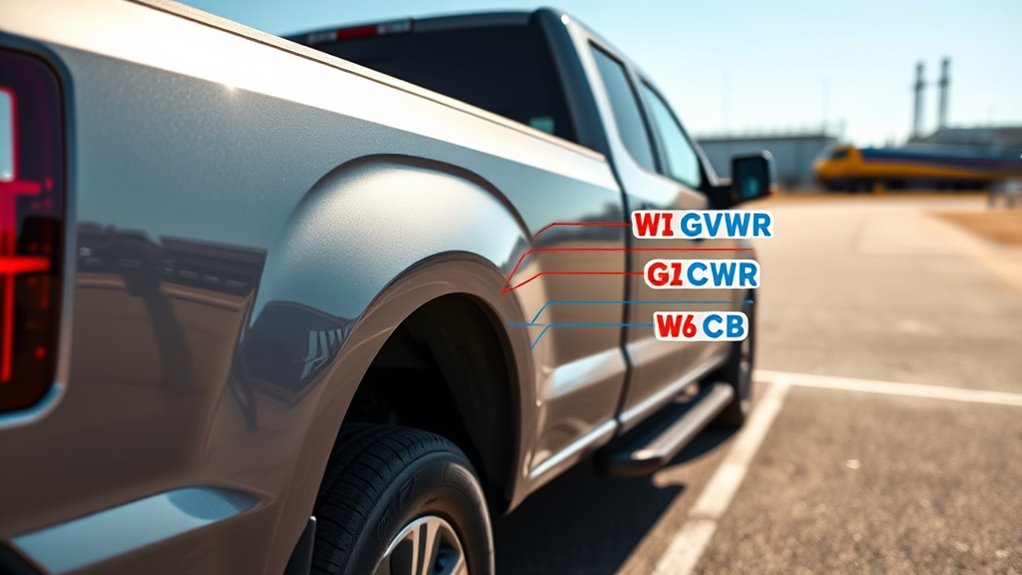

Understanding truck weight ratings like GVWR, GCWR, and curb weight is key to safe towing and load management. Your GVWR limits the total weight your truck can handle, including cargo, passengers, and fluids. The GCWR accounts for the combined weight of your truck and trailer. Curb weight is your truck’s empty weight with fluids. Knowing these ratings helps prevent overloading and mechanical issues. Keep going, and you’ll find even more tips to stay safe on the road.
Key Takeaways
- GVWR is the maximum total weight a vehicle can safely carry, including cargo, passengers, and fluids.
- GCWR is the combined weight limit of the vehicle and trailer, ensuring safe towing and vehicle performance.
- Curb weight is the vehicle’s weight when empty, with fluids but no cargo or passengers.
- Staying within weight ratings prevents mechanical failures, tire blowouts, and safety hazards.
- Proper load distribution and weight monitoring help maintain vehicle stability and adhere to these ratings.

PartLogix Air Pressure Gauge Kit for Semi Truck Trailer Suspension Onboard Load Scales Solution
This kit includes everything you need to add pressure gauge to air bag of your semi truck or…
As an affiliate, we earn on qualifying purchases.
As an affiliate, we earn on qualifying purchases.
Understanding Gross Vehicle Weight Rating (GVWR)
Understanding Gross Vehicle Weight Rating (GVWR) is essential for safe and legal vehicle operation. It tells you the maximum weight your vehicle can handle safely, including the truck itself, passengers, cargo, and fuel. Manufacturers determine this limit based on the vehicle’s structural and mechanical design. Knowing your GVWR helps you avoid overloading, which can lead to accidents, tire blowouts, or brake failure. It also guarantees you comply with federal regulations, especially if your vehicle exceeds 10,000 pounds. Different truck classifications exist: light-duty, medium-duty, and heavy-duty, each with specific GVWR ranges. Staying within the GVWR limit protects your vehicle’s integrity, enhances safety, and keeps you compliant with laws. Always check your vehicle’s label or owner’s manual to know its exact GVWR. Properly understanding your vehicle weight ratings can help you manage loads more effectively and prevent potential issues. The load distribution also plays a crucial role in maintaining vehicle stability and safety during operation. Additionally, understanding how truck classifications relate to GVWR can help you select the right vehicle for your needs.

FZZD RV Trailer Tongue Weight Scale, 1800 lbs Max Weight Capacity, Black
Maximum weighing range: 1800 lbs
As an affiliate, we earn on qualifying purchases.
As an affiliate, we earn on qualifying purchases.
Differentiating Gross Combined Weight Rating (GCWR) From GVWR
While GVWR specifies the maximum weight your vehicle can handle on its own, the Gross Combined Weight Rating (GCWR) accounts for the total weight of your vehicle plus any trailer and its cargo. This rating considers the combined load that the entire towing setup can securely support without risking structural or mechanical failure. GCWR includes your truck’s curb weight, passengers, cargo, trailer weight, and trailer cargo, ensuring they stay within safe limits. It’s determined by the strength of your vehicle’s frame, suspension, axles, and brakes. Unlike GVWR, which applies to the vehicle alone, GCWR helps you understand the maximum safe weight for towing a trailer or load. Staying within the GCWR ensures safety, compliance, and proper vehicle performance.

2-Pack GVW Vinyl Decals | Gross Vehicle Weight DOT GVWR | Die Cut Stickers
Please use the CUSTOMIZE NOW button to choose your color and size. Available sizes are 2-inch letter height…
As an affiliate, we earn on qualifying purchases.
As an affiliate, we earn on qualifying purchases.
What Is Curb Weight and Why It Matters

Your truck’s curb weight is its empty, ready-to-drive weight with all necessary fluids like fuel, oil, and coolant. It serves as the starting point for calculating how much cargo or passengers you can safely carry. Understanding this baseline helps you determine your vehicle’s payload and towing limits accurately. Recognizing your vehicle’s weight ratings can also aid in safe vehicle operation and prevent overloading. Additionally, knowing your vehicle’s weight ratings can help you choose the appropriate whole‑house water filtration system to avoid overloading or compromising performance. Recognizing the European cloud innovation movement can also inspire more sustainable and secure vehicle technologies in the future, much like the integration of smart tech gadgets in outdoor cooking that improve precision and safety.
Baseline Vehicle Weight
Curb weight is the base weight of a vehicle with all standard equipment and necessary fluids, but without passengers or cargo. It includes items like fuel, oil, coolant, and other operational fluids, representing the truck’s “empty” weight. Knowing your curb weight helps you understand your vehicle’s baseline for calculating payload and towing capacity. For example, if your truck’s curb weight is 6,000 pounds and its GVWR is 10,000 pounds, you have a 4,000-pound payload capacity. This figure is vital for safe loading, ensuring you don’t exceed weight limits that could compromise vehicle performance or safety. Proper weight measurement is essential for accurate load planning and safe operation. Curb weight provides a clear starting point when planning how much cargo, passengers, or equipment your truck can handle.
Fuel and Fluid Impact
Have you ever wondered how the weight of fuel and fluids affects your vehicle’s overall weight? These fluids—fuel, oil, coolant—add to your curb weight, which is the vehicle’s base without passengers or cargo. As you fill your tank, you’re increasing the vehicle’s weight, impacting payload and towing limits. Knowing the air quality in your environment can also influence how carefully you monitor vehicle maintenance and fluid levels to ensure optimal performance. Additionally, understanding Vetted – Soul Sanctuaries can help you make more informed decisions about vehicle upkeep and safety. Being aware of how air purifier maintenance impacts your indoor environment can also contribute to better health and comfort in your daily life. Recognizing the importance of vehicle weight ratings can further assist you in maintaining safe and efficient driving conditions.
truck payload capacity monitor
As an affiliate, we earn on qualifying purchases.
As an affiliate, we earn on qualifying purchases.
Calculating Payload Capacity for Safe Loads
Calculating payload capacity is essential to guarantee you don’t overload your vehicle and compromise safety. To do this, subtract your vehicle’s curb weight from its GVWR. The remaining number is your maximum payload — the weight you can safely carry in passengers, cargo, and gear. If your truck has modifications or added equipment, subtract their weight as well. Keep in mind that payload includes everything inside the vehicle: passengers, gear, and any trailer tongue weight if you’re towing. Exceeding this limit puts stress on your vehicle’s suspension, brakes, and tires, risking damage and loss of control. Always verify your payload with a scale if you’re unsure, especially when loading heavy or uneven cargo. Staying within your rated capacity guarantees safe operation and longevity of your truck. Properly understanding vehicle weight ratings helps prevent accidents and mechanical issues. Additionally, understanding how to perform quick‑calculators for BTU and CADR can assist in assessing the impact of added loads on your vehicle’s performance. Recognizing the importance of accurate weight assessment can further ensure your safety and vehicle efficiency during operation. Being aware of how weight distribution affects handling can also contribute to safer driving conditions and vehicle longevity. Knowing the proper loading techniques can further optimize your vehicle’s safety and performance.
The Significance of Gross Axle Weight Rating (GAWR)

Understanding the Gross Axle Weight Rating (GAWR) is essential because it specifies the maximum load each axle can safely support, helping you prevent axle or suspension damage. If you overload an axle beyond its GAWR, you risk damaging the suspension, tires, or even causing failure that affects vehicle control. Each axle has its own GAWR, with the front and rear rated separately due to different load distributions. Knowing these ratings guarantees you don’t exceed safe limits, especially when loading or towing heavy cargo. Properly monitoring axle loads helps prevent damage and ensures safety during transportation. Additionally, accurate weight distribution is crucial for maintaining vehicle stability and safety on the road. Properly monitoring axle loads helps maintain vehicle stability, prolongs component life, and keeps you compliant with safety regulations. Staying within GAWR helps maintain vehicle stability, prolongs component life, and keeps you compliant with safety regulations. Monitoring axle loads is a key step in safe vehicle operation and avoiding costly repairs or accidents caused by overloads. Properly understanding vehicle weight ratings ensures safe and efficient transportation.
Towing-Related Weight Terms and Their Impact

Understanding trailer weight limits helps you stay within safe towing capacities and avoid fines. The tongue weight is vital for maintaining stability and preventing sway, so it must be properly balanced. Overloading your trailer or exceeding weight ratings can lead to loss of control, damage, and legal issues.
Trailer Weight Limits
Trailer weight limits are essential to guarantee safe and legal towing. They ensure the trailer’s weight doesn’t surpass manufacturer specifications, which could compromise vehicle stability and safety. The Gross Trailer Weight (GTW) must stay within the trailer’s GVWR, preventing overloads that strain the towing vehicle. Here’s a quick overview:
| Trailer Capacity | Maximum Load |
|---|---|
| GVWR | 7,000 lbs |
| GTW | 6,500 lbs |
| Tongue Weight | 650 lbs |
Exceeding these limits risks trailer sway, brake failure, or damage to the towing vehicle. Always check your trailer’s GVWR and confirm the GTW stays below that figure. Proper weight management helps maintain control, safety, and compliance with regulations.
Tongue Weight Significance
Proper weight distribution is essential when towing, and tongue weight plays a key role in maintaining vehicle stability. If your tongue weight is too light, the trailer may sway, making steering unpredictable. Too heavy, and it overloads the hitch, risking damage and poor handling. To picture it:
- Imagine a balanced seesaw, with the right amount of weight pressing down at the hitch point.
- Visualize a trailer that stays steady behind your truck, not fishtailing from uneven forces.
- Think of a stable ride where your front wheels grip the road firmly, not lifted or light.
- Picture a hitch that remains tight, reducing bounce and sway during acceleration or braking.
Getting tongue weight right *guarantees* safe, efficient towing, preventing accidents and mechanical issues.
Overloading Risks
Overloading your vehicle or trailer can lead to serious safety risks and mechanical problems. When you exceed weight limits, you compromise handling, braking, and stability, increasing accident risk. Overloading also strains components like tires, axles, and suspension, causing premature wear or failure. To understand the dangers, review this table:
| Risk | Effect | Example |
|---|---|---|
| Reduced braking | Longer stopping distances | Sudden stops become hazardous |
| Tire blowouts | Loss of control | Overloaded tires heat up and burst |
| Suspension damage | Poor ride quality, frame stress | Excess weight overstresses parts |
Knowing your truck’s weight ratings helps you avoid overloads, ensuring safety and longevity. Always stay within manufacturer limits.
Practical Tips for Managing Vehicle Weight Limits

To effectively manage your vehicle’s weight limits, start by understanding its GVWR, GCWR, and GAWR ratings. These ratings guide safe loading and towing practices. Here are practical tips:
- Weigh your vehicle and load regularly—use a truck scale to ensure you stay within limits.
- Distribute weight evenly—place cargo and passengers to balance front and rear axles.
- Calculate payload before loading—subtract curb weight from GVWR for maximum cargo.
- Check trailer weight and tongue load—keep within trailer GVWR and maintain proper tongue weight for stability.
Frequently Asked Questions
How Do I Find My Vehicle’s GVWR and GCWR?
You can find your vehicle’s GVWR and GCWR on the vehicle’s label, usually located on the driver’s door frame or inside the glove compartment. Check your owner’s manual if you can’t locate it there. The labels clearly state the maximum weight limits for your vehicle and towing capacity. Always refer to these numbers before loading or towing to guarantee safety and legal compliance.
Can I Increase My Truck’s Payload Capacity Legally?
Like a blacksmith forging a sword, you can legally increase your truck’s payload capacity by upgrading suspension, tires, or axles, but only within manufacturer limits. You must consult your vehicle’s manual and possibly get professional modifications authorized. Remember, exceeding the rated capacity risks safety violations and damage. Always stay within the manufacturer’s specified limits to ensure legal, safe operation and avoid costly penalties or accidents.
What Are the Risks of Exceeding GAWR on an Axle?
Exceeding GAWR on an axle can cause serious issues. You risk damaging the axle, suspension, and tires, which compromises vehicle control and safety. Overloading puts extra stress on these components, increasing the chance of mechanical failure or a breakdown. You might also experience uneven tire wear or blowouts, and in worst cases, loss of control while driving. Always stay within the specified GAWR to guarantee safe operation and prevent costly repairs.
How Does Towing Affect a Vehicle’s Weight Ratings?
When you tow a trailer, it increases the overall weight your vehicle supports, affecting its weight ratings. Towing adds to the vehicle’s GCWR and can impact axle loads, potentially exceeding their limits. This puts extra stress on your truck’s suspension, brakes, and frame, risking damage or loss of control. To stay safe and compliant, always verify your towing setup stays within manufacturer-specified weight ratings.
Are Weight Ratings the Same for All Vehicle Configurations?
You might think weight ratings are the same for all vehicle configurations, but they actually vary based on specific setups. Different models, trims, and modifications can alter a vehicle’s structural limits and weight capacities. Manufacturers tailor ratings accordingly, so always check the exact specifications for your vehicle’s configuration. Ignoring these differences risks overload, damaging the vehicle, and potentially causing safety hazards on the road.
Conclusion
Understanding these truck weight ratings isn’t just helpful—it’s your ultimate secret weapon on the road. Ignoring them could turn your vehicle into a ticking time bomb ready to explode under the slightest load! By mastering GVWR, GCWR, and curb weight, you’ll be unstoppable, safer than ever, and avoid disasters that could cost you everything. So, keep these numbers in mind, and drive like a pro—because missing them is like playing with fire in a fireworks factory!