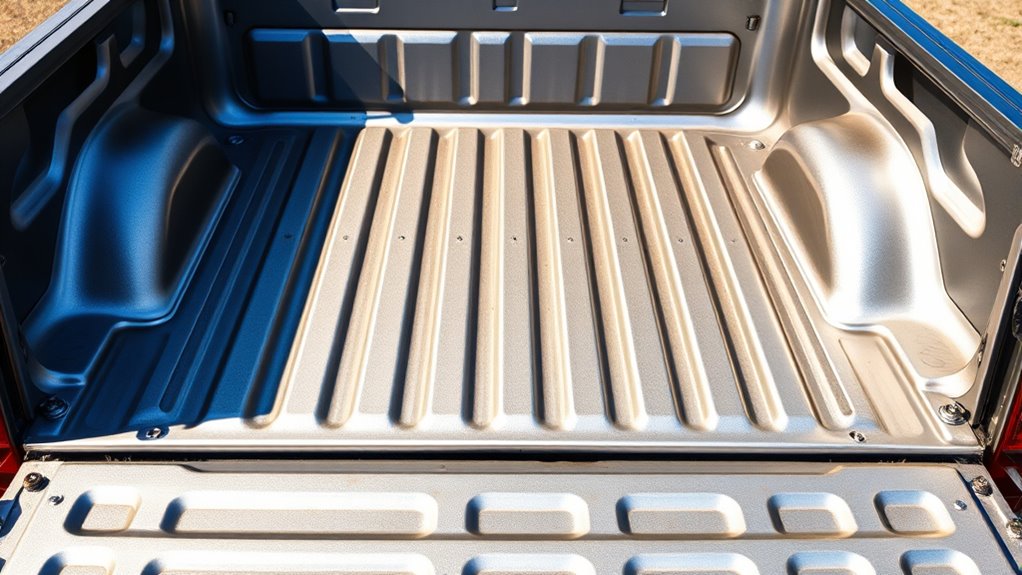
During a state inspection, inspectors check your truck bed for structural integrity, looking for rust, damage, or broken parts that could be unsafe. They also verify that tail lights, brake signals, and reflectors work correctly and are unobstructed. Inspectors confirm your cargo is secure and evenly distributed, and they examine tires, wheels, and suspension for wear or damage. Additionally, they review the fuel system and safety equipment. To learn more about passing inspection, keep exploring these important areas.
Key Takeaways
- Inspect for structural damage like dents, cracks, rust, or broken parts on the truck bed and frame.
- Check that lighting devices such as tail lamps, stop lamps, and reflectors are functional and unobstructed.
- Ensure cargo is properly secured with straps, chains, and covers, and that hazardous materials are labeled correctly.
- Verify tires have adequate tread depth, are free of damage, and wheels are securely fastened.
- Confirm all safety equipment, including fuel system components and underbody parts, are intact and leak-free.
Vehicle Structural Integrity and Bed Condition
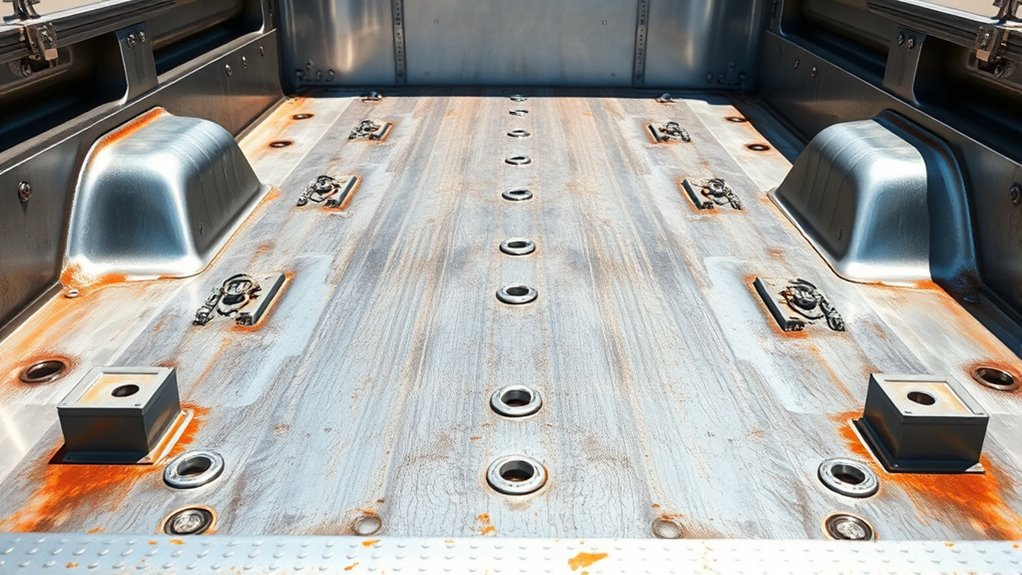
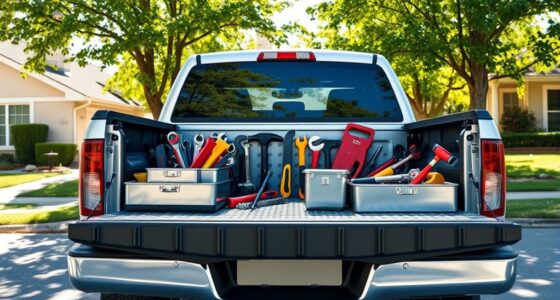
Have you checked the structural integrity of your vehicle and the condition of the truck bed? You need to look for scratches, dents, cracks, or broken parts on the bed surface and rear area. Inspect under the truck for damage or leaks in the muffler, fuel tank, or other underbody components. Check the rear bumpers and fenders for stability and security. Examine welds, frame attachments, and bed mounting points for corrosion or damage. Also, verify any racks or equipment mounted on the bed are secure and functioning properly. These inspections help confirm the truck’s overall strength and safety, preventing potential failures during operation. Addressing any issues now can save you from inspection failures and costly repairs later. Additionally, ensuring your vehicle’s wiring basics are intact can prevent electrical failures that may compromise safety.
Proper Functioning of Lighting and Reflective Devices
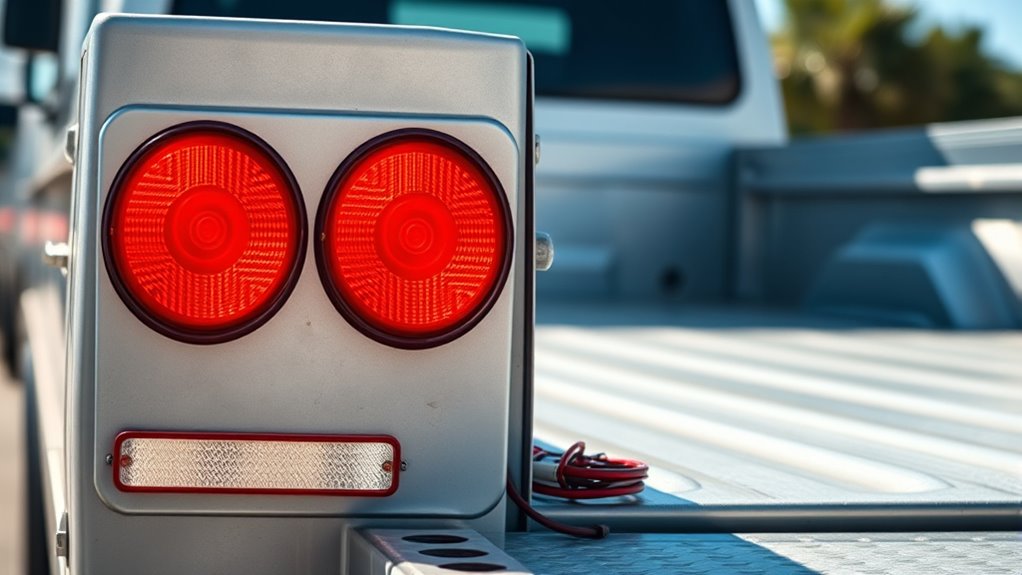
Ensuring all lighting and reflective devices around the truck bed are functioning properly is essential for safety and compliance. You must verify that tail lamps, stop lamps, and turn signals are operational and unobstructed. Third brake lights should work correctly, with clear lenses free of tape or covers. Reflectors, load lamps, and flags need to be visible and compliant with safety standards. Check wiring connections for security and absence of exposed wires. Also, ensure cargo area lights are functioning and properly positioned. Regular maintenance and inspection help prevent issues and ensure compliance with safety standards.
Cargo Security and Compliance With Safety Regulations
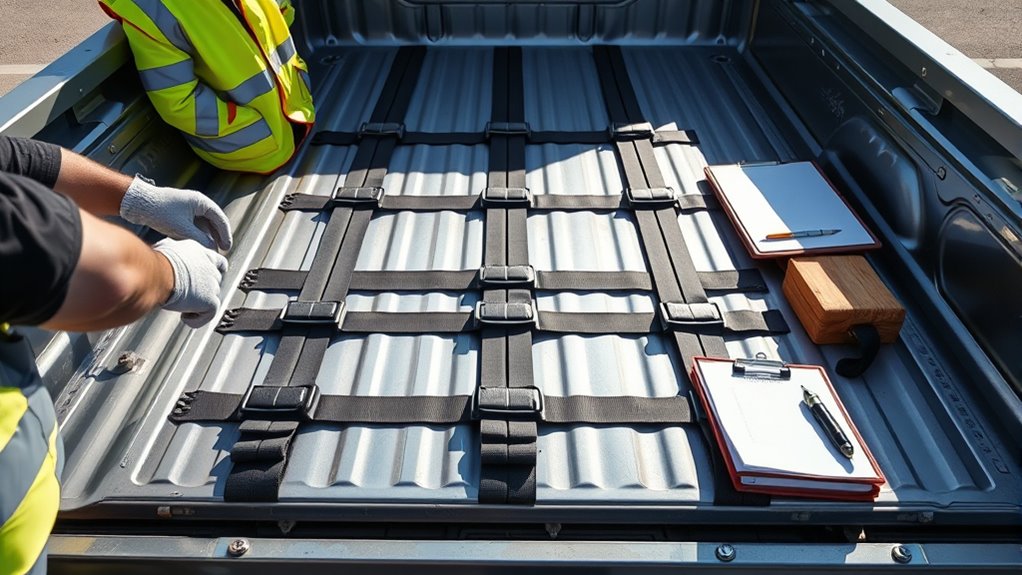
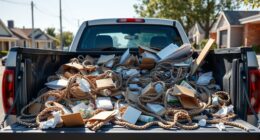
Are you confident that all cargo in the truck bed is properly secured according to safety regulations? You need to verify that straps, chains, and tie-downs are in good condition, properly attached, and tight enough to prevent shifting during transit. Check that cargo nets, tarps, or covers are secure and free of tears or damage. Remove loose debris that could fall off or cause hazards. If you’re carrying hazardous materials, confirm they’re secured and labeled correctly with appropriate placards. Distribute weight evenly across the bed to maintain stability and avoid overloading. Properly secured cargo not only keeps everyone safe but also helps you pass inspection without issues. Regularly inspecting your cargo securement is essential for compliance and safety on the road. Additionally, understanding style and hardware options can improve your cargo’s security and help meet regulations more effectively.
Tire, Wheel, and Suspension Checks Near the Truck Bed
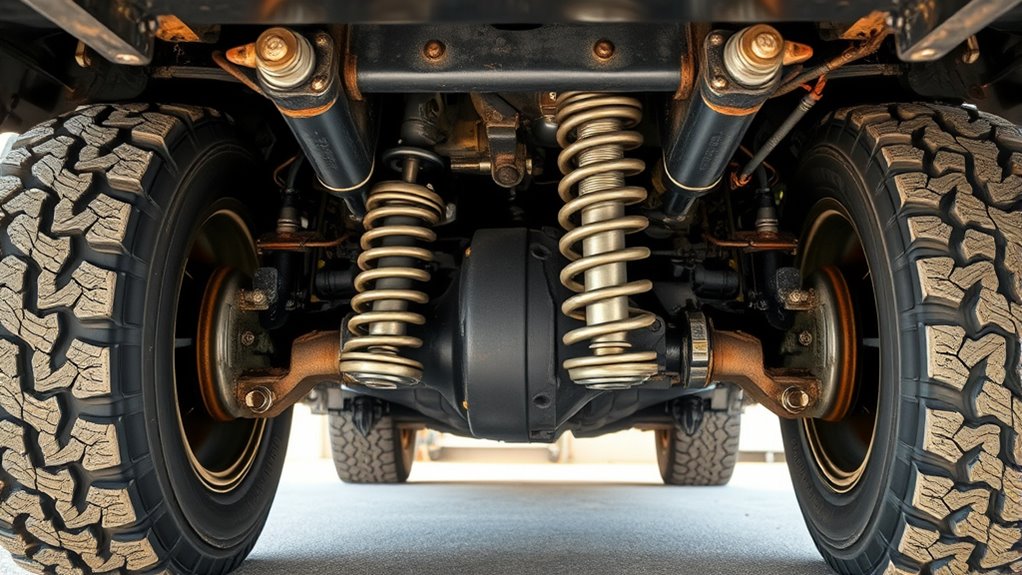
When inspecting tires, wheels, and suspension near the truck bed, focus on identifying any signs of damage or wear that could compromise safety. Look for tread depth less than 2/32 inches, cuts, bulges, or exposed cords on the tires. Check rims and hubs for cracks, rust, or loose lug nuts that could cause wheel separation. Examine the suspension components supporting the bed, such as shocks, springs, and bushings, for wear, leaks, or broken parts. Make certain that wheel alignment is proper to prevent uneven tire wear and steering issues. Confirm that all tire and wheel fasteners are tight and secure. Maintaining these elements is essential for vehicle stability, control, and safety during operation near the truck bed. Regular preventive maintenance can help identify issues early and avoid costly repairs.
Fuel System, Evaporative Controls, and Safety Equipment Inspection
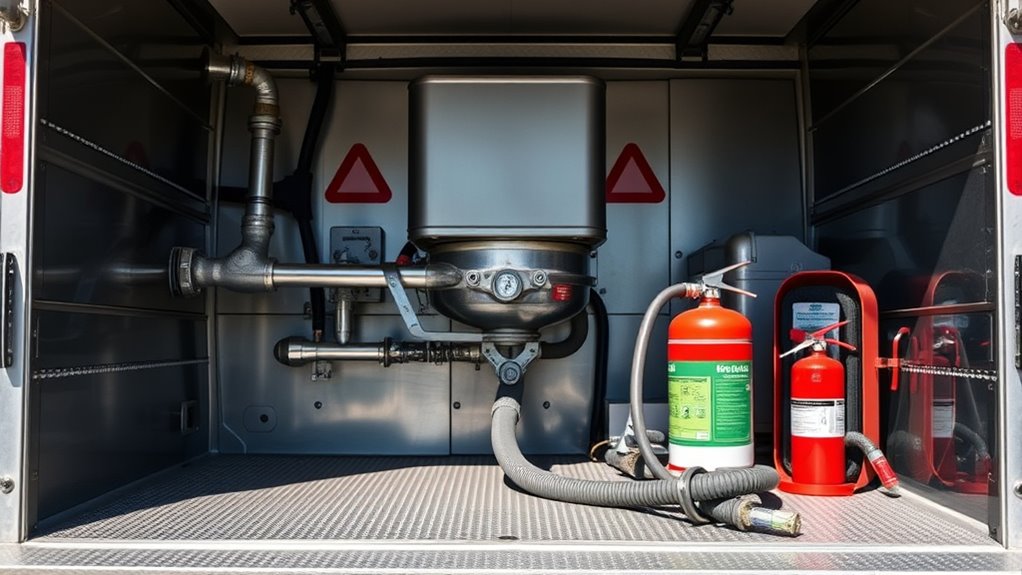
Inspect the fuel system and evaporative controls around the truck bed to confirm they are properly installed and functioning. Check that the fuel tank cap seals tightly and has relief valves to prevent vapor leaks. Ensure vapor control canisters and fuel hoses are intact and securely connected. Look for any missing or disconnected parts of the evaporative system, as these violate regulations. Examine the fuel tank mounting straps for secure attachment, free of leaks or corrosion. Verify that all components meet emissions standards and inspection requirements. Properly maintained fuel system components are essential for compliance and environmental protection.
Frequently Asked Questions
How Often Should I Inspect My Truck Bed for Corrosion or Damage?
You should inspect your truck bed for corrosion or damage at least once a month, especially before long trips or heavy loads. Regular checks help catch issues early, like cracks, rust, or loose parts. Pay attention to welds, frame attachments, and the condition of racks or equipment. Also, examine the underside for leaks or corrosion around fuel tanks and underbody components. Staying vigilant keeps your truck safe and compliant.
What Specific Safety Equipment Is Required Around the Truck Bed Area?
You need to have functioning emergency brakes accessible from the truck bed area, a horn audible at 200 feet, and operational lighting including backup and bed lights. Seat belts and airbags must be in good condition if relevant. Reflective warning devices should be present for nighttime visibility, and all safety equipment must be properly maintained and secured to ensure safety and pass inspections. Regular checks help keep everything working correctly.
Are There Restrictions on What Cargo I Can Carry in the Truck Bed?
Carrying cargo in your truck bed is like juggling fragile glassware—you need to keep it secure. You’re restricted from transporting hazardous materials unless properly labeled and secured. Oversized or improperly distributed loads could compromise stability or violate weight limits. Avoid loose debris or unsecured items that could fall off. Always follow safety regulations for securing your cargo, ensuring it’s stable and doesn’t pose a hazard during transportation.
How Do I Ensure My Truck’s Lighting System Complies With Regulations?
To guarantee your truck’s lighting system complies, start by checking all tail lamps, stop lamps, and turn signals near the truck bed are working and unobstructed. Make sure the third brake light functions properly with clear lenses. Inspect wiring for secure connections and no exposed wires. Confirm reflectors and load lamps are visible and compliant, and verify all electrical components are mounted correctly and operate as intended for safe, legal operation.
What Are the Penalties for Non-Compliance With Truck Bed Safety Standards?
If you neglect truck bed safety standards, penalties can be severe, including fines, vehicle impoundment, or even suspension of your license. You risk costly repairs or dangerous accidents that could harm lives. Stay ahead by ensuring your truck meets all safety requirements—ignoring them isn’t just risky; it could cost you much more than you expect. Don’t wait until it’s too late—secure compliance now to avoid these serious consequences.
Conclusion
So, next time you’re getting your truck inspected, remember that the inspector’s watching for more than just a shiny paint job. They’ll check your bed’s integrity, lighting, cargo security, tires, and fuel system—all to keep you safe. Ironically, it’s often the small details that get overlooked until it’s too late. So, don’t wait for a surprise inspection to realize that what looks fine on the surface might hide bigger issues underneath.