
To safely jack up your lifted truck without damage, start by inspecting the undercarriage and choosing manufacturer-recommended jacking points on the frame or pinch welds. Use a sturdy jack and jack stands rated for your vehicle’s weight, and always work on a flat, stable surface. Lift slowly and evenly, ensuring the truck remains stable before placing the stands. Follow proper lowering techniques, and double-check everything afterward; the step-by-step process becomes clearer as you continue.
Key Takeaways
- Use manufacturer-recommended jacking points and proper adapters to prevent damage to the lifted truck’s frame.
- Ensure the work area is flat, stable, and free of debris before jacking up the vehicle.
- Lift the truck slowly and steadily, keeping the jack aligned vertically and avoiding over-lifting.
- Place jack stands on solid, level ground under secure support points, and support both sides evenly.
- Perform final safety checks to confirm the vehicle is stable on all wheels before driving away.

BIG RED T43202 Torin Heavy Duty Steel Jack Stands: 3 Ton (6,000 lb) Capacity Car Lifting Stand,1 Pair (Not Suitable for SUV,Truck)
Lightweight jack stands are used to support your vehicle after lifting with a jack; Wide pyramid foot base…
As an affiliate, we earn on qualifying purchases.
As an affiliate, we earn on qualifying purchases.
Preparing and Inspecting Your Vehicle Before Lifting

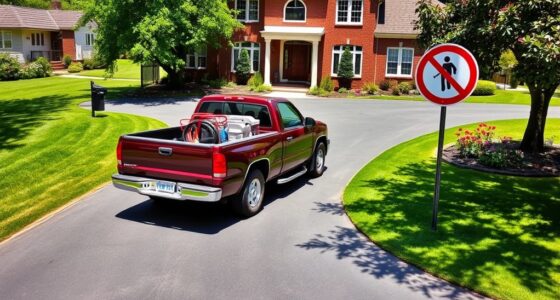
Before you start jacking up your lifted truck, it’s essential to thoroughly inspect the vehicle and work area. Check the undercarriage for signs of damage, rust, or worn components that could compromise safety during lifting. Make sure the ground surface is flat, firm, and free of debris to prevent slipping or uneven lifting. Park your truck on a level area, engaging the parking brake, and chock the wheels on the opposite side to keep it from rolling. Follow lock-out/tag-out procedures to ensure the vehicle can’t move unexpectedly. Also, verify that your jack and jack stands are rated for your truck’s weight, with a safety margin of at least 150%. Doing this prep helps create a safe, stable foundation for the lift, and consider using proper safety equipment like gloves and eye protection to minimize risk during the process.

DEDC Universal Aluminum Grooved Magnetic Jack Pad, Jacking Puck Pinch Weld Frame Rail Adapter, Oil Change Mush Haves, Change Tire Repair Tires Oil Must Have, for Car SUV Truck Pickup Sedan MPV Wagon
DURABLE: Made of solid aluminium with a nylon pad insert to protect pinch weld, not easy to damage.Machined…
As an affiliate, we earn on qualifying purchases.
As an affiliate, we earn on qualifying purchases.
Selecting the Correct Jacking Points for Your Lifted Truck

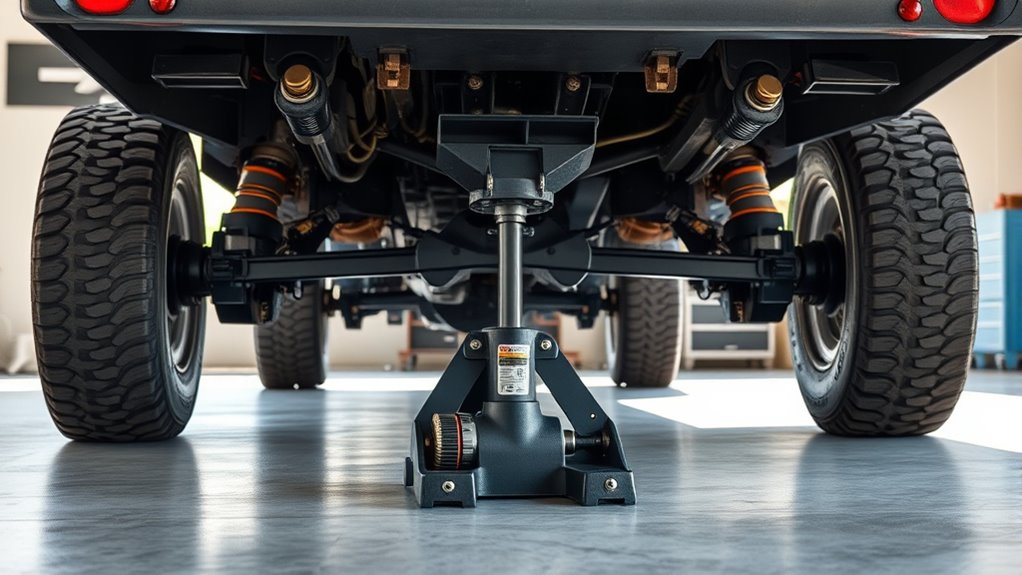
Choosing the right jacking points is key to safely lifting your truck without causing damage. For lifted trucks, manufacturer-recommended jacking points are essential, often located on the frame rails or pinch welds. Avoid jacking on drive axles, suspension parts, or U-bolts, which can be damaged easily. Use jack pad adapters if needed to protect pinch welds. Position your jack squarely on these points to ensure even pressure and prevent slipping. Confirm that the jacking points can handle the truck’s weight, especially with a lift kit installed. Always consult your vehicle’s manual for specific locations and instructions. Proper placement prevents unintended damage and ensures stability during the lift, making your work safer and more efficient.
Unique Truck Equipment Pre-Trip Inspection Tool – 4-in-1 Inspection Tool for Drivers and Mechanics
Visually check tire tread depth on driver and steer tires
As an affiliate, we earn on qualifying purchases.
As an affiliate, we earn on qualifying purchases.
Proper Techniques for Lifting Your Vehicle Safely
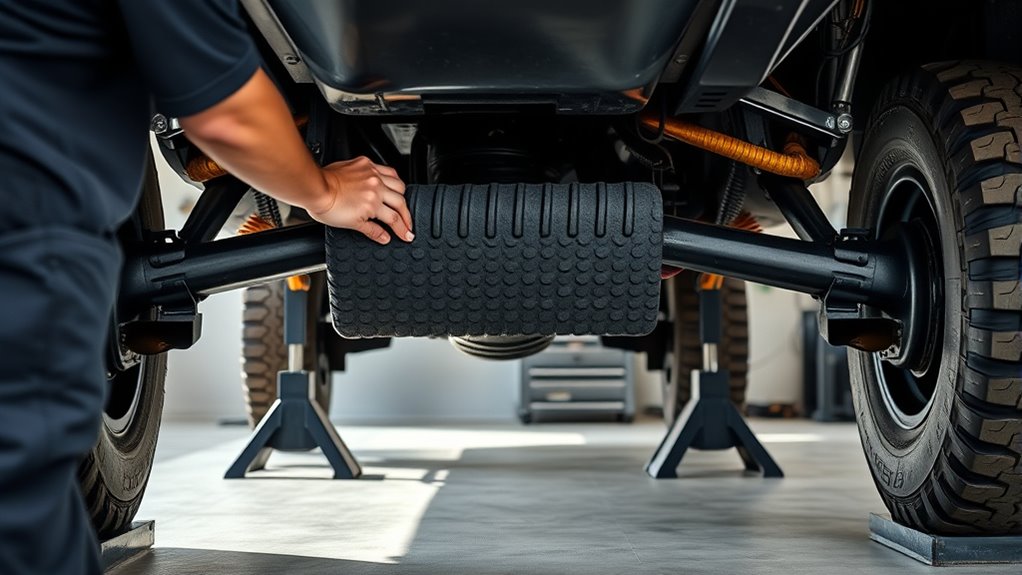
To lift your vehicle safely, you must use proper techniques that guarantee stability and prevent injury. Begin by positioning your jack directly on the manufacturer’s recommended jacking points, ensuring it contacts evenly to avoid slipping or damage. Keep the vehicle on a flat, stable surface and avoid sudden, jerky movements during lifting. Raise the truck slowly and steadily, monitoring for any signs of instability or shifting. Do not lift beyond the height needed to place jack stands comfortably underneath support points. Maintain the jack’s vertical alignment throughout the process to prevent angled lifting. Always stay alert and avoid distractions. Use controlled motions, and stop immediately if you feel any wobbling or imbalance. Proper technique minimizes risk and keeps both you and your vehicle safe. Utilizing proper tools designed for vehicle lifting enhances safety and efficiency during the process.

WEIZE 11000lbs Two Post Car Lift, Auto Lifts with 220V 3HP Motor, Double Safety Lock Release 2-Post Car Lift Hoist Equipment for Home Garage and Shop, Automotive Truck Clear Floor Hoist
Elevate your auto repair capabilities with WEIZE robust 2 post car lift, designed to handle vehicles up to…
As an affiliate, we earn on qualifying purchases.
As an affiliate, we earn on qualifying purchases.
Using Jack Stands Correctly to Support Your Lifted Truck

You need to choose proper support points on your lifted truck, like the frame or axle, to guarantee stability. Position your jack stands directly under these points, making sure they’re on solid, level ground. Before working underneath, double-check that the vehicle is secure and fully supported by the stands. Ensuring you understand the correct support points helps prevent accidents and damage.
Choose Proper Support Points
Selecting the proper support points is essential for making certain your truck remains stable and safe while lifted. You need to identify strong, designated areas designed to handle weight without causing damage. Here are key tips:
- Use manufacturer-recommended jacking points, typically along the frame rails or pinch welds, to distribute weight evenly.
- Avoid suspending the vehicle from suspension components, U-bolts, or drivetrain parts, which aren’t built for support.
- Ensure jack stands are placed on solid, level ground under sturdy support points like the axle ends or reinforced frame sections.
- Always double-check the support points for stability before fully lifting the vehicle to prevent accidents.
Position Jack Stands Correctly
Proper placement of jack stands guarantees your lifted truck remains stable and safe throughout the maintenance process. You should position the stands on solid, level ground under designated support points like the frame rails or axle ends. Make sure the stands are rated for your vehicle’s weight and set at equal heights on both sides for balance. Use a pair of stands to support each end or side to prevent twisting or tipping. Lower the truck slowly onto the stands, ensuring the weight is fully supported before removing the jack. Confirm that the stands are stable and secure before working underneath. Never rely solely on the jack; jack stands are essential for your safety and stability during maintenance. Additionally, understanding the weight of wind turbine blades can help you appreciate the importance of proper support and handling during transportation and installation.
Secure Vehicle Before Work
To guarantee safety while working under a lifted truck, it’s crucial to secure the vehicle with jack stands properly positioned. First, ensure the jack stands are rated for your truck’s weight and placed on solid, level ground. Second, position them at manufacturer-recommended support points, such as the frame or axle, to distribute weight evenly. Third, lower the vehicle carefully onto the stands, making sure it rests fully and securely without any wobbling. Additionally, utilizing modern safety features like wheel chocks can further prevent unintended movement during maintenance.
Safety Precautions When Working Under the Vehicle

When working under your truck, always wear the right personal protective equipment like safety glasses and gloves to prevent injuries. Make sure the vehicle is securely supported on jack stands, not just the jack, before you get underneath. Keep your work area clear of tools and debris to avoid accidents and guarantee a safe, stable environment. Additionally, ensuring proper vehicle support can help prevent accidents caused by unstable lifting methods.
Proper Personal Protective Equipment
Working safely under a lifted truck requires wearing the right personal protective equipment (PPE) to minimize risks. Proper PPE shields you from debris, chemicals, and potential injuries. First, always wear safety glasses or goggles to protect your eyes from flying particles, dirt, or fluid splashes. Second, use durable gloves to guard your hands against sharp edges, hot surfaces, or chemicals. Third, consider wearing a long-sleeved shirt and sturdy work boots to shield your skin and provide stable footing. Additional PPE like a dust mask or hearing protection may be necessary depending on the task. Ensuring you’re properly equipped helps prevent accidents and injuries, allowing you to focus on the task safely and efficiently. Free floating
Secure Vehicle Properly
Ensuring your vehicle is securely supported is essential before you get underneath. Use quality jack stands rated for your truck’s weight, and place them on solid, level ground. Position stands at manufacturer-recommended support points, such as frame rails or axle ends. Never rely solely on a hydraulic jack; always transfer the load onto stands. Confirm the vehicle is stable and not rocking before working underneath. Use wheel chocks on the ground wheels to prevent rolling. Keep the work area clean and free of tools or debris. Always double-check that the vehicle’s weight rests on the stands before starting work. This table highlights key safety steps:
| Step | Precaution | Equipment Needed |
|---|---|---|
| Position stands | On solid, level ground | Jack stands, wheel chocks |
| Support points | Use manufacturer’s recommended | Vehicle manual, support adapters |
| Stability check | Confirm no movement or rocking | Visual inspection tools |
Additionally, consulting the support points specified in your vehicle’s manual helps ensure proper safety and stability during the process.
Maintain Clear Work Area
Maintaining a clear work area is essential to assure safety while working under your vehicle. A cluttered space increases the risk of accidents and makes it harder to identify hazards quickly. To keep your workspace safe, consider these points:
- Remove unnecessary tools and debris that could cause trips or interfere with your work.
- Ensure adequate lighting so you can see clearly and avoid mistakes.
- Keep a safe distance from other people to prevent accidental bumps or distractions.
- Being aware of your surroundings and understanding energetic alignment can also help maintain focus and reduce stress while working.
Lowering Your Truck Safely After Maintenance

After you’ve finished your maintenance and confirmed that the vehicle is securely supported on jack stands, it’s time to lower the truck safely. Begin by slightly lifting the vehicle with your jack to take weight off the stands, ensuring they can be removed smoothly. Carefully turn the jack’s release valve or handle to lower the truck gradually, controlling the descent to prevent sudden drops or bouncing. Keep your hands clear of the vehicle’s underside during this process. Once the vehicle touches the ground, double-check that all jack stands are fully removed and that the truck rests evenly on all wheels. Before driving away, do a quick visual check to ensure no tools or obstacles remain. Store the jacks and stands properly, inspecting them for wear before your next use.
Frequently Asked Questions
What Are the Signs of Damaged or Worn Components Before Lifting?
You should look for visible signs of damage or wear, like cracks, rust, or corrosion on the undercarriage. Check for bent or broken suspension parts, leaking fluids, or worn bushings. Confirm bolts and fasteners are tight and intact. If you notice any rusted or weakened components, avoid lifting until repairs are made. Damaged parts can compromise safety, so inspecting thoroughly helps prevent accidents and vehicle damage during lifting.
How Do I Verify the Weight Capacity of My Jack and Stands?
Like a seasoned sailor checks the ship’s compass before setting sail, you verify your jack and stands’ weight capacity. Look for the stamped or printed maximum load ratings on the equipment. Confirm they exceed your truck’s weight by at least 150%. If unsure, consult the manufacturer’s specifications. Never guess or override these limits—safety depends on trusting the numbers, just like a captain trusts their instruments.
Can I Use a Single Jack Stand for Both Sides of the Axle?
You shouldn’t use a single jack stand for both sides of the axle. It’s unsafe because it can cause uneven support, leading to the axle twisting or the vehicle falling. Instead, place a pair of jack stands on solid, stable ground, supporting each side of the axle or frame. This balanced setup guarantees the vehicle stays secure, reducing the risk of accidents or damage during maintenance.
What Personal Protective Equipment Should I Wear During Lifting?
You should wear safety glasses, as over 70% of injuries during vehicle maintenance involve eye damage. Always don protective eyewear to shield your eyes from debris, sparks, or fluid splashes. Additionally, wear gloves to protect your hands from sharp edges and heavy parts, and sturdy work boots to prevent foot injuries. Personal protective equipment keeps you safe, reduces injury risk, and guarantees you can work confidently while lifting or working under your truck.
How Do I Check if the Ground Surface Is Stable Enough?
You check if the ground surface is stable by inspecting it carefully for firmness, flatness, and evenness. You look for soft spots, loose gravel, or uneven terrain that could cause the jack or jack stands to shift or sink. Press down gently with your foot or a tool to test stability. Make sure the surface is solid, level, and capable of supporting the weight without any movement before lifting your truck.
Conclusion
So, after all that careful planning, it’s amusing how many forget the basics—like double-checking their jacks or thinking safety’s optional. Ironically, the very steps designed to keep you safe are often overlooked in the rush to get back on the road. Remember, a little extra time and caution can save you from costly damage or injury. Because in the end, risking a mishap isn’t quite as thrilling as it seems—trust me, it’s not.