
TL;DR

Get business pricing on garage and car supplies
- Business-only prices and quantity discounts
- Tax-exempt purchasing
- Multiple users, one account, clear invoices
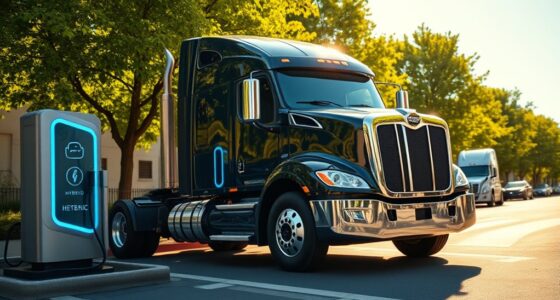
Online interest in the Tesla Semi has surged around claims that series deliveries — regular production shipments to customers — have begun. Tesla has been building the electric truck in limited volumes since 2022, but neither a start of series production nor delivery figures has been officially confirmed.
Online search interest and news coverage around the Tesla Semi have spiked sharply, centered on claims that the electric heavy truck has entered series deliveries — the stage at which a manufacturer ships regular production vehicles to customers rather than hand-built pilot units. As of this writing, no verified announcement from Tesla confirming the start of series deliveries, production volumes, or new customer handovers has been identified, and the trigger for the surge in interest remains unconfirmed.
The phrase circulating in coverage — “Tesla begins series deliveries of the Semi” — describes a milestone that would mark the transition from Tesla’s long-running pilot phase to full commercial production. That transition is plausible context for the attention: Tesla said in late 2024 that it had begun building Semi prototypes at a dedicated plant in Nevada, with volume production targeted for 2025 and an initial planned capacity of about 50,000 units per year, according to prior company statements.
What is long-established fact: Tesla delivered the first pilot Semi trucks to PepsiCo in December 2022, roughly five years after the truck was originally unveiled in 2017. Since then, a small fleet has been operating with PepsiCo’s Frito-Lay division in California, and the trucks have been used in real-world freight routes. Series production, however, would be a different and larger step — implying consistent output, a broader customer base beyond early partners, and steady deliveries at scale.
What is not confirmed: whether Tesla has formally begun those series deliveries, how many trucks have shipped, which customers are receiving them, or whether the Nevada factory has reached its intended production rate. No named executive statement, press release, or regulatory filing corroborating the claim was available in the source material for this report.
Why a Semi Production Ramp Matters
Heavy trucking is one of the hardest segments to electrify. Long-haul freight demands high payload capacity, long range, and fast refueling — constraints that have kept electric semis a small fraction of the market. If Tesla has genuinely begun series deliveries, it would signal that battery costs, charging infrastructure, and vehicle reliability have reached a point where electric freight is commercially viable at scale, not just in pilot fleets.
For fleet operators, a production ramp would mean real availability — order books converting to delivered trucks — and a chance to evaluate total cost of ownership against diesel. For competitors such as Daimler Truck, Volvo, and BYD, which are already selling electric heavy trucks in volume, a ramped Tesla Semi would sharpen competition in a market where incumbents currently lead. And for Tesla, the Semi remains a small business line relative to its passenger cars, but one aimed at a segment with heavy fuel consumption and emissions.
The Semi’s Slow Road Since 2017
“Tesla unveiled the Semi in November 2017, promising a range of up to 500 miles and production originally slated for 2019. The program slipped repeatedly, with Tesla citing battery cell constraints and company priorities shifting to passenger models. The first real deliveries came in December 2022, when PepsiCo received an initial batch as part of a program partly supported by California air-quality regulators.
Since then, Tesla has said it would build a dedicated Semi factory near its battery plant in Sparks, Nevada, and company executives have publicly discussed a 2025 target for volume production. Those statements, made in 2024 and early 2025, are the most recent verified benchmarks — and they make a mid-2020s series-delivery start plausible, though the specific event driving the current coverage spike has not been verified.
Unverified Claims Driving the Coverage
The core claim — that series deliveries have begun — is not corroborated by an identified official announcement, named executive statement, or delivery figure. It is not yet clear whether the current interest stems from a genuine event (such as a customer handover, factory milestone, or regulatory filing), from recycled or misdated coverage of Tesla’s earlier 2022 PepsiCo deliveries, or from speculative reporting on Tesla’s stated 2025 production target.
Specific unknowns include: the number of trucks shipped, if any; the identity of any new customers beyond PepsiCo; the current output rate of the Nevada plant; and whether ‘series’ refers to full volume production or an intermediate low-rate phase. Readers should treat all of these as open questions until Tesla or a verifiable customer confirms them.
Signals That Would Confirm the Milestone
Confirmation would most likely come through identifiable channels: a Tesla press release or earnings call statement citing Semi production and delivery numbers, a named fleet customer announcing received trucks, or regulatory and permit filings tied to the Nevada factory’s output. Tesla’s quarterly earnings calls, which typically report production and delivery figures by model line, are the most reliable near-term checkpoint for whether the Semi has crossed from pilot builds into series production.
Observers should also watch for updates on Megacharger infrastructure, the high-power charging network the Semi depends on for long-haul routes, since deployment of those chargers typically accompanies any serious delivery expansion.
Key Questions
Has Tesla officially confirmed series deliveries of the Semi?
Not in any verified announcement identified for this report. The claim is circulating online, and interest has spiked, but the trigger event is unconfirmed.
What is the difference between pilot deliveries and series deliveries?
Pilot deliveries, like the initial 2022 trucks sent to PepsiCo, are limited hand-built units for testing. Series deliveries mean regular production vehicles shipping steadily to customers — the milestone the current coverage refers to.
Who currently operates Tesla Semis?
PepsiCo is the best-documented operator, running a pilot fleet including trucks at its Frito-Lay facility in California since December 2022. Any additional customers receiving series-production trucks are not confirmed.
Where is the Semi built?
Tesla has said it is building a dedicated Semi plant near its battery factory in Sparks, Nevada, with volume production targeted for 2025 and a planned initial capacity of about 50,000 units per year, according to prior company statements.
Why is this milestone significant for trucking?
Heavy trucking is difficult to electrify due to range and payload demands. Confirmed series deliveries would signal electric freight becoming commercially viable at scale, intensifying competition with established electric truck makers like Daimler Truck, Volvo, and BYD.
Source: rss
Fall Picks
fall essentials
As an affiliate, we earn on qualifying purchases.