
TL;DR
Powerdot has integrated with Hubject’s Plug & Charge system, making more than 7,000 of its European charging points compatible with automatic vehicle authentication. The sites span France, Spain, Belgium and Poland; the companies have not specified a rollout schedule for the rest of Powerdot’s network.
Powerdot and Hubject have brought Plug & Charge compatibility to more than 7,000 charging points in France, Spain, Belgium and Poland, allowing compatible electric vehicles to authenticate and start charging without a separate app or RFID card. The deployment covers more than half of Powerdot’s roughly 13,000 charging points across Europe, according to the companies’ announcement.

Get business pricing on garage and car supplies
- Business-only prices and quantity discounts
- Tax-exempt purchasing
- Multiple users, one account, clear invoices
The integration connects Powerdot’s charging network to Hubject’s Plug & Charge ecosystem. The system uses the ISO 15118 standard and Hubject’s public key infrastructure to authenticate digital certificates exchanged between a vehicle, charging equipment and mobility service providers. For drivers with compatible vehicles and services, authentication takes place automatically when they plug in.
The newly compatible points are located in France, Spain, Belgium and Poland. Powerdot operates approximately 13,000 charging points at 2,400 locations across Europe, the source report said. The announcement does not say how many individual stations or sites in each country are included in the 7,000-point figure.
Powerdot focuses on destination charging, with chargers at places where drivers may leave their cars for longer periods, including supermarkets, shopping centers and restaurants. The company says its network is designed to work with multiple mobility platforms, service providers and vehicle manufacturers rather than requiring drivers to use a proprietary Powerdot app.
Fewer Steps at Destination Chargers
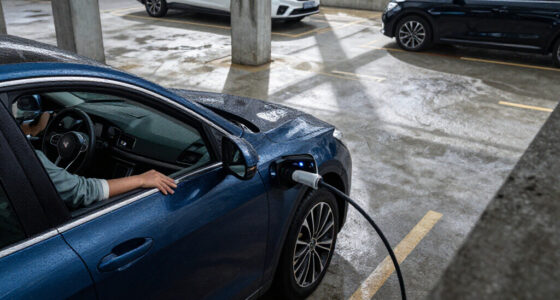
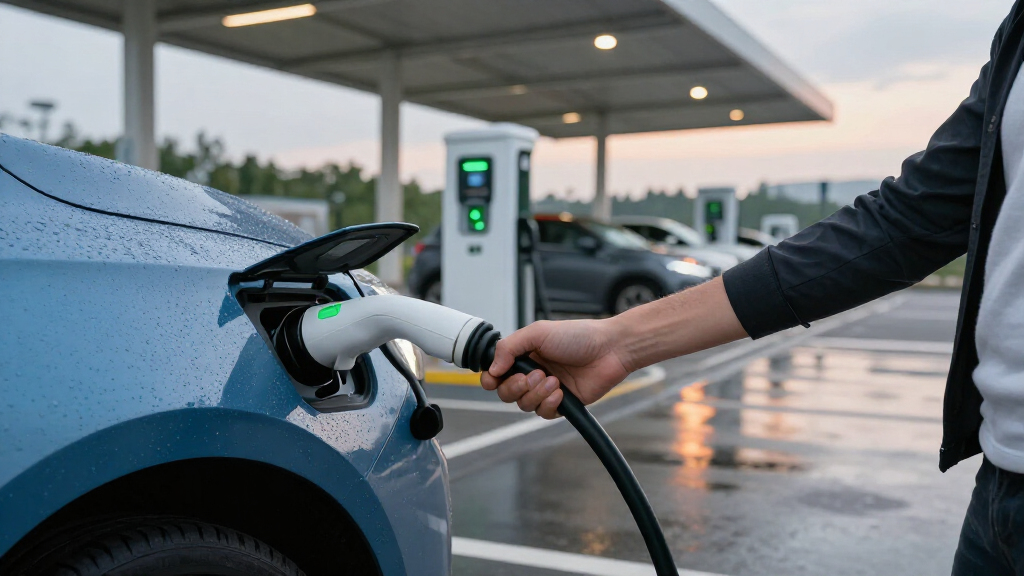
Plug & Charge can reduce the steps drivers take before a charging session begins. Instead of locating a charger in an app, starting a session and presenting a separate card, a compatible vehicle can identify itself through the certificate exchange. That may make charging more straightforward at destination sites, where drivers often want to plug in and continue with another activity.
The deployment also expands the availability of the system across a network with sites in several European markets. Its practical reach depends on more than charger compatibility: the vehicle and the driver’s charging service must also support Plug & Charge. The announcement does not provide a count of vehicles or customers able to use the newly enabled points, so the number of drivers who can use the feature cannot be determined from the stated total alone.
Powerdot’s stated preference for an open charging ecosystem is relevant because drivers may use different automakers and mobility-service providers. Integration with Hubject is intended to support that approach, although the announcement does not list every compatible vehicle, service provider or payment arrangement.
Products Worth Considering

Autel MaxiCharger Level 2 EV Charger, 40 Amp, 240V, 25-Foot Cable, NEMA 14-50 Plug

Autel 50A Level 2 Hardwired EV Charger with 25 ft J1772 Cable

Autel Level 2 Smart Home EV Charger with NACS Connector, 50A, 240V, 25-Foot Cable
As an affiliate, we earn on qualifying purchases.
How Powerdot Fits Hubject’s Network
Plug & Charge is based on ISO 15118, a standard that supports communication between an electric vehicle and charging infrastructure. In a Plug & Charge session, certificates are used to establish identity and authorize charging. Hubject provides the public key infrastructure used in this integration to manage the secure authentication process.
Hubject specializes in connections between charging networks and mobility services. Powerdot’s integration is its latest addition to that Plug & Charge ecosystem, according to the source report. The report describes the feature as spreading across Europe, but does not provide a comparative count of compatible chargers or a market-wide rollout rate.
Powerdot’s network is concentrated on charging at commercial destinations rather than only on dedicated highway stops. Its approximately 13,000 charging points are spread across about 2,400 locations in Europe, with the announcement identifying four countries where the new compatibility is available. The 7,000-point rollout is a subset of that wider network.
“Every operator that brings Plug & Charge to its network moves the industry closer to mass EV adoption, and Powerdot’s reach across Europe is a meaningful step in that direction.”
— Christian Hahn, Hubject CEO
Compatibility and Rollout Details
The announcement does not provide a list of compatible vehicle models, mobility-service providers or specific charging locations. It also does not explain whether every one of the 7,000 points is immediately available to all eligible drivers or whether access depends on a particular provider or account setup.
Powerdot and Hubject have not stated when Plug & Charge might be enabled at the rest of Powerdot’s network, or whether further countries are planned. The stated total refers to charging points, not locations, and the announcement does not break down the figure by country. The companies also did not disclose usage data, pricing changes or a timeline for further updates.
Further Network Expansion to Watch
The immediate next step for drivers is to check whether their vehicle and charging service support Plug & Charge and whether a specific Powerdot point is enabled. Powerdot’s network information and participating service providers can clarify availability at individual sites. The company has not announced a date for extending compatibility to additional points or markets.
Any later rollout announcement would help show whether the remaining Powerdot charging points will be added and how quickly. Further details on supported vehicles, services and site-level availability would also clarify how widely drivers can use the feature in practice.
Key Questions
What has Powerdot announced?
Powerdot has integrated with Hubject to make more than 7,000 charging points compatible with Plug & Charge. The points are in France, Spain, Belgium and Poland.
How does Plug & Charge work?
Plug & Charge uses the ISO 15118 standard to let a compatible vehicle and charging infrastructure exchange digital certificates for authentication. When the required systems are supported, the driver can plug in without starting a session through a separate app or using an RFID card.
Does every electric vehicle work with these chargers?
No vehicle compatibility list was included in the announcement. A driver’s vehicle and charging service must support Plug & Charge, and availability may depend on the provider and site.
Where are the compatible Powerdot points?
The announcement names France, Spain, Belgium and Poland. It does not identify individual locations or provide a country-by-country count.
Will Powerdot add Plug & Charge to its full network?
The 7,000-plus compatible points represent more than half of Powerdot’s roughly 13,000 charging points, but the company has not announced a timeline for further expansion.
Source: chargedevs.com