
TL;DR
Li-S Energy says one of its lithium-sulfur battery packs powered the Pegasus drone through a test flight of almost two hours and more than 75 kilometers over Queensland. The flight completes the project’s development and flight-test work; partners will now analyze performance data and consider commercial prospects. Longer missions are a company target, not a result demonstrated by this test.
Li-S Energy says one of its lithium-sulfur battery packs powered the Pegasus drone through an almost two-hour test flight over Queensland, covering more than 75 kilometers. The Australian cell developer said the aircraft achieved its expected flight performance and landed with battery capacity remaining, a result that completes the project’s development and flight-test work but does not yet establish commercial performance.

Get business pricing on garage and car supplies
- Business-only prices and quantity discounts
- Tax-exempt purchasing
- Multiple users, one account, clear invoices
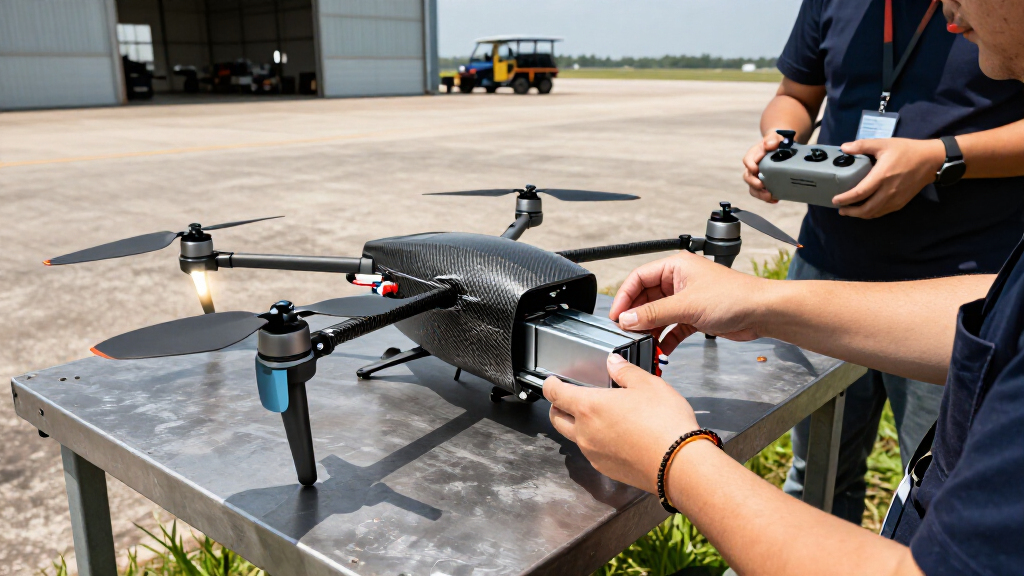
Pegasus is a twin-motor aircraft with a five-meter wingspan, designed and built by three Australian companies. V-TOL Aerospace developed the airframe and power systems; Li-S Energy supplied the 382-watt-hour lithium-sulfur battery packs and battery management system; and Halocell Energy made a perovskite solar array fitted along the wings. The report says one battery pack powered the test flight.
Li-S Energy’s battery management system is integrated with V-TOL’s power management system. The companies say the combined systems control power supplied to the motors and aircraft controls, while also managing electricity coming from the wing-mounted solar array. Li-S Energy filed two patent applications during the project, covering its battery management system and battery-pack design.
For a comparison, Li-S Energy says the flight used 1.1 kilograms of lithium-sulfur cells. It compared those cells with a Tattu 6S lithium-polymer drone pack rated at 16,000 milliamp-hours and 355 watt-hours, which the company lists at about 1.85 kilograms and 192 watt-hours per kilogram. On an equal cell-weight basis, Li-S Energy says its cells delivered 80% more range and flight time. That is a company calculation, not a result from a directly described flight using the alternative pack.
What the Test Says About Endurance
The flight offers a real-world demonstration of a lithium-sulfur battery system in an aircraft, rather than only a cell-level or bench test. For drone operators, endurance affects how much area can be surveyed on a single mission and how often an aircraft must land to recharge or change batteries. A lighter battery could be useful for long-range mapping, surveillance, and monitoring work if performance and reliability hold up in repeated operations.
However, the almost two-hour flight establishes only what happened during this test under its particular conditions. It does not by itself prove that Pegasus will achieve the company’s longer-duration target, or establish battery lifespan, cost, charging characteristics, or performance across different payloads and weather. The distinction matters because Li-S Energy’s projected five-to-eight-hour missions depend on fitting two packs and improving the solar arrays.
Products Worth Considering

NOCO Boost GB250 5250A UltraSafe Jump Starter, 12V Lithium Battery Booster

NOCO Boost GB70 2000A 12V Lithium Jump Starter
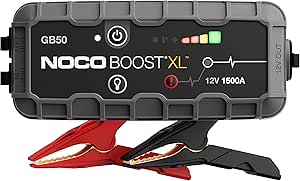
NOCO Boost GB50 1500A 12V Lithium Jump Starter
As an affiliate, we earn on qualifying purchases.
How Pegasus Was Developed
The Pegasus project was funded through the Australian government’s Emerging Aviation Technology Partnership program, which provided a grant of just over A$1.35 million. The three industry partners matched that funding, according to the source report. The reported Queensland flight completes the project’s planned development and flight-test work.
The aircraft was designed to carry two Li-S Energy packs, although the endurance test described in the report used a single pack. Li-S Energy says that, with both packs installed and improved Halocell solar arrays, Pegasus could eventually fly for five to eight hours and cover 250 kilometers. The company identifies mapping, surveillance, and agricultural, utilities, and environmental monitoring as potential uses. Those figures are prospective estimates, not demonstrated outcomes from the reported flight.
Performance Questions Still Open
The report does not provide a full flight-data record, including the exact flight duration, payload, weather, route profile, or the battery’s remaining charge at landing. It also does not give an independent assessment of the company’s comparison with the Tattu battery. Li-S Energy’s equal-cell-weight estimate excludes pack housings and battery management systems and assumes flight time scales linearly with cell energy, so it should not be read as a direct, whole-aircraft comparison.
It remains unclear when Pegasus might enter commercial service, what a production aircraft or battery system would cost, and whether repeated flights will match this test’s performance. The five-to-eight-hour and 250-kilometer figures are targets tied to a two-pack configuration and improved solar arrays; the source does not report that configuration completing a flight.
Partners to Review Flight Data
The project partners say they will analyze the flight data to characterize Pegasus’s performance and assess its commercial potential. They are aiming for future platform sales, but the report gives no sales timetable or confirmed customer commitments. The next useful evidence will include results from that analysis and any further tests showing how the aircraft performs with two packs, upgraded solar arrays, and operational payloads.
Until those results are available, the confirmed development is a successful near-two-hour test as reported by Li-S Energy, not a demonstrated five-to-eight-hour commercial mission. The companies have not announced a date for further flights or a final decision on production.
Key Questions
How long did the Pegasus drone fly?
Li-S Energy reported an almost two-hour test flight over Queensland. The report does not provide an exact duration.
How far did the drone travel?
The flight covered more than 75 kilometers, according to Li-S Energy’s report.
Was the five-to-eight-hour flight target achieved?
No. That is a future company estimate for Pegasus fitted with two battery packs and improved solar arrays. The reported test used one pack.
Who built the aircraft and its power systems?
V-TOL Aerospace developed the airframe and power systems, Li-S Energy supplied the lithium-sulfur packs and battery management system, and Halocell Energy fabricated the wing-mounted solar array.
What happens after the test?
The partners plan to analyze flight data and assess commercial potential. They are aiming for future sales, but have not announced a production or sales schedule.
Source: rss