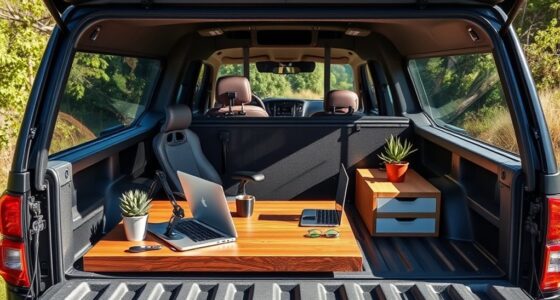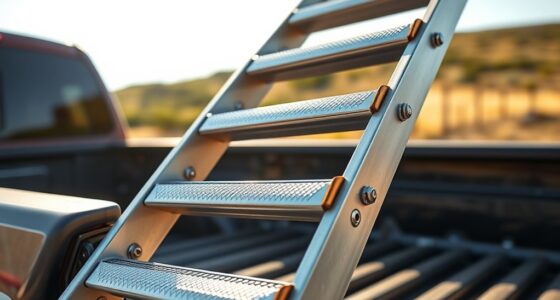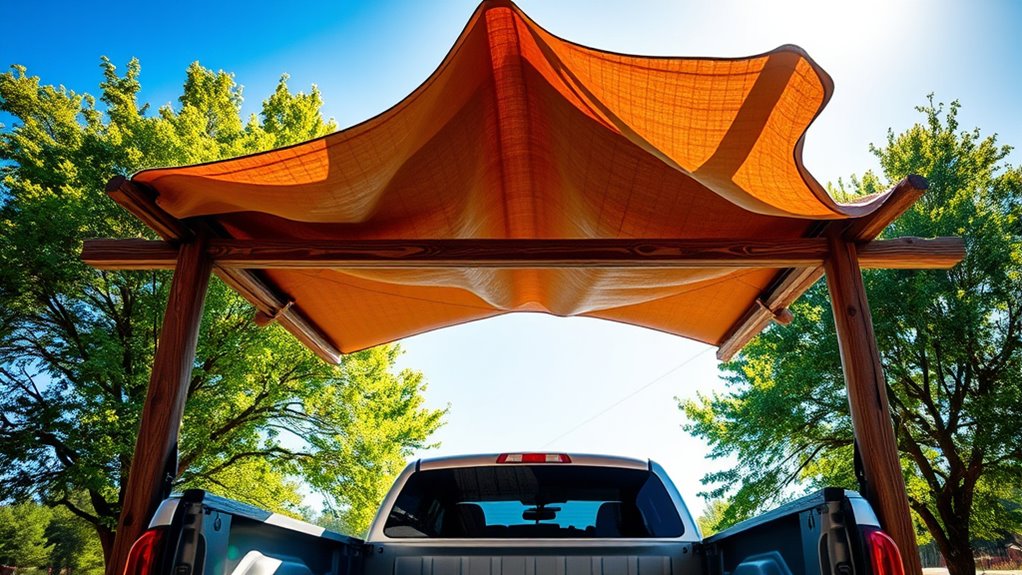
To build a simple roof over your truck bed for shade and shelter, start by measuring your truck’s dimensions and designing a suitable, weather-resistant frame using materials like aluminum, steel, or pressure-treated wood. Secure the structure firmly to your bed with proper hardware, ensuring it’s level and stable. Add waterproof coatings, gutters, and drainage features to protect against weather. For detailed steps and tips, the following information will guide you through each part of the process.
Key Takeaways
- Measure your truck bed accurately to ensure a proper fit and plan for the roof’s size, slope, and attachment points.
- Choose durable, weather-resistant materials like aluminum, steel, or sealed wood, and gather essential tools for precise construction.
- Reinforce the structure with sturdy supports, secure it using appropriate hardware, and plan for drainage to prevent water accumulation.
- Attach the frame securely to the truck bed, seal all drilled holes, and apply weatherproof coatings for protection against the elements.
- Regularly inspect and maintain fasteners, supports, and seals to ensure safety, stability, and longevity of the roof over time.
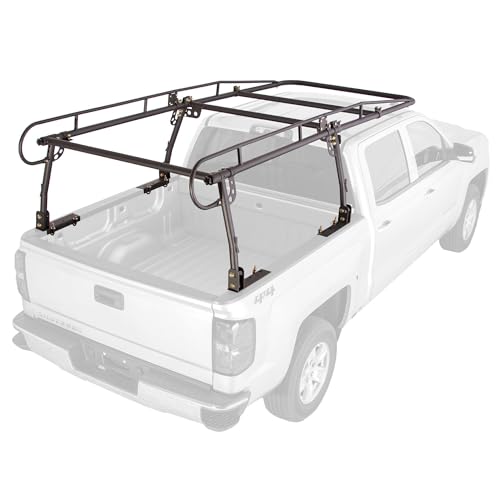
Elevate Outdoor Universal Over-Cab Truck Ladder Rack, 800 lb Capacity, Adjustable 49"–64" Width, Steel Contractor Rack for Pickup Beds, No-Drill Clamp-On Install
NO-DRILLING REQUIRED: Heavy-duty steel rack installs with clamp-on mounts, no drilling required; not compatible with integrated tie-down rails…
As an affiliate, we earn on qualifying purchases.
As an affiliate, we earn on qualifying purchases.
Planning Your Roof Structure and Design
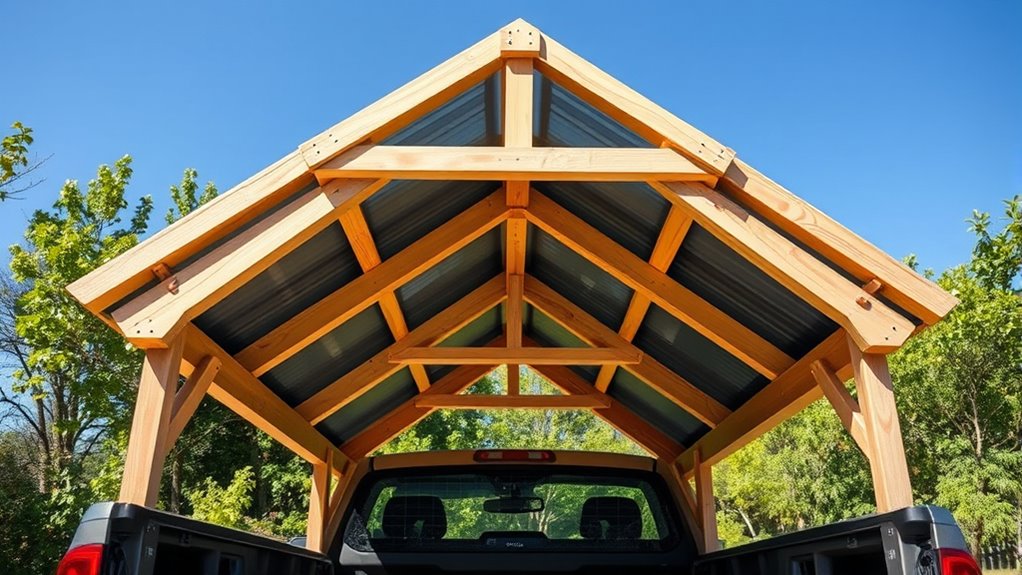
Before you start building your roof, it’s crucial to plan the structure and design to make sure it fits your truck and meets your needs. Begin by identifying your truck type—short bed, long bed, or with a camper shell—as this influences size and mounting options. Measure your truck bed accurately, including width, length, and height, to ensure a proper fit. Decide on the roof style, whether flat or sloped, based on weather conditions and aesthetic preference. Consider load capacity and reinforcement, choosing sturdy materials like steel or reinforced wood. Think about how you’ll attach the rack—permanent welds or removable bolts—and plan for drainage and weatherproofing to prevent water damage. Proper planning ensures your roof is functional, durable, and safe.

Truck Bed Tent, Waterproof PU3000mm Pickup Truck Tent for Camping 5.5-6.0 Ft Bed, 2-3 Person Sleeping Truck Tent, Portable for Car Camping
SPACIOUS & PRIVATE CAMPING SPACE: With a roomy 88.6" x 74.8" x 63" interior, this truck bed tent…
As an affiliate, we earn on qualifying purchases.
As an affiliate, we earn on qualifying purchases.
Choosing Appropriate Materials and Tools
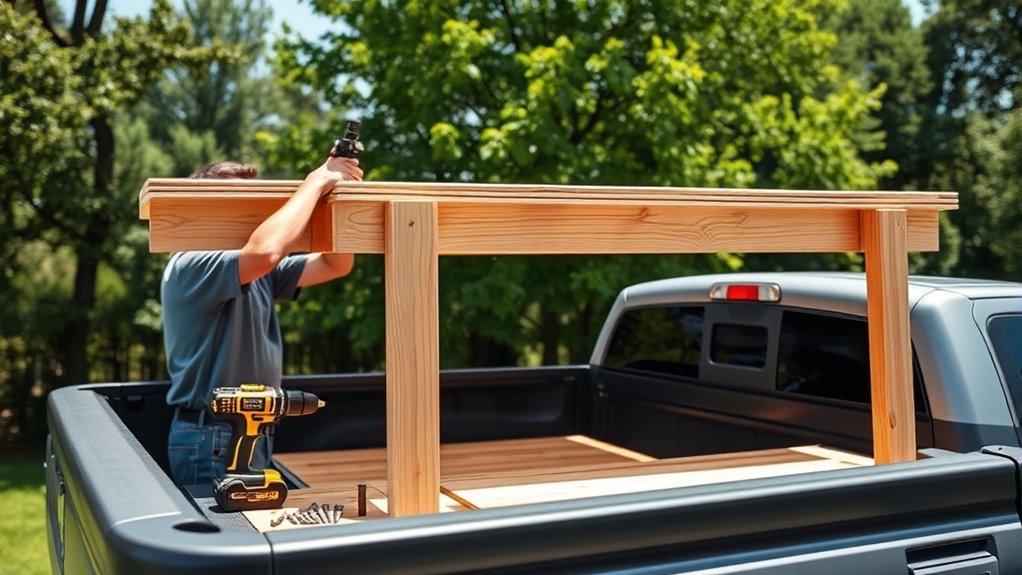
When selecting materials, focus on durability and suitability for outdoor use, like aluminum or steel for strength and corrosion resistance. You’ll also need essential tools like drills, saws, and clamps to assemble your roof securely. Using the right materials and tools guarantees your project is safe, long-lasting, and weatherproof. Incorporating visual and auditory cues into your design can also enhance its functionality and comfort.
Material Durability and Suitability
Choosing the right materials for your truck bed roof rack is crucial to guarantee durability and long-lasting performance. You want materials that can withstand weather, UV rays, and heavy use without deteriorating quickly. Aluminum is lightweight, corrosion-resistant, and ideal for outdoor exposure, but steel offers superior strength if properly coated. For wood, pressure-treated lumber resists rot, but it’s heavier and may warp over time. Plywood can serve as supports if sealed properly. Metal components should be galvanized or painted to prevent rust. Select hardware like bolts and fasteners made from stainless steel or coated metals to avoid corrosion. Using durable, weatherproof sealants and protective coatings will extend your rack’s lifespan. Prioritize quality materials that match your specific needs to ensure safety, stability, and longevity. Incorporating material durability considerations ensures your roof rack remains functional over time, especially in challenging outdoor conditions.
Essential Hand and Power Tools
Selecting the right hand and power tools is essential to guarantee a safe and efficient building process for your truck bed roof rack. You’ll need a drill with appropriate bits for metal or wood, depending on your materials. A saw—either hand or power—helps make precise cuts for beams and supports. A grinder is useful for smoothing metal edges and preparing joints. Clamps hold pieces steady during assembly, ensuring accuracy. Measuring tape ensures correct dimensions and alignment. If working with metal, welding equipment can create strong, permanent joints, but optional. Sealants and waterproof silicone help prevent leaks, so have a caulking gun ready. Remember safety gear like gloves, goggles, and masks to protect yourself during cutting, grinding, and welding. Proper tools make the project safer and more manageable. Additionally, understanding projector technology can help in selecting materials that optimize shelter effectiveness.
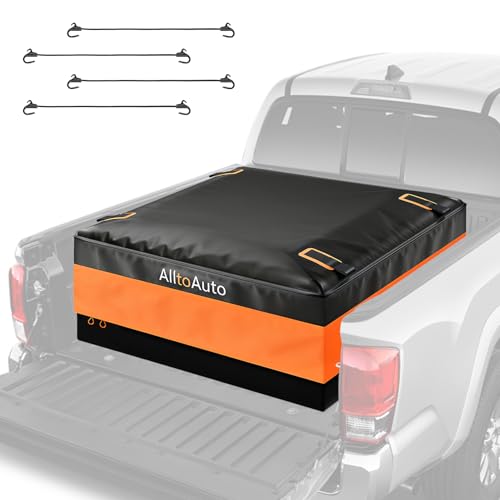
Truck Bed Cargo Bag Plus, 38 Cubic Feet (58''x49''x23''), 100% Waterproof Heavy Duty PVC, Fits Any Truck, Simple and Convenient for Installation
100% WATERPROOF- AlltoAuto cargo bed bag is made 100% waterproof heavy duty PVC, with waterproof zipper and a…
As an affiliate, we earn on qualifying purchases.
As an affiliate, we earn on qualifying purchases.
Measuring and Marking for Accurate Cuts
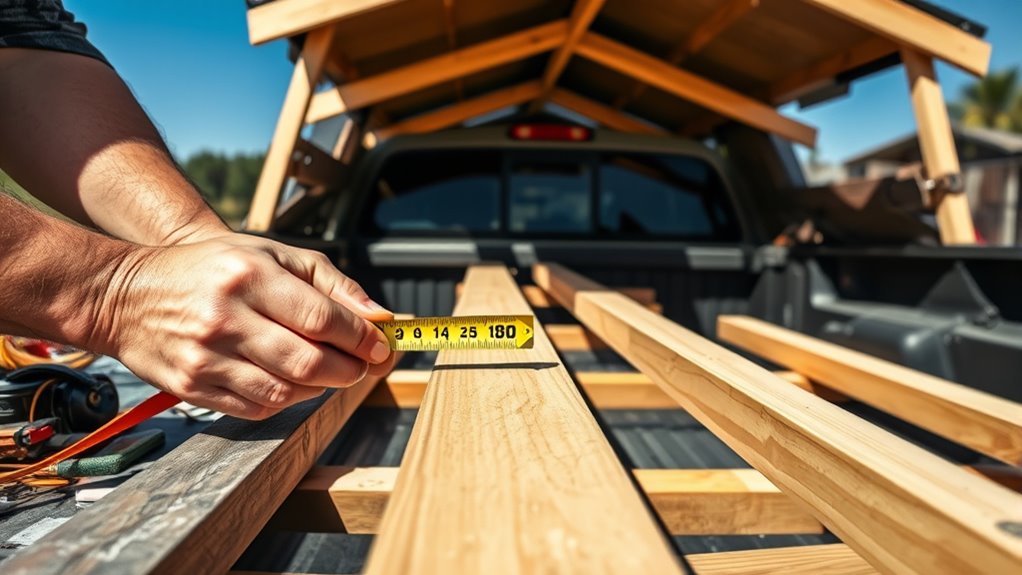
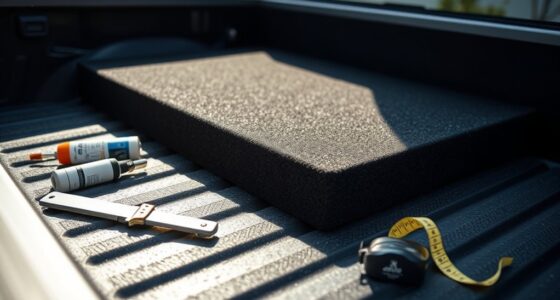
Accurate measuring and marking are crucial steps to guarantee that your roof components fit perfectly and function safely. Take your time to double-check measurements before marking. Use a reliable measuring tape and a straight edge for precise lines. Mark clearly with a pencil or chalk, ensuring visibility during cutting. Always measure twice to avoid mistakes. To help, consider this table for common measurements:
| Component | Measurement Guidance |
|---|---|
| Roof length | Match truck bed length, add extra 2 inches for overhang |
| Crossbar spacing | 16-24 inches apart for stability |
| Support height | Align with truck bed height for proper fit |
| Cut lines | Mark with a square for straight cuts |
Proper measuring and marking lay the foundation for a sturdy, well-fitting roof. Accurate measurements are essential for ensuring the stability and durability of your truck bed roof.

Heavy-Duty Dump Truck Tarp Kit, with Rear Anti-Sail Bow Set (with 7'x18' PVC Mesh Tarp)
1. Multi-Purpose Protection : 7×18 dump trailer tarp kit functions as truck bed tarp cover/camping groundsheet. Creates heavy…
As an affiliate, we earn on qualifying purchases.
As an affiliate, we earn on qualifying purchases.
Cutting and Preparing Frame Components
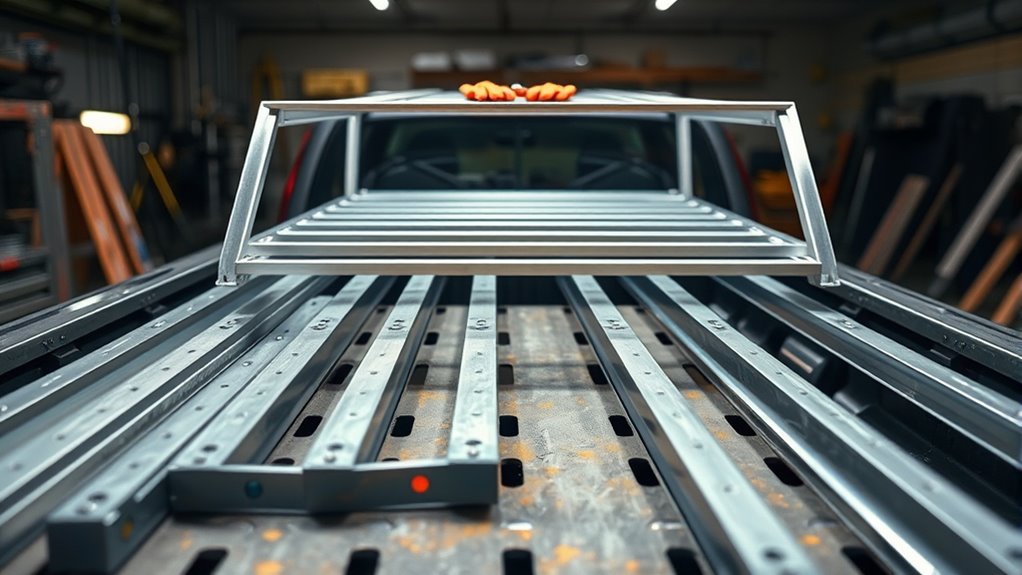
Before you start assembling your frame, you need to cut your materials to the correct lengths and prepare them for assembly. First, measure carefully and mark your cuts precisely, guaranteeing all pieces fit together properly. Second, use a saw suited to your material—either a power saw for metal or a hand saw for wood—to make clean, straight cuts. Third, smooth rough edges with a grinder or sandpaper to prevent injury and ensure a tight fit during assembly. Confirm each piece’s length against your measurements before cutting. For metal parts, consider applying a protective coating or primer after cutting to prevent rust. Properly prepared components will help you assemble a sturdy, aligned frame that withstands weather and load. Additionally, vetted safety equipment should be used during cutting and grinding to protect yourself from debris and injury.
Assembling the Roof Frame
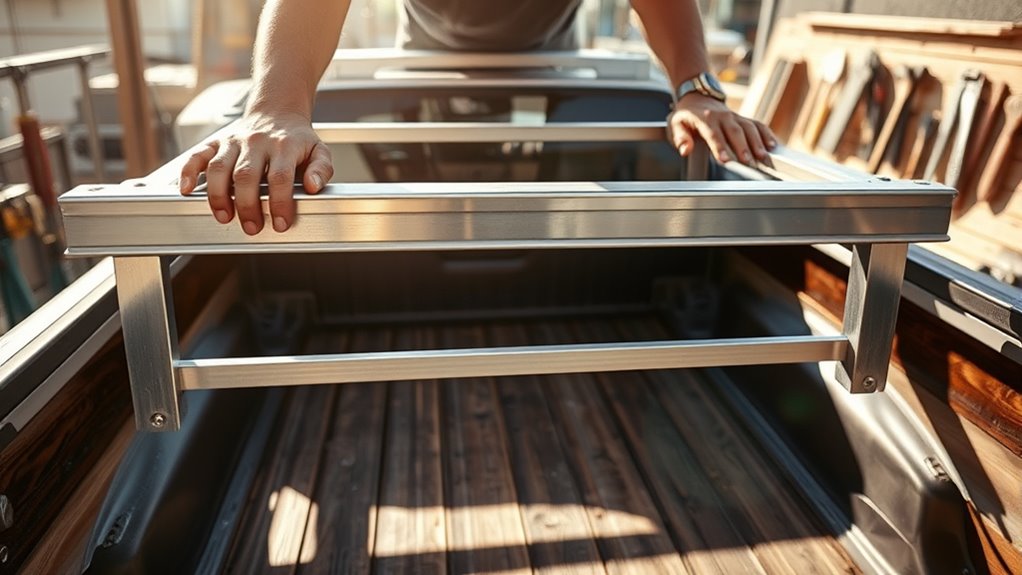
To assemble your roof frame, you first choose the right materials, such as aluminum tubing or sturdy lumber, based on your truck and needs. Next, you’ll secure the frame components together using bolts, welds, or screws, ensuring everything stays aligned and stable. Carefully fitting and fastening each part now sets the foundation for a strong, reliable roof that offers shade and shelter. Incorporating material selection strategies can help ensure your roof is durable and weather-resistant over time.
Selecting Frame Materials
Choosing the right frame materials is essential for building a durable and stable roof over your truck bed. You want materials that are strong, lightweight, and resistant to the elements. Consider these options:
- Aluminum tubing: Lightweight, rust-resistant, easy to cut and weld, ideal for portable or removable frames.
- Steel angle iron: Heavy-duty, highly durable, suitable for supporting heavier loads and permanent setups.
- Wood (2x4s): Cost-effective, simple to work with, best for lightweight or temporary roofs, and easy to modify.
Select materials based on your intended use, climate, and whether you want a permanent or removable structure. Properly chosen materials ensure your roof remains secure and withstands weather conditions over time. High pressure from airless sprayers demonstrates the importance of using sturdy and reliable frame materials to support the structure under various weather conditions.
Securing Frame Components
Securing frame components is a crucial step in guaranteeing your roof over the truck bed is sturdy and reliable. Use bolts, clamps, or welds to connect crossbars, uprights, and supports tightly. Double-check alignment before tightening to prevent sagging or uneven surfaces. For metal parts, weld joints for maximum strength; for wood, screw supports into place. Apply sealant around drilled holes to prevent leaks. Consistent fastening maintains stability under load and wind. Ensuring proper assembly techniques is essential for a durable and safe shelter.
Securing the Frame to Your Truck Bed
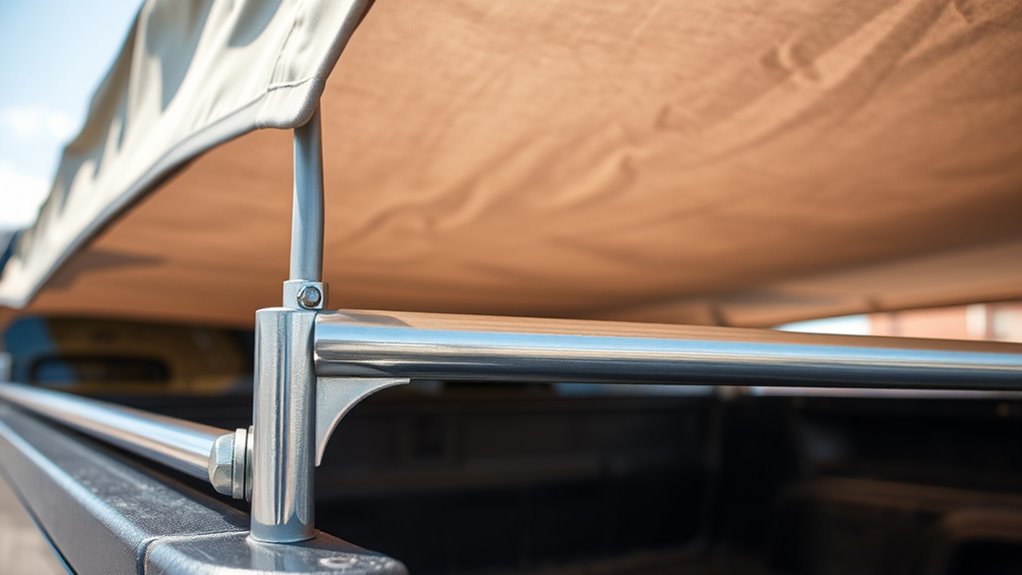
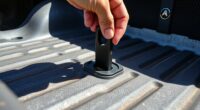
When attaching the frame to your truck bed, it’s essential to use the right hardware and mounting points to guarantee stability. First, identify the best anchoring spots, such as factory mounting points or sturdy sections of the bed. Then, follow these steps:
- Select appropriate fasteners—like J-bolts or carriage bolts—that match your mounting points and frame material.
- Drill precise holes in the frame and truck bed, sealing them with waterproof silicone to prevent leaks.
- Secure the frame using nuts and washers, tightening firmly to avoid movement or vibrations.
- Consider integrating smart mounting solutions that enhance stability and allow for easier adjustments in the future.
Ensure that brackets or mounts are padded with rubber or foam to protect your truck’s finish. Properly securing the frame prevents shifting and enhances safety during use.
Adding Weatherproofing and Water Drainage Features
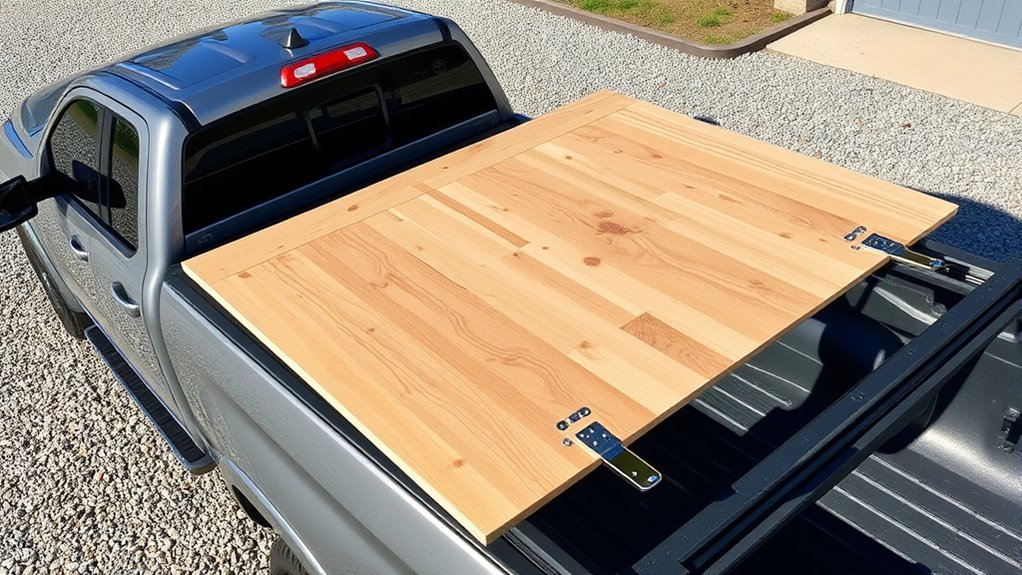
To effectively protect your truck bed roof from water damage, incorporate weatherproofing and drainage features during installation. Seal all drilled holes with waterproof silicone or sealant to prevent leaks. Use protective coatings or paint on metal surfaces to resist rust. Ensure your roof has proper slope or slight angles to promote water runoff. Install gutters or drip edges along the edges to channel water away from the bed.
| Feature | Purpose |
|---|---|
| Waterproof Sealant | Prevents leaks through drilled holes |
| Drip Edges | Guides water off edges, avoiding pooling |
| Gutters | Collects and redirects rainwater |
| Protective Coatings | Shields metal from corrosion |
| Proper Slope | Facilitates water runoff, avoids standing water |
Final Inspection and Safety Checks
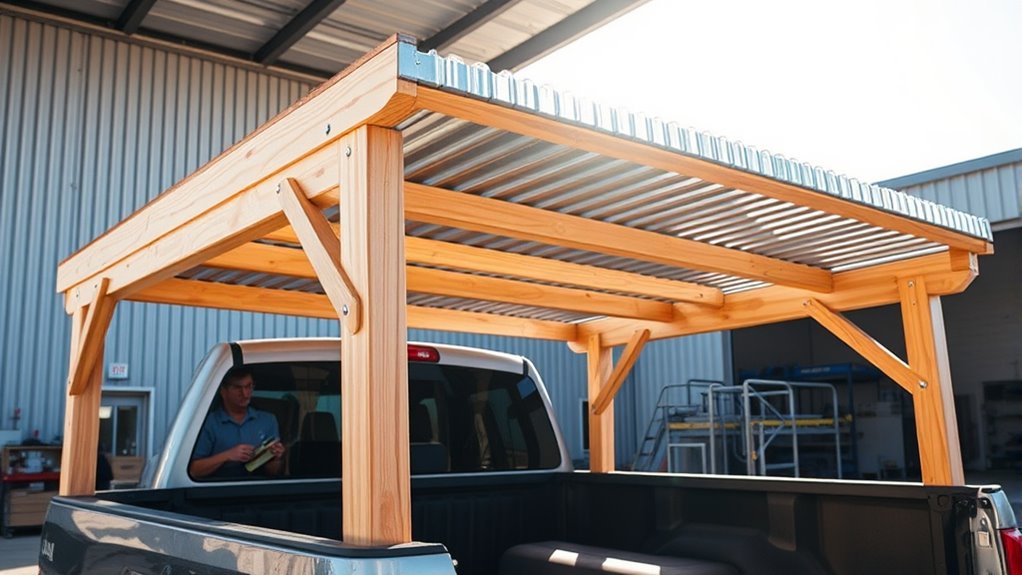
Before finalizing your truck bed roof setup, it’s essential to thoroughly inspect all components to guarantee safety and durability. First, check all fasteners—bolts, screws, and welds—for tightness and proper installation. Second, examine structural elements like supports and crossbars for signs of cracks, rust, or deformation. Third, verify the alignment of the entire frame, ensuring it’s level and securely attached to the truck bed or mounting points. Additionally, inspect weatherproof seals around drilled holes to prevent leaks. Make sure protective coatings are intact, and no parts are loose or wobbly. Performing these checks ensures your roof is stable, safe, and ready for use, preventing potential accidents or damage while maximizing longevity.
Maintenance Tips for Longevity and Durability
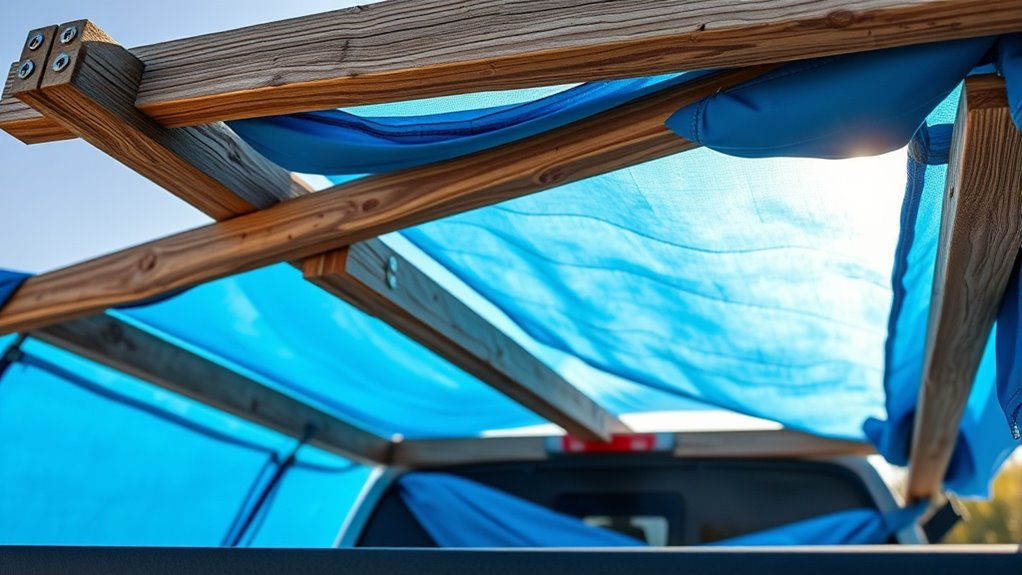
Regular maintenance keeps your truck bed roof rack in top condition and extends its lifespan. Start by inspecting bolts and fasteners monthly; tighten any that have loosened. Check for rust or corrosion, especially on metal parts, and apply protective paint or coating as needed. Clean the rack with mild soap and water to remove dirt and debris. Seal any drilled holes with waterproof silicone to prevent leaks. Replace worn or damaged components promptly to ensure safety.
| Maintenance Step | Frequency | Key Action |
|---|---|---|
| Bolt and fastener check | Monthly | Tighten and replace if needed |
| Corrosion inspection | Quarterly | Apply rust prevention or repaint |
| Sealant resealing | Annually | Waterproof drilled holes |
Frequently Asked Questions
How Do I Ensure the Roof Frame Is Level and Stable?
To guarantee your roof frame is level and stable, start by using a level tool during assembly. Double-check measurements before tightening bolts or welding. Clamp components temporarily to make adjustments easily. Reinforce joints with steel plates or secondary welds for added stability. Regularly verify the frame’s alignment as you work, and test the structure once complete by gently applying pressure to spot any wobbling or misalignment, adjusting as needed.
Can I Customize the Roof Design for Different Truck Models?
Think of customizing your roof design like tuning a vintage radio—each truck is unique. You can definitely tailor the design to fit different models by measuring carefully, choosing adaptable materials, and considering factory mounting points or gutters. Adjust dimensions, support structures, and mounting hardware for each truck’s specifics. This way, your roof stays sturdy, looks great, and fits perfectly, whether you’ve got a short bed, long bed, or camper shell.
What Safety Precautions Should I Follow During Installation?
You should always wear protective gear like gloves, goggles, and a welding shirt, especially when cutting, drilling, or welding. Make certain the truck is on a flat surface and secure it with wheel chocks to prevent movement. Use clamps to hold parts steady and avoid slips or errors. Follow all safety instructions for tools, and work in a well-ventilated area to prevent inhaling fumes. Regularly check your workspace for hazards.
How Much Weight Can My DIY Roof Structure Safely Support?
Your DIY roof’s weight capacity depends on materials and construction quality. Generally, a well-built frame with steel tubing or reinforced wood can support 200-500 pounds. To guarantee safety, verify your materials’ load ratings, evenly distribute weight, and reinforce joints with steel plates or welds. Avoid overloading, especially on unsupported sections, and always test the structure gradually to prevent damage or failure.
Are There Specific Paints or Coatings Recommended for Outdoor Durability?
For outdoor durability, you should use marine-grade or exterior-specific paints and coatings. These products contain UV blockers, corrosion inhibitors, and waterproofing agents that protect against sun, rain, and rust. Apply a primer first, then a high-quality exterior paint or powder coating designed for metal or wood, depending on your materials. Regularly inspect and touch up any chips or scratches to maintain protection and extend your roof’s lifespan.
Conclusion
Once you finish building your truck bed roof, you’ll have the ultimate fortress of shade and shelter that’s stronger than a mountain and more reliable than your best friend. No rain, sun, or falling debris will stand a chance! It’s the kind of upgrade that turns your truck into a legendary haven on wheels. Get ready to enjoy every adventure with confidence, knowing your new roof is built to outlast the ages!