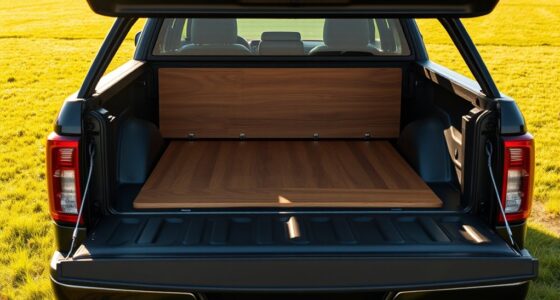
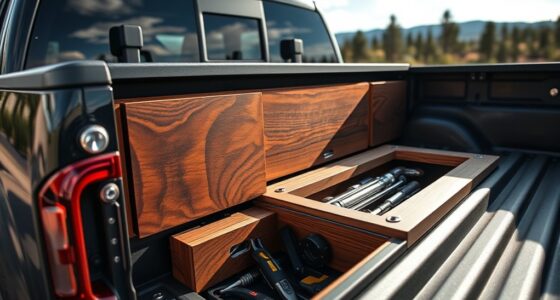
To create a lockable storage cubby in your truck bed wall, measure your space carefully and select weatherproof materials like plywood or steel for durability. Cut your panels precisely, assemble with rust-resistant fasteners, and securely mount the cubby to avoid interference with wheel wells or ribs. Install tamper-resistant locks and add seals for weather protection. If you want to learn detailed steps and tips, continue exploring to build a secure, long-lasting cubby customized to your needs.
Key Takeaways
- Measure truck bed space accurately, avoiding wheel wells and ribs, to ensure proper fit and placement of the cubby.
- Use weatherproof, durable materials like plywood or metal, reinforced with corrosion-resistant hardware for longevity.
- Carefully cut and assemble panels with proper joinery, then securely mount the cubby to the truck wall using heavy-duty bolts.
- Install tamper-resistant locks with protective covers, reinforce lock areas, and seal edges to prevent moisture and unauthorized access.
- Regularly inspect, maintain, and seal the cubby to ensure durability, security, and protection against weather and tampering.

VEVOR Truck Bed Storage Box, Lockable with Password Padlock, 6.6 Gal/25 L ABS Wheel Well Tool Box, Waterproof and Durable, Compatible with Ford F-150 2015-2021, Drivers Side (Left)
Enhanced Security: Keep your equipment secure with VEVOR's double-layered security system. Our innovative lockable box and unpickable combination…
As an affiliate, we earn on qualifying purchases.
As an affiliate, we earn on qualifying purchases.
Planning Your Cubby Dimensions and Placement
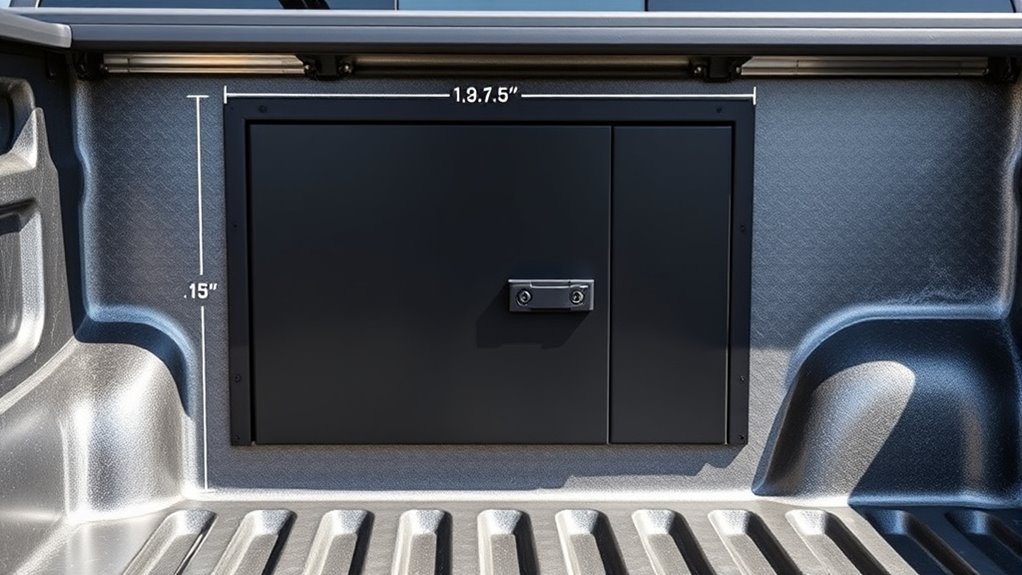
To effectively plan your truck bed storage cubby, start by measuring the available space within your truck bed wall, paying close attention to any ribs, corrugations, or wheel wells that could interfere. Use a tape measure to determine the width, height, and depth of the area where you want to install the cubby. Keep in mind that ribs and corrugations can limit usable space or require custom cuts. Avoid placing the cubby directly over wheel wells if it restricts access or reduces capacity. Decide whether you want the cubby on one side or centered. Be precise with your measurements to ensure the cubby fits snugly and doesn’t interfere with truck bed functions. Proper planning upfront prevents fitment issues later and helps you optimize your storage space. Understanding cable management and the importance of organized wiring can inspire better placement and design choices for your cubby.
weatherproof lockable cargo cubby
As an affiliate, we earn on qualifying purchases.
As an affiliate, we earn on qualifying purchases.
Selecting Materials and Components for Durability
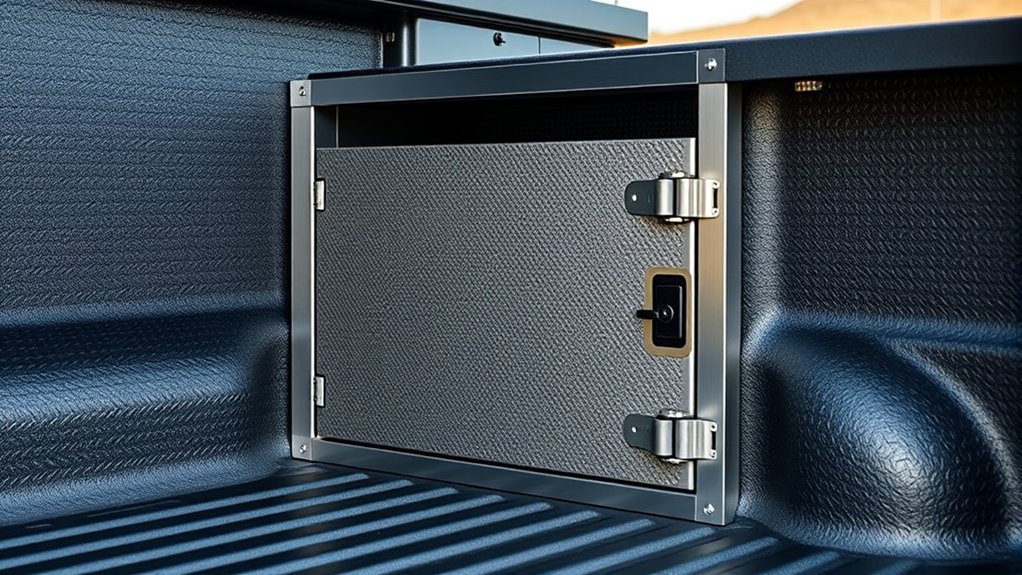
When choosing materials and components for your lockable cubby, prioritize durability by selecting sturdy plywood and metal brackets that can withstand regular use. Make sure your hardware, like locks and fasteners, are corrosion-resistant to prevent rust and ensure long-lasting performance. Additionally, opt for secure locking mechanisms that resist tampering and weathering, safeguarding your stored items effectively. Incorporating weatherproof coatings and rust inhibitors can further extend the lifespan of your storage solution for outdoor durability.
Durable Material Choices
Choosing the right materials is essential for ensuring your lockable storage cubby withstands the demanding environment of a truck bed. You should opt for sturdy plywood, like 3/4-inch thick sheets, for the main structure because it offers strength and ease of cutting. Aluminum channels or steel brackets will reinforce dividers and walls, providing durability against impacts and vibrations. For hardware, select corrosion-resistant screws, bolts, and washers designed for outdoor use, and consider thread-locking adhesives to prevent loosening over time. Using rust-resistant finishes or primers on metal parts will extend longevity. Avoid cheap, lightweight materials that can warp, rust, or break. Prioritize quality components that resist weather, moisture, and repeated use, ensuring your storage cubby remains secure and functional in tough conditions. Incorporating energy-efficient materials can also help reduce overall weight and improve the environmental sustainability of your project.
Corrosion-Resistant Hardware
Selecting corrosion-resistant hardware is crucial for ensuring your lockable storage cubby withstands the harsh conditions of a truck bed environment. You should choose fasteners like stainless steel, zinc-plated, or galvanized screws, bolts, and rivets, which resist rust and corrosion over time. Use weatherproof locks and latch mechanisms made from materials such as stainless steel or coated metals to prevent deterioration from moisture and dirt. Apply zinc-rich primer on metal components and treat drilled holes with rust inhibitors before assembly. Incorporate durable washers and lock nuts to secure hardware firmly. These corrosion-resistant materials will keep your cubby stable and functional, even after exposure to rain, mud, or snow, ensuring long-term performance and security in tough outdoor conditions. Proper material selection is essential for maximizing the durability of outdoor hardware in challenging environments.
Secure Locking Mechanisms
Durability in lock mechanisms is essential for securing your truck bed cubby against tampering and harsh weather conditions. Choose weather-resistant locks like keyed cam locks, latch locks, or padlocks made from stainless steel or zinc alloy. These materials resist rust and corrosion, ensuring long-term reliability. Opt for locking hardware with rubber or plastic covers to protect against dirt and moisture. Reinforce lock areas with steel or aluminum frames to prevent prying. When installing, use corrosion-resistant screws and bolts, and consider applying thread locking adhesives to prevent loosening over time. Position locks where they’re difficult to access or force open, and add protective covers or shields for extra security. Proper selection of durable, weatherproof components guarantees your cubby stays secure in any environment. Additionally, understanding free floating design principles can help ensure your storage remains flexible and accessible without compromising security.
truck bed lock and seal kit
As an affiliate, we earn on qualifying purchases.
As an affiliate, we earn on qualifying purchases.
Cutting and Assembling the Cubby Structure
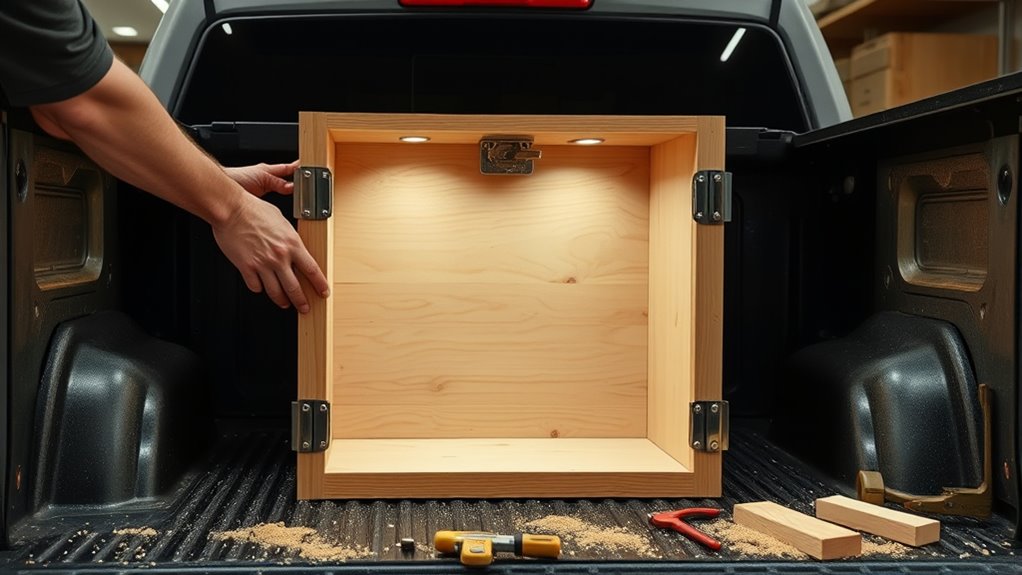
To guarantee your lockable storage cubby fits precisely within your truck bed wall, start by carefully measuring the available space, accounting for panels, ribs, and wheel wells. Transfer these measurements onto your plywood, making precise cuts with a circular saw. Use a framing square or speed square to ensure right angles for clean assembly. Trim panels accurately to avoid gaps or misalignments. Drill holes for mounting hardware and locks, paying attention to tight spaces around ribs. Join the panels using wood screws or self-drilling metal screws, reinforced with angle brackets for stability. Use corner clamps during assembly to keep pieces aligned. Smooth sharp edges with a router or sandpaper to prevent splintering. Double-check measurements before final assembly to ensure a snug, secure fit within your truck bed wall. Additionally, verifying your measurements with a measurement tool can help prevent errors and ensure a precise fit.
heavy-duty lock for truck storage
As an affiliate, we earn on qualifying purchases.
As an affiliate, we earn on qualifying purchases.
Mounting Techniques for Secure Installation
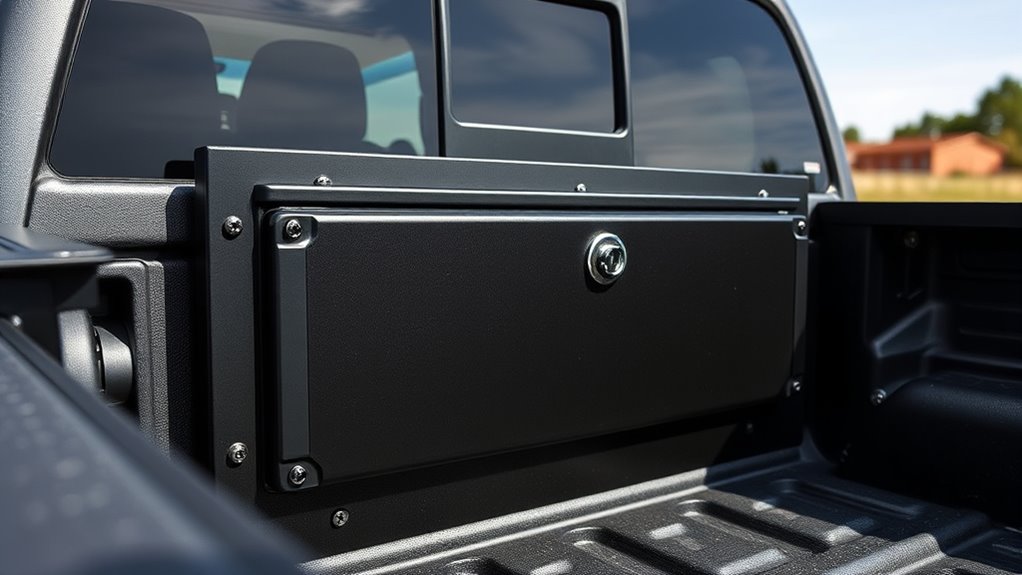
Proper mounting guarantees your lockable storage cubby stays firmly in place during transit and rough conditions. To achieve this, use heavy-duty bolts and screws designed for metal and wood, ensuring a secure attachment. Drill precise holes, avoiding ribs or welds, and treat the metal with rust-preventive primer before inserting fasteners. Secure the cubby back panel directly to the truck bed wall using bolts accessible from inside the bed or through taillight openings. Employ washers and thread-locking adhesives to prevent loosening over time. For added stability, consider using angle brackets or metal fasteners at corners and joints. Temporary fixtures like ratcheting cargo bars or C-clamps can hold components during positioning. Finish by tightening all fasteners securely to withstand vibrations and rough handling. Proper mounting techniques are essential for ensuring long-term durability and safety of the installation.
Installing Locking Mechanisms for Security
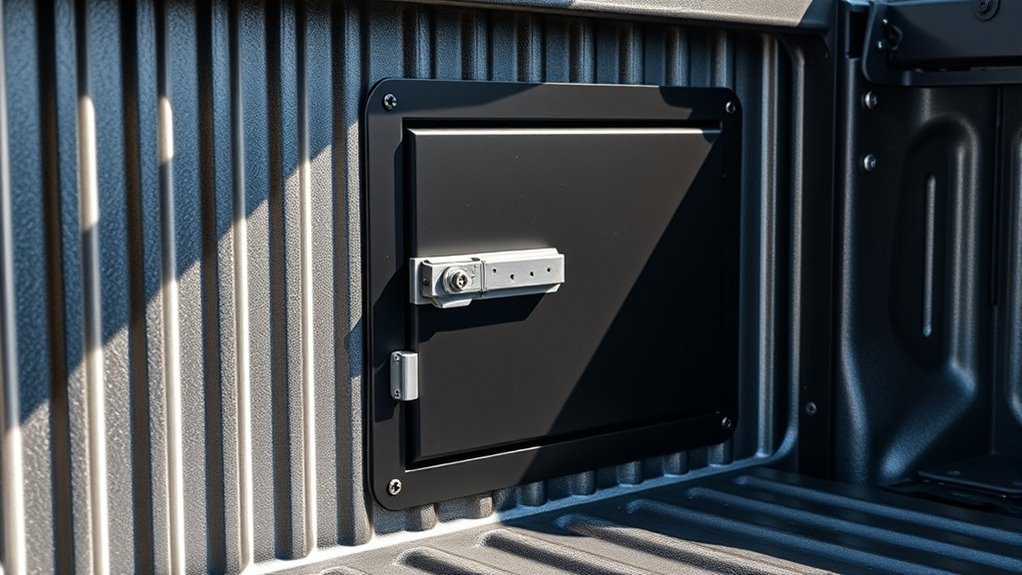
Installing effective locking mechanisms is essential to keep your stored items secure and prevent unauthorized access. Choose weather-resistant locks like keyed cam locks or latch locks that are durable enough to withstand outdoor conditions. Integrate these locks directly into your cubby doors or covers, ensuring they sit flush and are difficult to pry open. For added security, position locks away from vulnerable edges and reinforce the cubby frame with metal brackets or extra fasteners. If you prefer a simple DIY option, retrofit thumb screws or padlocks into existing latch points. Always use high-quality hardware designed for outdoor use, and consider applying rust-resistant finishes or sealants around lock areas to prevent corrosion. Proper locking mechanisms give you peace of mind, knowing your tools and gear stay safe. Additionally, selecting security-focused hardware designed specifically for outdoor use can further enhance your cubby’s protection against tampering.
Customizing and Enhancing Storage Features
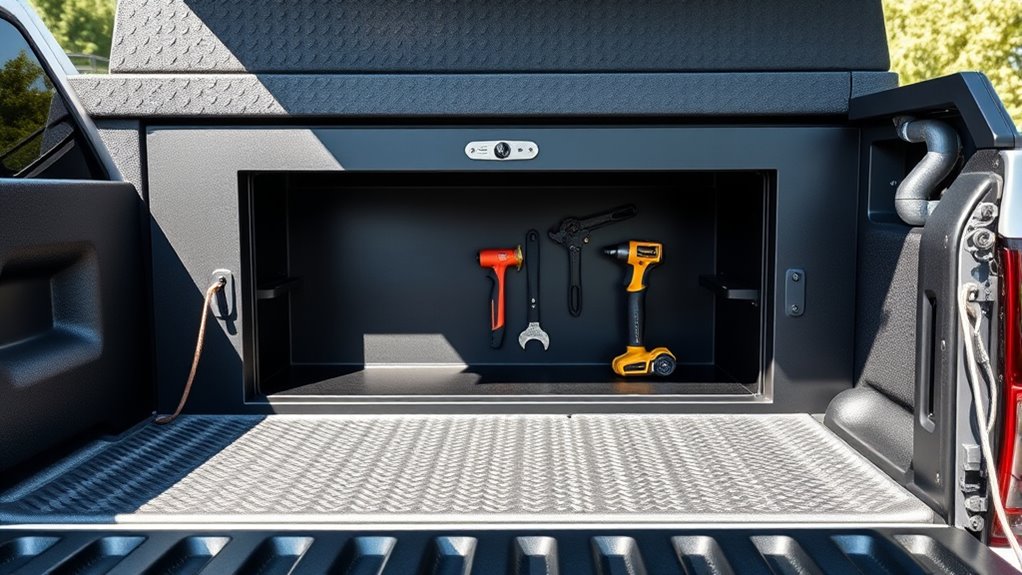
Enhancing your truck bed storage with customization options allows you to tailor the space to fit your specific needs. You can add modular dividers to organize tools, gear, or supplies more efficiently. Installing pull-out trays or drawer slides inside the cubby makes accessing stored items easier. Weatherproof sealants or liners protect the interior from moisture, dirt, and damage, extending the lifespan of your storage. For additional organization, consider mounting MOLLE panels or attaching hooks for tools and accessories. Rounding edges, painting, or applying protective coatings not only improve durability but also give your cubby a finished look. These enhancements help you maximize space, improve accessibility, and create a more functional and secure storage solution tailored to your truck and your work or recreational needs. Proper sealing techniques can further prevent corrosion and ensure long-term durability of your customized storage.
Maintaining and Protecting Your Lockable Cubby
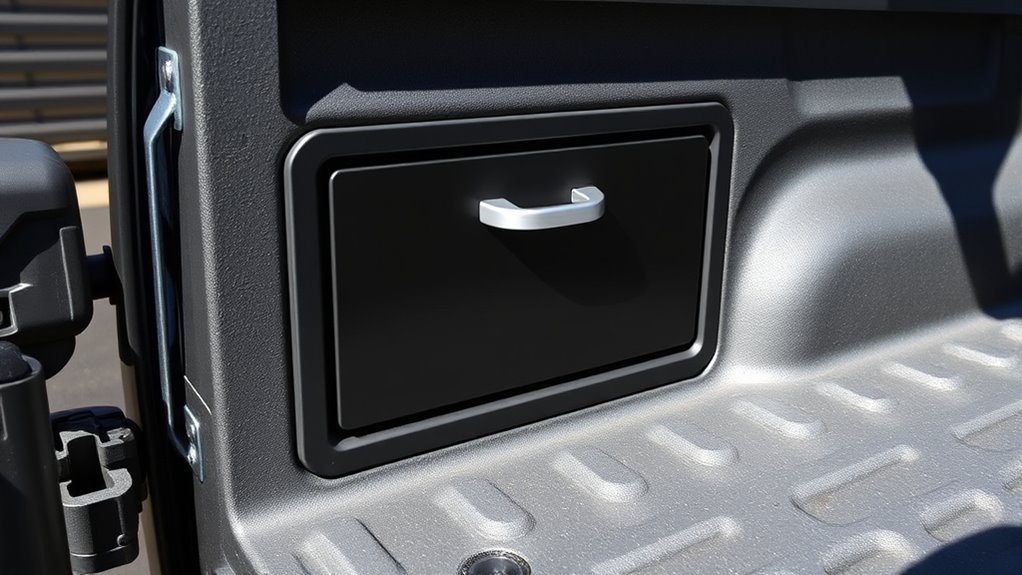
To keep your lockable cubby in top condition, regular maintenance and protective measures are essential. Check for loose screws, bolts, and fasteners, tightening them as needed to prevent rattling or structural issues. Apply rust-preventive primer and lubricate locks periodically to ensure smooth operation and resist corrosion from exposure to moisture. Clean the exterior and interior surfaces with mild soap and water, removing dirt, mud, or debris that could cause wear over time. Protect the cubby from harsh environmental elements by applying a weatherproof sealant or paint, especially on exposed edges. Inspect lock mechanisms for signs of tampering or damage, replacing or repairing faulty components promptly. Proper upkeep ensures your storage remains secure, functional, and durable for long-term use. Additionally, considering the use of corrosion-resistant materials can further enhance the longevity of your lockable cubby in outdoor conditions.
Frequently Asked Questions
What Are the Best Lock Types for Outdoor Truck Bed Storage?
You should choose keyed cam locks or latch locks for outdoor truck bed storage because they’re weather-resistant and secure. Padlocks with weatherproof shackles also function well, especially if you retrofit existing latches. Consider locks with durable, corrosion-proof finishes like zinc or stainless steel. Position the locks to prevent prying, and reinforce cubby edges for added security. These options guarantee your gear stays safe in outdoor conditions.
How Do I Prevent Corrosion Around Locks and Hinges?
Think of your locks and hinges as sitting in a rainstorm—corrosion is inevitable if you don’t take precautions. To prevent this, apply zinc-rich primer on drilled holes and metal surfaces before assembly. Use stainless steel or weather-resistant hardware, and regularly clean and lubricate moving parts with a corrosion inhibitor. Sealing joints with waterproof sealant also keeps moisture out, giving your storage a long-lasting, rust-free life.
Can I Retrofit Existing Truck Bed Panels With Lockable Cubbies?
Yes, you can retrofit existing truck bed panels with lockable cubbies. Start by measuring available space and cutting plywood or metal panels to fit. Attach the panels securely with screws or bolts, ensuring they don’t interfere with ribs or wheel wells. Install lockable latches or cam locks on the doors, and reinforce mounting points with brackets or fasteners. Seal drilled holes to prevent corrosion, and test the locks for proper security.
What Safety Precautions Should I Take During Installation?
You should wear safety goggles to protect your eyes from debris and gloves to prevent cuts when handling sharp tools or materials. Always work in a well-ventilated area, especially when using adhesives or paints. Secure your truck bed to prevent movement, and use clamps to hold panels steady during cutting or drilling. Follow manufacturer instructions for tools and hardware, and double-check measurements before making cuts to avoid mistakes.
Are There Recommended Finishes for Weather-Resistant Cubby Surfaces?
Think of your cubby as a fortress against the elements. To keep it weather-resistant, opt for finishes like marine-grade paint or polyurethane sealant, which act like a waterproof shield. You can also use outdoor-grade varnish or epoxy coatings to enhance durability. Applying these finishes guarantees your storage stays dry and protected, turning your truck bed into a reliable, weatherproof sanctuary for your gear.
Conclusion
Now that you’ve built your lockable cubby, you’re practically a locksmith and carpenter rolled into one—ready to guard your treasures from any sneaky intruder or curious neighbor. Just remember, no lock is foolproof, and even the best craftsmanship can’t stop a determined raccoon or a mischievous kid. So, enjoy your fortress of cargo security, and maybe keep a spare snack in there—just in case your new storage becomes the world’s most secure, yet surprisingly empty, treasure chest.