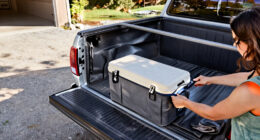
To manage food storage in your truck bed, choose durable, airtight containers to prevent leaks and keep pests out. Use insulated coolers with ice packs for perishables, and store hot foods in insulated containers. Organize items by placing heavier ones at the bottom and lighter, fragile ones on top, securing everything with bungee cords. Regularly check temperatures and seals to guarantee freshness and safety. Keep everything in proper zones and stay vigilant—more tips can help you master the system.

Get business pricing on garage and car supplies
- Business-only prices and quantity discounts
- Tax-exempt purchasing
- Multiple users, one account, clear invoices
Key Takeaways
- Use durable, airtight containers with clear lids for easy organization and to prevent leaks.
- Segment the truck bed into zones for perishables, non-perishables, and cooking supplies.
- Secure containers with bungee cords or cargo nets to prevent shifting during transit.
- Keep raw meats at the bottom of coolers, stored in sealed containers to prevent cross-contamination.
- Regularly inspect storage conditions and temperature to ensure food safety and prevent spoilage.

Storing food in your truck bed requires careful planning to keep everything fresh and secure during transport. One of the most important aspects is choosing the right storage container materials. Durable, airtight containers like heavy-duty plastic or stainless steel work best because they prevent leaks, block out moisture, and keep out pests. Avoid flimsy or porous options, as they can compromise food safety and lead to spoilage. Additionally, selecting containers with secure lids ensures that no food spills or contaminates other supplies during transit. When stacking or packing, consider containers that are uniform in size for easy organization and maximize space efficiency. Using clear containers allows you to quickly identify contents without opening each one, saving time and reducing unnecessary exposure to air and bacteria.
Proper food storage also involves understanding how to manage cooking techniques during transport. If you plan to prepare meals on the go, invest in portable cooking appliances like small stoves or grills that can be safely used in a truck bed setup. Keep raw ingredients separate from cooked foods to avoid cross-contamination, and store raw meats in sealed containers on the bottom of your cooler or storage area to prevent juices from leaking onto other items. When reheating or cooking, ensure your equipment is clean and used in a well-ventilated area. It’s crucial to maintain proper food temperatures; use insulated coolers with ice packs for perishables and keep hot foods in insulated containers to preserve their temperature until you’re ready to eat. Proper temperature control is essential for maintaining food safety and freshness during transportation. Recognizing the importance of food safety standards can help you avoid health risks and spoilage. Moreover, understanding the storage conditions necessary for different types of food can further ensure freshness and safety during your trip.
Furthermore, understanding the importance of energetic alignment can help you stay focused and motivated in maintaining an organized and efficient food storage system. You should also pay attention to the placement of your storage containers within the truck bed. Heavier items, like canned goods or large bottles of water, should sit at the bottom to stabilize your setup. Lighter, more fragile items go on top, reducing the risk of crushing or damage. Secure everything with bungee cords or cargo nets to prevent shifting while driving, which could cause spills or breakage. Consider dividing your truck bed into zones—one for perishable foods, another for non-perishables, and one for cooking supplies. This organization makes it easier to access what you need without rummaging through everything. Additionally, using storage solutions designed specifically for truck beds can further improve organization and security. Developing a consistent maintenance routine for your food storage system can also help catch potential issues early and keep everything in optimal condition.
Finally, regular checks are essential. Before setting out, double-check that all containers are sealed properly and that perishable items are still within their safe temperature ranges. During stops, quickly inspect your storage setup to ensure everything remains secure and intact. By carefully selecting storage container materials, applying proper cooking techniques, and maintaining organized, secure packing, you’ll keep your food fresh, safe, and ready for your journey.
airtight plastic food storage containers
As an affiliate, we earn on qualifying purchases.
As an affiliate, we earn on qualifying purchases.
Frequently Asked Questions
How Do I Prevent Food From Spoiling in Hot Weather?
To prevent food from spoiling in hot weather, you should use cooling techniques like portable coolers with ice packs. Incorporate food dehydration for long-lasting snacks, reducing moisture that causes spoilage. Keep perishables in insulated containers, and store them in the shade whenever possible. Regularly check and replace ice packs, and make sure your cooler is sealed tightly. These strategies help maintain freshness and prevent food from spoiling during hot days.
What Types of Containers Are Best for Truck Bed Food Storage?
You should choose reusable containers and insulated coolers for truck bed food storage. Reusable containers keep your food organized and eco-friendly, while insulated coolers maintain the proper temperature, preventing spoilage. Both options are durable and portable, making them ideal for on-the-go needs. By pairing these containers with good insulation, you safeguard your food, extend freshness, and guarantee safe, convenient storage in your truck bed.
How Can I Secure Food From Pests During Transportation?
To keep pests at bay during transportation, you should use secure packaging that’s hard for pests to access, like airtight containers. Additionally, incorporate pest deterrents such as natural repellents or traps around your storage area. Make sure your containers are tightly sealed and stored off the ground. Regularly check your setup for signs of pests, and promptly address any issues to prevent contamination and protect your food during transit.
Is There a Recommended Way to Organize Different Food Types?
You should organize your food types with laser-focused precision, making your meal prep effortless and your truck bed a fortress against chaos. Use clear, labeled containers for each food group—meat, grains, snacks—so you can find what you need instantly. This system prevents mix-ups, keeps pests at bay, and transforms your storage into a culinary command center. Food labeling and smart organization make every trip a smooth, stress-free adventure.
How Often Should I Check and Restock Stored Food?
You should check your stored food at least once a month to guarantee freshness and safety. Regular inspections help you identify expired items and adjust your meal planning accordingly. Restocking emergency supplies and perishable foods is essential, especially if your trips are frequent or long. Keeping a rotation system ensures you always have fresh, ready-to-eat options, and your emergency supplies stay reliable in any situation.
As an affiliate, we earn on qualifying purchases.
Conclusion
Managing food storage in your truck bed keeps your supplies fresh and accessible, ensuring you’re always ready for the road. Did you know that properly stored food can last up to 50% longer, reducing waste and saving money? By using insulated containers, securing items, and maintaining a clean setup, you’ll maximize space and efficiency. Keep your food organized and fresh, so you can focus on the journey ahead without worrying about spoilage or clutter.
cargo bungee cords for truck bed
As an affiliate, we earn on qualifying purchases.
As an affiliate, we earn on qualifying purchases.
As an affiliate, we earn on qualifying purchases.
Halloween Picks
halloween
As an affiliate, we earn on qualifying purchases.