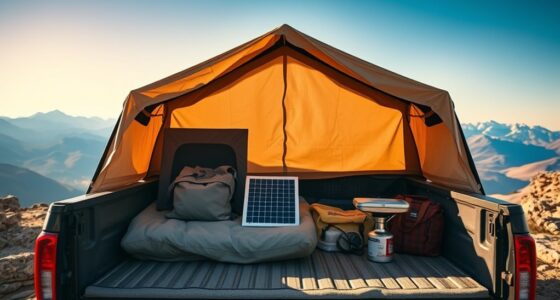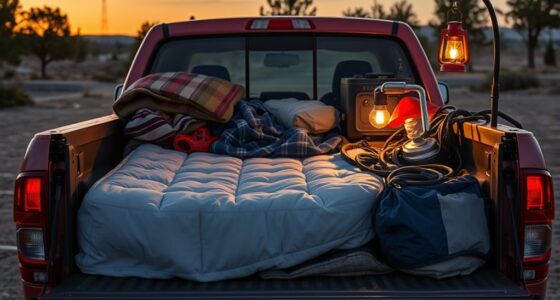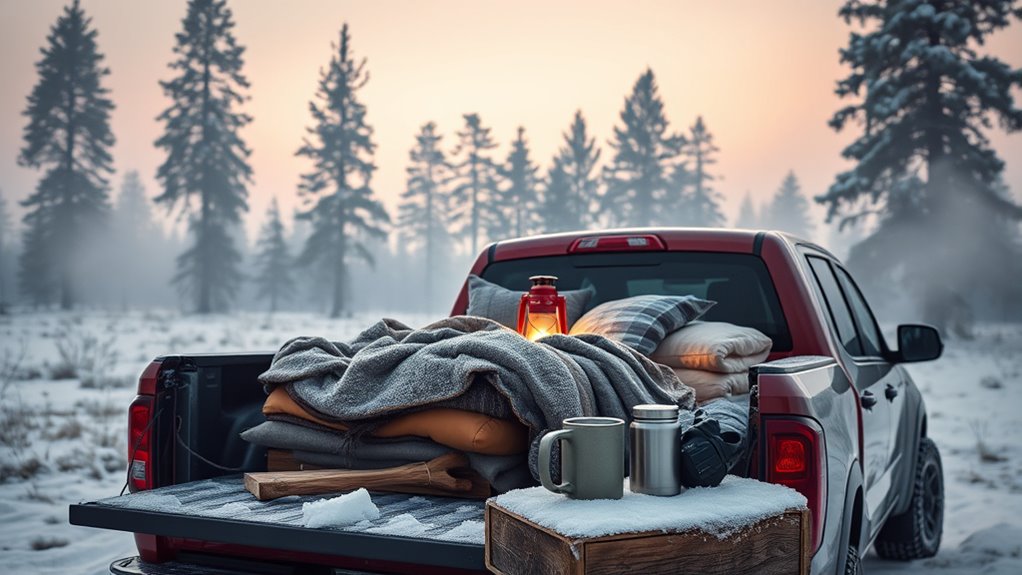

To stay warm at 20°F during truck bed camping, focus on sealing all gaps and adding insulation to your camper and sleeping area. Use a high-quality sleeping bag rated well below the temperatures, layered with blankets and insulating pads. Choose a reliable heating system like a diesel heater, and make certain your water lines are insulated or heated to prevent freezing. Proper clothing is key—wear moisture-wicking base layers and insulating outerwear. If you want all the details that help you stay safe and warm, keep going.
Key Takeaways
- Insulate and seal all gaps around windows, doors, and vents to prevent warm air loss and cold drafts.
- Use appropriate sleeping gear, such as insulated bags and layered blankets, rated below expected lows.
- Maintain a reliable heat source, like a diesel heater, and ensure proper ventilation to prevent CO2 buildup.
- Protect water systems with insulation, covers, and heating solutions to prevent freezing.
- Choose a well-insulated camper with sealed windows and a sub-zero rated package for consistent warmth.
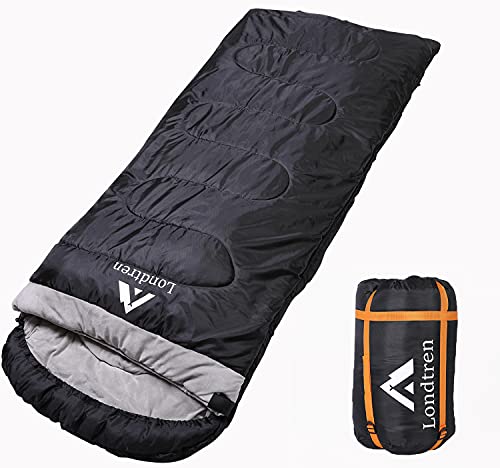
Londtren Large 0 Degree Sleeping Bags for Adults Cold Weather Sleeping Bag Camping Winter Below Zero 20 15 Flannel Big and Tall XXL
【Big and Tall Sleeping Bag】:Extra large sleeping bag height:90 inch and width:40 inch,Extra wide sleeping bag can accommodate…
As an affiliate, we earn on qualifying purchases.
As an affiliate, we earn on qualifying purchases.
Selecting the Right Sleeping System for Cold Nights

Choosing the right sleeping system is essential for staying warm during cold nights in your truck bed camper. You want a sleeping bag rated 10-20°F lower than the coldest expected temperature. For example, a 0°F-rated bag works well in 20°F to 40°F conditions. Layering is vital; wear pajama pants, a hoodie, and use multiple blankets to build insulation barriers. Consider using two quilt-style sleeping bags—one rated for 20°F and another for 40°F—to adjust your comfort level. Electric heating blankets can preheat your bag but shouldn’t run all night, as they drain batteries fast. Placing foam blocks under your bed prevents cold drafts from the ground and wheel wells. Incorporating energy-efficient insulation materials can further improve warmth retention. With these strategies, you’ll stay warmer and more comfortable throughout the night.

YGDMD OEM#326A0004 59.1×3/5" Tonneau Cover Seal Strip,2026 Upgrade Rubber Tonneau Cover Weather Stripping with Ribbed Design,Self-Adhesive Truck Bed Seal Kit Car Accessories
RIBBED DESIGN: Our truck topper seal uses a unique rib design with raised ribs that provide multiple barriers…
As an affiliate, we earn on qualifying purchases.
As an affiliate, we earn on qualifying purchases.
Essential Insulation Techniques for Comfort and Warmth

To stay warm in your truck bed, you need to focus on insulating your sleeping area effectively. Make sure to add insulation materials like foam or blankets beneath and around your bed to block cold air. Also, seal all gaps around windows, doors, and vents to prevent heat from escaping and cold drafts from sneaking in. Utilizing space-heating solutions such as electric fireplaces or portable heaters can further enhance warmth and comfort during cold nights.
Insulate Sleeping Areas
Insulating your sleeping area is crucial for maintaining warmth in cold-weather truck bed camping. Proper insulation keeps cold air out and traps your body heat, making a big difference at 20°F. Think of it as creating a cozy bubble inside your truck bed.
Here are four essential insulation techniques:
- Use foam panels under your mattress to block ground drafts and cold airflow from wheel wells.
- Add reflective bubble wrap to walls and ceiling to reflect body heat inward.
- Install insulated curtains around your sleeping area to prevent heat loss through windows or open spaces.
- Layer blankets and quilts inside your sleeping bag for extra thermal barriers and comfort.
These steps help you stay warm and comfortable all night long. Additionally, choosing the right safe and reliable insulation materials can ensure your setup is both effective and secure.
Seal All Gaps
Sealing all gaps in your truck camper is essential to prevent warm air from escaping and cold drafts from sneaking in. Carefully inspect around windows, doors, vents, and seams, and seal them with weatherproof tape, caulk, or foam strips. Pay special attention to areas where panels meet and joints near the cab and camper shell. Use draft stoppers or foam gaskets on door and window frames to block air leaks. For larger openings, consider installing removable panels or fabric barriers to reduce airflow. Ensuring a tight seal minimizes heat loss, making your heating system more efficient and keeping you warmer. Regularly check and re-seal as needed, especially after travel or extreme weather, to maintain a consistent, cozy interior at 20°F. Incorporating proper insulation techniques into your sealing process will further enhance your camper’s warmth and energy efficiency.

VEVOR 8KW Diesel Heater All in One, DC12-24V, Fast Heating Diesel Air Heater with Remote Control and Color Digital Display, Low Noise, Voice Announcement, for RV, Truck, Camper, Van, Boat and Trailer
Efficient Heating: This diesel heater 8kw operates on DC 12V-24V, suitable for areas ranging from 161-215 FT². The…
As an affiliate, we earn on qualifying purchases.
As an affiliate, we earn on qualifying purchases.
Heating Options: Which System Works Best Below Freezing

When choosing a heating system for below-freezing conditions, diesel heaters stand out for their reliability and long-lasting warmth. Propane heaters can work well but need large tanks and careful management to avoid running out of fuel. Electric options are convenient but often struggle with battery life in extreme cold, making diesel the top choice for extended cold-weather camping. Additionally, smart thermostats can help optimize heating efficiency and conserve energy in such conditions.
Diesel Heaters Dominance
Diesel heaters stand out as the top choice for heating your truck bed camper in below-freezing conditions because of their reliability and efficiency over extended periods. They can run continuously without quickly draining your batteries or relying on external power sources. Imagine:
- A steady stream of warm air flowing through ducts, evenly heating every corner.
- The heater’s robust burner igniting reliably even in -20°F weather.
- A digital thermostat maintaining a consistent, cozy 54°F inside.
- Extended operation with minimal fuel refills, thanks to large diesel tanks or auxiliary fuel sources.
- Nanotechnology-based insulation materials can further improve heat retention and reduce fuel consumption during cold nights.
These features make diesel heaters a trusted solution for cold-weather camping, providing warmth without the frequent interruptions or safety concerns associated with other heating options.
Propane vs. Electric
Both propane and electric heating systems have distinct advantages and limitations when it comes to below-freezing conditions. Propane heaters deliver consistent warmth and can operate independently of your battery, making them reliable for extended cold spells. However, they require full tanks and proper ventilation to prevent dangerous fumes. Propane’s energy density means longer burn times, but supply limitations can be an issue in extreme cold. Electric heaters are quieter, cleaner, and easier to operate, especially if you have a reliable power source like a deep-cycle battery or shore power. Yet, they tend to drain batteries quickly and may struggle to produce enough heat without supplementary power. In frigid weather, propane generally offers more sustained, robust warmth, but electric systems can be effective with proper planning and backup power. Additionally, air quality considerations are important, as proper ventilation when using propane heaters helps prevent the buildup of potentially harmful fumes.

Frienda Rv Window Reflective Insulation Roll 24inchx10ft Double Aluminum Foil Heat Bubble Thermal Window Shade Door Cover Blackout for Garage Roof Travel Camper Skylight Shield
Upgraded Blackout Design: this RV window cover adopt upgraded blackout design, three layer material structure effectively keeping the…
As an affiliate, we earn on qualifying purchases.
As an affiliate, we earn on qualifying purchases.
Preparing Your Truck Bed for Freezing Temperatures
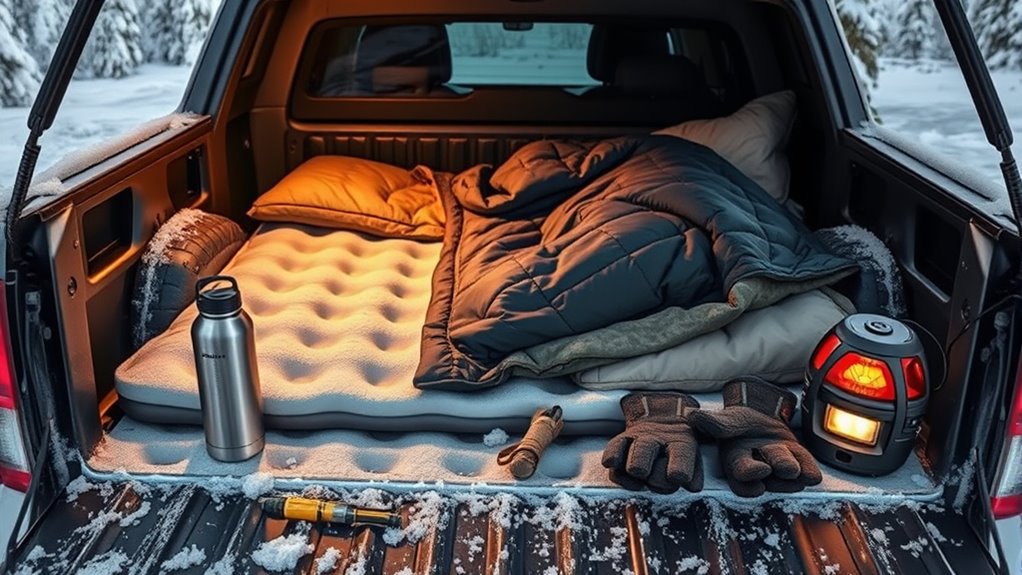
To keep your truck bed comfortable and safe during freezing temperatures, you need to take proactive steps to insulate and seal it effectively. First, install foam board insulation along the walls and floor to block cold air. Second, seal all gaps and leaks with weatherstripping or caulk, especially around windows and entry points. Third, cover exposed openings with insulated window coverings or heavy-duty blankets to prevent heat loss. Finally, elevate your sleeping platform with foam blocks or battens to create a cold barrier from the ground and wheel wells. These steps help trap heat inside, prevent drafts, and maintain a warmer environment. Proper insulation and sealing are essential for navigation and mapping to ensure your setup remains effective and safe. With proper insulation and sealing, your truck bed becomes a more hospitable winter shelter.
Water System Management in Freezing Conditions
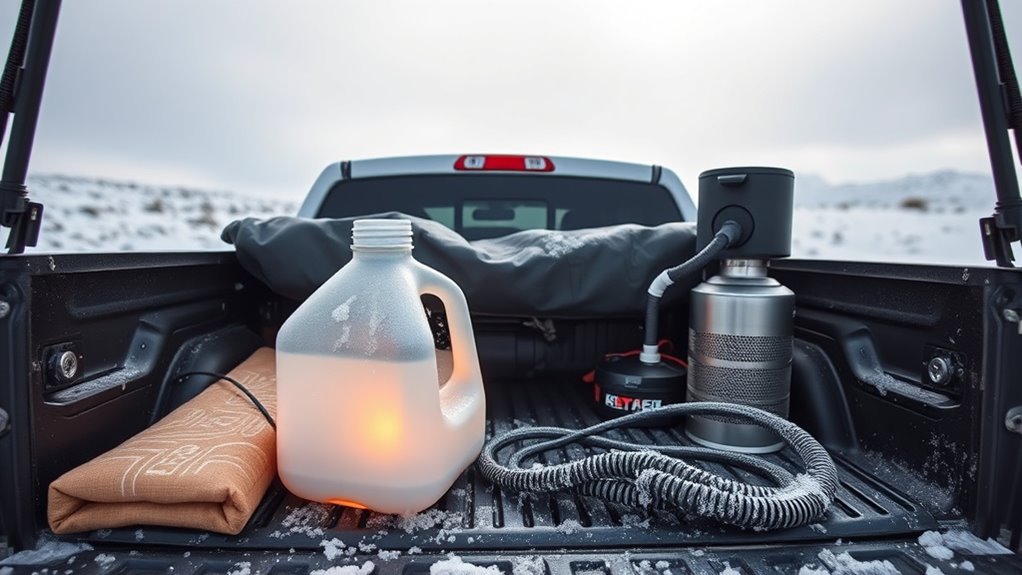
Proper water system management is essential when camping in freezing temperatures, as any exposed plumbing can freeze and cause costly damage. To prevent this, insulate all exposed pipes with foam or heat tape, especially in vulnerable areas like faucets and storage compartments. Use recirculating valve systems with timers to keep water moving, minimizing freezing risk. Drip faucets slightly to maintain a continuous flow, which helps prevent ice formation inside lines. Keep holding tanks warm with heated basements or ducted furnace heat, and consider adding antifreeze if you’ll be away for extended periods. Cover or insulate external water lines and slide-out compartments, since they’re more exposed to the cold. Regularly check your plumbing for signs of freezing or leaks, and address issues immediately to ensure continuous water access. Additionally, selecting a water system with high contrast ratios can improve visibility when inspecting and maintaining plumbing in low-light winter conditions.
Clothing and Personal Gear Strategies for Cold Weather
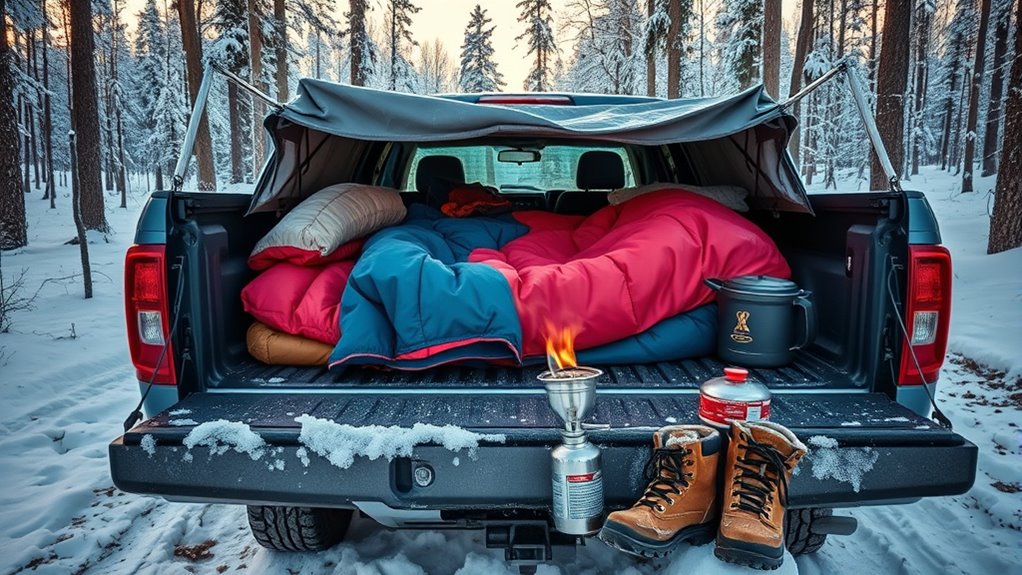
Staying warm in cold weather starts with choosing the right clothing and gear. Your goal is to trap heat and block out cold air. First, wear a moisture-wicking base layer to keep sweat away from your skin. Second, add insulating layers like fleece or down to retain body heat. Third, top it with a waterproof, windproof outer shell to shield against wind and snow. Fourth, don’t forget accessories: a warm hat, thick socks, and insulated gloves make a big difference. Pack extra clothing to change into if you get damp or cold. Use thermal underwear and layered blankets inside your sleeping bag for added warmth. Additionally, consider Free Floating techniques to prevent heat loss and improve overall warmth management. Effective gear keeps your core temperature stable and helps you rest comfortably in freezing conditions.
Choosing a Camper That Handles 20°F and Below
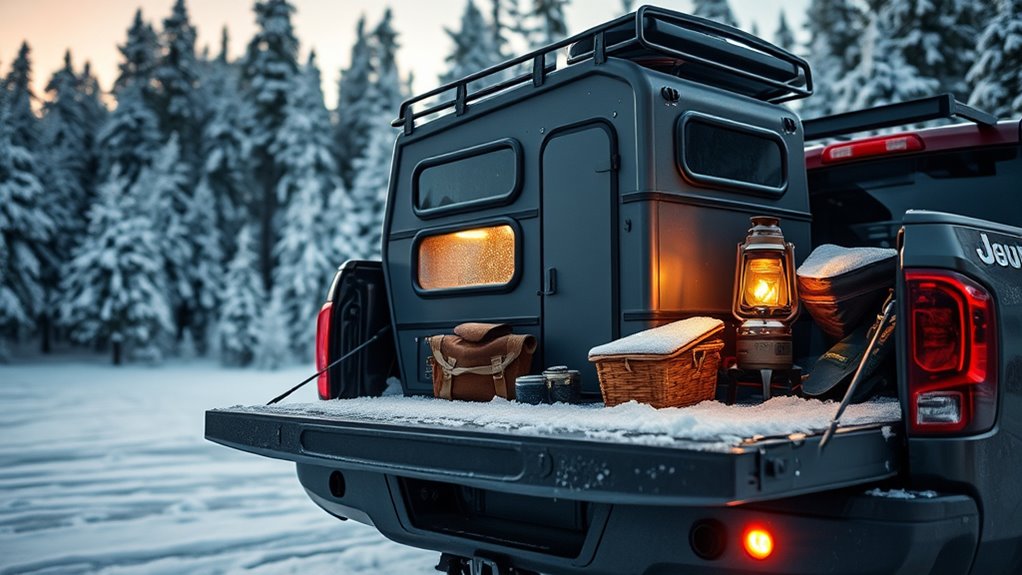
When selecting a camper capable of handling temperatures at or below 20°F, focus on models built for extreme cold. Look for hard-side units with upgraded insulation, such as foam-Cor walls and insulated floors, to prevent heat loss. Choose campers with ducted heating systems that distribute warm air evenly, especially to cabover areas. Verify that the camper has sealed windows and well-insulated doors to minimize drafts. Consider models rated for sub-zero conditions, like those with factory-tested cold-weather packages or purpose-built designs like the ORU Tenfold Weekender. Heavy-duty construction materials and additional insulation layers are essential for maintaining interior warmth. Finally, ensure your camper’s water and plumbing systems are protected with insulation or heating solutions to prevent freezing during extended cold spells.
Practical Tips for Staying Warm and Safe During Cold-Weather Camping
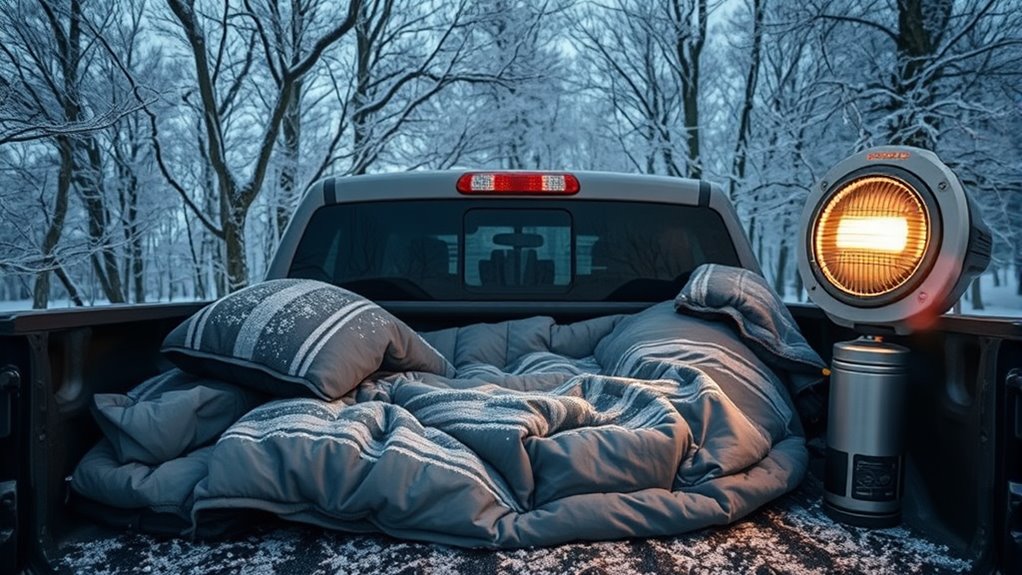
To keep warm and safe during cold-weather camping, you need to prioritize insulation and heat management. First, seal all gaps around your truck bed, windows, and vents to prevent drafts. Second, layer your clothing—wear thermal underwear, a hoodie, and a down jacket when outside, and add blankets and sheets inside. Third, use a high-quality sleeping bag rated for temperatures below your expected lows, and consider an insulating pad underneath. Fourth, monitor your heating system; run your diesel heater efficiently, and keep spare fuel handy. Visualize these steps:
- Wrapping yourself tightly in layered clothing and blankets.
- Sealing every window and vent for maximum insulation.
- Sleeping on an insulated foam pad with a rated sleeping bag.
- Checking your heater’s fuel and thermostat regularly.
Frequently Asked Questions
How Do I Prevent Frost Buildup Inside My Sleeping Bag?
To prevent frost buildup inside your sleeping bag, you should keep moisture out by avoiding sweating and dampness. Use a moisture-wicking liner and layer appropriately to stay warm without overheating. Ventilate slightly to reduce humidity, and make certain your sleeping bag stays dry by storing it in a dry place after use. Additionally, consider using a sleeping bag with water-resistant or breathable materials to minimize condensation.
What Safety Precautions Are Essential When Using Propane Heaters in Cold Conditions?
When using propane heaters in cold conditions, you need to guarantee proper ventilation to prevent carbon monoxide buildup. Always operate the heater in a well-ventilated area and never leave it unattended while running. Use a carbon monoxide detector inside your camper for added safety. Keep a safe distance from flammable materials, and check for leaks regularly. Make sure your propane tanks are secure and in good condition to avoid accidents.
How Can I Keep My Electronics and Batteries Warm Overnight?
To keep your electronics and batteries warm overnight, you should insulate them with foam or thermal covers to reduce heat loss. Store batteries in a warmer spot inside your camper, away from cold drafts. Consider using a small, low-wattage heater or heat packs nearby, but avoid overcharging or exposing batteries to direct heat. Regularly check their temperature and voltage to guarantee peak performance and prevent freezing.
What Are the Best Ways to Manage Condensation in Cold Camping Environments?
Condensation is like fog creeping into your space, turning warm air into icy droplets. To manage it, you should make certain of proper ventilation by cracking windows slightly and use moisture absorbers or silica packs to soak up excess humidity. Keep your sleeping area insulated with blankets or foam, and avoid over-heating. Running a small, vented fan helps circulate air, preventing moisture buildup and keeping your environment dry and comfortable.
How Do I Choose Between a Hard-Side and Soft-Side Camper for Winter Camping?
You should choose a hard-side camper for winter camping because it offers better insulation and durability against extreme cold. Hard sides retain heat more effectively, helping you stay warm in freezing temperatures. They also resist snow and ice buildup better than soft-side models. If you prioritize reliable warmth, structural strength, and protection from harsh weather, a hard-side camper is your best choice for winter conditions.
Conclusion
So, after all this talk about insulation, heating, and gear, you’d think staying warm at 20°F is a breeze. Ironically, it’s often the simple things—like dressing in layers or sealing your truck bed—that make all the difference. Sure, fancy gear helps, but don’t forget, sometimes the best way to stay warm is just to outsmart the cold. Who knew that surviving cold-weather camping could come down to common sense?