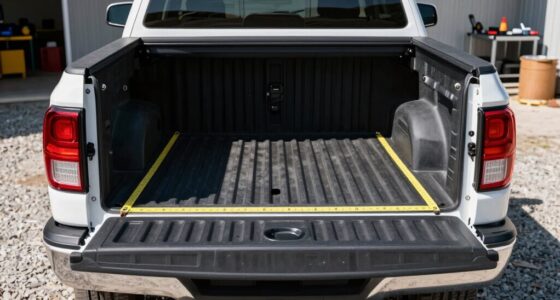

Overloading your truck bed even slightly shifts the center of gravity higher and further back, making your vehicle more unstable and harder to control. This increases the risk of tipping, rolling over, or losing cargo during sharp turns or stops. It also puts extra strain on brakes, suspension, and tires, leading to faster wear and higher repair costs. If you keep going, you’ll discover how these small overloads can cause serious safety and vehicle issues.
Open a free Amazon Business account
Business pricing, bulk buying and tax-exempt orders.
As an affiliate, we earn on qualifying purchases.
Key Takeaways
- Slight overload raises the center of gravity, causing instability and increasing rollover risk during turns or sudden stops.
- Even minor overloading can loosen cargo, making it shift or fly out, posing road hazards.
- Overloading accelerates wear on brakes, suspension, and tires, leading to costly repairs and reduced vehicle lifespan.
- Excess weight hampers fuel efficiency and increases mechanical strain, decreasing overall performance.
- Improper load distribution and unsecured cargo compromise vehicle handling and safety.

Ever wondered what happens when you slightly overload your truck bed? It might seem like a minor issue at first, but even a small overload can set off a chain of problems that affect your safety, your vehicle’s performance, and your cargo’s security. When you load your truck, the way you distribute that weight plays a vital role in how your vehicle handles. If you ignore proper load distribution, you risk unevenly placing the weight, which causes instability. A poorly balanced load makes steering unpredictable, increases tire wear, and can even lead to loss of control, especially during sharp turns or sudden stops. You might think a slight overload isn’t a big deal, but it shifts the center of gravity higher and further back, making your truck more prone to tipping or rolling over. Proper load distribution is essential to maintaining vehicle stability and safety. Cargo security is another essential concern. When you overfill your truck bed, the chances of items shifting or flying out increase dramatically. Even if your load seems stable at first, vibrations and bumps on the road can loosen unsecured cargo. This isn’t just about losing belongings; it’s a safety hazard for you and other drivers. Flying debris can cause accidents, and loose cargo can become a dangerous projectile if it’s not secured properly. Overloading often leads to insufficient tie-down points or compromised restraints, making your cargo vulnerable to movement. This movement not only risks damaging your haul but also affects your truck’s balance, which can further impair handling. Additionally, proper load management can help prevent unnecessary strain on your vehicle’s components, reducing the likelihood of breakdowns. From a mechanical perspective, the increased strain from overloads can also accelerate the wear and tear on your truck’s parts, leading to more frequent repairs. Ignoring these principles can also lead to **accelerated wear and tear**, increasing maintenance costs over time. Overloading also impacts your vehicle’s braking system. The extra weight puts added strain on your brakes, increasing stopping distances and wearing brake components faster. It can also damage suspension parts, axles, and tires, leading to **costly repairs down the line. Additionally, when you carry more weight than your truck is designed to handle, it reduces fuel efficiency and accelerates strain on your engine. All these issues stem from neglecting the importance of load distribution and cargo security, which are interconnected. Properly distributing your load ensures that weight is evenly spread, preventing undue stress on any single part of your truck. Securing your cargo tightly prevents shifting, which helps maintain control and stability. Moreover, understanding the importance of vehicle safety factors can help you avoid dangerous situations on the road. In the end, slight overloads aren’t so slight—they have serious consequences that can compromise your safety, damage your vehicle, and jeopardize your cargo. Taking the time to understand load distribution and investing in proper tie-downs keeps you safe on the road and helps your truck perform at its best. It’s a small effort that pays off in peace of mind** and avoiding costly repairs.
As an affiliate, we earn on qualifying purchases.
Frequently Asked Questions
Can Slight Overloads Affect Fuel Efficiency?
Slight overloads can negatively impact your fuel economy because overload effects make your engine work harder to carry the extra weight. When your truck is slightly overloaded, it increases resistance and strain on the drivetrain, leading to higher fuel consumption. Even small overloads can cause noticeable drops in efficiency over time, so it’s best to stay within recommended weight limits to optimize fuel economy and prevent long-term damage.
How Does Overload Impact Truck Braking Performance?
Did you know that overloaded trucks can take up to 20% longer to stop? When you overload your truck, it strains the braking system, causing brake overheating and reducing effectiveness. This not only compromises safety but accelerates tire wear. You might notice increased stopping distances and uneven tire wear, which can lead to costly repairs. Always keep your load within recommended limits to guarantee your brakes work efficiently and your tires last longer.
Are There Legal Penalties for Minor Overloads?
Yes, there are legal consequences for minor overloads. If you’re caught, you could face fines, penalties, or even license suspension, depending on your jurisdiction. Overloading can also lead to insurance issues—your coverage might be denied if an accident occurs due to exceeding weight limits. Staying within legal weight limits helps you prevent these legal consequences and guarantees your insurance remains valid, protecting you from costly liabilities.
What Are Signs of Suspension Damage From Overload?
Hold onto your DeLorean—overloading your truck bed can seriously damage your suspension. Signs include uneven tire wear, especially on the edges, and suspension wear like sagging or excessive bouncing. You might also notice a rougher ride or strange noises when driving. Ignoring these signs accelerates tire degradation and worsens suspension damage, risking safety and costly repairs. Regular inspections help catch issues early before they turn into bigger problems.
Does Overload Reduce Truck Lifespan Significantly?
Overloading your truck can substantially reduce its lifespan by stressing components like the suspension and frame. It also impacts cargo stability, increasing the risk of shifting and accidents. Tire wear becomes uneven and faster, leading to costly replacements. Over time, these issues can cause major damage, making your truck less reliable and more expensive to maintain. To protect your vehicle, avoid consistently overloading and follow weight limits carefully.
cargo securement straps for trucks
As an affiliate, we earn on qualifying purchases.
As an affiliate, we earn on qualifying purchases.
Conclusion
So, think twice before pushing that load just a little too far. That slight overload might seem harmless now, but the risks are lurking just beneath the surface. One small misstep could lead to a disaster you didn’t see coming. Are you willing to gamble with your safety and your truck’s future? Sometimes, the tiniest overload is the beginning of something far worse—something you definitely want to avoid. Stay cautious, stay safe.
As an affiliate, we earn on qualifying purchases.
As an affiliate, we earn on qualifying purchases.
Flea & tick season Picks
flea and tick prevention
As an affiliate, we earn on qualifying purchases.