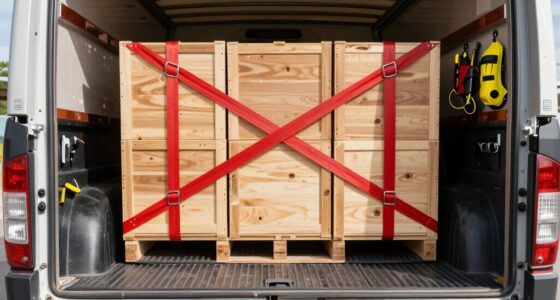
To load for maximum stability, focus on evenly distributing weight across your support points and keeping the load centered. Place heavier items at the bottom to lower the center of gravity and prevent tipping. Secure everything tightly to prevent shifting during movement, and balance loads side to side and front to back. Regularly check and adjust your load as needed. Keep these tips in mind to enhance safety—and there’s much more to learn on how to optimize your load for stability.
Listen free for 30 days with Audible
Thousands of audiobooks and originals — cancel anytime.
As an affiliate, we earn on qualifying purchases.
Key Takeaways
- Distribute weight evenly across support points to prevent tipping or uneven stress.
- Keep the center of gravity low by placing heavier items at the bottom.
- Center loads over support points and balance side to side for stability.
- Secure loads tightly to prevent shifting during movement.
- Regularly inspect and adjust load placement to maintain balance over time.

Have you ever wondered how to guarantee a structure remains stable under various loads? The key lies in understanding weight distribution and managing the center of gravity. When loading a structure, whether it’s a piece of heavy machinery, a truck, or a shelving unit, how you distribute the weight directly affects its stability. You want to assure that the weight is evenly spread across the foundation or support points. Uneven weight distribution causes some parts to bear more load than others, increasing the risk of tipping or collapse.
Balancing weight and lowering the center of gravity are essential for structural stability under load.
A low center of gravity is crucial for maximum stability. When you load a structure, aim to keep the heaviest items as low as possible. This lowers the overall center of gravity, making it harder for external forces—like wind, vibrations, or sudden movements—to topple the structure. For example, when stacking boxes or equipment, place heavier items on the bottom and lighter items on top. This simple step substantially improves stability because it prevents the structure from becoming top-heavy.
Another essential factor is how you position the load relative to the support base. You should center the weight over the base or support points whenever possible. For instance, if you’re loading a trailer or a flatbed, make certain the load is balanced side to side and front to back. This prevents uneven pressure on one side, which could cause tilting or shifting during transit. When loading a shelving system, distribute weight evenly across all shelves and avoid concentrating too much weight on one side or at the rear. Additionally, understanding structural stability principles can help you optimize load arrangements for maximum safety.
Additionally, you should consider the dynamic forces acting on the structure. Loads that shift or sway during movement can compromise stability, so secure everything tightly. Use straps, braces, or barriers to keep items from shifting, especially if the load will be transported. When stacking or arranging items, leave some space for expansion and movement, but guarantee the overall weight remains balanced. Proper weight distribution is essential to prevent instability caused by shifting loads.
Finally, regular inspection and adjustment are indispensable. As loads are added or removed, the center of gravity shifts. Make sure to periodically reassess the load distribution and make adjustments as needed. This ongoing attention helps prevent unexpected shifts that could lead to instability. By focusing on proper weight distribution, maintaining a low center of gravity, and keeping everything balanced, you can considerably enhance the stability of any structure under various loads.
As an affiliate, we earn on qualifying purchases.
Frequently Asked Questions
What Types of Loads Are Most Unstable?
Unstable loads often involve uneven weight distribution, making them prone to shifting during transport. You’ll find that loads with high centers of gravity, such as tall, narrow, or top-heavy items, are especially unstable. Dynamic shifts, like sudden acceleration, braking, or turns, exacerbate this instability. To improve load stability, focus on proper load balancing, securing items firmly, and minimizing dynamic shifts during transit.
How Does Weight Distribution Affect Stability?
Your weight distribution directly impacts stability by influencing the center of gravity. If you keep the load balanced and low, it lowers the center of gravity, making you more stable. Proper load balancing ensures even weight distribution, preventing tipping or shifting. You should position heavier items closer to the base and center, reducing the risk of imbalance. Maintaining ideal weight distribution helps you stay steady, even on uneven terrain.
Are There Safety Tips for Heavy Load Handling?
Handling heavy loads safely is like walking a tightrope—balance is essential. Always wear proper safety gear, including gloves, steel-toed boots, and helmets. Before lifting, plan your move and check for hazards. Know emergency procedures in case of accidents, such as spills or falls. Keep loads close to your body, lift with your legs, and avoid rushing. Staying alert and prepared minimizes risks and keeps you safe during heavy load handling.
How Do Environmental Factors Impact Load Stability?
Environmental influences and weather conditions substantially impact load stability. You need to take into account wind, rain, and temperature changes, which can cause loads to shift or become unstable. Wind, especially, can tip or sway your load, while rain makes surfaces slippery, increasing risk. Rapid temperature fluctuations may weaken materials, reducing stability. Stay alert to these factors, adjust your loading techniques accordingly, and secure loads tightly to prevent accidents caused by environmental effects.
What Tools Assist in Proper Load Loading?
You can’t just rely on instinct when load securing; tools like load bars, straps, and tie-downs are essential for proper load loading. Equipment calibration guarantees your tools are accurate, preventing shifting or accidents. Using load binders and tensioners helps tighten straps securely. With these tools, you’re better equipped to stabilize loads, reduce risks, and ensure safety during transport. Properly calibrated equipment guarantees your securing methods are effective every time.
As an affiliate, we earn on qualifying purchases.
Conclusion
As you load with purpose, imagine each item settling like a gentle tide, finding its perfect place. Balance becomes your steady compass, guiding your hands to create a harmonious weight distribution. Feel the rhythm of stability flowing through your fingertips, anchoring your load with confidence. With every careful placement, you craft a fortress of balance—solid, unwavering, ready to face any journey ahead. Your mindful loading transforms chaos into calm, ensuring maximum stability every step of the way.
As an affiliate, we earn on qualifying purchases.
shelving weight distribution brackets
As an affiliate, we earn on qualifying purchases.
As an affiliate, we earn on qualifying purchases.
NFL season / tailgating Picks
team gear
As an affiliate, we earn on qualifying purchases.