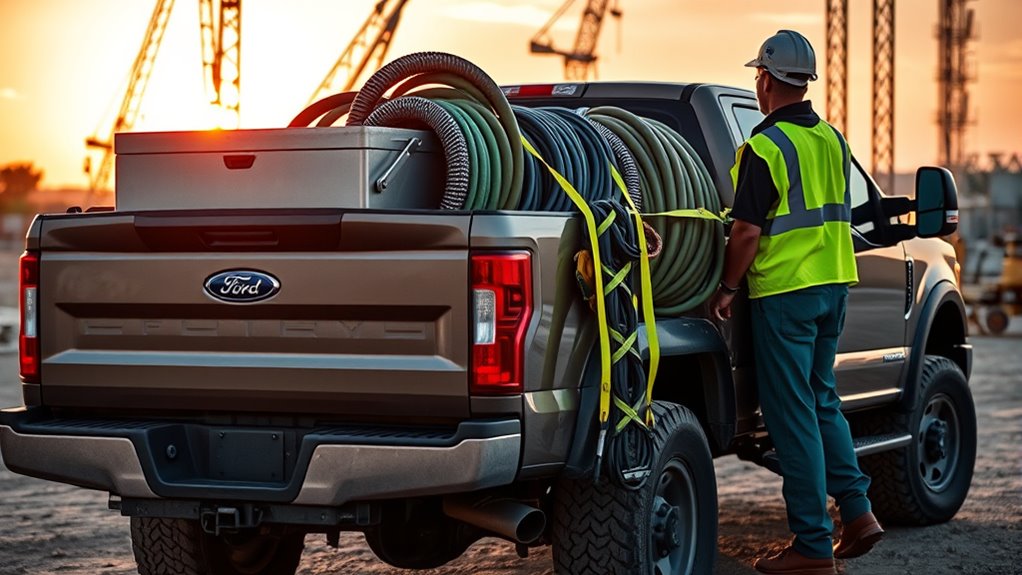

Start by planning your load carefully, prioritizing heavier items over the rear axle for balance and placing lighter cargo toward the front. Secure all items with rated straps or chains, especially long or bulky materials, using bed extenders or racks if needed. Verify your towing equipment and hitch ratings, then conduct safety checks on tires, lights, and securements before departure. Ensuring proper payload distribution and securement is vital—you’ll find more tips if you continue to explore this framework.

Get business pricing on garage and car supplies
- Business-only prices and quantity discounts
- Tax-exempt purchasing
- Multiple users, one account, clear invoices
Key Takeaways
- Prioritize heavy, bulky items over the rear axle for proper weight distribution and vehicle stability.
- Secure long or overhanging loads with bed extenders and ratchet straps to prevent shifting during transit.
- Distribute cargo evenly side to side and keep lighter items forward to maintain balance and prevent front-end lift.
- Use rated tie-downs attached to solid anchor points, padding straps to protect cargo and avoid slippage.
- Regularly inspect securements, tire pressure, and load stability throughout the jobsite work and towing trip.
Ford Super Duty bed cargo straps
As an affiliate, we earn on qualifying purchases.
As an affiliate, we earn on qualifying purchases.
Assessing and Planning Your Cargo Load
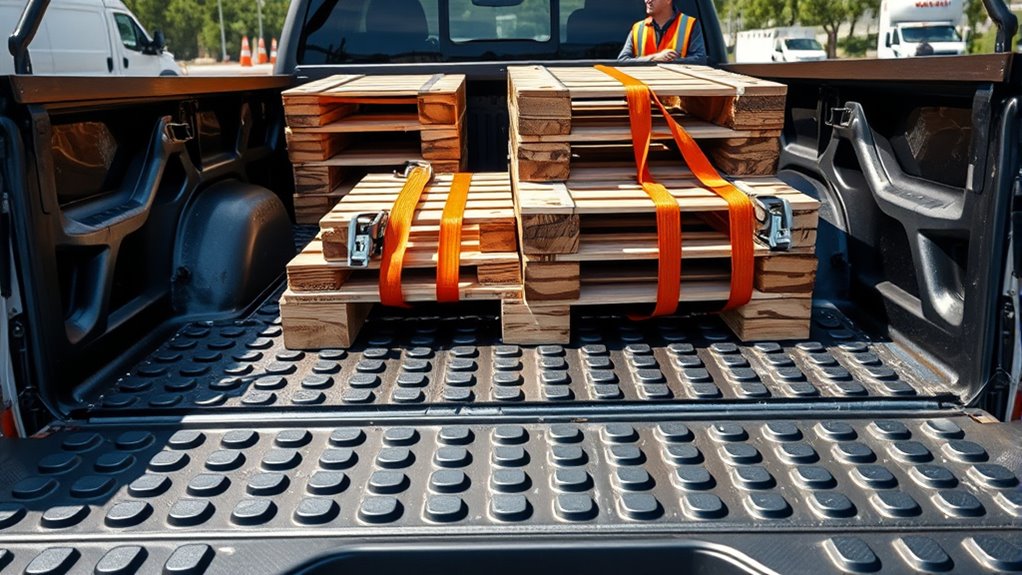
Before loading your Ford Super Duty bed, you should assess your cargo and plan how to distribute it effectively. Take a moment to identify all items you need to transport and consider their weight, size, and fragility. Decide which heavier items should go over the rear axle to improve balance and stability. Think about the shape and dimensions of your cargo to determine the best placement, avoiding any obstructions to your view or access. Make a mental or written plan to prioritize securing items that could shift or fall during transit. Check the weight limits specified for your truck model to prevent overloading. Proper planning from the start helps ensure safety, maintains vehicle performance, and streamlines the loading process. Additionally, understanding cargo loading techniques can further enhance your safety and efficiency during the process.
As an affiliate, we earn on qualifying purchases.
Distributing Weight for Optimal Balance
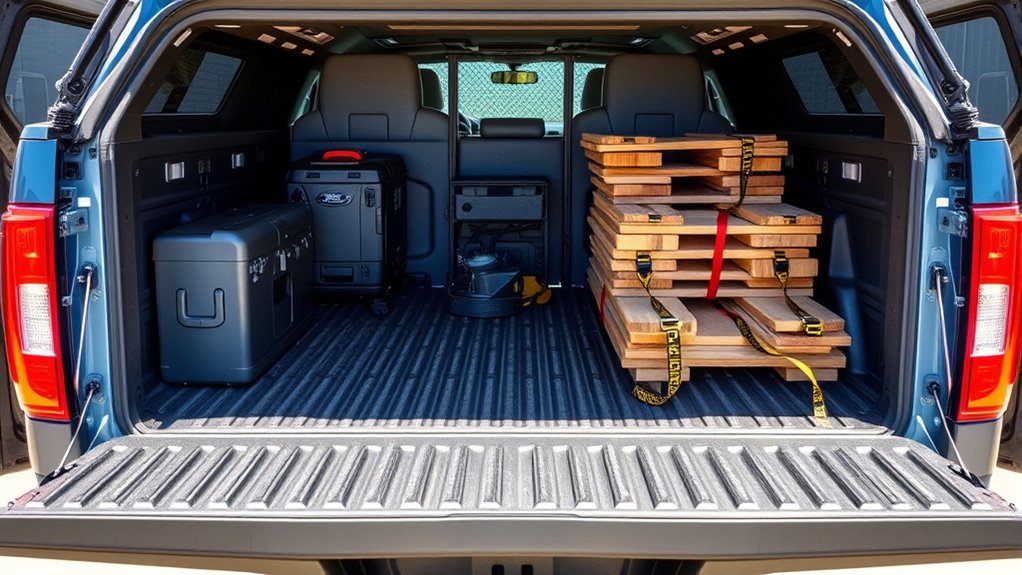
To achieve a stable and balanced load, you need to distribute weight evenly across the truck bed. Proper weight distribution ensures better handling, reduces wear, and minimizes rollover risks. Place heavier items over the rear axle for ideal support and stability. Keep lighter cargo toward the front to prevent front-end lift. Use these tips to visualize your load:
- Heaviest tools and equipment directly over the rear axle
- Bulk materials spread evenly side to side
- Smaller items secured around larger cargo to prevent shifting
Balancing your load minimizes sway during towing and keeps your truck stable on rough terrain. Always check that your cargo is secure and that weight limits aren’t exceeded. Proper distribution is essential for safety, performance, and maintaining your vehicle’s integrity. Creating calm and organized homes can help simplify your load management and ensure your vehicle stays secure.
As an affiliate, we earn on qualifying purchases.
Securing Heavy and Sharp Items Safely
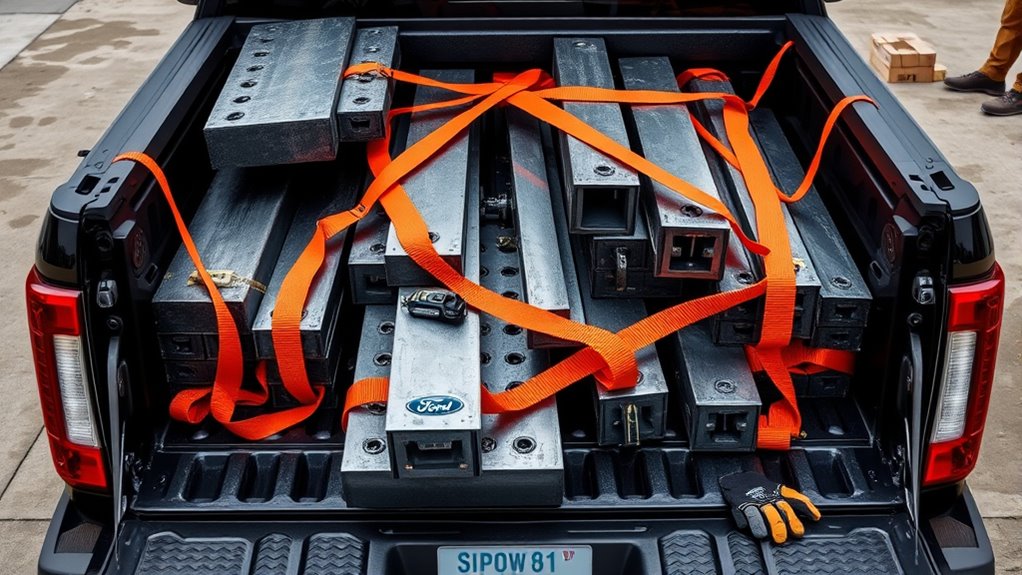
When securing heavy and sharp items, make certain to use proper tie-downs rated for the load to prevent shifting. Keep dangerous objects separated from fragile cargo to avoid damage or accidents. Regularly check all securements during transit to ensure everything stays tight and safe. Additionally, utilizing appropriate color coding can help quickly identify and distinguish different types of cargo for better safety management.
Use Proper Tie-Downs
How do you guarantee heavy and sharp items stay secure during transport? The key is using proper tie-downs rated for your cargo’s weight. Choose straps, chains, or tie-downs that match or exceed the load’s requirements. Make sure to:
- Use heavy-duty ratchet straps or chains with secure hooks or anchor points
- Double-check that tie-downs are tight and not frayed or worn
- Attach straps to solid anchor points, avoiding loose or weak spots
- Consider using energy-efficient tie-downs made from sustainable materials to reduce environmental impact
Ensure all tie-downs are properly tensioned to prevent shifting. For sharp edges, pad straps or chains to avoid damage and slipping. Regularly inspect your tie-downs during transit, adjusting as needed to keep everything firmly in place.
Separate Dangerous Items
Securing heavy and sharp items properly is essential for safe transport. Heavy tools, metal parts, or sharp equipment can cause serious injuries or damage if they shift or fall. To prevent this, place heavy and sharp objects on the bottom or center of the bed, away from passenger areas. Use appropriate tie-downs rated for the weight and sharpness of these items, such as heavy-duty ratchet straps or chains. Cover sharp edges with protective padding or edge guards to prevent tears and injuries. Make sure all securements are tight and check their integrity before moving. Keep dangerous items separate from fragile or lighter cargo to avoid accidental punctures or damage. Properly segregating these items reduces the risk of accidents and ensures a safer journey. Additionally, understanding vehicle safety protocols can further enhance secure loading practices.
Check Securement Regularly
Regularly checking your cargo securement is essential to prevent shifting or falling during transit. Loose or poorly secured items can cause accidents, damage, or injury. Before each trip, inspect all straps, chains, and tie-downs to ensure they’re tight and undamaged. Look for signs of wear, corrosion, or fraying that could compromise securement. Make sure sharp or heavy objects are properly protected or separated from fragile cargo to avoid damaging straps. Confirm that all fasteners are engaged and that load distribution remains stable. For example:
- Tighten straps and chains to eliminate slack.
- Replace any damaged or worn tie-downs immediately.
- Recheck all securements after driving a few miles or on rough roads.
Consistent inspections keep your load safe and secure, avoiding costly mishaps. Additionally, understanding the importance of precious metal investments can help diversify your assets and enhance financial security.
As an affiliate, we earn on qualifying purchases.
Utilizing Accessories for Long and Bulky Materials
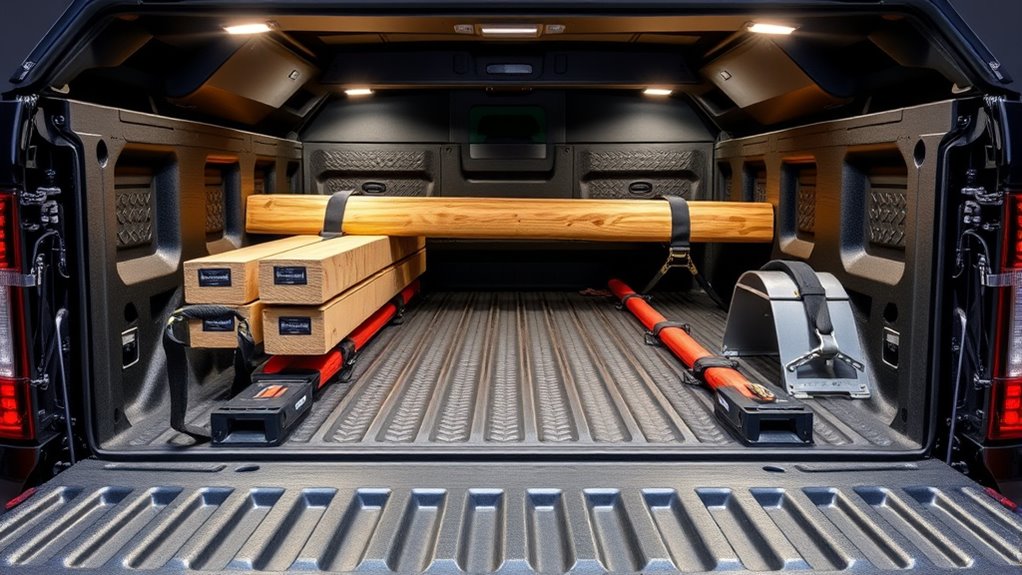
When loading long or bulky materials, using bed extenders or racks can help keep everything secure and prevent shifting. Make sure to anchor these items firmly with straps or tie-downs rated for the load’s weight. Protect fragile cargo by separating it from heavier or sharp objects to avoid damage during transport. Additionally, employing load management techniques can optimize weight distribution and improve overall safety on the road.
Bed Extenders Usage
To safely transport long or bulky materials that don’t fit entirely within the truck bed, bed extenders are vital accessories. They help support the overhanging load and prevent items from shifting or falling out during transit. When using a bed extender, you can visualize:
- Extending the bed’s length to accommodate lumber, pipes, or drywall.
- Securing the overhanging material with straps to prevent movement.
- Ensuring the extender locks firmly in place for stability.
- Proper installation is crucial to ensure safety and load stability during transport.
Properly installing the extender is essential; it should be flush against the tailgate and locked securely. Always double-check that your load is balanced, and use additional tie-downs if needed. This setup allows you to carry longer items safely without risking damage or unsafe driving conditions.
Securing With Racks
Are you transporting long or bulky materials that don’t fit entirely in your truck bed? Racks are essential accessories that help secure these items safely. Install bed-mounted or stake-side racks to hold pipes, lumber, or metal beams in place. Crossbeds or utility racks provide a stable framework for securing long loads across the bed’s width. Use tie-down points integrated into the racks to attach ratchet straps or cargo nets tightly around your materials. Make sure the load is evenly distributed and well-secured to prevent shifting during transit. Racks keep your cargo stable, reduce the risk of damage, and improve safety on the jobsite or highway. Always double-check that straps are tight and attachments are secure before hitting the road. Proper load securing methods are vital for preventing accidents and ensuring compliance with safety regulations.
Protecting Fragile Items
Long or bulky materials like pipes, lumber, or metal beams can shift or get damaged during transport if not properly protected. To prevent this, use accessories designed for long loads. For example, bed extenders or load bars help keep items secure and prevent movement. Cargo nets or ratchet straps ensure fragile or small items stay in place, reducing the risk of damage. Additionally, padding or foam blocks can cushion delicate materials and absorb shocks during transit. Incorporating water-resistant materials can also protect your cargo from moisture or weather-related damage during long hauls.
Verifying Towing Equipment and Hitch Ratings
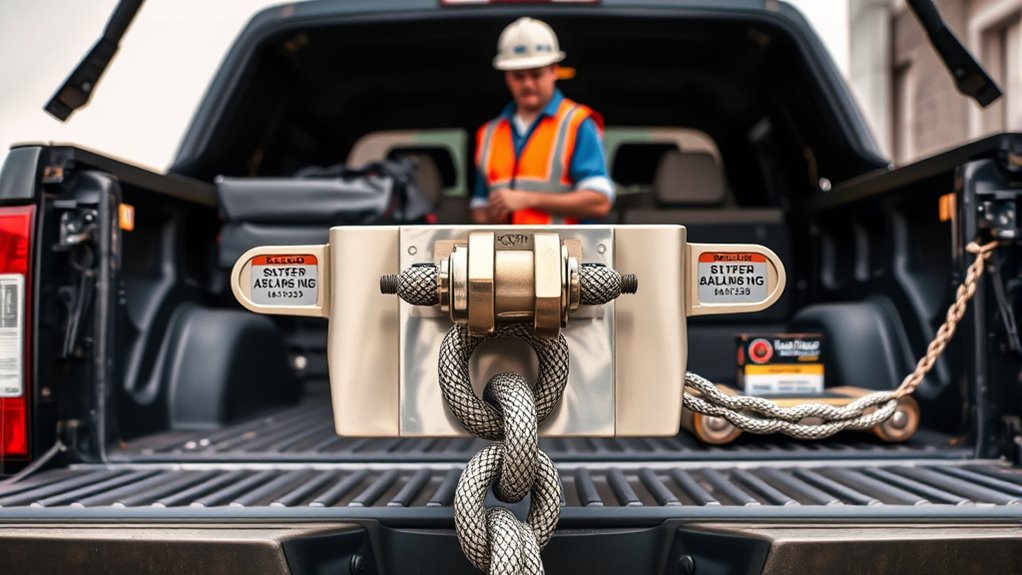
Before loading or towing, you should verify that your hitch and towing equipment are rated to handle the weight of your trailer and cargo. Check the hitch’s maximum weight capacity and ensure it matches or exceeds your trailer’s gross weight. Confirm that the ball size and hitch rating align with your trailer’s specifications. For heavy loads, use a weight-distributing hitch designed for over 5,000 pounds to maintain stability. Inspect the trailer’s tongue weight, making sure it falls within the recommended 10–15% of the total trailer weight. Also, verify that your truck’s towing capacity isn’t exceeded. Properly rated equipment guarantees safe towing, prevents damage, and helps you avoid costly accidents or breakdowns on the road.
Conducting Safety Checks Before Departure
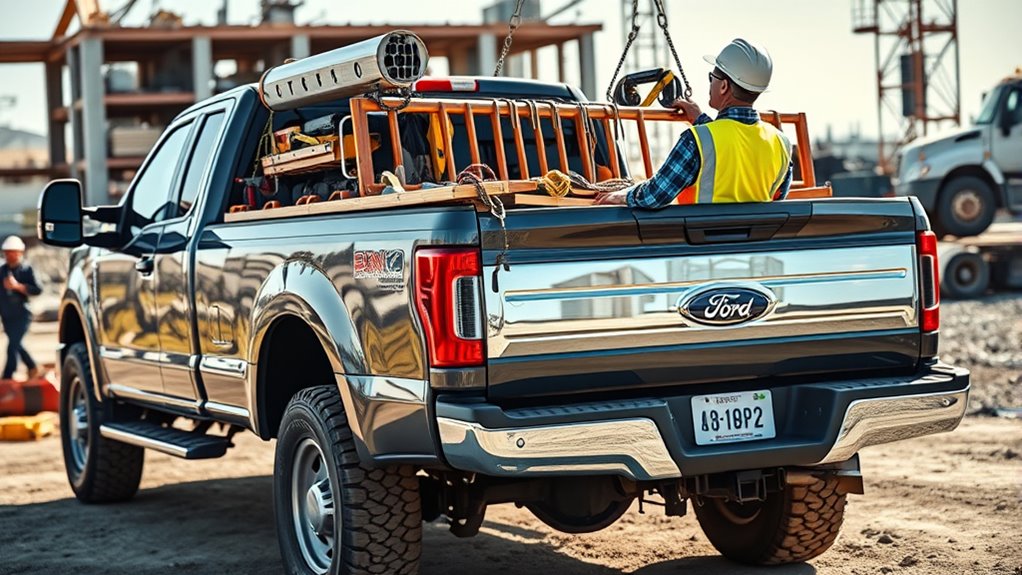
Conducting safety checks before departure guarantees your truck and trailer are ready for the road. You want to catch any issues that could cause delays or accidents. Start with inspecting your tires for proper inflation and tread depth to prevent blowouts. Check the suspension and frame for signs of wear or damage that might compromise safety. Make sure all lights, signals, and brake connections are working correctly to stay visible and stop effectively. Confirm cargo isn’t obstructing mirrors or lights, ensuring clear visibility.
Before hitting the road, verify these:
- Proper tire pressure, including spare tires
- All trailer and truck lights operational
- Secure cargo and tie-downs intact
Maintaining Proper Payload Limits and Load Adjustments
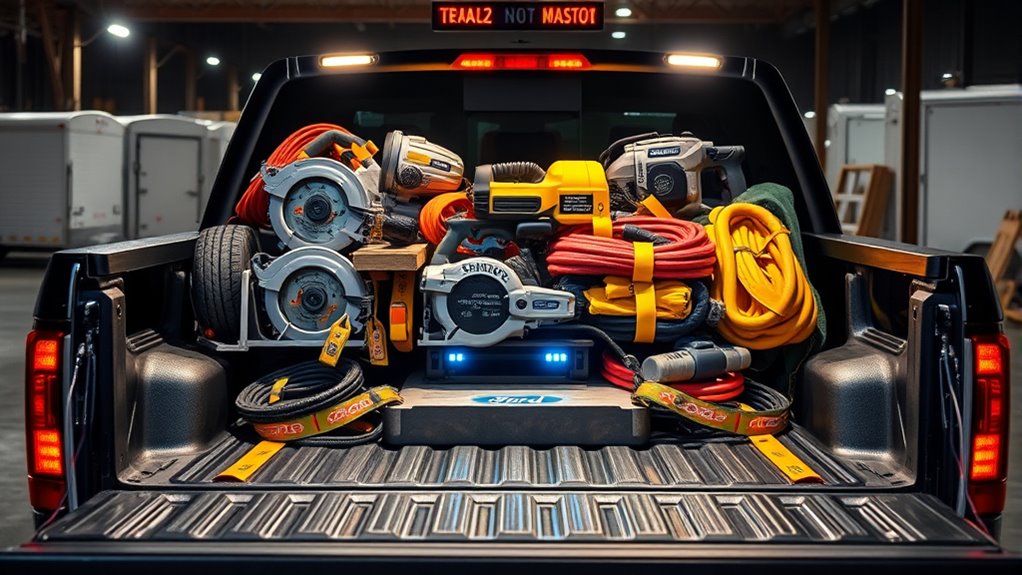
To prevent damage to your truck and guarantee safe operation, you need to maintain your payload within the vehicle’s specified limits. Check your truck’s maximum payload capacity, which varies by model and configuration, and avoid surpassing it. Distribute your load evenly across the bed, placing heavier items over the rear axle for better balance. Adjust your cargo to keep the center of gravity low, reducing rollover risk. When loading, secure all items tightly with appropriate straps or tie-downs rated for the load weight. If you’re towing, ensure trailer tongue weight is 10–15% of the trailer’s total weight. Regularly recheck your load during transport and make adjustments as needed to stay within safe payload limits, preserving your truck’s longevity and safety.
Frequently Asked Questions
How Do I Calculate the Correct Tongue Weight for My Trailer?
You calculate the correct tongue weight by taking 10 to 15 percent of your trailer’s total weight. For example, if your trailer weighs 10,000 pounds, aim for a tongue weight between 1,000 and 1,500 pounds. Use a scale or weigh the trailer with the tongue on a scale designed for this purpose. Proper tongue weight guarantees safe towing, stability, and decreases the risk of trailer sway.
What Are the Signs of an Overloaded Truck Bed?
You’ll notice your truck feels unstable or sways more than usual, especially during turns or braking. The bed might sag noticeably, and you could see uneven tire wear. Reduced visibility, difficulty steering, or a rough ride are common signs. If the load exceeds the payload limit, your truck’s suspension may bottom out, and you might hear creaking or clunking sounds. Always verify these signs to prevent overloading and ensure safety.
How Often Should I Inspect Tie-Downs During Transport?
During transport, you should inspect your tie-downs every 15-30 minutes, like checking your ship’s anchor during a storm. This keeps your cargo from shifting or falling, ensuring safety for you and others. If you’re on a bumpy road or hauling heavy loads, stop more often to confirm everything stays tight. Regular checks prevent accidents and protect your valuable equipment, giving you peace of mind on every trip.
Can I Use Household Items to Secure Cargo Temporarily?
You shouldn’t use household items to secure cargo temporarily. They aren’t rated for heavy loads and may fail during transport, risking damage or injury. Instead, use proper ratchet straps, chains, or tie-downs rated for your cargo’s weight. These tools are designed to keep your load stable and secure. Always choose equipment that meets or exceeds weight requirements, and double-check your tie-downs before hitting the road.
What Are the Specific Payload Limits for Different Super Duty Configurations?
Your Ford Super Duty’s payload limits vary by model and configuration. For example, the F-250 can handle up to 4,268 pounds, the F-350 SRW up to 7,647 pounds, the F-350 DRW up to 8,000 pounds, and the F-450 up to 6,482 pounds. Always check your specific vehicle’s manual or door sticker for exact payload capacity, considering your cab, bed, axle, and engine options.
Conclusion
As you load your Ford Super Duty, remember that careful planning often coincides with safer towing and jobsite success. When you balance weight, secure items properly, and double-check your equipment, everything aligns perfectly—saving you time and avoiding surprises. It’s no coincidence that a well-prepared load makes your work smoother and safer. Trust your instincts, follow these steps, and enjoy the confidence that comes from knowing everything’s set for a successful haul.
Fall Picks
fall essentials
As an affiliate, we earn on qualifying purchases.