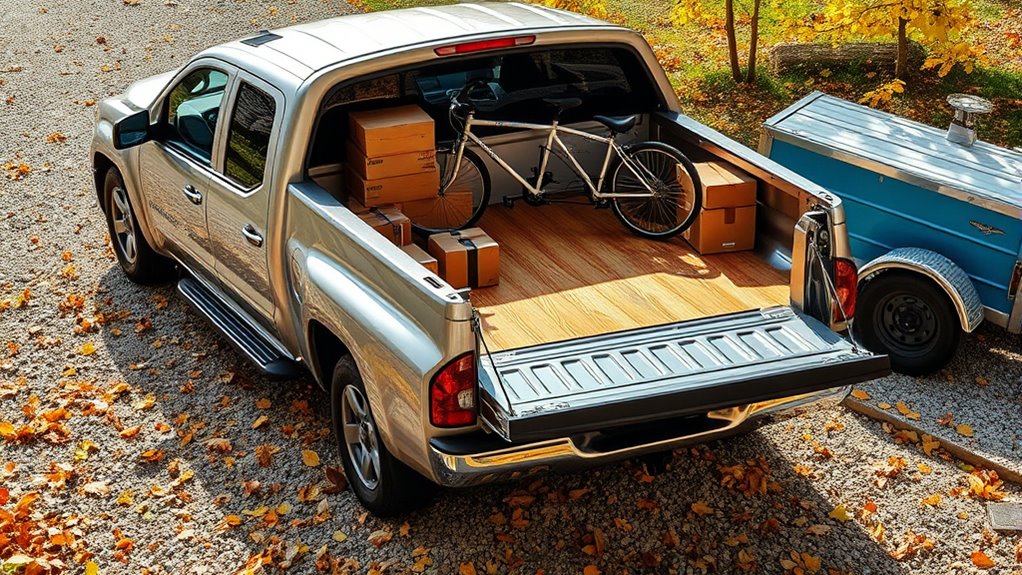

Using a pickup bed instead of a small trailer is convenient for quick loads but limited in capacity and flexibility. Pickup beds typically hold less about 70-90 cubic feet and can’t easily be modified for larger or irregular cargo. Trailers, on the other hand, are more adaptable, with features like removable sides and ramps that improve usability. If you want to explore further about the tradeoffs, including costs and ideal scenarios, there’s plenty more to consider.
Listen free for 30 days with Audible
Thousands of audiobooks and originals — cancel anytime.
As an affiliate, we earn on qualifying purchases.
Key Takeaways
- Pickup beds are fixed in size and lack the flexibility of trailers for irregular or bulky loads.
- Trailers often offer removable sides and ramps, making loading larger or awkward items easier.
- Using a pickup bed limits cargo volume and may not accommodate oversized or heavy loads efficiently.
- Trailers can be customized with modifications, while pickup beds are limited by factory design.
- For frequent, small loads, a pickup bed suffices, but for larger or occasional projects, a trailer provides better practicality.
As an affiliate, we earn on qualifying purchases.
Comparing Cargo Capacity and Flexibility
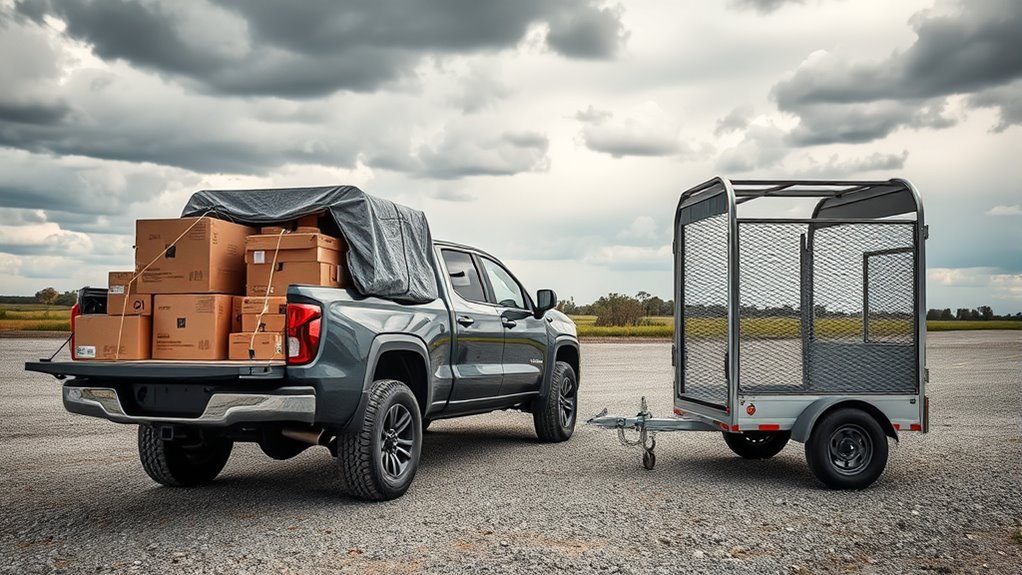
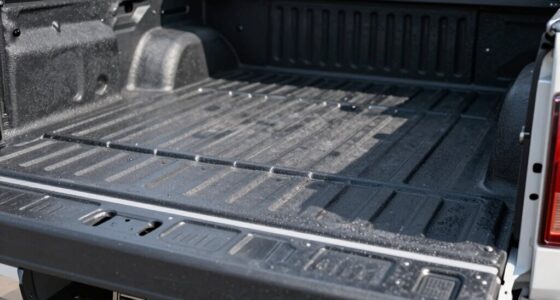
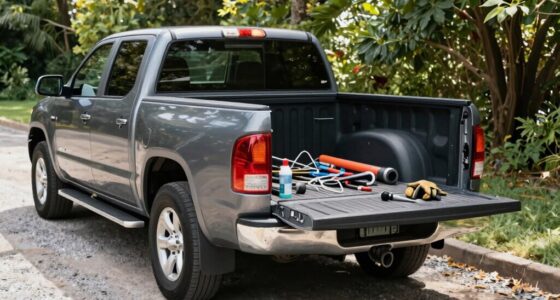
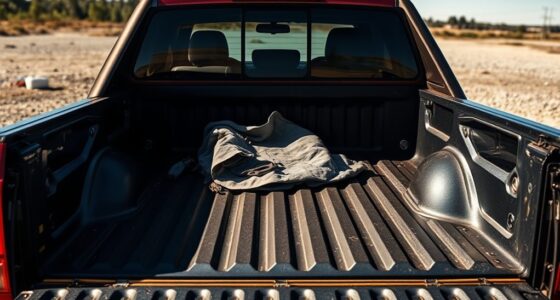
When comparing cargo capacity and flexibility, trucks with pickup beds offer a straightforward solution for hauling smaller loads within their fixed size limits. Pickup beds come in standard lengths, typically from 5.5 to 8 feet, with capacities ranging from about 62.9 to 89.1 cubic feet. These beds are rigid and cannot be expanded or reshaped without costly modifications. Most modern trucks have short beds, which restricts the maximum volume you can carry. Unlike trailers, pickup beds don’t offer adjustable sides or customizable features, limiting their flexibility. They’re ideal for quick, everyday tasks but fall short when you need to transport larger or irregularly shaped items. For occasional small loads, pickup beds are simple and effective, but they lack the adaptability of trailers. Additionally, the material quality of the pickup bed influences its durability and ability to handle various loads over time.
trailer ramp and removable sides
As an affiliate, we earn on qualifying purchases.
As an affiliate, we earn on qualifying purchases.
Cost Considerations for Pickup Beds and Trailers
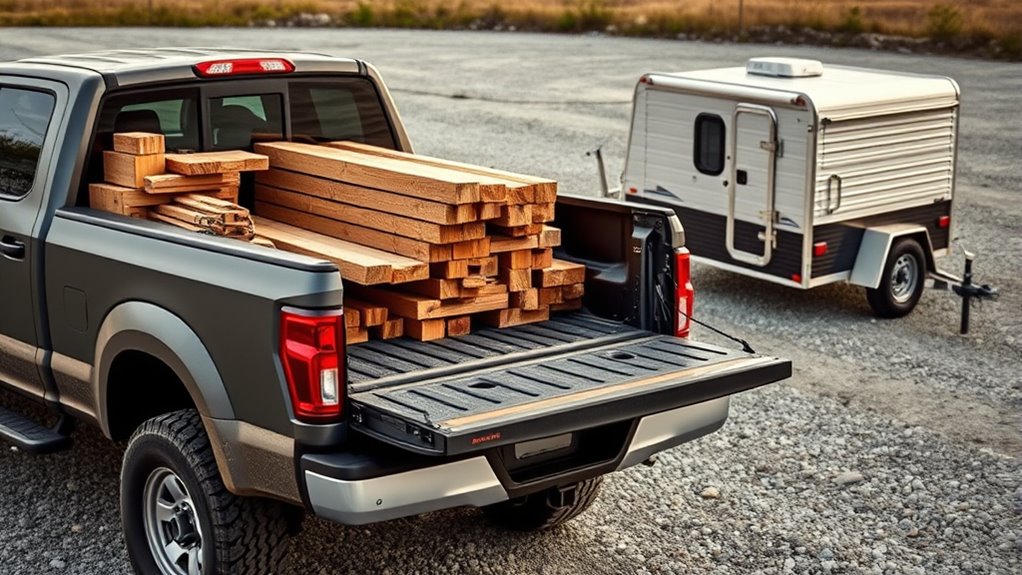
While pickup trucks often come with a higher upfront cost, trailers generally offer a more budget-friendly option for occasional hauling needs. Buying a truck can be a significant investment, and maintenance, insurance, and fuel expenses add up over time. If you only need to haul occasionally, owning a trailer can save money since it’s cheaper to purchase and maintain. Trailers also don’t always require registration or insurance, depending on your location, reducing ongoing costs. Renting a trailer for short-term use is often more economical than owning a truck, especially if you don’t haul frequently. Additionally, trailers can be stored outside, saving garage space and avoiding storage fees. Overall, trailers tend to present a lower-cost solution for infrequent or seasonal hauling tasks. The decision can also depend on vehicle features, which can influence the overall efficiency and convenience of hauling options.
As an affiliate, we earn on qualifying purchases.
Practicality and Usage Scenarios
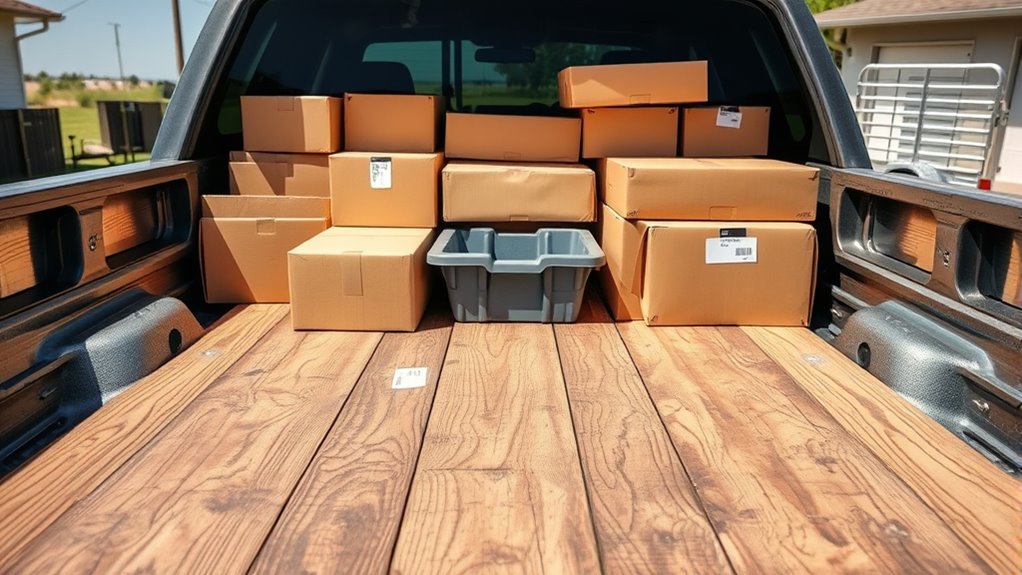
Trailers are often the practical choice for occasional or bulky hauling needs because they offer flexibility that pickup beds can’t match. If you need to transport large, irregular, or heavy items, a trailer makes loading and unloading easier, especially with removable sides and ramps. They’re ideal for one-off projects, moving furniture, or hauling yard debris. Trailers can be detached when not in use, freeing up your truck for daily tasks. However, they’re less suited for frequent, small loads or daily commuting, as towing adds complexity and fuel consumption. Trailers excel in situations where you need extra capacity temporarily, and their ability to be customized for specific jobs makes them more adaptable than a fixed pickup bed. Additionally, understanding home-care techniques can help maintain your vehicle and trailer in optimal condition for long-lasting performance. Use them when your hauling needs are sporadic or unusually large.
small utility trailer for hauling
As an affiliate, we earn on qualifying purchases.
As an affiliate, we earn on qualifying purchases.
Customization Potential and Modifications
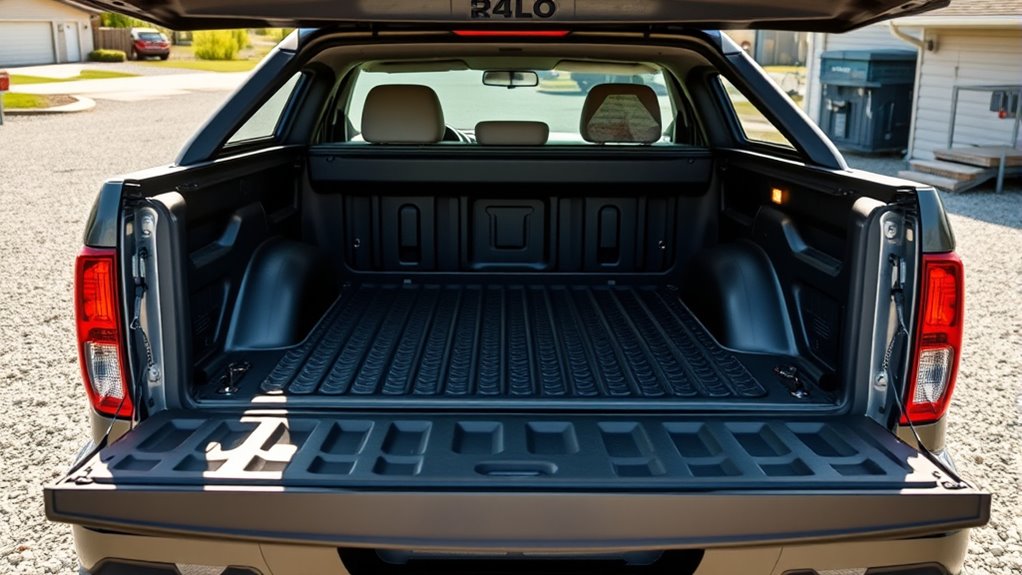
Trailers are considerably more versatile and easier to modify than pickup beds, allowing you to tailor them to your specific hauling needs. You can add sides, ramps, or custom storage, adjusting capacity and functionality quickly. Pickup beds are limited by factory design, making modifications costly and complex. Additionally, trailers often come with customizable features that can be adapted over time to changing needs.
Limitations and Ideal Use Cases
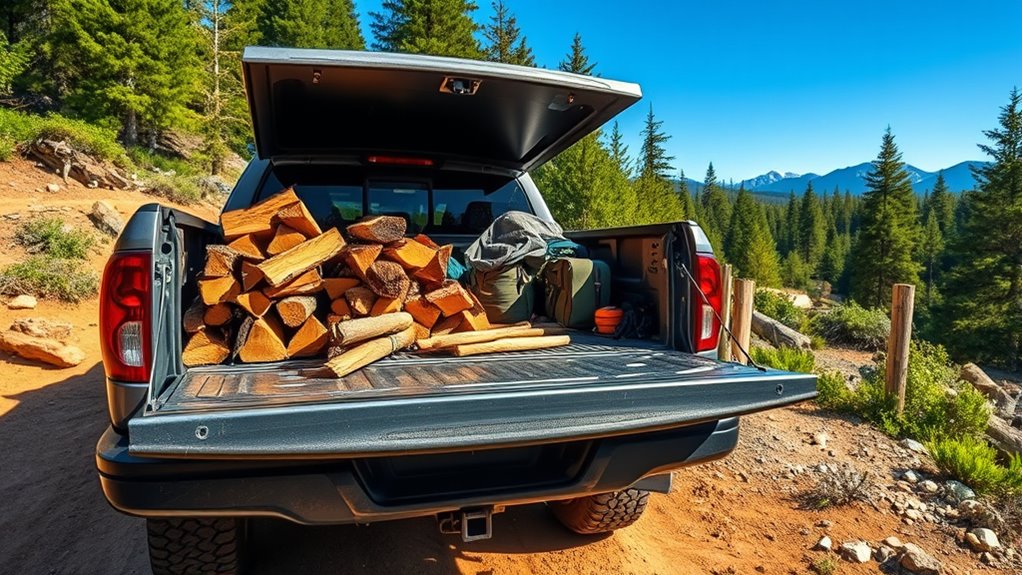
Although pickup beds are convenient for everyday hauling, they have notable limitations that make them less suitable for certain tasks. Their fixed size restricts the volume you can carry—most are limited to about 71.7 cubic feet, which can fall short for large or bulky loads. Pickup beds are ideal for frequent, smaller jobs like transporting tools, furniture, or landscaping supplies. However, they’re less practical for occasional large or irregularly shaped cargo, especially when height or width becomes an issue. They don’t offer the flexibility of adjustable sides or customizable features like trailers do. Additionally, pickup beds aren’t suited for off-road or rough terrain tasks, and their security is limited compared to enclosed trailers. Use them for daily, moderate hauling, but consider a trailer for bigger, infrequent projects. Proper load‑planning tools can help you determine when a pickup bed meets your needs versus when a trailer is necessary.
Frequently Asked Questions
Can a Pickup Bed Be Converted Into a Trailer?
You can’t easily convert a pickup bed into a trailer because they’re built differently. Pickup beds are fixed structures designed for cargo inside a truck, not for towing or detachable use. To turn a bed into a trailer, you’d need extensive modifications like adding a frame, wheels, axles, and a hitch, which are complex and costly. It’s usually more practical to buy or rent a purpose-built trailer for your hauling needs.
How Secure Is Cargo Stored in a Pickup Bed Versus a Trailer?
Think of your pickup bed like an open toolbox—your tools are visible and vulnerable. Cargo in a pickup bed isn’t as secure as in a trailer with lockable sides or enclosed features. While a tonneau cover offers some protection, it’s not foolproof against theft or weather. For better security, you’d need additional locks or an enclosed trailer, especially if you’re leaving valuables unattended.
Are Pickup Beds Suitable for Transporting Fragile or Sensitive Items?
Pickup beds aren’t ideal for transporting fragile or sensitive items because they lack built-in protection from weather and impact. You might consider using secure, padded crates or covers to prevent damage, but the open design still exposes your items to elements and rough handling. For more safety, you should opt for a trailer with enclosed sides or specialized storage options, ensuring your delicate cargo stays secure and protected during transit.
What Are the Legal Requirements for Using a Pickup Bed for Hauling?
You can haul in your pickup bed legally if you follow local laws. You need to secure your load properly to prevent it from falling or causing hazards. Make sure your cargo doesn’t stick out dangerously beyond the bed’s limits, and avoid obstructing your rearview. Also, check if any weight or height restrictions apply in your jurisdiction. Staying compliant keeps you safe and avoids fines or penalties.
How Do Weather Conditions Affect Cargo in Pickup Beds Compared to Trailers?
Weather conditions considerably impact cargo in pickup beds versus trailers. In a pickup bed, your cargo is exposed to rain, snow, and sun, risking damage or corrosion without proper cover. With a trailer, you can keep items protected inside an enclosed or covered trailer, shielding them from the elements. If you frequently haul in bad weather, a trailer offers better protection, while an uncovered pickup bed needs additional covers or tarps.
Conclusion
Using a pickup bed as a makeshift trailer can save you money and simplify tasks, but it’s not always the best solution. Did you know that pickup beds typically offer about 1.7 times the cargo space of small trailers? While they’re great for quick jobs and customization, they lack the stability and legal protections of traditional trailers. Weigh your needs carefully to choose the right option, and remember, sometimes a real trailer is worth the investment.
NFL season / tailgating Picks
team gear
As an affiliate, we earn on qualifying purchases.