
TL;DR

Get business pricing on garage and car supplies
- Business-only prices and quantity discounts
- Tax-exempt purchasing
- Multiple users, one account, clear invoices
Tesla released a cockpit-perspective video showing its next-generation Roadster performing a kickflip and other aerial stunts previously shown at an unveiling. The demo car carried a dummy, and Tesla has not published the stunt’s g-forces; the footage does not establish whether the car will be delivered or be road legal.
Tesla has released a first-person video of its next-generation Roadster performing a kickflip and other aerial stunts, offering a cockpit view of a demonstration previously shown from outside the car. The footage features an unoccupied vehicle with a dummy in the front seat, not a human driver, and Tesla has not published the stunt’s g-force figures or confirmed that the demonstrated flying configuration will reach customers.
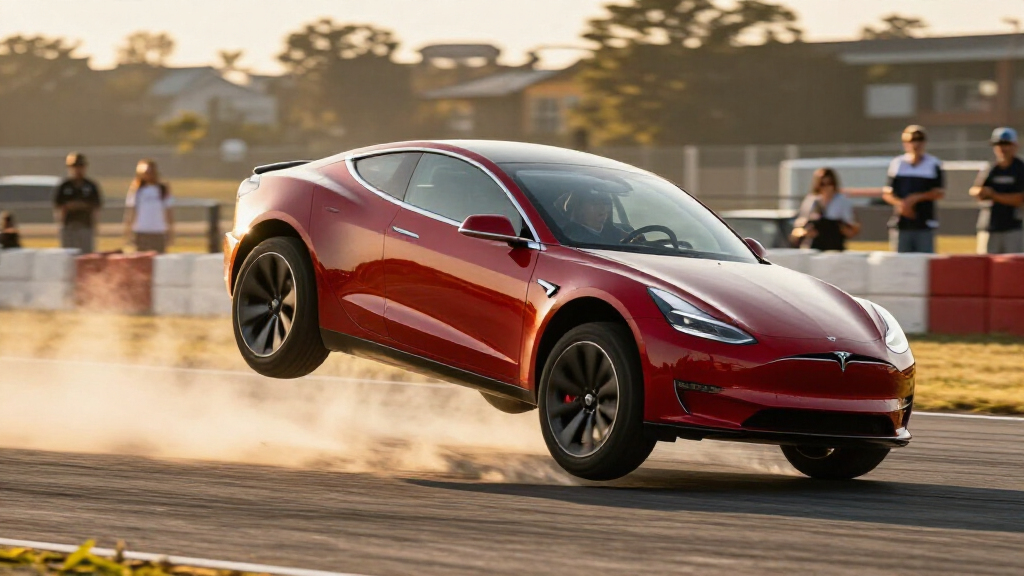
The new footage shows the Roadster executing the kickflip maneuver, diving upside down off a half-pipe and jumping over a Tesla Semi before spinning. These are the same stunts shown at the car’s unveiling the previous month, according to InsideEVs, which reported on Tesla’s video. The onboard viewpoint makes the rotations and changes in orientation more immediate than an exterior camera angle.
In the video, cold-gas thrusters appear to help control the car’s movement. InsideEVs describes the system as releasing nitrogen in varying amounts to keep the Roadster from over-rotating during the kickflip. The outlet also reports that the car corrects its roll and yaw during the half-pipe dive. Those details describe what the footage appears to show; Tesla has not provided publicly reported performance measurements for the maneuvers in the source material.
The demonstration was not a test with a person aboard. A dummy occupied the front seat, and the available report says Tesla has not disclosed the g-forces involved. The video therefore cannot establish how a passenger would experience the maneuvers, what restraints would be needed, or whether the stunt configuration reflects a production vehicle.
What the Cockpit View Reveals
The video shifts the Roadster demonstration from a spectacle seen at a distance to a view of what a passenger might see as the vehicle rotates. That matters because dramatic exterior footage alone does not show the forces on an occupant or whether a person could comfortably remain in place. The first-person perspective makes the question more visible, but it does not answer it: there are no published g-force figures in the source report, and the filmed seat held a dummy.
The footage also highlights the gap between a controlled stunt and a usable car. Aerial maneuvers may demonstrate engineering and attract attention, but they do not confirm that the vehicle is ready for production, that customers will receive the same capability, or that it can be driven legally on public roads. For prospective buyers, the distinction between a demonstration and a delivered, road-legal vehicle is more consequential than the spectacle itself.
Products Worth Considering

Chemical Guys 17-Piece Car Detailing Kit for Interior, Wheels, and Exterior

Chemical Guys 10-Piece Car Wash Kit with Foam Gun

Meguiar's G55048 Ultimate Car Care Kit
As an affiliate, we earn on qualifying purchases.
From Unveiling to Onboard Footage
The new clip follows a Roadster unveiling the previous month, when Tesla showed the car performing a kickflip, an upside-down dive from a half-pipe and a jump-spin over a Tesla Semi. The latest release uses a camera positioned to give viewers a first-person cockpit perspective of those stunts. InsideEVs notes that the car in the demonstration carried a dummy rather than a driver.
The source report describes a nitrogen-based thruster system and says filling the reported 600-liter pressure vessels to 10,000 PSI takes hours, while the thrusters operate for only seconds. Those figures come from the report and concern the demonstration setup; the available material does not clarify how the equipment would be incorporated into a customer vehicle. InsideEVs also notes that Tesla cannot guarantee the flying version will reach driveways or be road legal.
““It does not look pleasant to experience firsthand.””
— InsideEVs report on Tesla’s video
Passenger Forces and Delivery Status
The available source does not give g-force measurements for the kickflip or other maneuvers, explain what restraints a human occupant would need, or establish whether a person has performed these stunts in the car. A dummy in the seat cannot answer questions about comfort, safety or human tolerance.
It is also unclear whether the vehicle and thruster system shown represent a production-ready Roadster, whether buyers would receive the aerial capabilities, or whether such a version could be road legal. The source material does not provide a delivery date or confirmation that the demonstrated configuration will be sold.
Awaiting Production Details
The video adds a new camera angle to Tesla’s Roadster demonstration, but the supplied reporting identifies no announced date for further testing or customer deliveries. Readers will need direct Tesla updates for confirmed production plans, delivery timing, road-use status and technical specifications for the thruster system.
Until those details are released, the clip is evidence of a staged stunt, not confirmation of a customer-ready flying car. Any future claims about passenger experience or safety would need supporting information, including disclosed force measurements and details about the vehicle’s restraints and configuration.
Key Questions
What does Tesla’s new Roadster video show?
It shows a first-person view of the next-generation Roadster performing a kickflip and other stunts, including an upside-down half-pipe dive and a jump-spin over a Tesla Semi.
Was a person inside the car during the stunts?
No. The source report says the demonstration used a dummy in the front seat, not a human driver.
Has Tesla disclosed the forces on a passenger?
The source material says Tesla has not published g-force figures for the kickflip. The footage alone does not establish how a person would experience it.
Will the Roadster’s flying version be delivered or road legal?
The supplied reporting does not confirm either point. It says Tesla cannot guarantee the demonstrated flying version will reach customers or be road legal.
Source: insideevs.com