
TL;DR

Get business pricing on garage and car supplies
- Business-only prices and quantity discounts
- Tax-exempt purchasing
- Multiple users, one account, clear invoices
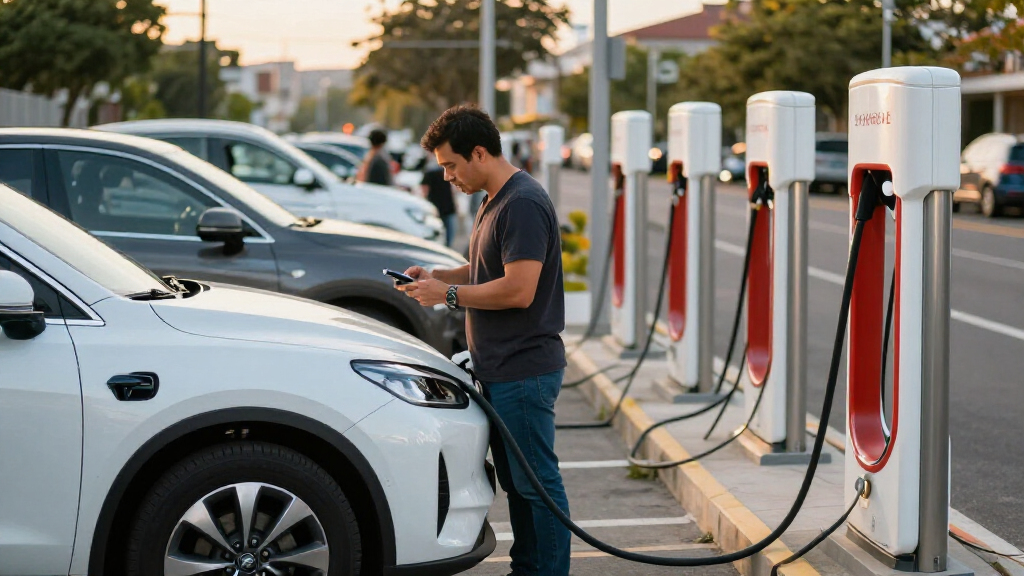
EV drivers in San Diego have reported waiting as long as an hour or seeking another location when Waymo robotaxis occupy public fast-charging stalls. Waymo says it prioritizes its own charging hubs and tries to avoid crowding stations; charging network operator EVgo says the chargers are open to both private drivers and robotaxis. The scale and frequency of the reported waits are not established.
Waymo robotaxis are using public fast chargers in San Diego, and some local EV drivers say they have waited as long as an hour or gone elsewhere when stalls were occupied. The reported strain highlights a practical conflict between a growing robotaxi fleet and private drivers who rely on shared charging sites. Waymo says it prioritizes its own charging hubs and tries to avoid having vehicles crowd a single station.
The account was reported by the Los Angeles Times and summarized by InsideEVs. One driver told the newspaper, “They come in droves,” describing robotaxis arriving at public charging locations. The supplied report says some drivers have faced waits of up to an hour or chosen another charging site, but it does not provide a count of affected drivers, stations or charging sessions.
Waymo told the newspaper that it has staff at some public charging locations to assist vehicles and tries to prevent its robotaxis from crowding one station. The company said it prioritizes charging at its own depots. A spokesperson also said Waymo vehicles, including Jaguar I-Paces and Zeekr vans sometimes driven by humans, may use public chargers during breaks.
EVgo told the Los Angeles Times that its San Diego chargers are available to private EV drivers and robotaxis. The report does not say that Waymo violated station rules. The issue described is competition for available stalls, rather than an allegation that the vehicles are using chargers unlawfully.
Fast chargers are shared infrastructure: a stall occupied by a fleet vehicle is unavailable to another driver until charging is finished. For people who depend on public charging, especially those without access to home charging, even intermittent congestion can complicate a trip or add time to a stop. Reported waits of up to an hour illustrate why fleet charging arrangements can matter beyond a company’s own operations.
The reported situation also points to a local infrastructure challenge as robotaxi service expands. A fleet may need dependable charging near its operating area, while public networks serve drivers with different needs. If dedicated depots are not yet available or cannot meet all demand, vehicles may turn to public stations. The source does not quantify how much Waymo contributes to congestion, so the broader impact remains uncertain.
Products Worth Considering

Autel MaxiCharger AC Home Level 2 EV Charger, 50A, Hardwired J1772, Wi-Fi, 25-Foot Cable

DEWALT 20V MAX XR Hammer Drill and Impact Driver Combo Kit with Two 4Ah Batteries and Charger

DEWALT 20V MAX 1/4-Inch Impact Driver Kit with Battery and Charger (DCF787D1)
As an affiliate, we earn on qualifying purchases.
Depots and Public Charging
Waymo operates depots for charging and maintenance, but the company said establishing dedicated facilities can take time when it enters new markets. The supplied report says the company is expanding its robotaxi service and operates in 15 cities; it does not specify when that count was recorded. During market expansion, public chargers can provide another option while dedicated infrastructure is developed.
The report also cites complaints about Waymo vehicles using public chargers in Nashville and St. Louis, based on social media posts. Those posts are not independently detailed in the supplied material. Separately, residents in Santa Monica and San Francisco have reported other neighborhood concerns involving Waymo vehicles, including overnight noise. Those complaints are distinct from the San Diego charging reports and do not establish the frequency or cause of the charger waits.
““They come in droves.””
— A San Diego driver quoted by the Los Angeles Times
Scale of Charger Delays Unknown
The supplied reporting does not establish how many San Diego stations are affected, how often robotaxis occupy multiple stalls, or how frequently drivers experience long waits. It also gives no charging-session data or comparison with typical station demand. The reported hour-long wait is attributed to drivers’ experiences, not presented as an average.
It is also unclear how many Waymo vehicles use public chargers rather than depots, whether the company’s station-management steps have reduced congestion, and when new dedicated facilities might open. The complaints cited from other cities do not provide enough information to establish a comparable pattern there.
More Depot Capacity Could Help
Waymo says it favors its own charging hubs, and adding dedicated capacity as the company enters markets could reduce its reliance on public stalls. The supplied report does not identify a schedule for new San Diego facilities or announce a change to Waymo’s charging practices.
For now, the immediate issue depends on how many vehicles arrive at public sites and how quickly stalls turn over. Further reporting or charging-network data would be needed to establish the frequency and scale of delays. Public chargers remain available to both private drivers and robotaxis, according to EVgo’s statement in the report.
Key Questions
Are Waymo robotaxis using public fast chargers in San Diego?
Yes. The report says some Waymo vehicles use public fast-charging stations in San Diego, although the company says it prioritizes its own charging hubs.
How long have drivers reportedly waited?
Some drivers told the Los Angeles Times, as summarized by InsideEVs, that they waited up to an hour or went to another location. The report does not say how common those waits are.
Is Waymo breaking charger rules?
The report does not say that Waymo has violated station rules. EVgo told the Los Angeles Times that its San Diego chargers are open to both private EV drivers and robotaxis.
What has Waymo said about charging its fleet?
Waymo said it prioritizes its own depots, tries to avoid crowding a single public station and has staff at some locations to assist its vehicles. It also said setting up dedicated facilities can take time in new markets.
Source: insideevs.com