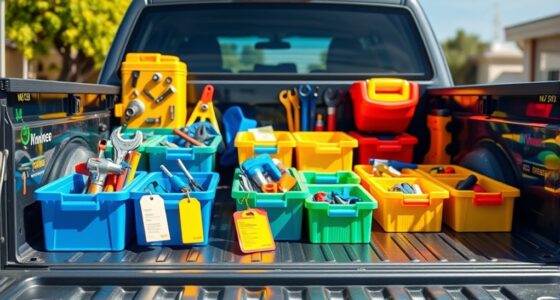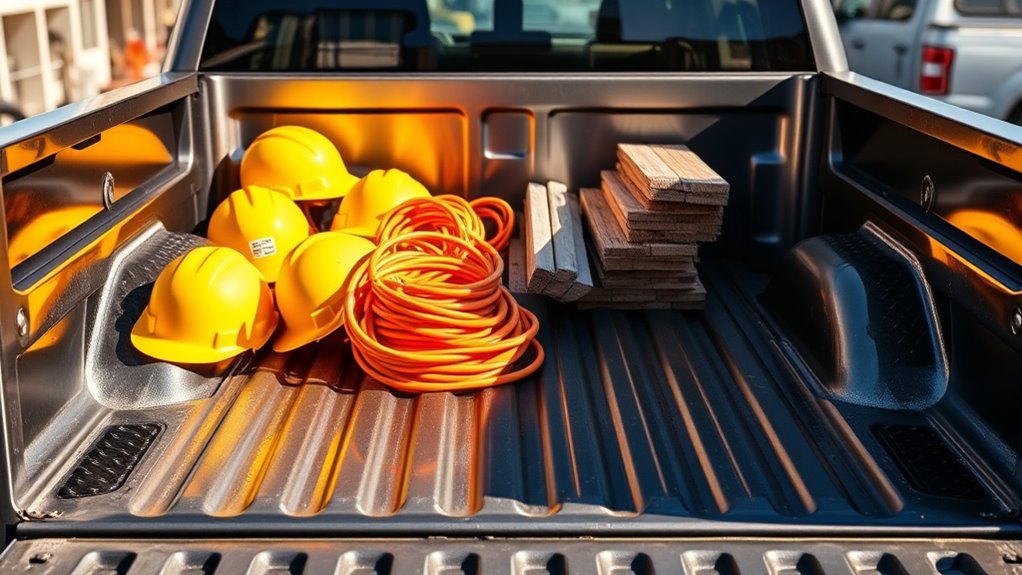

A half-ton truck can handle many business loads, but its payload capacity has limits. Typically, they can carry around 1,500 to 2,000 pounds safely, suitable for tools, small equipment, or lighter loads. However, if your business requires hauling heavier items or frequent heavy loads, a three-quarter- or one-ton truck may be better. To make sure you stay safe and within limits, consider your typical payload needs and explore the details ahead.
Key Takeaways
- Half-ton trucks typically have payload capacities around 1,500 to 2,000 pounds, suitable for light to moderate loads.
- Overloading beyond the rated payload risks vehicle damage, safety issues, and warranty voidance.
- For heavier loads or frequent hauling, consider upgrading to a three-quarter- or one-ton truck.
- Proper weight distribution and load management are essential to maintain vehicle safety and performance.
- Assess your typical cargo weight and business needs to determine if a half-ton truck’s capacity is sufficient.

Rough Country Slide-Out Truck Bed Cargo Tray – Long Bed Organizer for 5'7"+ Beds, Heavy-Duty Polyethylene, UV-Protected, Easy Tailgate Access
Maximize Bed Storage: Optimize your truck bed's space with ample storage for tools, gear, golf clubs, and weekend…
As an affiliate, we earn on qualifying purchases.
As an affiliate, we earn on qualifying purchases.
Understanding Payload Capacity: What Does It Really Mean?

What does payload capacity really mean when it comes to half-ton trucks? It’s the maximum weight your truck can safely carry in its bed and as cargo. This number isn’t just a random figure; it’s determined by the truck’s design, frame, suspension, and engine. When you load your truck, every pound added reduces the remaining capacity for additional cargo or passenger weight. Exceeding this limit risks damaging the vehicle, compromising safety, and voiding warranties. Keep in mind, payload capacity includes everything in the truck bed, plus any passengers and accessories. It’s essential to understand that payload capacity varies based on configuration, engine choice, and drivetrain. Knowing your truck’s true payload helps you avoid overloads and ensures safe, efficient operation for your business needs. Choosing the right inverter generator can help power your worksite efficiently without risking overloads.

BIT Air Scale 18-Wheeler Set – Bluetooth-Enabled Onboard Load Scale for Dedicated Trucks and Trailers
REAL-TIME MONITORING: Get accurate weight readings for total truck weight, cargo load, and individual axle weights directly through…
As an affiliate, we earn on qualifying purchases.
As an affiliate, we earn on qualifying purchases.
How Configuration Affects Your Truck’s Carrying Power
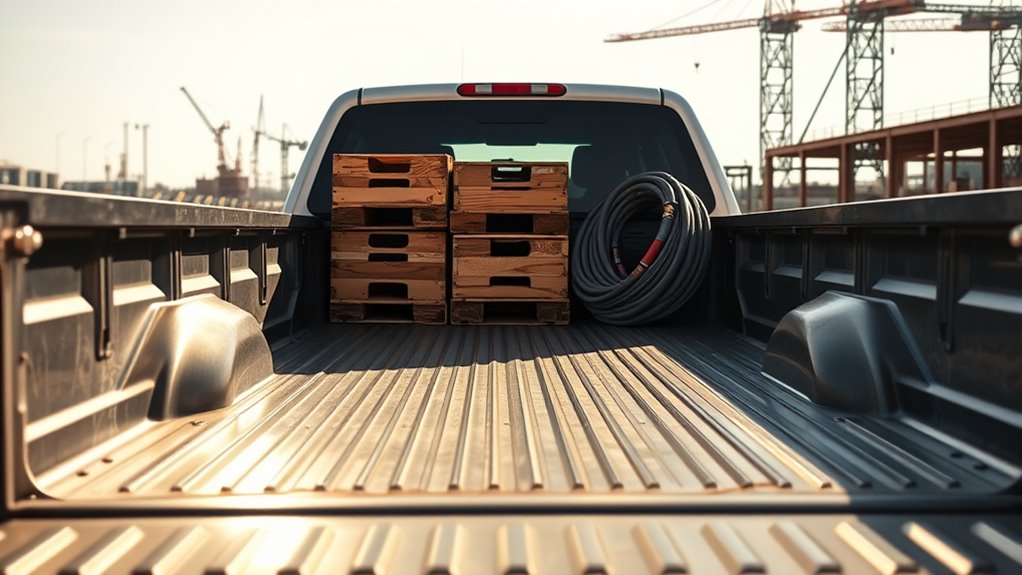
Your truck’s configuration plays a crucial role in determining how much weight it can carry. The choices you make about cab style, bed length, engine, and drivetrain directly impact payload capacity. For example:
- Crew cabs with 4WD and larger beds often reduce payload compared to regular cabs.
- 2WD models typically carry more than their 4WD counterparts—sometimes by 50-300 pounds.
- Extended beds on regular cabs usually offer higher payload ratings than crew cab options.
- Payload capacity is also affected by the overall vehicle weight and design, influencing how much weight you can haul safely.
These factors influence how much weight you can haul, so selecting the right configuration is key. Smaller beds and lighter engine options help maximize payload, while larger cabs and 4WD add comfort but often limit capacity. Keep your business needs in mind when customizing your truck.

TripleAliners Truck Mat Compatible with 2009-2026 Ram 1500 & 2019-2024 Classic 5.7FT Accessories, Truck Bed Mat Heavy Duty Custom Fit All Weather Protection TPE Pickup Liner, Won't fit Rambox
Perfect Fitment: TripleAliners truck bed mat custom-fit for your 2009-2025 2026 Ram 1500 & 19-24 Classic with 5.7FT…
As an affiliate, we earn on qualifying purchases.
As an affiliate, we earn on qualifying purchases.
Comparing Half-Ton Trucks to Heavy-Duty Alternatives
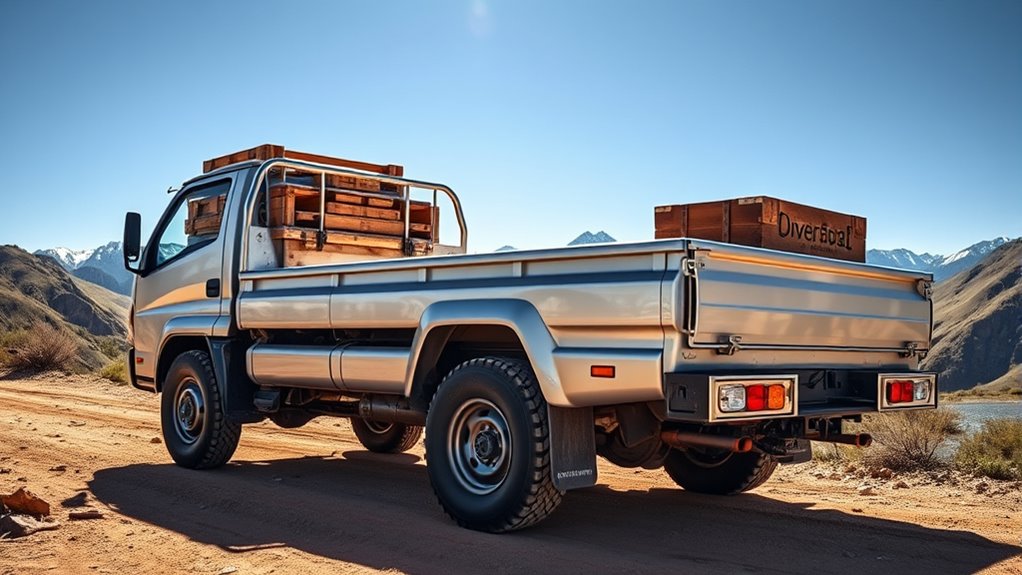
While half-ton trucks handle everyday hauling needs effectively, heavy-duty models like three-quarter-ton and one-ton trucks offer substantially higher payload capacities that surpass the limits of light-duty pickups. A three-quarter-ton truck typically provides between 3,400 and 3,900 pounds of payload, making it suitable for heavier loads and more demanding applications. One-ton trucks, with capacities up to 8,000 pounds, are built for serious commercial use and large payloads. However, these heavy-duty models usually cost more, consume more fuel, and require higher maintenance. If your business regularly involves heavy loads or towing substantial trailers, upgrading to a heavier-duty truck makes sense. But if your needs are moderate, sticking with a half-ton can save you money while still getting the job done efficiently. For those considering their options, understanding the security features and overall durability of these vehicles can help in making a well-informed decision.

Digital Caliper, Adoric 0-6" Calipers Measuring Tool – Electronic Micrometer Caliper with Large LCD Screen, Auto-Off Feature, Inch and Millimeter Conversion
Precise measurement: Measurement range: 0 – 6''/0 – 150 mm; Resolution: 0.01”/0.1 mm; Accuracy: +/- 0.2 mm/0.01”. Perfect…
As an affiliate, we earn on qualifying purchases.
As an affiliate, we earn on qualifying purchases.
Real-World Performance: What Owners Are Actually Loading
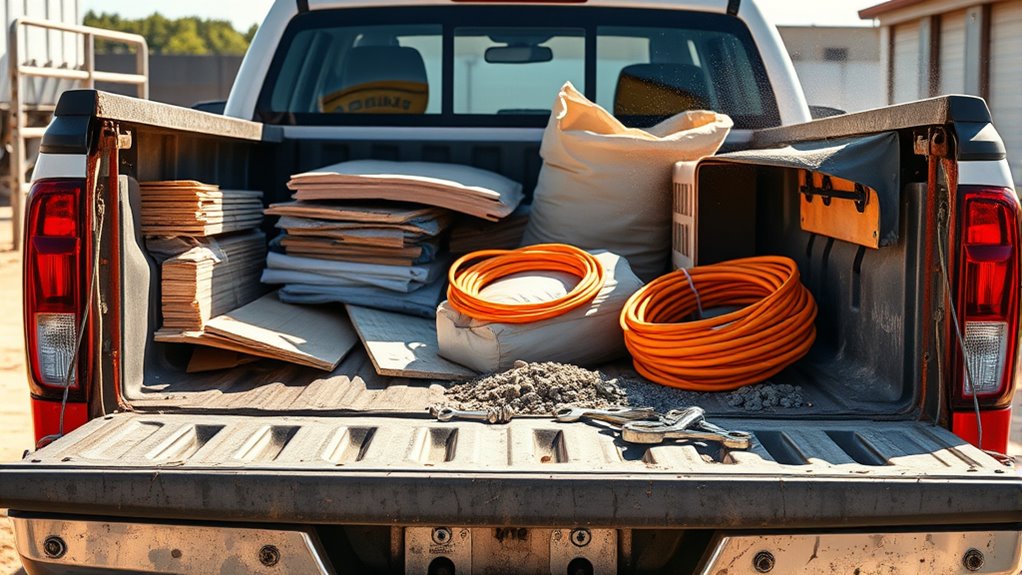
Owners often find that their actual loadings are somewhat lower than the maximum payload ratings listed by manufacturers. In real-world use, most trucks carry less than the rated capacity, often between 50-300 pounds below the limit. Here’s what you typically see:
- Light construction tools and materials, like bags of concrete or lumber, usually stay well within payload limits.
- Landscaping equipment such as mowers, mulch, and small soil loads are common, rarely nearing capacity.
- Delivery jobs often involve lighter cargo, like boxes or small appliances, which rarely max out payload ratings.
- Properly managing weight distribution helps maintain vehicle performance and safety during daily operations.
While your truck might be capable of more, practical loads tend to be lighter. Always verify actual payloads with your VIN and avoid pushing limits during daily operations.
Making the Right Choice for Your Business Needs
Determining the right truck capacity for your business hinges on understanding your specific hauling needs and operational demands. You need to assess the typical weight of your loads, trailer requirements, and how often you’ll haul heavy items. If your loads usually stay under 2,500 pounds, a half-ton truck can be a cost-effective, efficient choice. However, if you regularly handle heavier equipment or materials, consider a three-quarter-ton or heavier model to avoid overloading and potential damage. Think about the configuration too—crew cabs, bed length, and drivetrain affect payload capacity. Always check manufacturer specs and VIN data for precise ratings. Balancing your payload needs with fuel economy and budget guarantees you select the right truck that supports your business without sacrificing performance or safety. Additionally, understanding your payload capacity is crucial to ensure your truck can handle your typical loads safely and reliably.
Frequently Asked Questions
How Do I Accurately Determine My Truck’s Payload Capacity?
You can accurately determine your truck’s payload capacity by checking the manufacturer’s specifications, usually found on the VIN label or in the owner’s manual. Look for the “payload capacity” or “maximum payload” rating. Keep in mind that this number varies based on your truck’s engine, cab style, bed length, and drivetrain. Always verify these details for your specific model and configuration to guarantee safe, effective use.
Can Modifications or Accessories Reduce My Truck’s Payload?
Yes, modifications and accessories can diminish your truck’s payload capacity. Adding heavy-duty accessories like toolboxes, lift kits, or bed liners increases weight, which directly decreases the available payload. You need to account for these extra weights when calculating your total capacity. Always check your truck’s manufacturer specifications and consider the weight of any modifications to ensure you stay within safe payload limits for your vehicle.
What Are the Signs My Truck Is Overloaded?
You’ll notice your truck is overloaded if the suspension sags, the tires look bulged, or you feel excessive bouncing while driving. You might also hear grinding or squealing brakes, or see warning lights on your dashboard. If steering feels stiff or unresponsive, or if the truck feels unstable, these signs indicate you’re exceeding your payload capacity. Always check your vehicle’s specific limits to avoid damaging your truck or compromising safety.
How Does Towing Capacity Relate to Payload Capacity?
Towing capacity directly impacts your payload capacity because the trailer’s tongue weight diminishes the weight your truck can carry in the bed. When you tow, part of the truck’s maximum payload is shifted to support the trailer, meaning you have less available for cargo. Always check your vehicle’s towing and payload ratings to make sure you stay within safe limits, especially when hauling heavy loads or towing large trailers.
Are Newer Trucks Generally Capable of Handling Higher Payloads?
Yes, newer trucks generally handle higher payloads thanks to advancements in design, materials, and engineering. Manufacturers have increased payload capacities, especially in models like the Ford F-150, Chevrolet Silverado, and Ram 1500. You’ll find configurations with improved strength, better weight distribution, and optimized chassis. Just remember, payload varies based on the specific model, engine, and cab setup, so check the manufacturer’s specs to guarantee it meets your business needs.
Conclusion
Think of your truck as a trusty steed, built to carry your load. Just like a horse can only pull so much before tiring, your half-ton truck has its limits. Knowing its true capacity helps you avoid overburdening it, ensuring it’s ready for the journey ahead. Choose wisely, respecting its strength, so you can ride smoothly without risking a breakdown. After all, a well-kept steed keeps your business moving forward.