
Your truck bed’s shape and materials directly impact fuel efficiency by reducing air resistance and weight. Smooth, rounded edges and aerodynamic covers help decrease turbulence at highway speeds, making your engine work less. Using lightweight materials like aluminum cuts overall weight, boosting handling and fuel economy. When both design and material choices work together, you get bigger savings and better performance. Keep exploring how these tweaks can turn into long-term benefits for your truck and wallet.

Get business pricing on garage and car supplies
- Business-only prices and quantity discounts
- Tax-exempt purchasing
- Multiple users, one account, clear invoices
Key Takeaways
- Aerodynamic shapes and streamlined covers reduce air resistance and turbulence, improving fuel efficiency at highway speeds.
- Using lightweight materials like aluminum or composites decreases truck weight, lowering engine effort and fuel consumption.
- Combining aerodynamic features with lightweight materials maximizes overall fuel savings and reduces emissions.
- Design modifications that minimize drag and weight enhance handling, payload capacity, and fuel economy simultaneously.
- Small aerodynamic and material improvements can lead to significant long-term fuel cost reductions.
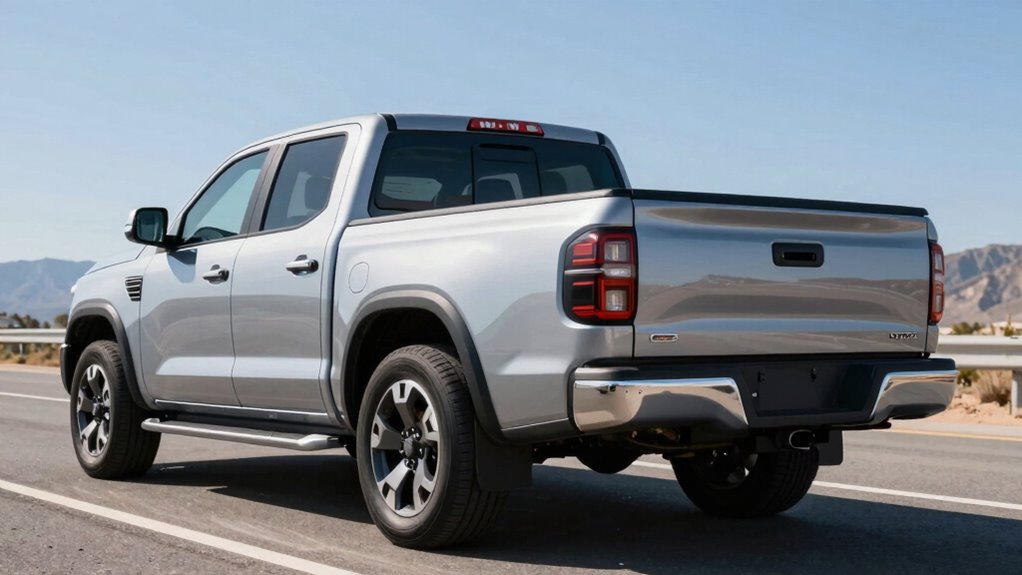
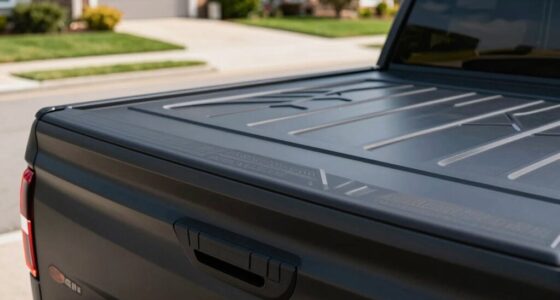
The design of a truck bed plays a essential role in determining a vehicle’s fuel efficiency, especially as more drivers seek ways to save on gas without sacrificing utility. One of the most effective strategies involves implementing aerodynamic enhancements. When your truck bed is shaped to reduce air resistance, it encounters less drag as you drive, which directly boosts fuel economy. For example, smooth, rounded edges or streamlined covers help air flow more efficiently over and around the truck, minimizing turbulence that can cause additional fuel consumption. Similarly, adding a tonneau cover or a bed cap can create a sleek surface, further cutting down drag and improving overall efficiency. These aerodynamic modifications are especially beneficial at highway speeds, where small improvements in airflow can lead to noticeable savings at the pump. Additionally, aerodynamic principles play a crucial role in designing these enhancements to maximize their impact on fuel savings.
Streamlined truck beds reduce air resistance, boost fuel efficiency, and save money on highway drives.
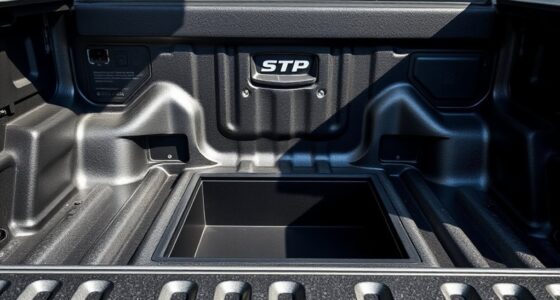
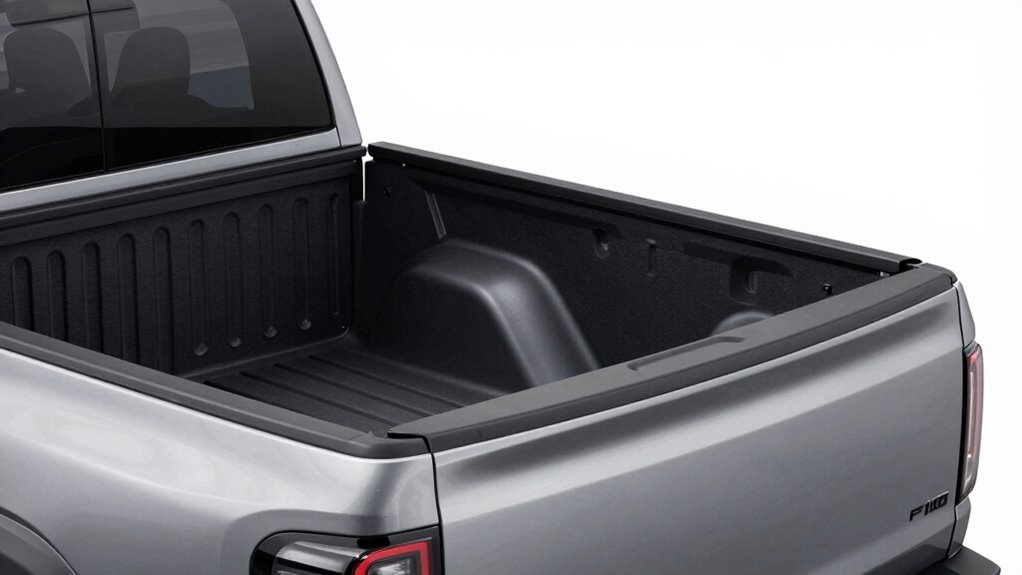
Alongside aerodynamic enhancements, material weight reduction is another critical factor influencing your truck’s fuel efficiency. The heavier your truck bed, the more energy your engine needs to move it, which translates into higher fuel consumption. Using lighter materials, such as aluminum or advanced composites, can markedly decrease the weight of your truck bed without sacrificing strength or durability. This reduction in weight not only improves fuel economy but can also enhance handling and payload capacity. Manufacturers are increasingly adopting these lightweight materials in new truck bed designs to help drivers like you achieve better mileage while maintaining the utility and robustness required for hauling. Additionally, lightweight materials can also contribute to a more sustainable vehicle design, reducing the overall environmental footprint. Incorporating aerodynamic design principles in manufacturing can further optimize performance and efficiency. Properly integrating these design strategies requires a comprehensive understanding of vehicle aerodynamics, which can lead to more efficient and innovative solutions.
Combining aerodynamic improvements with lighter materials creates a synergistic effect that maximizes fuel savings. A streamlined truck bed made from lightweight composites can cut wind resistance and reduce overall weight simultaneously. This means your engine doesn’t have to work as hard, leading to lower fuel costs and less emissions. Additionally, exploring truck bed modifications that focus on aerodynamics and weight reduction can provide even more benefits. When selecting or customizing a truck bed, consider these factors seriously—they’re not just about appearance or cargo capacity but directly impact your wallet and the environment. Keeping your truck’s design optimized for aerodynamics and weight reduction makes a tangible difference, especially if you spend a lot of time on the road.
In the end, your choices regarding truck bed design can make your vehicle more efficient without compromising its utility. By focusing on aerodynamic enhancements and material weight reduction, you’re actively improving your truck’s fuel economy and contributing to a more sustainable driving experience. Small adjustments, when combined, can lead to considerable savings over time, making your investment in these upgrades well worth it.
As an affiliate, we earn on qualifying purchases.
Frequently Asked Questions
How Does Truck Bed Material Affect Aerodynamics?
You’ll notice that truck bed material influences aerodynamics through factors like material weight and shape. Lighter materials, such as aluminum, reduce overall weight, improving airflow and decreasing drag. Heavier materials, like steel, can create more turbulence, which hampers aerodynamics. The shape and surface smoothness also matter, as streamlined designs minimize aerodynamic drag, helping you save fuel. Choosing the right material and design optimizes airflow, boosting your truck’s efficiency.
Do Different Truck Bed Sizes Impact Fuel Mileage Significantly?
Yes, different truck bed sizes can considerably impact your fuel mileage. Larger beds increase overall weight and drag, reducing efficiency. If you carry more cargo, it boosts your cargo capacity but may lower fuel economy because of added weight and wind resistance. Additionally, a bigger bed can affect towing performance, as the increased size impacts aerodynamics and handling. So, choose a size that balances your cargo needs with fuel efficiency.
Can Bed Accessories Improve or Hinder Fuel Efficiency?
Imagine your truck’s bed like a sail catching wind; adding accessories can either streamline or disrupt its flow. A bed cover acts like a smooth, tight sail, reducing drag and improving fuel efficiency. Conversely, an awkward tailgate design or bulky accessories can create turbulence, slowing you down and wasting fuel. Carefully choosing sleek, aerodynamic bed accessories helps your truck glide smoothly, saving you money at the pump.
How Does Bed Height Influence Overall Vehicle Aerodynamics?
A higher truck bed height disrupts aerodynamic airflow, increasing drag and reducing fuel efficiency. When your truck’s bed is elevated, it creates turbulence behind the vehicle, making it harder for the engine to work efficiently. To improve aerodynamics and reduce drag, keep the bed height as low as possible or add aerodynamic accessories. This helps streamline airflow, ultimately boosting fuel economy and vehicle performance.
Are There Specific Truck Bed Designs Optimized for Fuel Economy?
Yes, certain truck bed designs optimize fuel economy by improving aerodynamics. You should look for streamlined beds with smooth surfaces and minimal protrusions, which reduce drag. Cargo management features, like integrated tie-downs and secure covers, can also help maintain a sleek profile. Additionally, choosing a bed liner impact that’s lightweight and smooth minimizes turbulence, further enhancing fuel efficiency. These design choices make your truck more aerodynamic and cost-effective on fuel.
As an affiliate, we earn on qualifying purchases.
Conclusion
Ultimately, your truck bed design substantially influences fuel efficiency. For instance, a study shows that streamlined beds can improve fuel economy by up to 10%. By choosing designs that reduce air resistance, you not only save money at the pump but also lessen your environmental impact. So, when selecting or modifying your truck, consider how its bed shape and features can make a meaningful difference in your fuel consumption and overall driving efficiency.
As an affiliate, we earn on qualifying purchases.
As an affiliate, we earn on qualifying purchases.
Halloween Picks
halloween
As an affiliate, we earn on qualifying purchases.