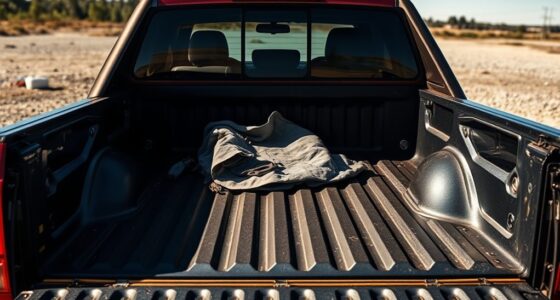
Swapping beds between trucks is possible but tricky because it impacts vehicle classification, safety, and legal compliance. You need to make certain the new bed fits your truck’s frame, mounting points, and weight limits, or you could face fines or roadside issues. Plus, safety inspections and proper documentation are essential to stay legal. If you’re curious about how all these factors come together, there’s more you should know to do it right.
Key Takeaways
- Vehicle classification changes after bed swaps may affect licensing, permits, and road regulations; verify local laws beforehand.
- Proper fitment requires matching bed dimensions and mounting points to the truck’s frame for safety and legal compliance.
- Ensure the load capacity and weight distribution of the bed align with the vehicle’s GVWR to prevent safety issues.
- Post-swap safety inspections and certification are often necessary to confirm the vehicle remains roadworthy and compliant.
- Securing loads and covering open beds with tarps are critical for safety and adherence to federal and state transportation laws.

Forccord Tie Down Anchors Fit for Ford F150 F250 F350 & Raptor 2026 2025-2015 (Include Lightning) Truck Trailer Tie Down Anchors Car Accessories Replace# FL3Z-99000A64-B Bed Tie Downs for Truck-4 Pack
【Vehicle Specific】The tie down anchors compatible with 2026 2025 2024 2023 2022 2021 2020 2019 2018 2017 2016…
As an affiliate, we earn on qualifying purchases.
As an affiliate, we earn on qualifying purchases.
Understanding Vehicle Classifications and Legal Implications
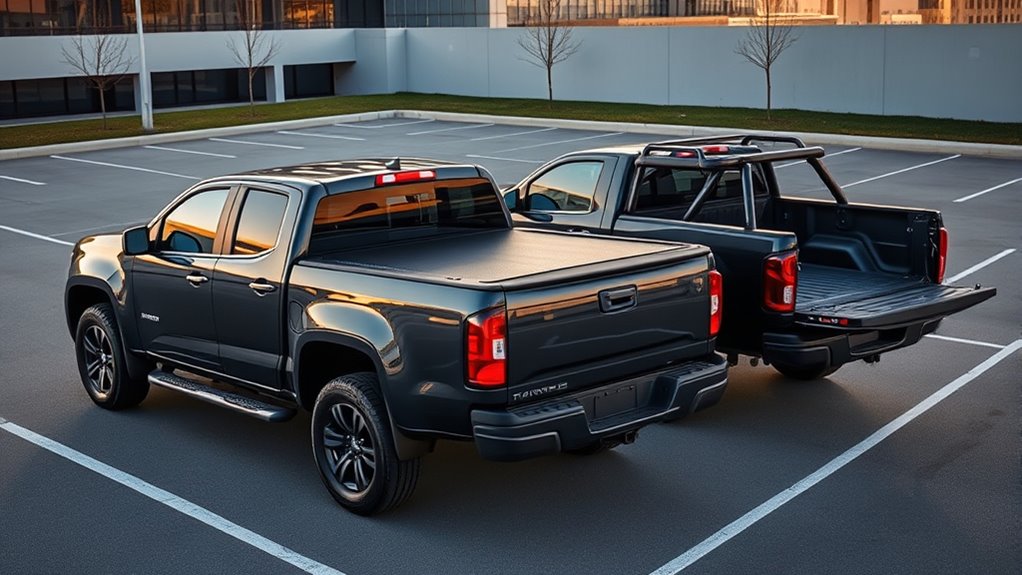
Understanding vehicle classifications is essential because swapping a truck bed can change how your vehicle is legally categorized on the road. If you replace a pickup bed with a utility or flatbed, your vehicle might be classified as a “motor truck” under California law, which impacts your legal requirements. This classification determines whether you need to stop at weigh stations or follow specific commercial vehicle regulations. Even if you still use passenger plates, the new bed type and GVWR could make you subject to different rules. Knowing how your vehicle’s classification changes helps you stay compliant and avoid penalties. It’s important to understand these distinctions because they directly influence what inspections, permits, and safety standards you must meet after the swap.

USKITS DOT Economy OSHA ANSI Compliant Truck Safety Kit for Enhanced DOT Compliance and Road Safety
USKITS DOT Economy OSHA ANSI Compliant Truck Safety Kits for Enhanced DOT Compliance and Road Safety
As an affiliate, we earn on qualifying purchases.
As an affiliate, we earn on qualifying purchases.
Regulations Governing Bed Swaps and Size Limits
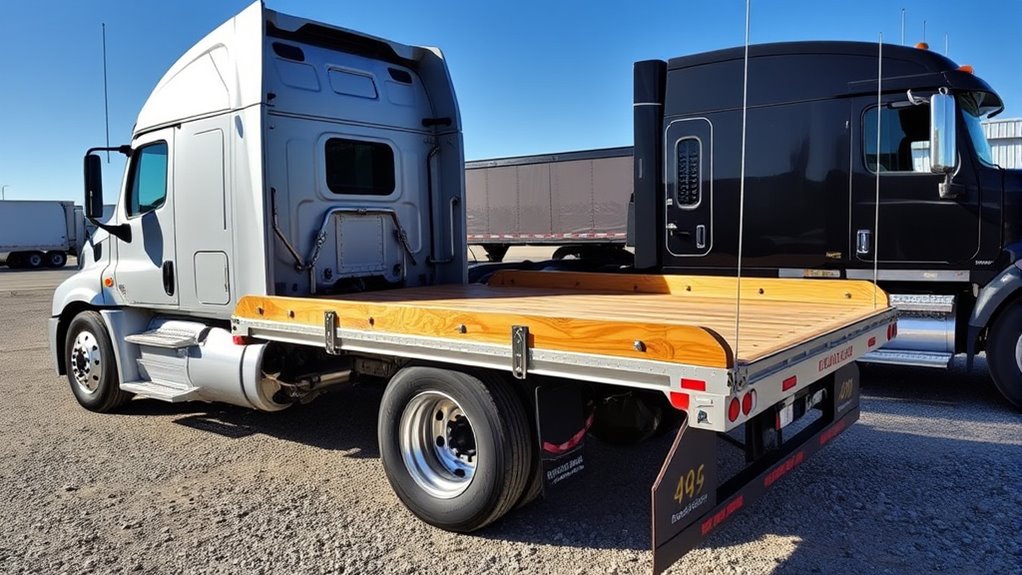
When swapping truck beds, you must comply with specific regulations that govern vehicle modifications and size limits. First, check your state’s rules on maximum vehicle width, length, and weight, as these can restrict your modifications. Many states require that any bed extension or replacement stays within legal size limits to avoid penalties. You may need to obtain permits if your modified vehicle exceeds these limits, especially for width or length. Additionally, changing the bed can alter your vehicle’s classification, potentially subjecting it to commercial regulations or weigh station inspections. Ensure your new bed mounts securely and matches the chassis specifications to maintain safety and legality. Always verify local laws before proceeding to avoid fines or vehicle impoundment. Consulting vehicle regulations can help you better understand how modifications impact your vehicle’s classification and compliance.
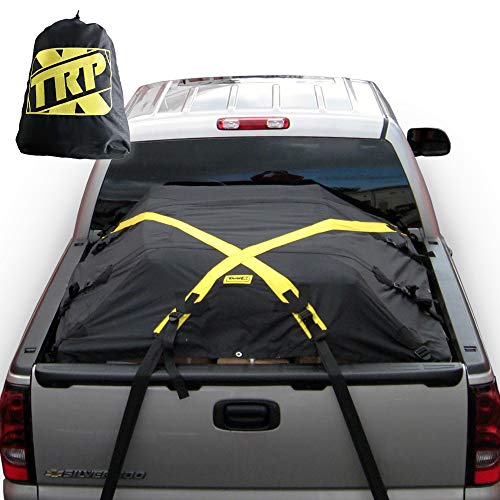
The X-Cover by TRPx – Trailer and Truck Bed Cover Medium – Integrated Heavy Duty Black Tarp and Tie Down System. Fits: Short Bed, Standard Bed Trucks and Utility trailers up to 6'6"
[TOUGH] – Water resistant, UV resistant, weather resistant, and built to last. Heavy duty tie-down straps with hooks…
As an affiliate, we earn on qualifying purchases.
As an affiliate, we earn on qualifying purchases.
Safety Inspections and Certification Requirements

Once you’ve swapped beds, your vehicle must pass a safety inspection to prove it meets all standards. This process verifies that the chassis, engine, and other critical systems are in good working order and that the load capacity remains within limits. You’ll need to gather proper certification documents to confirm your vehicle’s compliance before it can be legally operated. Additionally, understanding vehicle safety standards can help ensure your modifications adhere to all regulations.
Inspection Standards Overview
Before operating a vehicle with a modified bed, you must guarantee it passes a thorough safety inspection. This inspection checks the integrity of the chassis, engine, drivetrain, and steering system to verify they’re in proper working order. It also confirms that the load capacity after modification doesn’t exceed the original design limits. You can’t use recycled parts unless they’re specialized equipment or engines. If your vehicle transports hazardous materials, it needs extra certification for safety compliance. The inspector will verify that the bed is securely mounted, compatible with your chassis, and within weight limits. Proper fitment is essential; improper installation can compromise safety and handling. Ensuring these standards helps prevent violations, fines, or impoundment, and keeps you compliant with legal and safety requirements. Mastering safety inspections is crucial to ensure your modifications meet all regulatory standards and avoid unexpected issues.
Safety Certification Process
To make certain your truck with a modified bed meets safety standards, you must undergo a thorough safety inspection conducted by a certified inspector. This process verifies that your vehicle complies with all safety regulations and is roadworthy. During the inspection, the inspector checks the chassis, engine, drivetrain, and steering system to ensure they’re in proper working order. They’ll also evaluate the load capacity, confirming it doesn’t exceed the original design limits, and ensure recycled components aren’t improperly used. If your vehicle transports hazardous materials, additional certification is required. Once the inspection is complete, you’ll receive a certificate of technical safety inspection. Keep this documentation safe, as it proves your truck’s compliance and is necessary for registration and legal operation. Failure to pass can result in fines or impoundment.
Compliance Documentation Needed
Proper compliance documentation is essential after modifying your truck’s bed to guarantee it meets all safety and legal standards. Without it, you risk fines, penalties, or vehicle impoundment. You’ll need a certificate of technical safety inspection confirming your vehicle’s safety and compliance with regulations. Additionally, ensure your vehicle registration and ownership documents are up to date, reflecting any modifications. Keep records of the installation process and any component certifications, especially if recycled parts are used. Some states may require special permits for bed swaps, especially if the vehicle’s classification changes. Always verify local regulations to avoid violations. Proper documentation not only proves compliance but also helps streamline inspections and prevents legal issues during roadside checks. Moreover, certified vehicle components play a crucial role in ensuring your modifications meet the standards set by European and local authorities.

SKYRC Wireless Corner Scale Setup System for RC Cars
A compact corner scale system for radio-controlled cars. Includes 4 individual scale pads, download and use app to…
As an affiliate, we earn on qualifying purchases.
As an affiliate, we earn on qualifying purchases.
Ensuring Proper Fitment and Compatibility
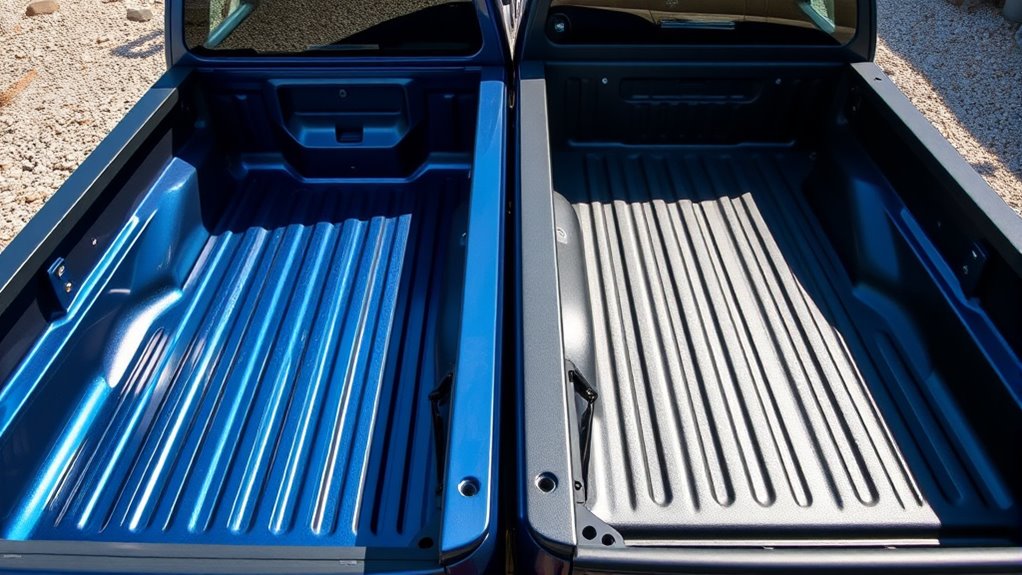
Make certain the bed’s dimensions match your truck’s frame and mounting points. You may need custom brackets or modifications to guarantee a secure, proper fit. Overlooking compatibility can affect safety, handling, and legal compliance. Additionally, understanding projector compatibility ensures the bed swap does not interfere with any installed components or accessories.
Matching Bed Dimensions
Ensuring that the bed dimensions match your truck’s specifications is essential for safe and effective conversion. If the bed is too large or small, it can cause instability, damage, or legal issues. You need to verify the length, width, and mounting points to confirm compatibility. Mismatched dimensions may require custom brackets or modifications, which can complicate the swap and increase costs. Additionally, the bed’s weight and load capacity must align with your truck’s GVWR to prevent overloading. Proper fitment guarantees not only safety but also compliance with regulations. To avoid issues, double-check your truck’s specifications against the bed’s measurements before proceeding.
- Confirm the length, width, and mounting points match your truck’s frame
- Ensure the bed’s weight capacity aligns with your vehicle’s GVWR
- Check for compatibility with existing mounting brackets
- Consider potential custom modifications for proper fitment
Custom Mounting Requirements
Since truck beds vary in design and mounting configurations, you need to pay close attention to how the bed will attach to your vehicle’s frame. You must guarantee the mounting points align with your truck’s chassis and that the bed’s dimensions fit properly. Custom brackets or modifications are often necessary to secure aftermarket beds safely. Check that the bed’s weight and load capacity match your vehicle’s gross vehicle weight rating (GVWR) to avoid overload risks. Proper mounting is critical for safety, handling, and legal compliance. Incorrect fitment can lead to instability, damage, or violations of regulations. Always verify that the mounting system provides a secure, stable connection, and consult manufacturer specifications or a professional if needed, to ensure a proper, safe fit. Proper fitment is essential for maintaining the integrity of your vehicle and ensuring compliance with safety standards.
Documentation and Compliance With Local Laws

To stay compliant with local laws after swapping a truck bed, you must maintain proper documentation that verifies your vehicle meets safety and regulatory standards. Without it, you risk fines, vehicle impoundment, or legal issues. Keep these documents ready:
- Certificate of technical safety inspection
- Updated vehicle registration reflecting the modifications
- Proof of ownership for the new bed
- Environmental compliance certificates if applicable
Ensure these are current and accessible during inspections or if stopped by authorities. It’s your responsibility to verify that your vehicle’s modifications align with local, state, and federal regulations. Failing to do so can lead to penalties, especially if your vehicle is classified as a commercial or modified unit. Proper documentation proves your vehicle’s compliance and helps avoid unnecessary legal complications. Additionally, understanding regulatory standards for vehicle modifications can prevent inadvertent violations.
Load Securement and Tarping Regulations

Are you aware of the specific load securement and tarping regulations required when transporting materials in your truck bed? If you’re hauling loose materials like gravel or sand, federal and state laws mandate proper securement to prevent spills or accidents. For vehicles manufactured after September 30, 2001, you must securely cover open beds to avoid load loss. Tie-downs are required every 10 feet or fraction thereof to keep loads stable. If your truck has a complete enclosure, some tarping rules may not apply. Always ensure your load is evenly distributed and properly tied down, and use tarps or covers when necessary. Proper anime storytelling techniques and attention to safety regulations can help you avoid fines, safety hazards, or vehicle inspection issues. Stay informed, and follow these regulations to keep your loads protected and legal.
Frequently Asked Questions
Can I Legally Swap a Flatbed Onto My Pickup Truck?
Yes, you can legally swap a flatbed onto your pickup truck, but you must guarantee it fits the chassis and matches your truck’s specifications. You’ll need to pass a safety inspection, verify the load capacity, and keep proper documentation. Check your state’s regulations on size, weight, and vehicle classification, as some modifications may require permits or additional compliance measures. Proper fitment and safety are essential to avoid penalties.
Do Bed Swaps Affect My Vehicle’s Insurance Coverage?
Yes, swapping beds can affect your insurance coverage. You need to update your policy to reflect the new bed configuration because it changes the vehicle’s classification and potentially its use. Failure to do so might void coverage or lead to claims being denied if an accident occurs. Always notify your insurer before making modifications, so you’re protected and compliant with regulations. Keep documentation of the change for proof if needed.
Are There Specific Weight Limits for Different Truck Bed Types?
Yes, there are specific weight limits for different truck bed types. You need to take into account the gross vehicle weight rating (GVWR) of your truck and verify the bed’s load capacity doesn’t exceed it. Flatbeds, utility beds, and stock pickup beds each have their own weight limits, which are essential for safety and legal compliance. Always check manufacturer specifications and local regulations before swapping beds to avoid overloading and potential fines.
How Often Do Safety Inspections Need to Be Renewed After Modifications?
Safety inspections after modifications need to be renewed at intervals set by your state or local regulations, which can range from annually to every few years. You must get a new inspection whenever you make significant changes, like swapping beds or altering load capacities. Skipping or delaying inspections isn’t just risky — it can lead to hefty fines or even your vehicle being grounded. Stay on top of inspections to keep your truck safe and road-ready!
Can a Bed Swap Change My Vehicle’s Registration Classification?
Yes, swapping your truck bed can change your vehicle’s registration classification. If you remove a standard pickup bed and install a utility body or flatbed, your vehicle might be classified as a “motor truck” under state laws like California’s CVC Section 410. This reclassification can affect licensing, registration, and whether you need to stop at weigh stations. Make sure you comply with local regulations and update your registration accordingly to avoid penalties.
Conclusion
Swapping truck beds is like fitting puzzle pieces—you need to know the rules to make everything work smoothly. By understanding vehicle classifications, adhering to regulations, and ensuring proper fitment, you keep yourself safe and compliant. Think of it as steering a road full of signs—you’ll avoid costly mistakes and stay on the right side of the law. Stay informed, double-check your setup, and enjoy a hassle-free experience behind the wheel.