
TL;DR

Get business pricing on garage and car supplies
- Business-only prices and quantity discounts
- Tax-exempt purchasing
- Multiple users, one account, clear invoices
A generator wattage calculator helps you determine the right capacity by estimating running and starting watts of your appliances. It prevents overloads and saves money by matching your needs precisely.
Ever tried powering your entire home with a generator, only to find it stalls or trips the circuit? That’s because size matters—too small, and you’re stuck in the dark. Too big, and you waste fuel and money.
Using a generator wattage calculator streamlines this process. It helps you estimate your essential power needs, avoid overloads, and pick a generator that fits perfectly. Whether you’re prepping for emergencies or running a job site, knowing your wattage is the first step to peace of mind.
Always consider both running and starting watts for accurate sizing.
Avoid simply summing all startup watts; use the largest surge and add it to continuous loads.
Leave at least 20% headroom for surges and future expansion.
Use real appliance labels instead of estimates for precision.
Environmental factors like altitude and temperature can reduce generator capacity—plan accordingly.
How a Wattage Calculator Finds Your Perfect Generator
A generator wattage calculator is like a smart assistant for sizing your backup power. It asks for each appliance’s wattage—both running and startup. Then, it totals those up, giving you a clear picture of what size generator to buy.
For example, if your fridge needs 200 watts running and 1,200 watts startup, and your sump pump is 800 watts running plus 2,000 watts startup, the calculator adds the continuous load and picks out the highest surge demand. It then recommends a generator that can handle that peak comfortably, with some headroom for safety.
Understanding how these calculations work is crucial because it directly impacts your generator’s performance and longevity. Choosing a generator too small can lead to frequent overloads, damaging your equipment and risking safety hazards. Conversely, oversizing means you’re paying extra upfront and running a less efficient system, which increases fuel consumption and operational costs. The calculator helps find a balance—adequate capacity without excessive waste—so your setup runs smoothly and economically.
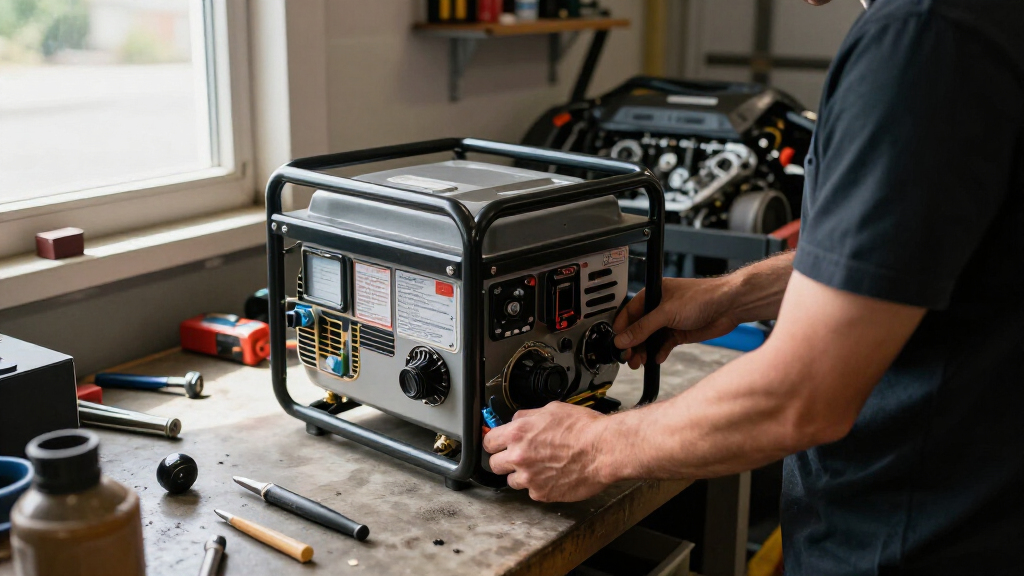
portable generator with sufficient wattage
As an affiliate, we earn on qualifying purchases.
As an affiliate, we earn on qualifying purchases.
Key Inputs You Need for Accurate Results
To get a reliable estimate, gather these details:
- Appliance wattages: Check labels or manuals. Accurate wattage ensures your calculations reflect real-world demands, preventing surprises during operation. Using estimates can lead to undersizing, causing your generator to stall, or oversizing, which wastes resources.
- Number of each device: How many lights, refrigerators, or tools? The total load depends heavily on quantity, so accounting for multiple units ensures your generator can support your entire setup without overloads.
- Start-up surges: Especially for motors like refrigerators or air conditioners. These surges can be 2-3 times the running wattage, and neglecting them risks selecting a generator that can’t handle sudden demand, leading to trips or damage.
- Voltage requirements: 120V or 240V? Different appliances may require different voltages, affecting the size and type of generator needed. Properly matching voltage ensures safe and efficient operation.
- Environmental factors: Altitude and temperature can reduce actual power output. Higher elevations and extreme temperatures lower generator efficiency, so your calculations should include a safety margin to compensate for these conditions, preventing unexpected overloads or underperformance.
For example, a 3500 watt inverter generator might handle most household essentials, but if your well pump requires 2,500 watts start-up, ignoring environmental factors could lead to underperformance. Overlooking these details can result in selecting a generator that either struggles to start appliances or wastes energy when oversized.
backup home generator for essential loads
As an affiliate, we earn on qualifying purchases.
As an affiliate, we earn on qualifying purchases.
Understanding the Tradeoffs of Generator Sizing
Choosing the right generator size involves understanding the tradeoffs between capacity, cost, and efficiency. A generator that is too small will constantly be pushed to its limits, causing frequent overloads, increased wear, and potential damage to your appliances. On the other hand, oversizing your generator means paying more upfront for a unit capable of handling loads you may never need, leading to unnecessary fuel consumption and higher operational costs.
By using a wattage calculator, you can strike a balance—selecting a generator that comfortably meets your maximum load with some margin for safety and future expansion. This approach minimizes waste, reduces fuel costs, and extends the lifespan of your equipment. Recognizing these tradeoffs helps you make an informed decision that aligns with your budget and needs, ensuring reliable power without overspending or risking damage.
As an affiliate, we earn on qualifying purchases.
Frequently Asked Questions
How do I know the wattage of my appliances?
Check the label or manual; many appliances list their wattage. For motors, multiply volts by amps and adjust for power factor. If unsure, use a clamp meter to measure actual power draw.Can I add all startup watts together?
Not usually. Add the total running watts of all devices plus only the largest startup wattage. This prevents oversizing and ensures your generator can handle the real surge demands.What size generator do I need for my house?
It depends on your essential loads and appliances. For basic needs, 2000–3500 watts may suffice. For whole-home backup, 5000 watts or more might be necessary, especially if you run HVAC or large pumps.How much headroom should I leave?
Aim for 20–25% extra capacity beyond your maximum estimated load. This buffer covers surges, future expansion, and environmental factors, keeping your system safe and reliable.Is a larger generator always better?
No. Oversized generators cost more and run inefficiently at light loads. The goal is a size that comfortably handles your peak needs without waste or excess fuel consumption.As an affiliate, we earn on qualifying purchases.
Conclusion
Picking the right generator isn’t just about wattage numbers—it’s about understanding your actual power needs. A good wattage calculator turns guesswork into a clear plan, saving you money and headaches.
Remember: size up for surges, leave room for growth, and always verify with real device labels. That way, when the power goes out, you’re ready—quietly confident your backup will handle the load.
Generator Wattage Calculator
Estimate running and starting watts for a short list of common backup loads.
Your selected load fits the small-generator range. Compare 2,000 watt portable generators for essentials-only backup.
See small-generator matchesYour surge load points to a mid-size inverter generator. Compare 3,500 watt options and verify each appliance label.
See mid-size generator matchesYour list needs a larger generator class. Compare 5,000 watt portable generators and plan circuits with a qualified pro.
See larger generator matchesEstimate only. Check product specs, local rates, and site conditions before buying or planning around these numbers.
Fall Picks
fall essentials
As an affiliate, we earn on qualifying purchases.