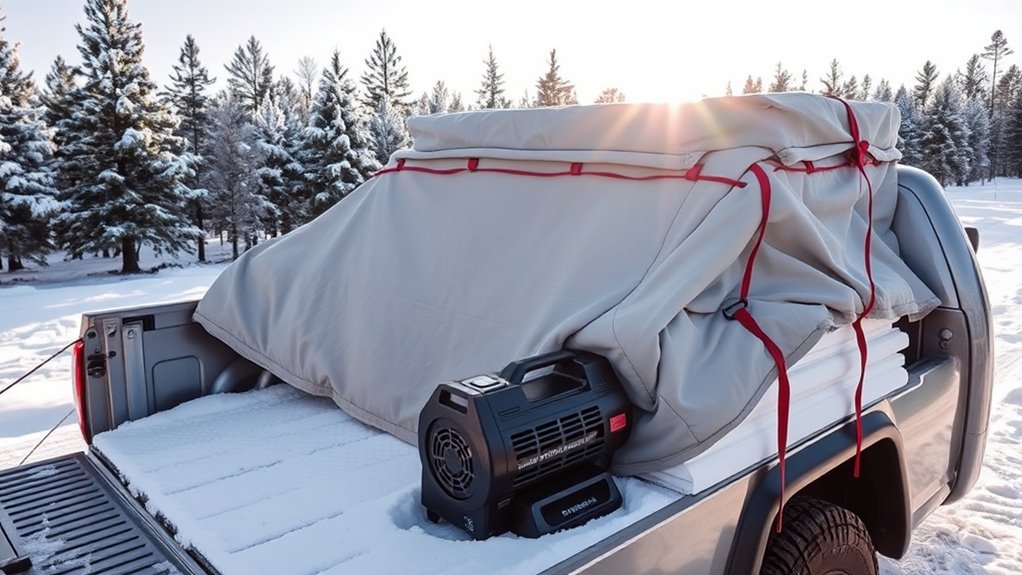

Before the first freeze, you should drain all water tanks and lines completely, then use antifreeze to protect the plumbing. Keep your camper well-ventilated and remove damp items to prevent mold. Secure the camper on a solid surface, lower the jacks, and tighten straps to prevent movement. Insulate windows, vents, and walls, and check everything carefully after winter. Following these steps helps protect your setup—continue to discover more tips for freezing temperatures.
Key Takeaways
- Drain all water tanks, lines, and appliances completely, then introduce RV-grade antifreeze to prevent freezing damage.
- Bypass and drain the water heater, opening pressure relief valves to remove residual water.
- Secure and stabilize the camper on a flat surface, using jacks and straps to prevent movement during winter.
- Seal gaps around windows, doors, and vents with weather stripping or caulking to maintain warmth and prevent drafts.
- Check and recharge batteries, inspect for leaks or damage, and ensure all exterior seals are intact before winter storage.
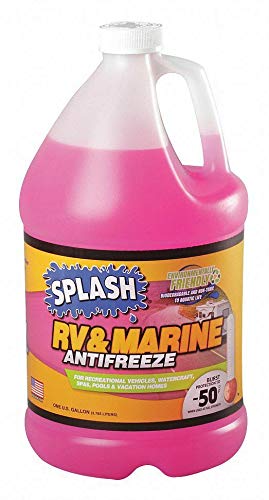
SPLASH RV & Marine Antifreeze -50°F Burst Protection, 1 Gallon (1 Pack)
BURST PROTECTION PERFORMANCE (-50°F) – Helps protect pipes and systems from freezing damage during cold weather storage
As an affiliate, we earn on qualifying purchases.
As an affiliate, we earn on qualifying purchases.
Preparing Water Systems to Prevent Freezing Damage

To prevent freezing damage, you need to thoroughly drain all water from your camper’s system. Start by emptying the fresh, gray, and black holding tanks completely. Open all faucets, showers, and low-point drains to allow water to flow out freely. Use an air compressor with a blowout plug adapter to blow out residual water in the lines, ensuring they’re completely dry. Bypass the water heater, drain it by removing the drain plug, and open the pressure relief valve to release any remaining water. Then, introduce RV or marine-grade antifreeze into the system through the water pump inlet, flushing it through all faucets and toilets. This antifreeze protects pipes from freezing and prevents costly damage during cold weather. Additionally, consult your system’s cost of ownership to understand the long-term maintenance requirements and any potential replacements needed for winterization.

Rieco Titan 21104 Stable Stix Stabilizer System for Truck Campers
Strong square steel tubing
As an affiliate, we earn on qualifying purchases.
As an affiliate, we earn on qualifying purchases.
Ensuring Proper Interior Ventilation and Organization
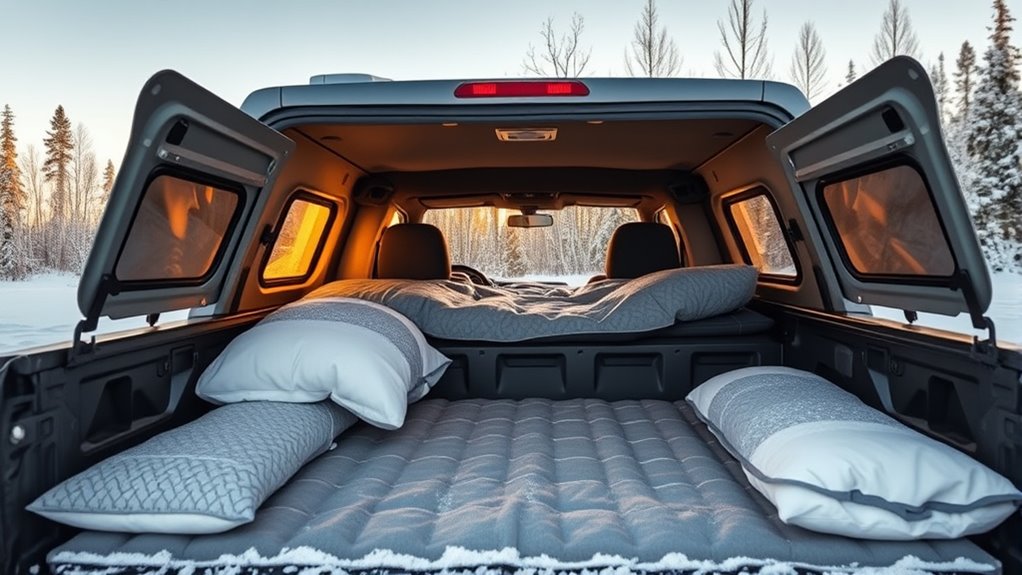
After draining and antifreezing the water system, focusing on proper interior ventilation helps prevent moisture buildup and mold growth during winter storage. Keep windows slightly open or install vent covers to promote airflow and reduce humidity. Use fans or exhaust vents to circulate air, especially in high-moisture areas like the bathroom and kitchen. Remove any wet or damp items, including bedding or towels, to avoid mold. Store pillows and other fabrics in dry, ventilated spaces. Regularly check the interior for signs of condensation or moisture, and air out the camper if needed. Maintaining good airflow minimizes mold risks and keeps the interior dry, ensuring your camper stays fresh and ready for use when spring arrives. Incorporating Free Floating techniques in your storage area can further enhance natural air circulation and prevent stagnant air.

AGHITG Reflective Insulation Foam,48" x 10 Ft Window Insulation for Summer Heat,Aluminum Foil Bubble Insulation Roll for Keep Heat,Window Insulation Kit for RV, Thermal Insulation Cover for Window.
AlUMINUM REFLECTIVE INSULATION ROLL SIZE: 48''(W) x 10Ft (L), Easy to cut that can cater to all your…
As an affiliate, we earn on qualifying purchases.
As an affiliate, we earn on qualifying purchases.
Securing Camper Stability and Storage Arrangements
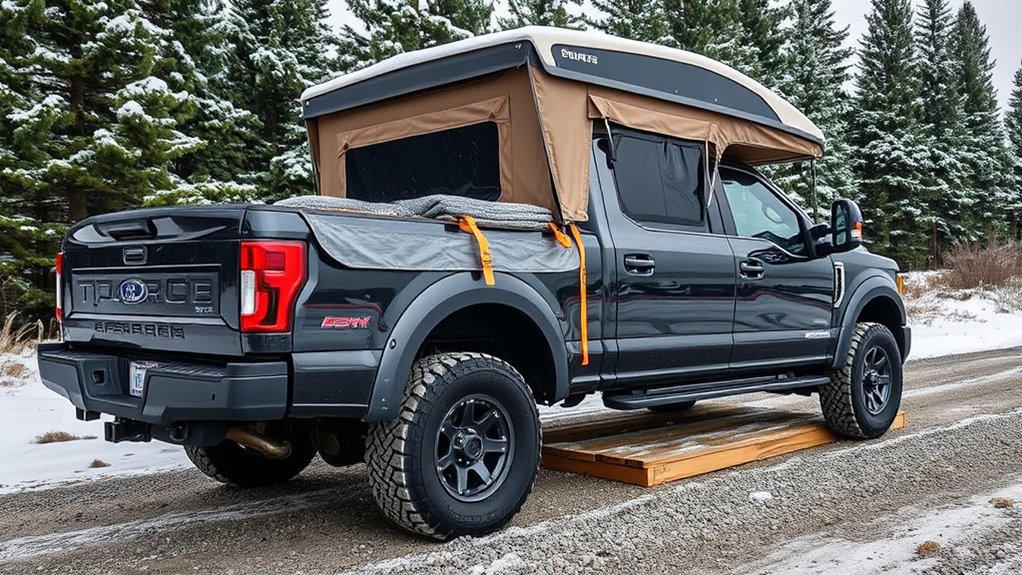
Ensuring your camper remains stable during winter storage is essential to prevent damage from shifting or wind. Start by choosing a flat, solid surface to unload the camper from your truck bed. Remove all securing turnbuckles or bolts that attach the camper to the vehicle. Attach all four jacks securely to the corner brackets and lower jack pads onto firm ground for added stability. Raise the camper slightly—about 4 to 6 inches—to clear the truck bed. Once in position, double-check that all jacks are firmly in place. Secure the camper against movement by tightening any additional straps or braces. Proper stabilization minimizes the risk of wind damage, settling, or shifting during freezing conditions, protecting your investment until spring. Incorporating essential oils for stability in your storage routine can also help maintain the camper’s condition and prevent issues caused by moisture or mold.

EDIETH 14"x14"x3" RV Vent Insulator (1-Pack) – Universal Reflective Skylight Cover for Camper Vents, Thermal Insulation & Noise Reduction, Fits 14×14 Inch RV Sunroof
Premium Reflective Insulation – Features a durable aluminum-coated surface to reflect 98% of sunlight, keeping your RV interior…
As an affiliate, we earn on qualifying purchases.
As an affiliate, we earn on qualifying purchases.
Enhancing Thermal Insulation for Cold Weather Conditions

When preparing your camper for cold weather, enhancing its thermal insulation is key to maintaining warmth and preventing condensation. You can install insulation liners on pop-up walls to trap heat inside. Using insulated covers or thermal blankets designed for campers helps retain internal temperatures. Seal gaps around windows, doors, and vents with weather stripping or caulking to minimize heat escape. Adding insulated curtains or reflective shades over windows further reduces heat loss. For extra comfort, use heated mattress pads or add multiple bedding layers. Proper insulation prevents drafts and keeps your camper cozy during freezing nights. Additionally, insulation effectiveness can be improved by combining multiple methods for optimal results. Here’s a quick overview of insulation options:
| Insulation Method | Benefits |
|---|---|
| Thermal liners | Retain heat, reduce condensation |
| Insulated covers/shades | Minimize heat loss through windows |
| Weather sealing (caulk, strips) | Block drafts, improve efficiency |
| Reflective blankets | Reflect heat inward, boost warmth |
Conducting Post-Winter Checks and Maintenance

Once winterizing is complete, it’s essential to perform thorough post-winter checks to guarantee your camper remains in good condition. Start by inspecting plumbing connections for leaks or damage, and ensure all faucets and drain plugs are securely closed. Check the water system for any signs of freezing or cracking, and flush out any remaining antifreeze if needed. Examine batteries and recharge if necessary, since cold storage can drain their power. Look for moisture buildup, mold, or pest intrusions inside the camper, and ventilate as needed. Inspect the exterior for cracks, damage, or corrosion, especially around seals and vents. Additionally, consider inspecting the modern kitchen systems to ensure all appliances and connections are functioning properly after winter. Finally, make any necessary repairs before your next trip, ensuring your camper is ready for the season ahead.
Frequently Asked Questions
How Long Should Antifreeze Remain in the Water System Before Use?
You should leave the antifreeze in your water system until you’re ready to de-winterize. When you’re prepared to use your camper again, flush out the antifreeze thoroughly by running clean water through all lines, faucets, and appliances. It’s important to remove all traces of antifreeze to guarantee safe drinking water and proper system operation. Never leave antifreeze in the system during regular use, as it can affect water taste and safety.
Can I Leave My Camper Connected to Electricity During Winter Storage?
Leaving your camper connected to electricity during winter storage is like keeping a tiny heartbeat alive inside it. You can do it if you want to maintain battery charge and prevent freezing issues, but make sure to use a timer or monitor to avoid energy waste. Turn off heating elements and appliances not needed, and periodically check on your camper to make sure everything stays safe and snug throughout the cold months.
What’s the Best Way to Prevent Pests From Entering During Winter?
To prevent pests during winter, you should thoroughly clean your camper inside and out, removing any food or debris that attract bugs. Seal all gaps around windows, doors, and vents with weather stripping or caulking to block entry points. Consider installing screens on vents and vents covers. Leaving interior cabinets slightly open can also help airflow, and placing pest deterrents like natural repellents or traps can keep unwanted visitors out during the cold months.
How Often Should I Check on the Camper During Winter Months?
Think of your camper as a sleeping giant that needs checking. During winter months, you should inspect your camper at least once a month. Look for signs of moisture, pests, or damage, and guarantee the battery remains charged. Ventilate when needed and recheck seals or insulation. Regular visits keep your camper safe, warm, and ready for adventures when spring arrives, preventing costly repairs from unnoticed issues.
Is It Necessary to Remove All Batteries for Winter Storage?
You should remove all batteries for winter storage to prevent damage from cold temperatures. Batteries can freeze, leak, or deteriorate if left in the camper during freezing weather. Store them in a cool, dry place away from moisture and extreme cold. Check the batteries periodically, recharge if needed, and clean the terminals to maintain their health. Removing batteries helps extend their lifespan and guarantees they’re ready for use when spring arrives.
Conclusion
By winterizing your truck bed camper, you’re wrapping it in a warm, protective blanket against the icy grip of winter. With each step, you’re carving out a fortress of resilience, ensuring your adventure’s spirit endures beyond the frost. When the first snow falls, you’ll rest easy knowing your setup stands strong like a steadfast sentinel, ready to face the cold and welcome spring’s return, turning winter’s challenge into a triumph of preparation.