After a wildfire, it’s essential to clean your truck bed carefully to prevent damage and health risks. Wear protective gear like masks, gloves, and goggles to avoid ash inhalation and contact. Use a damp cloth or HEPA vacuum to gently remove ash—avoid dry sweeping. Rinse surfaces with water and dispose of debris properly. Protect your vehicle during cleanup and consider post-cleaning treatments to prevent corrosion. Keep learning more tips to safeguard your truck from wildfire damage and contamination.
Key Takeaways
- Use a HEPA vacuum or damp cloth to gently remove ash from your truck bed, avoiding dry sweeping to minimize dust.
- Wear protective gear like respirators, gloves, goggles, and long sleeves during cleanup to prevent inhalation and skin contact.
- Rinse surfaces with water and mild detergent after ash removal, and avoid high-pressure washing that could damage paint or seals.
- Properly dispose of ash in sealed bags at hazardous waste sites to prevent environmental contamination and health risks.
- After cleaning, inspect and seal your truck bed to prevent moisture damage, and reapply protective coatings every 1-2 years.
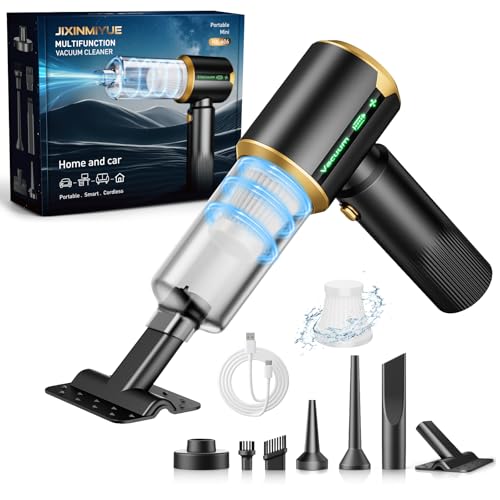
JIXINMIYUE Cordless Car Vacuum Cleaner: Handheld Vacuum with 16000Pa Strong Suction, Brushless Motor & HEPA Filter, 7-in-1 Cleaning Kit, Type-C Charging for Home Office Car Pet
Pro 7-in-1 Cleaning Kits: Experience professional cleaning with our advanced car vacuum that includes seven dedicated accessories: brush,…
As an affiliate, we earn on qualifying purchases.
As an affiliate, we earn on qualifying purchases.
Understanding Wildfire Ash and Its Risks to Your Vehicle

Wildfire ash can be highly damaging to your vehicle if not properly addressed. It’s made up of a mix of organic and inorganic materials, including soil minerals, charcoal, and partially burned debris. Ash from burned structures may contain hazardous substances like heavy metals and toxins, which can pose additional risks. When left on your vehicle, ash can corrode paint, dull surfaces, and cause long-term damage to metal parts. Inhalation of fine ash particles during cleanup can irritate your eyes, nose, and lungs, especially if you don’t wear protective gear. Because ash becomes airborne easily, it’s vital to clean it up carefully. Improper removal, such as dry sweeping, can suspend harmful particles in the air, increasing health risks and potentially damaging your vehicle’s exterior. Utilizing appropriate cleaning techniques can help minimize these risks and better protect your vehicle from long-term damage.
wildfire ash protective gear kit
As an affiliate, we earn on qualifying purchases.
As an affiliate, we earn on qualifying purchases.
Essential Personal Protective Equipment for Safe Cleanup

To stay safe during wildfire ash cleanup, you need the right personal protective equipment. Wearing a respirator helps protect your lungs from harmful particles, while protective clothing shields your skin from irritation. Don’t forget goggles and gloves to prevent eye and skin contact with hazardous ash.
Respirator Use Importance
Wearing a respirator is crucial for protecting yourself from hazardous ash particles during wildfire cleanup. Ash contains fine, airborne particles that can irritate your lungs, eyes, and nose, and even cause serious health issues if inhaled regularly. An N95 or higher-grade respirator filters out these dangerous particles, reducing your risk of respiratory problems like asthma attacks or bronchitis. Always wear your respirator properly, ensuring a snug fit to prevent unfiltered air from entering. Avoid using dust masks or makeshift coverings, as they don’t provide adequate protection. Remember, during heavy cleanup, the amount of airborne ash increases, making respirators even more critical. Protecting your lungs is an essential step in ensuring your safety while restoring your property after a wildfire. Protective equipment plays a vital role in minimizing exposure to harmful airborne particles.
Protective Clothing Necessity
Protective clothing plays a vital role in keeping you safe during wildfire ash cleanup. You need gear that shields you from ash particles and potential contaminants. Wear long-sleeved shirts and long pants made of tightly woven fabric to prevent skin contact with ash. Heavy-duty gloves protect your hands from irritants and hazardous residues, especially if ash contains heavy metals or chemicals. Closed-toe shoes or boots should be worn to avoid foot exposure and provide stability on uneven surfaces. Cover your head with a hat or hood to prevent ash from settling on your hair and scalp. This clothing acts as a barrier, reducing the risk of skin irritation, contamination, and inhalation of airborne particles. Always combine protective clothing with respiratory gear for maximum safety. Incorporating energy-efficient protective gear can further enhance safety while minimizing environmental impact.
Eye and Skin Safety
Are your eyes and skin at risk during wildfire ash cleanup? You need proper protection to avoid irritation and potential health issues. Here are three essential items:
- Goggles or safety glasses – Shield your eyes from flying ash particles that can cause irritation or injury.
- Long-sleeved shirts and gloves – Cover your skin completely to prevent contact with hazardous ash and reduce irritation risks.
- Closed-toe shoes – Protect your feet from ash and debris, preventing cuts and contamination.
Wearing these items minimizes exposure to harmful particles and contaminants. Avoid rubbing your eyes or touching your face during cleanup. If ash gets on your skin, wash thoroughly with soap and water. Using personal protective equipment can significantly reduce health risks during wildfire debris cleanup. Proper eye and skin protection keeps you safe during wildfire debris cleanup.

Rust-Oleum 248914 Automotive Truck Bed Coating Spray, 15 oz, Black
Ideal for use on truck beds, trailer floors, fenders and other metal surfaces
As an affiliate, we earn on qualifying purchases.
As an affiliate, we earn on qualifying purchases.
Preparing Your Truck Bed for Ash Removal
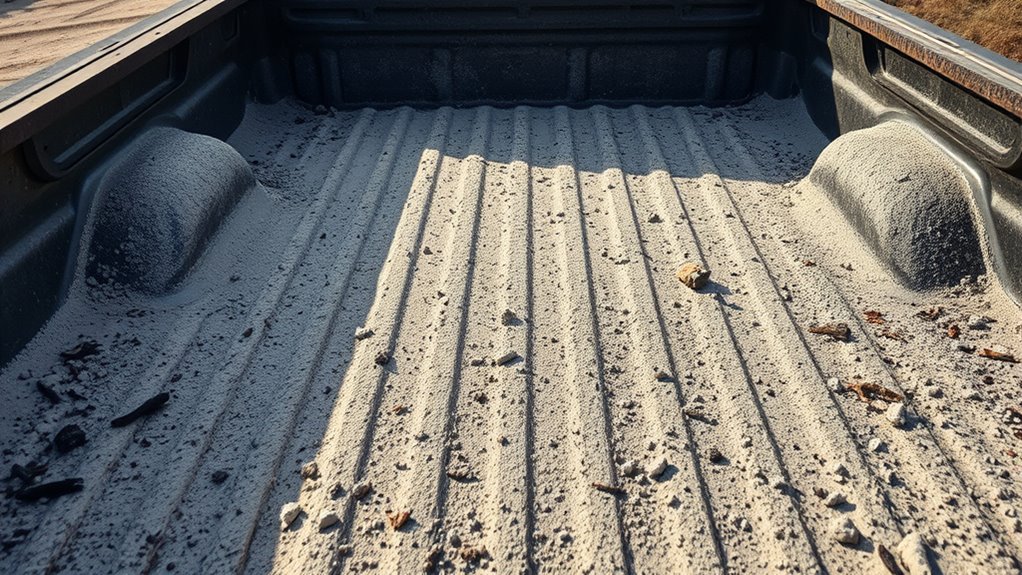
Preparing your truck bed for ash removal starts with a thorough assessment of the contaminated area. Check for heavy ash buildup, loose debris, and potential hazards like sharp objects or hazardous materials. Remove any loose items and secure or cover sensitive equipment to protect it from dust and moisture. Use protective gear such as gloves, goggles, and an N95 respirator to safeguard yourself during cleanup. Wet down the ash lightly with water to minimize dust dispersal. If possible, tarp the truck bed to contain debris and prevent ash from spreading during transport. Avoid dry sweeping or leaf blowers, as they can stir up harmful particles. Taking these steps ensures a safer, more effective cleanup while reducing health risks and environmental impact. Additionally, understanding hazardous materials can help you identify and properly dispose of dangerous substances encountered during cleanup.

Kärcher Vehicle Wash and Wax, Pressure Washer Detergent, Cleans Cars, Bikes, Trucks, Boats and More, Highly Concentrated, Makes up to 20 gal of Cleaner
Universal Compatibility: Formulated to work in tandem with your pressure washer, and compatible with most consumer gas &…
As an affiliate, we earn on qualifying purchases.
As an affiliate, we earn on qualifying purchases.
Step-by-Step Cleanup Procedures for Truck Beds and Outdoor Surfaces
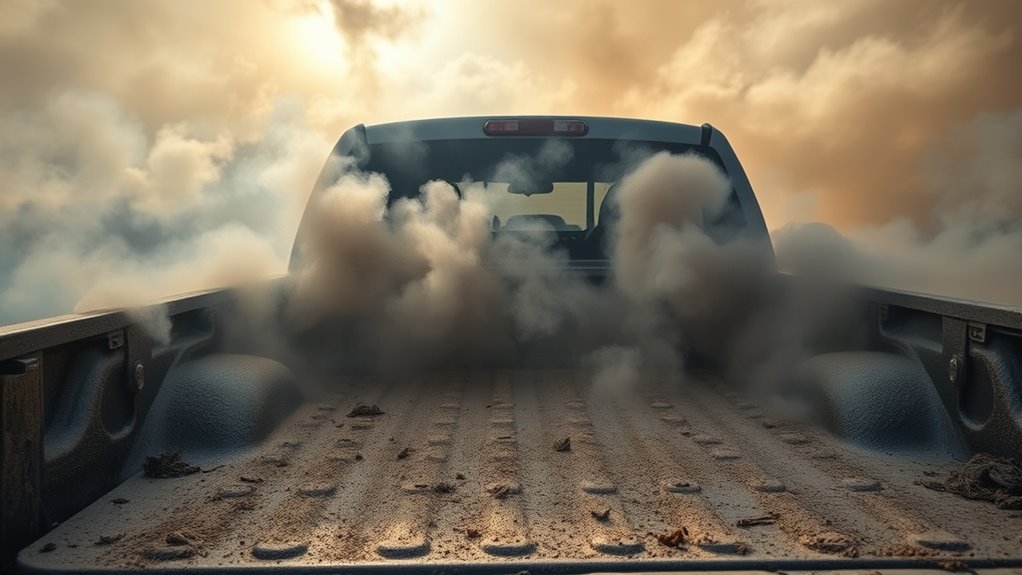
To effectively clean your truck bed and outdoor surfaces after a wildfire, start by lightly misting the ash with water. This helps prevent dust from becoming airborne and makes removal easier. Next, follow these steps:
- Use a broom or soft brush to gently sweep the damp ash into a dustpan or bag, avoiding dry sweeping to reduce airborne particles.
- Securely bag the ash and debris in sealed plastic bags, and ensure your truck bed or outdoor surface is free of loose ash.
- Rinse the area with water and a mild detergent, then use a soft brush or sponge for stubborn spots. Avoid high-pressure sprays that can scatter ash.
Always wear PPE, including masks and gloves, during cleanup to safeguard yourself from inhalation and contact hazards.
Proper Disposal of Ash and Contaminated Debris
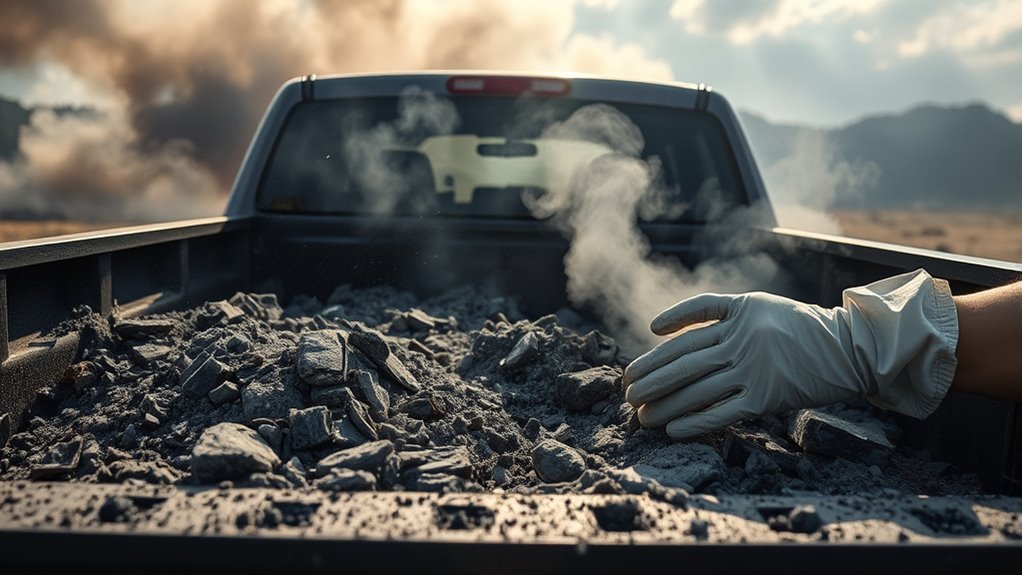
Proper disposal of ash and contaminated debris is essential to prevent environmental contamination and health risks. Always seal ash and debris in heavy-duty plastic bags or wrap them securely before disposal. For ash contaminated with hazardous materials, follow local hazardous waste guidelines and take it to designated disposal sites. Avoid burning or dry sweeping ash to prevent airborne particles; instead, dampen ash with water before bagging to reduce dust. When transporting, tarp and seal truck beds to prevent spills. If soil or debris is contaminated, remove and dispose of it in lined landfills designed for hazardous waste. Never dispose of contaminated material in regular trash or storm drains. Proper disposal safeguards your health and the environment from lingering toxins and pollutants. Implementing proper disposal techniques is vital for minimizing environmental impact and ensuring safety.
Protecting Your Vehicle and Surfaces During Cleaning

Wildfire ash can quickly settle on your vehicle and outdoor surfaces, and if not protected, cleaning them can stir up dangerous particles. To prevent this, take simple precautions.
- Cover your vehicle with a tarp or plastic sheeting before cleaning to block ash from settling again and to minimize airborne dust.
- Mist ash lightly with water before sweeping or brushing to reduce dust clouds and particle suspension.
- Use a damp cloth or sponge with mild detergent to wipe down surfaces instead of dry brushing, which can stir up ash particles.
- Regularly inspect and replace any protective covers to ensure ongoing home safety, especially during ongoing wildfire events.
These steps help protect your lungs from inhaling fine ash, keep surfaces cleaner, and reduce environmental contamination during cleanup.
Environmental Considerations and Preventing Soil Contamination
When removing wildfire ash, it’s important to take into account its potential to contaminate soil with hazardous substances like arsenic, lead, mercury, and chlorine. These toxins can leach into the topsoil (3-6 inches), risking environmental and human health. To prevent soil contamination, remove contaminated soil and debris, disposing of them in lined landfills. Use diversion or filtration for wash runoff to protect waterways. Incorporate organic matter like compost or mulch to support soil recovery. Employing proper cleanup techniques can also help mitigate soil pollution and promote a safer environment after wildfire events.
Post-Cleanup Maintenance to Safeguard Your Truck
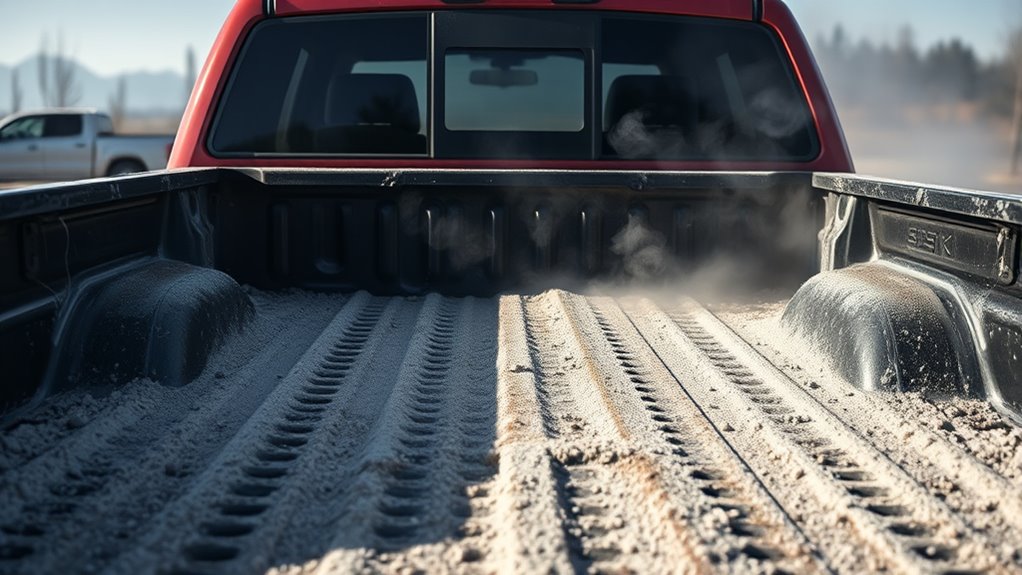
After cleaning your truck, you should inspect for any leftover ash or debris that could cause corrosion or damage. Applying a protective coating or sealant can help prevent moisture from seeping in and harming the surface. Taking these steps guarantees your truck stays in good shape long after the cleanup is complete. Additionally, ensuring proper safe wiring practices can help maintain the integrity of any electrical components exposed during cleanup.
Inspect for Residual Ash
Inspecting your truck for residual ash is a crucial step in post-cleanup maintenance to guarantee it’s safe and fully restored. Leftover ash can contain hazardous particles that may cause damage or health issues if not addressed. To ensure thorough inspection:
- Check all accessible surfaces, including bed, sides, and undercarriage, for any lingering ash or dust.
- Use a HEPA vacuum or damp cloth to carefully remove any remaining particles, especially in crevices and seams.
- Examine the seals and joints for trapped debris, and clean or replace as needed to prevent future contamination.
- Consider air filtration methods to remove residual airborne ash particles that may settle in hard-to-reach areas.
Apply Protective Coatings
Applying protective coatings is a vital step to shield your truck from future damage and environmental elements after wildfire ash cleanup. A high-quality sealant or coating creates a barrier that prevents ash, dirt, and moisture from penetrating your truck’s surface. Start by thoroughly washing and drying the truck bed to remove residual ash and debris. Use a degreaser if necessary to guarantee a clean surface. Choose a durable, weather-resistant coating designed for outdoor use, such as a clear sealant or rust inhibitor. Apply evenly with a brush, roller, or spray, following the manufacturer’s instructions. Reapply every 1-2 years or as needed, especially after extensive exposure to harsh weather. This maintenance step preserves your truck’s appearance and protects its structural integrity over time.
Tips for Ongoing Safety and Prevention After Wildfire Events
Wildfire aftermath requires ongoing vigilance to guarantee safety and prevent further damage. To stay protected, implement these key prevention tips:
- Regularly assess your property for hotspots or smoldering debris, and extinguish them promptly to prevent rekindling.
- Maintain clean gutters and drainage systems to avoid water damage and reduce fire risk during dry seasons.
- Continue using protective gear like masks, gloves, and goggles during cleanup activities to minimize inhalation and contact with hazardous ash or debris.
Stay vigilant about soil and water contamination by avoiding disturbed ash or debris from entering storm drains. Keep firebreaks clear of combustible materials and stay informed about local fire advisories. Consistent precautions will safeguard your property and health long after the flames are gone.
Frequently Asked Questions
Can Wildfire Ash Damage My Truck’s Paint or Exterior Surfaces?
Yes, wildfire ash can damage your truck’s paint and exterior surfaces. The ash contains chemicals and heavy metals that may corrode or stain the paint if left uncleaned. Additionally, abrasive ash particles can scratch the surface during cleaning. To protect your truck, wash it promptly with mild detergent and water, avoiding harsh scrubbing. Rinse thoroughly and dry to prevent residue buildup that could harm the paint over time.
Is It Safe to Use a Standard Household Vacuum for Ash Cleanup?
You shouldn’t use a standard household vacuum for ash cleanup—it’s like inviting danger in with open arms. These vacuums lack HEPA filters, risking fine ash particles becoming airborne and harming your lungs and eyes. Instead, opt for a HEPA-filter vacuum or use damp cloths for interior surfaces. Protect yourself and your space, because safety isn’t just a choice, it’s a necessity when dealing with hazardous wildfire ash.
How Long Should I Wait Before Washing My Vehicle After a Wildfire?
You should wait at least 24 to 48 hours before washing your vehicle after a wildfire. This allows ash particles to settle and reduces the risk of stirring up dangerous dust. During cleanup, wear protective gear like gloves and a respirator. When you do wash your vehicle, use gentle methods with water and mild detergent, avoiding high-pressure streams that can spread ash into the air or nearby waterways.
Are There Specific Local Regulations for Disposing of Wildfire Ash?
You should verify your local regulations first, as disposal rules vary by area. Many places require you to dispose of wildfire ash as hazardous waste, meaning it must be sealed in approved containers and taken to designated disposal sites. Contact your local waste management agency or environmental department to confirm specific guidelines. Following these rules ensures safe disposal, prevents environmental contamination, and keeps you compliant with local laws.
Can I Drive My Truck Immediately After Cleaning Wildfire Ash?
You shouldn’t drive your truck immediately after cleaning wildfire ash because residual particles can still be airborne or cling to surfaces. Even if it looks clean, ash may contain hazardous materials or toxins, making it unsafe for both you and the environment. Wait until you’ve thoroughly rinsed and dried the vehicle, and consider using HEPA vacuuming, to prevent inhaling or spreading harmful ash. Safety first guarantees your vehicle stays clean and safe.
Conclusion
Think of wildfire ash as a silent shadow lingering on your truck bed—left unchecked, it can cause lasting damage. By taking swift, careful action, you’re like a vigilant guardian protecting your vehicle’s future. Regular cleanup and proper precautions are your shield against the invisible threat. Stay proactive, treat your truck like a trusted companion, and remember: just as a forest needs tending, so does your vehicle’s health—nurture it to keep it strong and resilient.