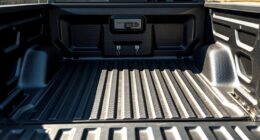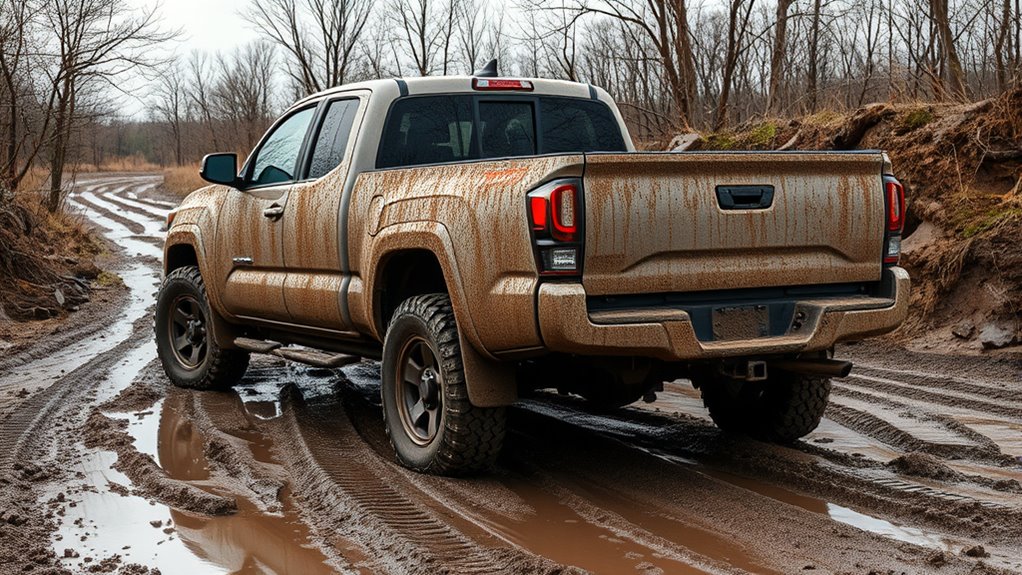

During mud season, you should regularly clean your truck bed with low-pressure water and stiff brushes to remove mud and debris, paying attention to corners and seams. Choose a durable liner like spray-on for better waterproofing, and secure cargo with tie-downs to prevent shifting. Protect your bed from weather with covers or sealants, and inspect for rust or damage afterwards. Maintaining the underside and using protective coatings will extend your truck bed’s life—keep going to learn more useful tips.
Key Takeaways
- Regularly clean and inspect your truck bed to prevent mud buildup and rust, especially in corners and seams.
- Choose durable bed liners like spray-on or bed rugs for better protection against mud and moisture.
- Use tie-downs and cargo dividers to secure items and minimize mud contact during off-road trips.
- Install tonneau covers or tarps to shield the bed from rain, snow, and mud exposure.
- Remove snow and ice promptly, and apply waterproof sealants to prevent rust and corrosion in muddy conditions.
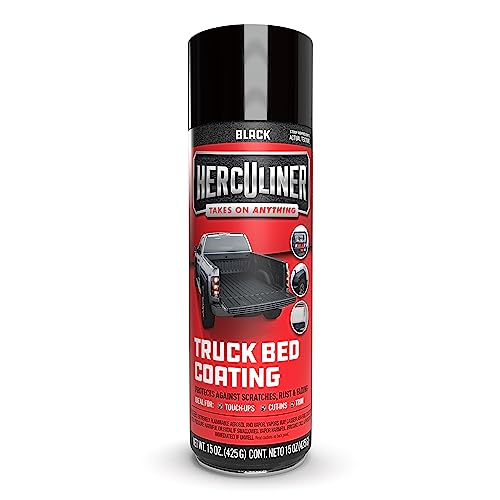
Herculiner Aerosol Spray Truck Bed Liner, 15 Ounce Spray Can, Black, Textured, Suitable For All Truck Beds, 6-7 sq ft Coverage
Herculiner "Original" Truck Bed Liner Aerosol protects against scratches, rust & fading for use as a touch-up or…
As an affiliate, we earn on qualifying purchases.
As an affiliate, we earn on qualifying purchases.
Regular Cleaning and Mud Removal Techniques
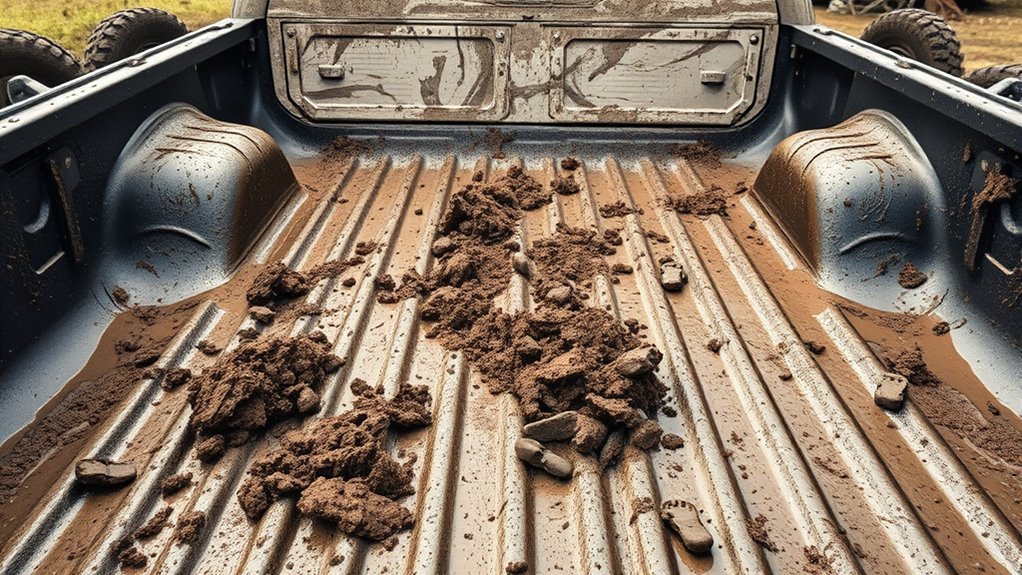
After each off-road trip, it’s essential to clean your truck bed thoroughly to prevent mud buildup and corrosion. Start by rinsing the bed with a pressure washer set to low pressure to avoid damaging the surface. Focus on removing thick mud from corners, seams, and hard-to-reach areas. Use a stiff bristle brush to scrub stubborn spots, paying extra attention to crevices where mud can trap moisture. Rinse everything thoroughly with water to wash away loosened dirt and debris. Once clean, dry the bed completely with a towel or air compressor to prevent moisture retention. During the process, inspect for scratches or dents that could trap water and lead to rust. Regular cleaning maintains your truck’s condition and extends its lifespan in muddy conditions. Understanding proper care & maintenance routines can help prolong the life of your truck bed and prevent long-term damage.

AUTOSAVER88 FRP Hard Tri-fold Truck Bed Tonneau Cover Fits for Toyota Tacoma 2024 2025 2026 5ft Bed (Excl. Trail Edition) with Deck Rail System
Great Fitment: The AUTOSAVER88 FRP hard tri-fold tonneau cover is designed to fit for Toyota Tacoma 2024 2025…
As an affiliate, we earn on qualifying purchases.
As an affiliate, we earn on qualifying purchases.
Choosing the Right Bed Liner for Muddy Conditions
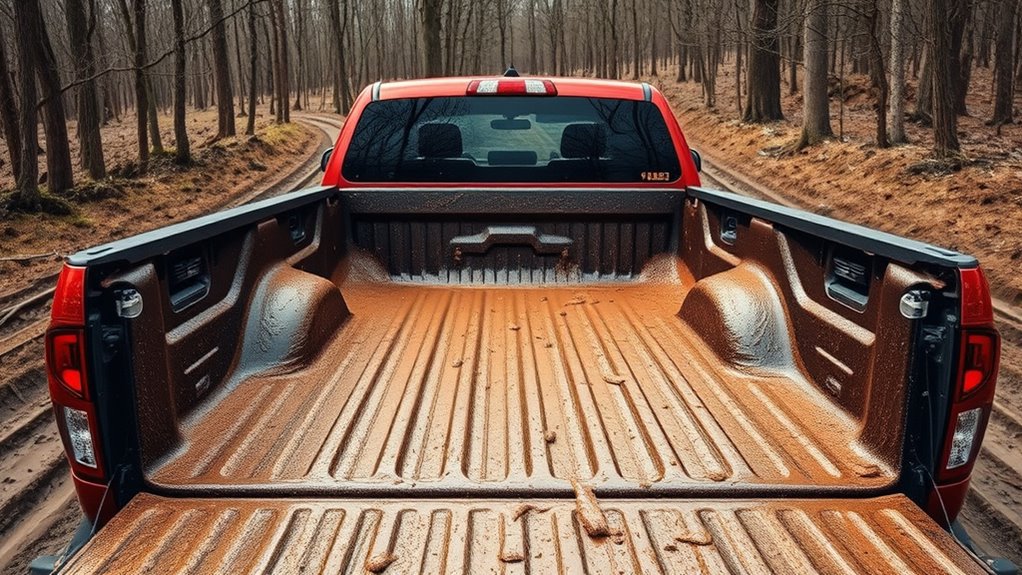
When choosing a bed liner for muddy conditions, it’s important to contemplate how well it seals out dirt and moisture. Spray-on liners are ideal because they create a permanent, watertight barrier that prevents mud from seeping underneath. They’re durable, resist cracking, and require minimal maintenance. Drop-in liners are easier to remove and clean, but they may trap mud and moisture underneath, which can lead to rust. Bed rugs offer flexibility and are simple to shake or wash out, making them a good option if you often deal with mud. Additionally, selecting a liner with a high contrast ratio can improve visibility of the bed’s contents during cleanup. Regardless of your choice, regularly inspect the liner for cracks or tears and clean it thoroughly after each muddy trip. Properly sealed and maintained, your liner will better protect your truck bed from corrosion and damage.

SmartStraps 10-Foot Cambuckle (4pk) 900 lbs Break Strength, 300 lbs Safe Work Load– Tie Down Fragile and Lighter Loads for Transport – Offers More Security Than Rope
PROTECT ALL LOADS – SmartStraps 4 Pack 10-Foot Cambuckle straps have a break strength of 900lbs and a…
As an affiliate, we earn on qualifying purchases.
As an affiliate, we earn on qualifying purchases.
Effective Bed Organization and Cargo Securing Strategies
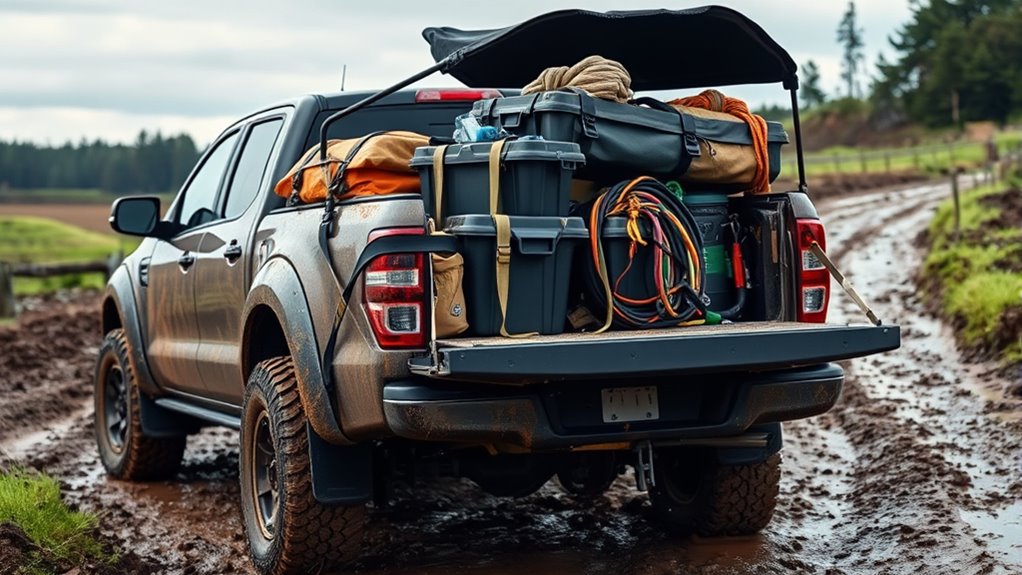
You need to keep your cargo secure to prevent shifting and damage during muddy trips. Using tie-downs and cargo dividers helps keep everything in place, especially heavy or sharp items. Proper organization guarantees safety and protects your truck bed from unnecessary wear. Incorporating practical mindfulness strategies can help you stay focused and attentive when organizing your gear, ensuring nothing is overlooked.
Secure Heavy Items
Securing heavy items in your truck bed is essential to prevent shifting, which can cause damage to the bed liner, truck frame, or other cargo. Use heavy-duty tie-downs or ratchet straps to anchor bulky objects firmly. Attach straps to designated anchor points or built-in tie-down hooks to ensure maximum stability. For particularly heavy or sharp items, consider wrapping edges with padding to avoid puncturing or scratching the liner. Elevate or cover cargo to minimize contact with mud and moisture, reducing corrosion risk. Avoid stacking items loosely; always tighten straps after loading to maintain security during transit. Remove unnecessary or loose items after each trip to keep the bed organized and prevent unintended movement. Properly securing your cargo helps protect your truck and ensures safe driving in muddy conditions. Additionally, understanding recovery devices can be beneficial when stuck in challenging terrain, helping to prevent further damage or accidents.
Use Cargo Dividers
Cargo dividers are an effective way to keep your truck bed organized and prevent shifting during transit. They help separate different types of gear, reducing clutter and making it easier to access specific items. When hauling muddy or loose materials, dividers keep everything stable, preventing damage to your bed liner or other cargo. Secure heavy or sharp tools behind the dividers to avoid shifting or puncturing surfaces. Adjustable dividers allow you to customize compartments based on your load, making packing more efficient. Use them in combination with tie-downs or cargo nets for added security. Proper organization with dividers not only keeps your gear in place but also minimizes mud and moisture contact, protecting your truck bed and prolonging its lifespan during muddy seasons. Organization methods are essential for creating a functional and durable truck bed setup.

Seam Sealer Automotive Black – Paintable Waterproof Quick-Cure Polyurethane Auto Body Sealant for Car Metal Panels, Truck Beds, RV Roofs – Heavy Duty Kit with Gloves & Applicator, 10.5 oz
Rapid Paint & Superior Bond: Our seam sealer automotive Securely bonds bare, primed, or painted metal with zero…
As an affiliate, we earn on qualifying purchases.
As an affiliate, we earn on qualifying purchases.
Protecting Your Truck Bed From Weather Elements
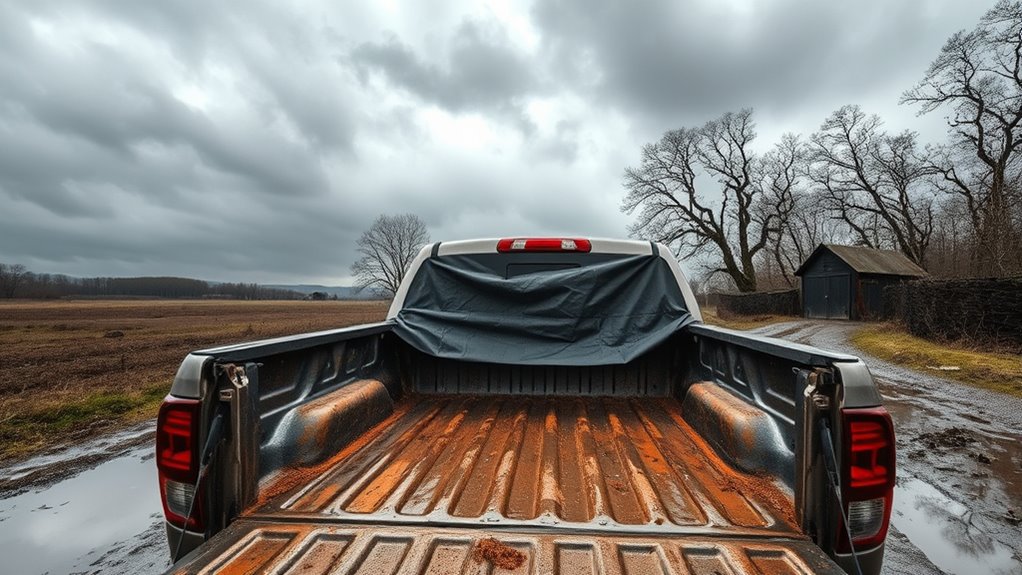
Protecting your truck bed from weather elements is essential for maintaining its condition and preventing rust. Exposure to rain, snow, and UV rays accelerates deterioration, so shielding your bed is vital. Installing a tonneau cover or bed cap creates a barrier against moisture and debris, keeping your bed dry and clean. Waterproof tarps or covers add extra protection during muddy or wet trips, especially for hauling wet gear. Applying spray-on sealants or rust inhibitors to exposed metal surfaces helps prevent corrosion and extends the lifespan of your truck bed. Additionally, removing snow and ice promptly avoids moisture buildup that can lead to rust. When possible, store your truck under cover or in a garage during prolonged wet periods to maximize protection. Using proper drainage systems can also help prevent water pooling and reduce rust risk.
Maintaining the Underside and Frame After Muddy Adventures
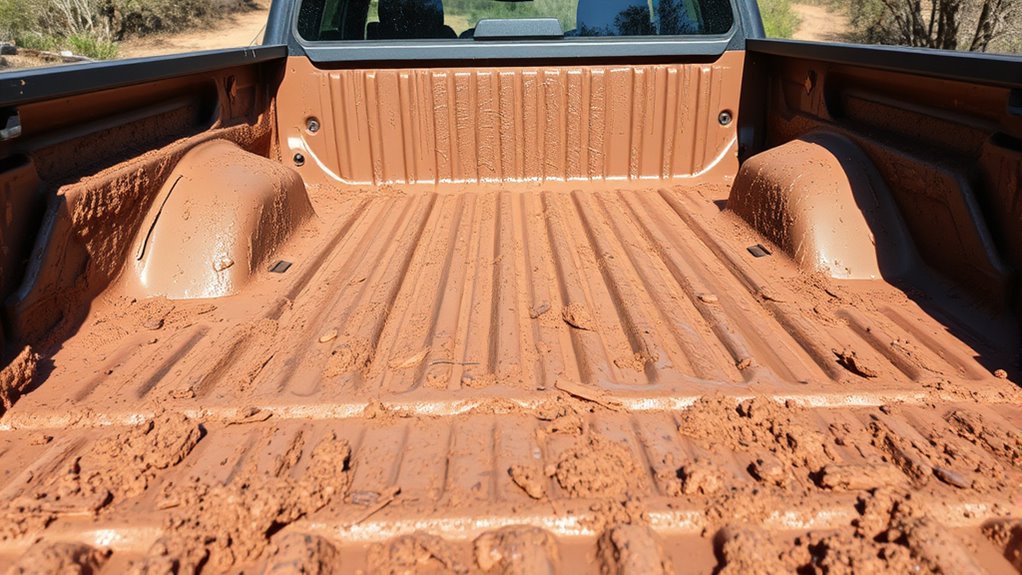
After muddy adventures, make sure to clean the underside of your truck thoroughly to remove mud and salt that can cause rust. Use a brush or low-pressure water to reach hard-to-access areas and inspect for any signs of corrosion. Applying an undercoat or rust inhibitor helps protect your frame and extend your truck’s lifespan. Incorporating energy-efficient cleaning methods can further reduce environmental impact during maintenance.
Underneath Cleaning Techniques
Cleaning the underside of your truck after muddy adventures is essential to prevent rust and corrosion. You want to remove mud, salt, and debris that can cause corrosion over time. Start by using a pressure washer with a focused, low-pressure setting to rinse away dirt from the frame, axles, and suspension components. Make sure to target hard-to-reach areas like control arms and wheel wells. Use a stiff-bristled brush or a soft broom to scrub stubborn mud and grime from crevices and joints. After cleaning, thoroughly rinse to wash away loosened debris. Finally, dry the underside with a high-pressure air blower or compressed air to prevent moisture retention. Regularly inspect for rust, loose bolts, and damaged parts to keep your truck in prime condition.
Rust Prevention Strategies
To effectively prevent rust on your truck’s underside and frame after muddy adventures, you should apply rust inhibitors or protective coatings promptly. Begin by thoroughly cleaning the underside with a pressure washer, focusing on removing mud, salt, and debris. Once dry, inspect for any signs of rust or damage. If you spot rust, treat it immediately with a rust converter to stop it from spreading. Afterward, spray or brush on a high-quality undercoat or water-displacing film designed for corrosion resistance. Pay special attention to seams, joints, and hard-to-reach areas. Regularly reapply these protective layers, especially after off-road trips in wet or salty conditions. Consistent maintenance guarantees your truck’s frame and underside stay corrosion-free, extending its lifespan and maintaining safety. Incorporating corrosion-resistant coatings can provide an extra layer of protection against harsh elements.
Inspecting and Repairing for Rust and Damage
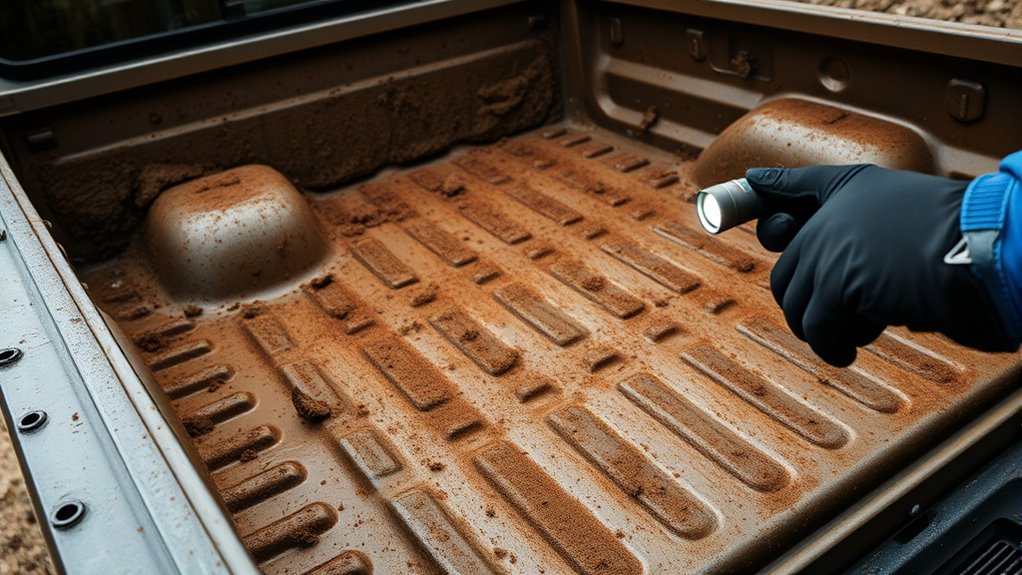
Regularly inspecting your truck bed for rust and damage is essential to maintaining its longevity, especially after mud season. You need to look for signs of corrosion, dents, scratches, or cracks that could trap moisture and worsen rust. Focus on areas like seams, corners, and beneath liners. Keep an eye out for:
- Rust spots or bubbling paint indicating corrosion
- Dents or gouges that expose metal
- Cracks or tears in liners or protective coatings
- Loose bolts or fasteners
Address issues promptly to prevent further damage. Use a wire brush or rust converter on small rust spots, then touch them up with paint. Repair or replace damaged liners and seals immediately to keep moisture out. Regular checks can save you costly repairs down the line. Incorporating essential oils for rust prevention can help inhibit corrosion and extend the life of metal surfaces.
Using Protective Coatings and Sealants for Longevity
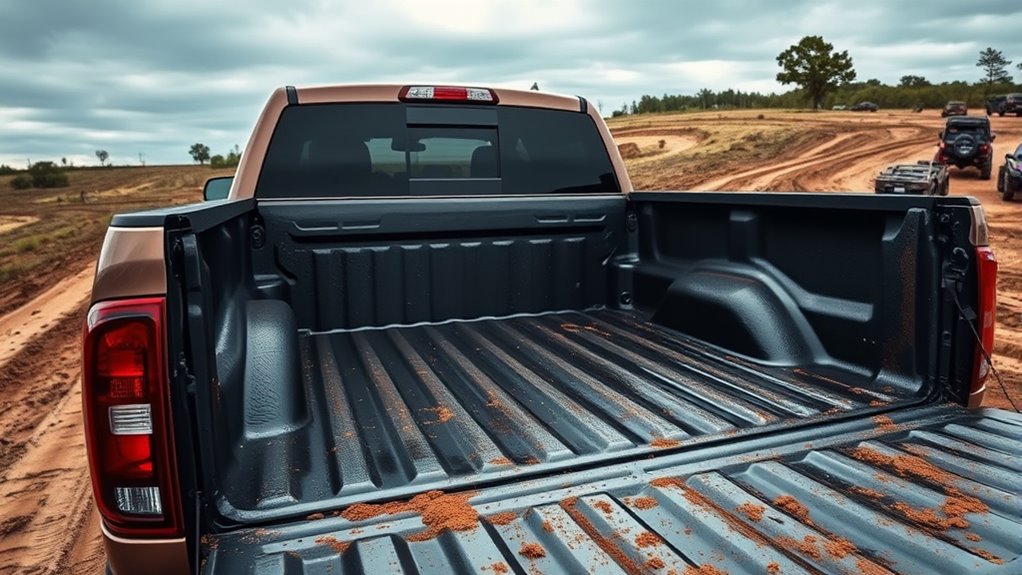
Applying protective coatings and sealants is one of the most effective ways to extend the lifespan of your truck bed after mud season. These products create a barrier that prevents moisture, mud, and debris from reaching the metal surface, reducing rust and corrosion. Start by cleaning your bed thoroughly to remove dirt and residue. Choose a high-quality spray-on or brush-on sealant designed for truck beds. Apply evenly, paying special attention to seams, corners, and hard-to-reach areas. Allow the coating to cure fully before hauling cargo again. Reapply sealants periodically to maintain protection, especially after heavy mud exposure or cleaning. Using these coatings helps preserve your truck bed’s integrity, ensuring it stays durable and rust-free for years to come. Detecting passive voice can help improve the clarity and impact of your writing.
Managing Snow, Ice, and Excess Moisture
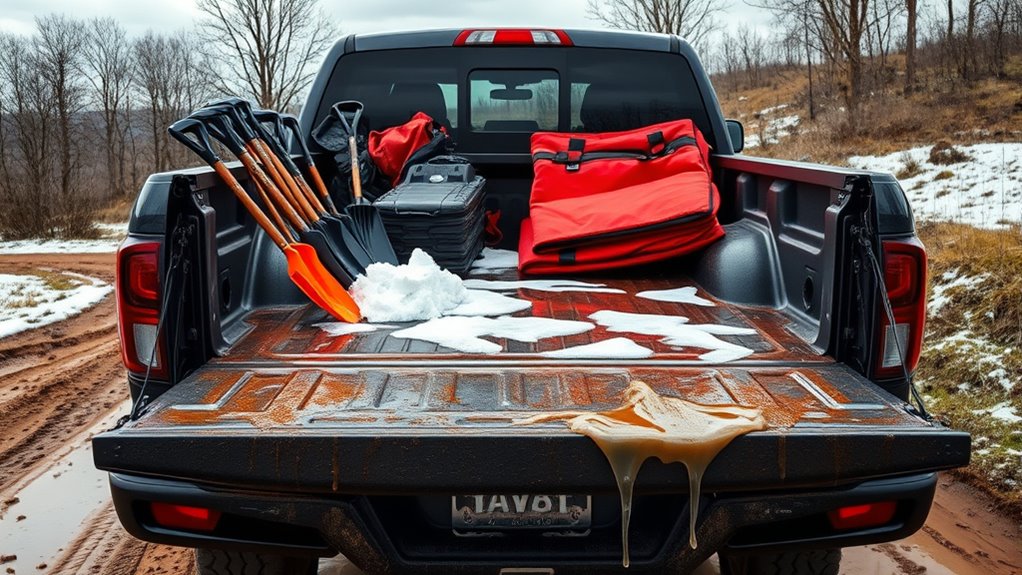
To keep your truck bed in good shape during winter, you need effective snow removal techniques that prevent buildup. You should also take steps to prevent ice from forming in seams and corners, which can cause damage over time. Managing moisture with proper dry-out methods and protective measures helps avoid rust and corrosion during muddy, snowy conditions.
Effective Snow Removal Methods
Managing snow, ice, and excess moisture in your truck bed requires prompt and effective removal methods to prevent rust and damage. First, use a sturdy snow brush or a plastic shovel to clear snow without scratching the surface. Next, melt ice with a mixture of warm water and a mild de-icer or salt, being careful not to oversaturate the bed. You can also use a leaf blower or compressed air to blow away loose snow and ice chunks. Finally, dry the bed thoroughly with a cloth or blower to prevent moisture retention. Keep these tools handy:
- Snow brush and plastic shovel
- Warm water and mild de-icer
- Leaf blower or compressed air
- Absorbent towels or blower for drying
Preventing Ice Buildup
After removing snow and ice from your truck bed, taking steps to prevent ice buildup can save you time and reduce the risk of damage. Start by applying a waterproof sealant or spray-on rust inhibitor to exposed metal surfaces, which helps prevent moisture from seeping in and freezing. Use a bed cover, tonneau, or tarp to shield the bed from snow and rain, minimizing moisture accumulation. Confirm proper drainage by clearing out any blockages in the drain holes and inspecting seams for leaks. When possible, park your truck in a covered area or garage to limit exposure to the elements. Regularly check for lingering ice or snow, and remove it promptly. Keeping the bed dry and protected prevents ice from forming and reduces rust development.
Moisture Control Strategies
Effective moisture control begins with proactively preventing water from seeping into your truck bed and trapping excess moisture. To do this, consider these strategies:
- Install a tonneau cover or bed cap to block rain, snow, and ice from entering.
- Use waterproof tarps or covers when hauling in wet conditions to keep moisture out.
- Apply spray-on sealants or rust inhibitors on exposed metal surfaces for added protection.
- Promptly remove snow and ice buildup to prevent rust and corrosion.
These measures help keep moisture out, reducing rust risk and preserving your truck bed. Regularly inspecting seals, covers, and liners guarantees no small openings or damages allow water intrusion. Staying vigilant during mud season keeps your truck in top shape and extends its lifespan.
Storage Solutions for Prolonged Wet Periods
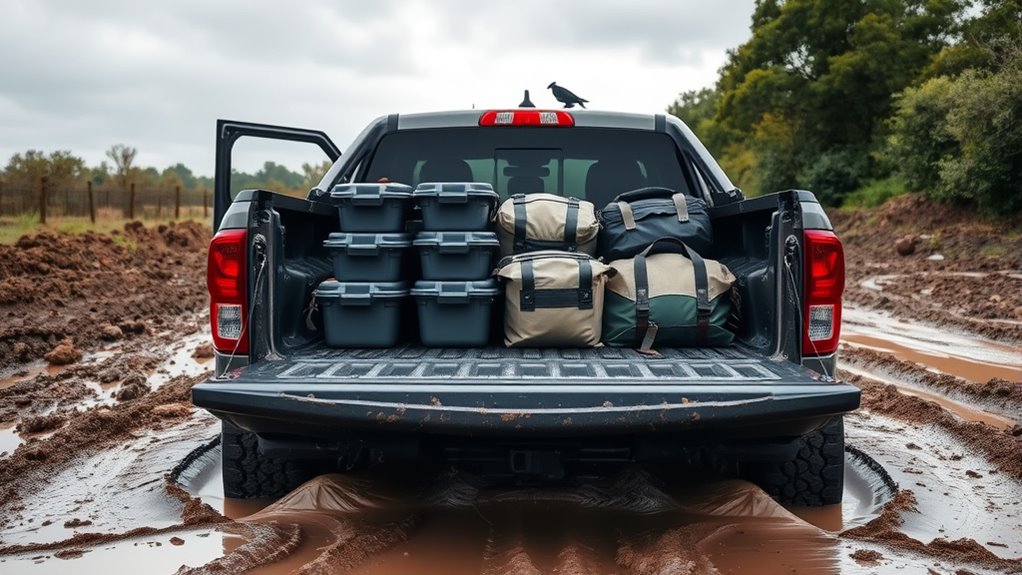
During prolonged wet periods, protecting your truck bed from persistent moisture is essential to prevent rust and corrosion. Invest in a high-quality tonneau cover or bed cap to shield the bed from rain, snow, and mud. Waterproof tarps or covers can add extra protection when hauling in wet conditions. Consider applying spray-on sealants or rust inhibitors to exposed metal surfaces for added defense. Elevate cargo using bed dividers or pallets to prevent direct contact with standing water or mud. Store tools and supplies in sealed, waterproof containers to avoid contamination. Regularly remove snow and ice buildup to prevent rust development. When possible, park your truck under cover or in a garage to minimize exposure. These solutions help maintain your truck bed’s integrity through wet seasons.
Routine Inspection Schedule to Extend Bed Life
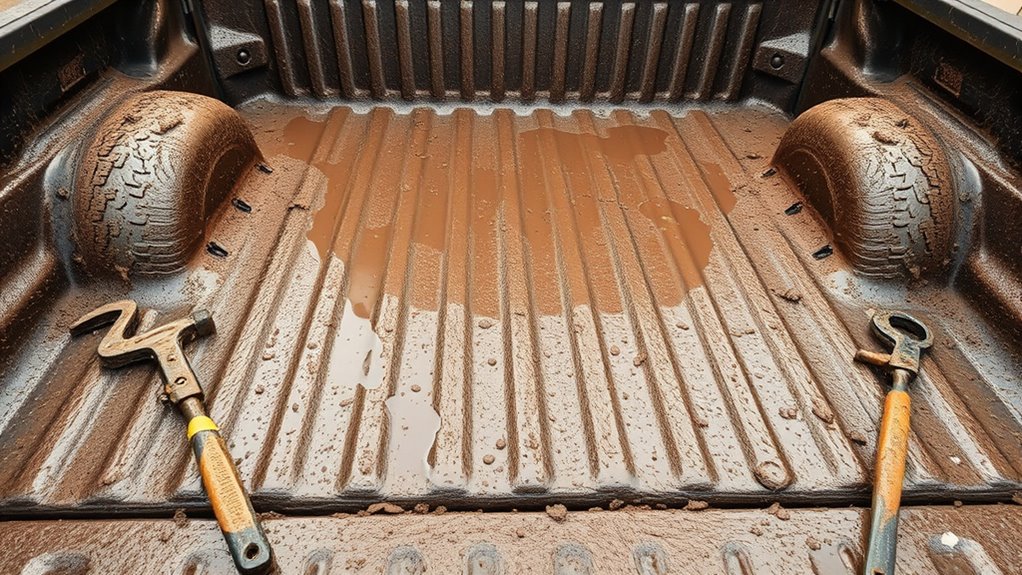
Establishing a routine inspection schedule is essential for maximizing the lifespan of your truck bed. Regular checks help catch issues early before they worsen. After each mud season, look for rust spots, dents, or damaged liners and seals. Pay close attention to areas prone to moisture buildup, like corners and seams.
- Check for loose bolts, cracked liners, or damaged seals.
- Inspect for rust or corrosion, especially on metal surfaces.
- Examine the bed liner for tears or trapped debris.
- Review weatherproof covers and seals for integrity.
Perform these inspections promptly and address problems immediately. Small repairs, like applying rust converter or tightening bolts, prevent costly damage later. Keep a maintenance log to track your inspections and repairs, ensuring your truck bed stays durable through mud season and beyond.
Frequently Asked Questions
How Often Should I Replace My Truck Bed Liner After Mud Season?
You should replace your truck bed liner whenever it shows signs of damage, like cracks, tears, or significant wear, especially after mud season. Regularly inspect it for trapped debris or deterioration, and if repairs aren’t enough, replace it to maintain protection against rust and corrosion. Promptly replacing a damaged liner helps keep your truck bed in good condition, ensuring it stays durable and resistant to harsh mud and weather conditions.
What Are the Best Tools for Deep-Cleaning Hard-To-Reach Bed Corners?
Like a miner unearthing hidden treasures, you’ll want tools that reach the deepest corners. Use a stiff-bristle brush or a narrow detail brush to scrub tight spaces. An angled nozzle on your pressure washer helps blast away stubborn mud. A flexible, long-handled brush also works wonders for inaccessible spots. These tools guarantee your truck bed stays clean, protecting it from corrosion and extending its lifespan after each muddy adventure.
Can I Use Household Cleaning Products to Remove Mud From My Truck Bed?
You shouldn’t rely on household cleaning products to remove mud from your truck bed. They may contain harsh chemicals that can damage the liner, paint, or metal surfaces. Instead, use a pressure washer with low pressure to gently blast away mud, followed by scrubbing with a stiff-bristle brush if needed. Rinse thoroughly and dry completely to prevent moisture buildup, ensuring your truck bed stays protected and in good shape.
How Do I Prevent Rust Formation in Hidden or Hard-To-Access Areas?
To prevent rust in hidden or hard-to-access areas, you should regularly inspect these spots for moisture and debris. Apply a rust inhibitor or rust-proof coating specifically designed for such spaces. Use a spray-on lubricant or corrosion-resistant sealant to reach tight corners. After cleaning, make sure to dry thoroughly and consider adding undercoating or protective sprays to prevent moisture buildup. Routine maintenance keeps these areas rust-free and extends your truck’s lifespan.
What Maintenance Schedule Is Recommended for Off-Road Truck Beds in Muddy Conditions?
Think of your truck bed as a garden needing regular tending. You should inspect it after each muddy adventure, cleaning mud and debris thoroughly. Schedule deep cleanings every few months, focusing on hidden spots. Apply rust inhibitors, check liners, and tighten bolts regularly. Keep up with routine maintenance, like sealing and protecting the underside. Consistent care prevents corrosion, ensuring your truck bed stays strong and ready for the next off-road challenge.
Conclusion
To keep your truck bed in top shape during mud season, stay proactive with regular cleanings, proper protection, and organized storage. Don’t forget, a stitch in time saves nine—address issues early to avoid bigger problems down the road. By following these tips, you’ll extend your truck’s lifespan and be ready for whatever the muddy trail throws your way. Keep your gear dry and your truck happy, no matter how rough the season gets.