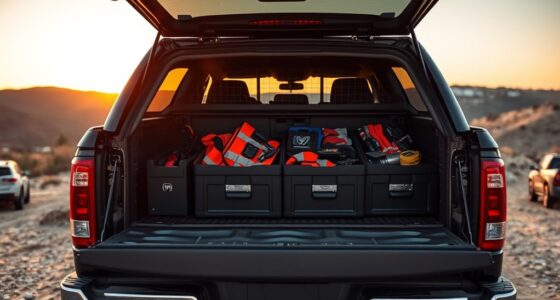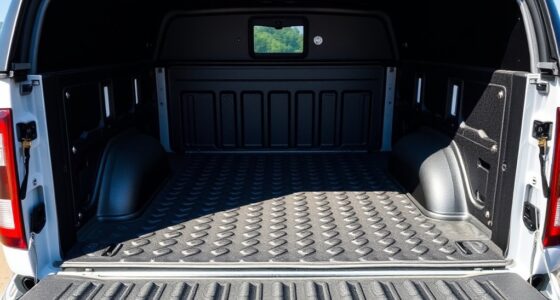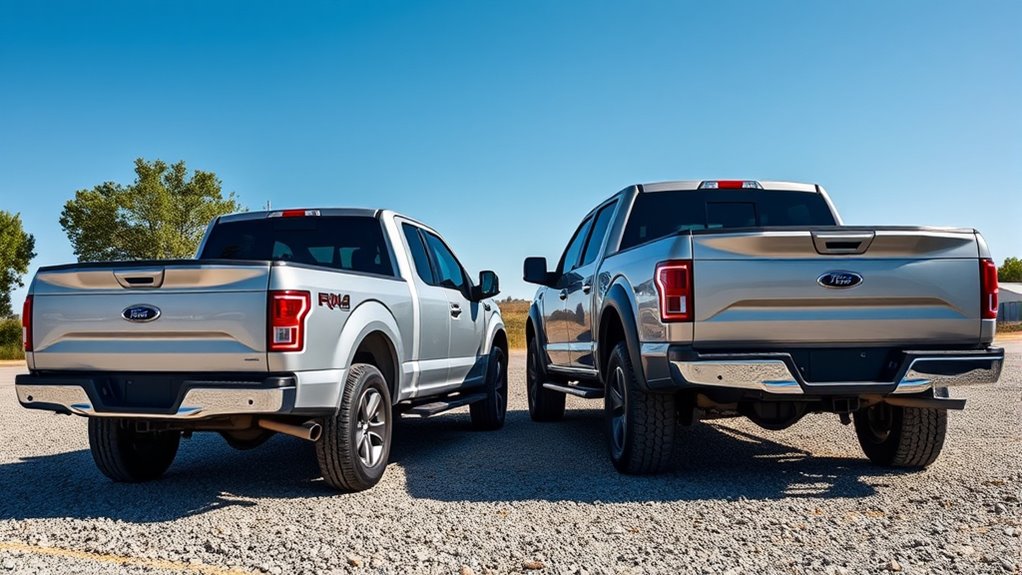

Choosing between a short and long bed depends on your needs for cargo space and maneuverability. Short beds, typically around 5 to 6 feet, are easier to park and ideal for city driving, while long beds, around 8 feet, offer more cargo volume for larger loads and construction work. Consider your daily use, towing needs, and budget. If you want to explore how these options suit popular trucks, keep going to find helpful details.
Key Takeaways
- Consider urban vs. rural use: short beds offer better maneuverability for city driving, while long beds maximize cargo capacity for heavy loads.
- Evaluate towing and payload needs: long beds typically support higher payloads and larger cargo, suitable for construction or hauling.
- Budget constraints: short beds are generally less expensive to purchase and maintain due to lower material costs.
- Parking and maneuverability: short beds make parking in tight spaces easier, ideal for urban environments.
- Manufacturer options and market trends: popular models now offer more short bed configurations, influenced by consumer demand for versatility and affordability.
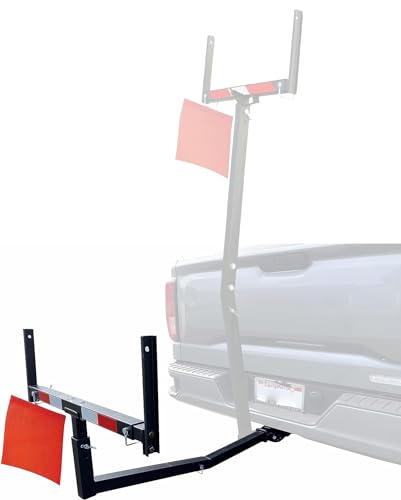
MaxxHaul 70231 Hitch Mount Pick Up Truck Bed Extender For Ladder, Rack, Canoe, Kayak, Long Pipes and Lumber) , Black , 37 x 19 x 3 inches
Extends your truck bed for carrying longer payloads, designed to fit 2-Inch hitch receivers
As an affiliate, we earn on qualifying purchases.
As an affiliate, we earn on qualifying purchases.
Overview of Common Bed Lengths and Their Dimensions
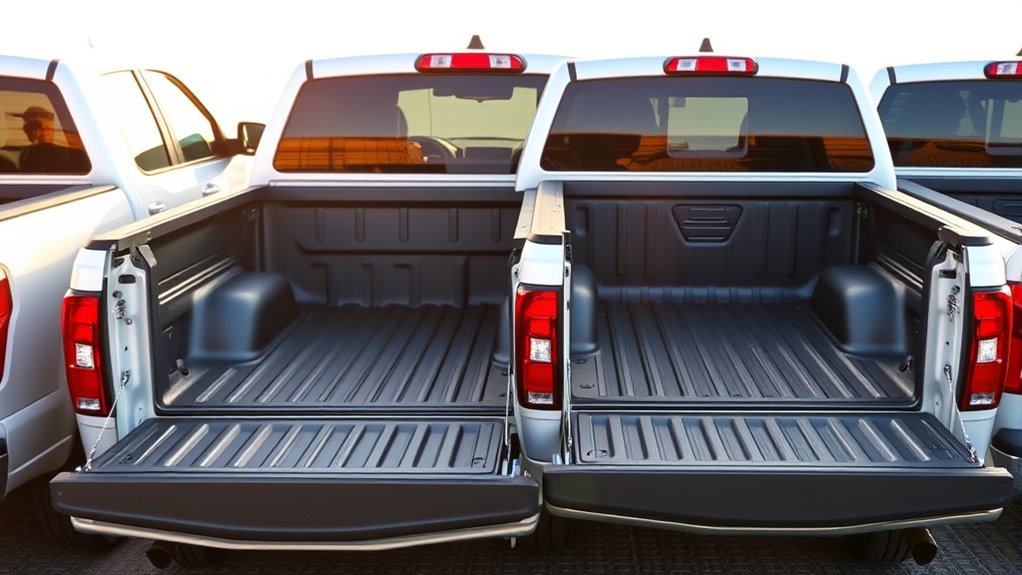
Understanding the common bed lengths on trucks is essential for choosing the right model for your needs. Short beds typically range from about 5 to 5.8 feet, making them more maneuverable and easier to park in tight spaces. Standard or regular beds measure between 6.4 and 6.6 feet, offering a good balance of cargo space and vehicle length. Long beds usually extend to 8 feet, maximizing cargo capacity for heavy hauling or large loads. Different manufacturers, like Ford and Chevy, offer these sizes across various models. When measuring, it’s crucial to note that bed length refers to the inside measurement from the bulkhead to the tailgate. Knowing these dimensions helps you select a truck that fits your cargo needs and driving environment.

Tmat Truck Bed Organizer Storage System Slide Out Mat (Universal Fit for Long Beds 8' to 8'2")
ORGANIZED CARGO, YOUR WAY – Tmat is a modular truck bed mat system with adjustable blockers designed to…
As an affiliate, we earn on qualifying purchases.
As an affiliate, we earn on qualifying purchases.
Impact of Bed Size on Truck Maneuverability and Parking
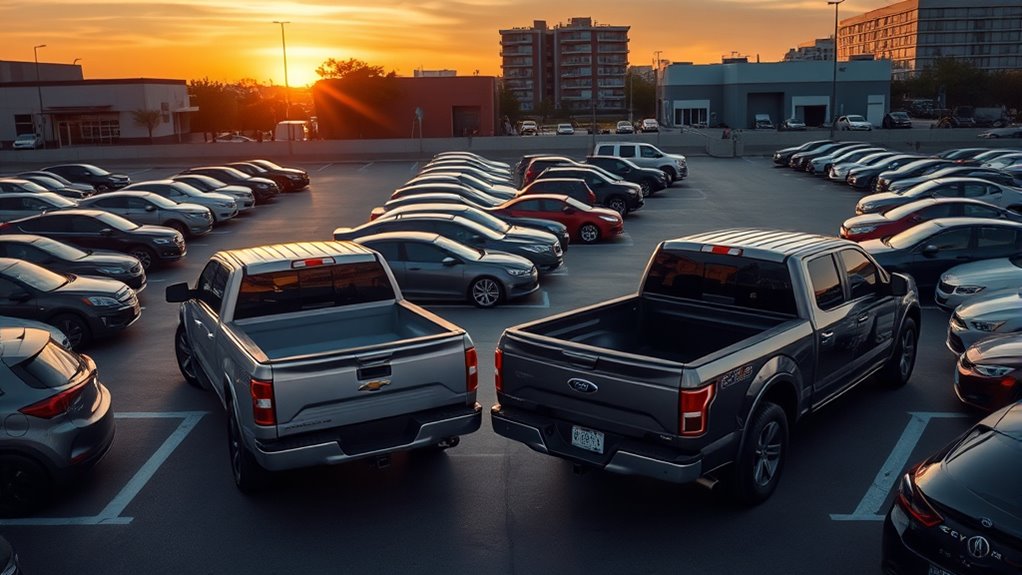
Choosing the right bed size directly impacts how easily you can maneuver and park your truck day to day. A shorter bed makes *steering through* tight city streets, parking in small spaces, and performing sharp turns much simpler. You’ll find it easier to park in crowded lots and handle urban driving conditions. Conversely, a longer bed increases the overall vehicle length, which can make parking more challenging and reduce maneuverability. It often requires wider turns and a larger turning radius, especially in tight spots. If you frequently drive in congested environments or need quick, agile handling, a short bed is your best option. However, if parking isn’t a concern and you prioritize cargo capacity, a long bed may be suitable, even if it slightly hampers maneuverability. Modern truck designs include features that can also influence ease of handling, regardless of bed size.

Hard Folding Truck Bed Tonneau Cover Compatiable with Ford Super Duty 8.2 FT Long Box, 1999-2026 F250 F350 F-250 F-350, Tri Fold Style
Vehicle Fitment: Custom-made to fit 1999-2026 Ford Super Duty F250 F350 F450 F550 8.2ft (98") long bed, ensuring…
As an affiliate, we earn on qualifying purchases.
As an affiliate, we earn on qualifying purchases.
Cargo Capacity and Practical Applications for Different Bed Lengths
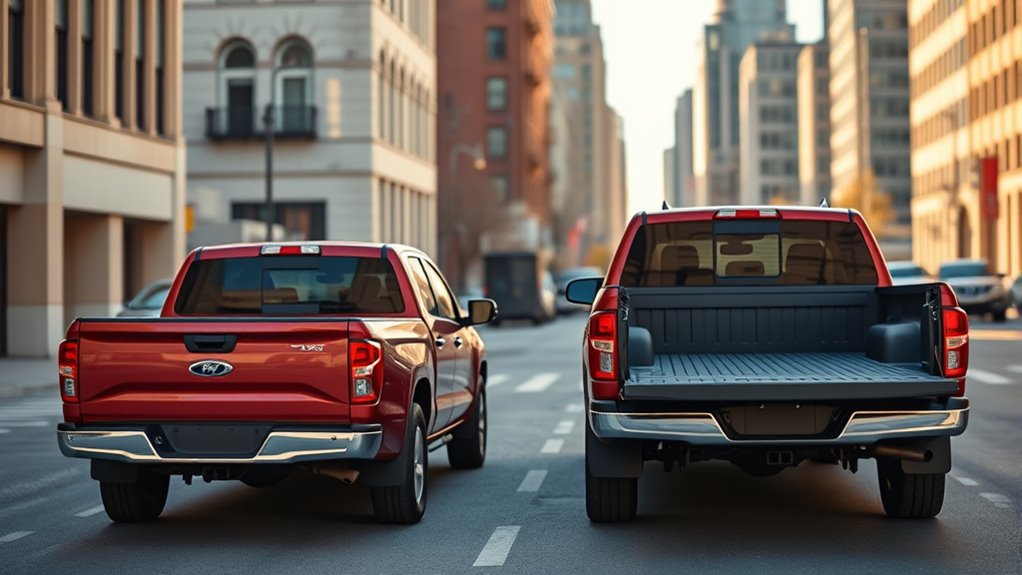
Your choice of bed length directly affects how much cargo you can carry and what you can haul. Long beds offer more volume for bulky items and heavy-duty jobs, while short beds suit smaller loads and recreational gear. Understanding these differences helps you select the right truck for your specific needs. Additionally, considering bed dimensions and capacity ensures you choose a configuration that aligns with your workload and transportation requirements.
Cargo Volume Differences
Different bed lengths on trucks considerably influence cargo capacity, shaping how you can use your vehicle for various tasks. Longer beds provide notably more volume, allowing you to carry larger or more bulky items without stacking or compression. For example, an 8-foot bed offers up to 61.5 cubic feet of space, ideal for construction materials, furniture, or heavy equipment. Short beds, typically around 5 to 6 feet, have less capacity—around 50 cubic feet—making them suitable for smaller loads, recreational gear, or occasional hauling. Standard beds strike a balance, offering enough room for most tasks while maintaining maneuverability. Your choice impacts how much you can transport at once, directly affecting efficiency for work projects or outdoor adventures. Consider your typical cargo size to select the bed length that best meets your needs.
Ideal Use Cases
Short beds excel for everyday tasks and urban driving because they offer easier maneuverability and parking. If you mostly haul small loads, recreational gear, or groceries, a short bed provides enough space without sacrificing agility. They’re ideal for contractors or outdoor enthusiasts who need occasional hauling but prioritize city driving. Long beds, on the other hand, suit heavy-duty use like construction, moving large equipment, or transporting bulky materials. They maximize cargo capacity, making them perfect for commercial or frequent hauling needs. Standard beds strike a balance, offering moderate space for both personal use and work-related tasks. Consider your typical loads and driving environment when choosing. If you frequently tow trailers or carry large items, a long bed is more practical. For daily commuting and light hauling, a short bed is more convenient. Additionally, understanding cargo capacity can help determine which bed length aligns best with your hauling requirements.

B&W Trailer Hitches Heavy-Duty Receiver Hitch – HDRH25182 – Compatible with 2001-2010 Chevrolet/GMC 2500 Heavy Duty Short Bed Trucks with Factory Bumper
Compatibility: Fits 2001-2010 Chevrolet/GMC 2500 Heavy Duty Short Bed Trucks with Factory Bumper
As an affiliate, we earn on qualifying purchases.
As an affiliate, we earn on qualifying purchases.
Comparing Popular Truck Models and Their Bed Options
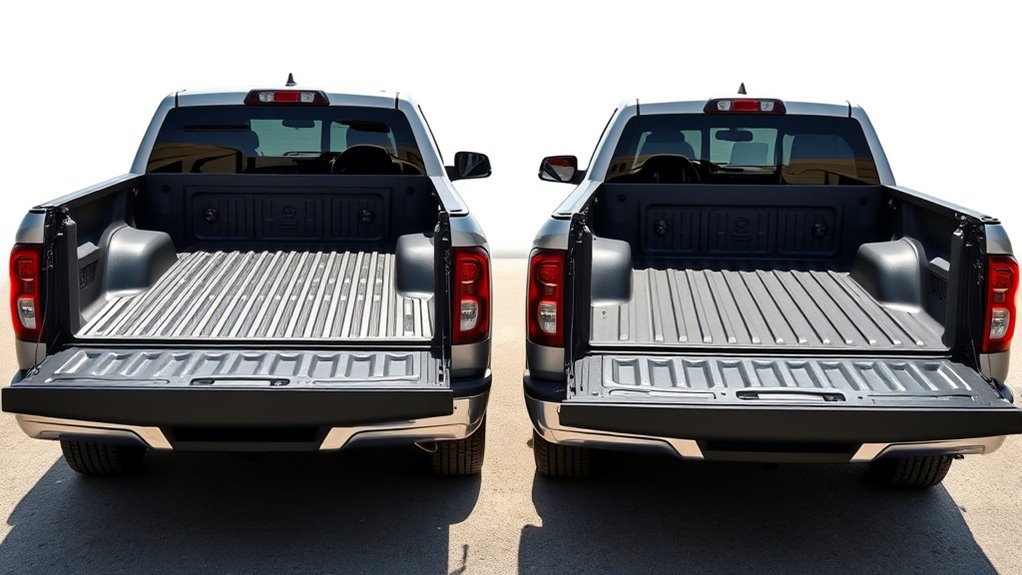
When comparing popular truck models, their bed options vary considerably, offering a range of lengths to suit different needs. For example, the Ford F-150 provides 5.5 ft, 6.5 ft, and 8 ft beds, giving flexibility for urban driving or heavy hauling. Chevy Silverado offers 5.8 ft, 6.6 ft, and 8.1 ft beds, catering to both everyday use and commercial tasks. Ram 1500 includes 5.7 ft and 6.4 ft options, ideal for balancing cargo space with maneuverability. Toyota Tacoma presents around 5 ft and 6.1 ft beds, suited for smaller loads and city use. GMC Sierra shares similar options to Silverado. This variety helps you select a truck that matches your specific needs, whether for work, recreation, or daily driving. Additionally, understanding bed length options can help you optimize your truck’s usability for different lifestyle needs.
How Bed Length Influences Truck Use, Lifestyle, and Towing Capabilities
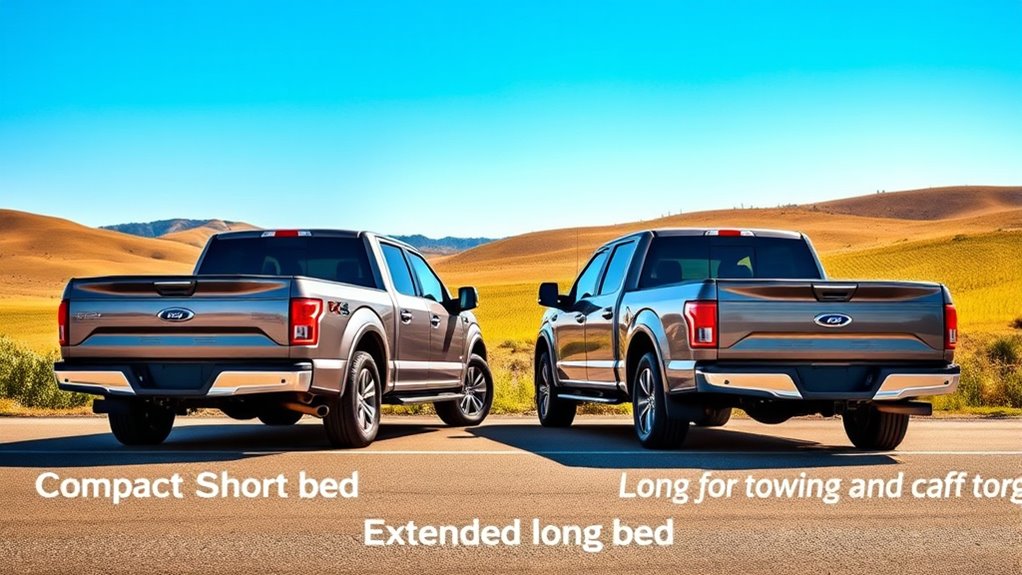
Your choice of bed length directly affects how you use your truck, especially regarding utility and payload capacity. Short beds are easier to maneuver and park in urban settings, while long beds maximize cargo space for heavy loads. Consider how your lifestyle and towing needs influence which bed size works best for you. Additionally, understanding deep-sky imaging can help you appreciate the importance of equipment and setup choices, much like selecting the right truck bed for your needs.
Utility and Payload Capacity
Longer truck beds directly enhance utility and payload capacity, making them ideal for heavy-duty tasks and hauling large or bulky items. With more internal space, you can carry oversized equipment, construction materials, or multiple large boxes without sacrificing cargo stability. Longer beds typically support higher payload capacities because they distribute weight more evenly and allow for larger, heavier loads. If your work involves frequent towing or transporting substantial gear, a long bed ensures you can maximize your truck’s carrying potential. Additionally, precious metals investments can be stored securely in specialized containers during transport, emphasizing the importance of choosing the appropriate bed length for security and weight distribution. Conversely, short beds limit payload capacity but offer enough space for smaller loads, recreational gear, and occasional hauling. Choosing the right bed length aligns with your workload and how much weight your truck needs to handle regularly.
Maneuverability and Urban Use
Choosing the right truck bed length can considerably impact how you use your vehicle daily, especially in urban environments. Short beds improve maneuverability and parking, making city driving easier. Longer beds add length, which can hinder handling and complicate tight turns. Consider this comparison:
| Bed Length | Urban Suitability |
|---|---|
| Short (5-6 ft) | Easier parking, quick turns |
| Standard (6.4-6.6 ft) | Balance of maneuverability and cargo |
| Long (8 ft) | Less agile, best for heavy-duty tasks |
If you mostly drive in tight spaces, a short bed helps you navigate crowded streets effortlessly. For occasional hauling but frequent city use, a standard bed offers a good compromise. Long beds excel for cargo but may challenge urban driving. Additionally, vehicle dimensions and overall length can influence parking and maneuverability in tight environments.
Cost Implications and Market Trends for Short vs. Long Bed Configurations
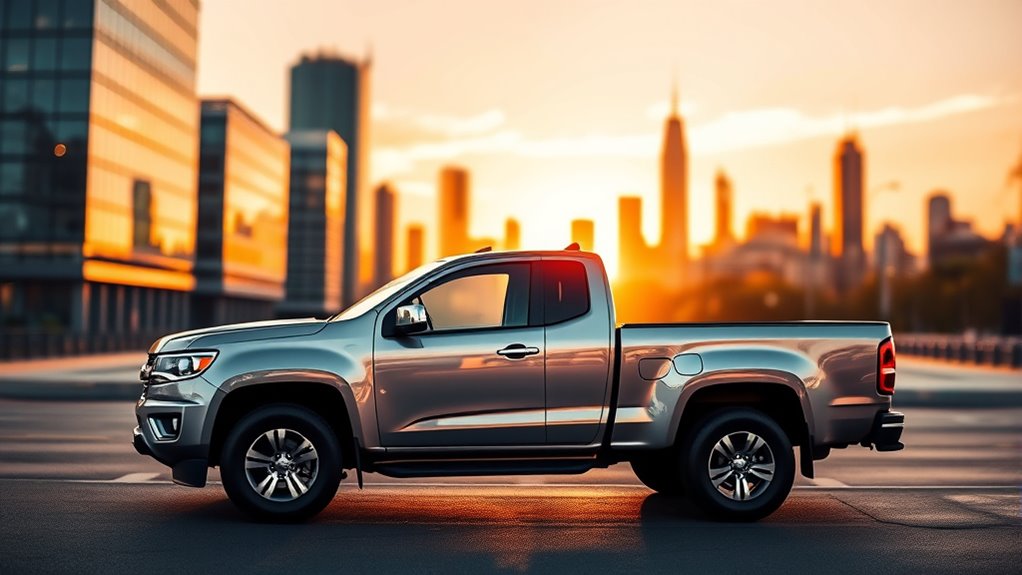
Short bed trucks generally cost less than their long bed counterparts because they use fewer materials and are less complex to manufacture. This price difference makes short beds more accessible, especially for budget-conscious buyers. Market trends show increasing popularity for short and mid-size beds on full-size trucks, driven by urban drivers seeking maneuverability and affordability. Manufacturers tend to offer a wider range of short bed options, reflecting consumer preferences for versatile, city-friendly vehicles. Long beds, on the other hand, command higher prices due to their larger size, added utility, and manufacturing costs. As demand shifts toward more practical, versatile trucks, you’ll find a growing market for short and mid-size beds, often at a more competitive price point, making them a smart choice for many buyers. Additionally, cost implications influence both consumer choices and manufacturing strategies, impacting the overall market availability of different bed sizes.
Frequently Asked Questions
How Does Bed Length Affect Fuel Efficiency?
You’ll notice that a longer bed can slightly reduce your truck’s fuel efficiency because it adds extra weight and increases aerodynamic drag. The increased length may cause more wind resistance, especially at highway speeds, making your engine work harder. Shorter beds are usually more aerodynamic and lighter, helping you save fuel. So, if you’re focused on better mileage, opting for a shorter bed can make a noticeable difference.
Are Longer Beds More Prone to Damage?
Longer beds are more prone to damage because their extended length increases the chance of dents, scratches, or impacts from road debris. Studies show that trucks with beds over 8 feet experience 15% more minor damages annually than shorter models. You’ll want to be extra cautious, especially when parking or hauling bulky items, to protect your investment. Regular inspections and careful loading help minimize the risk of damage.
Can Bed Size Impact Resale Value?
Your truck’s bed size can impact resale value, especially if it matches popular demand. Short beds are often preferred for city driving and ease of parking, making them more attractive to urban buyers. Long beds appeal to commercial users needing maximum cargo space, boosting resale for heavy-duty work. Consider your typical use; a well-chosen bed size aligned with market preferences can help you get a better resale price.
Do Bed Lengths Vary by Cab Style?
Yes, bed lengths vary by cab style. When you choose a truck, the cab size often determines available bed options. For example, a crew cab usually offers shorter beds for better passenger space, while an extended cab might accommodate longer beds for more cargo. This variation helps you balance passenger comfort and hauling needs, giving you options tailored to your driving style and workload.
Is It Easier to Retrofit or Extend a Truck Bed Later?
Extending or retrofitting a truck bed later isn’t easy or cost-effective. You’ll likely face structural issues, alignment problems, and compatibility challenges. It involves significant modifications to the frame, body, and potentially the suspension, which can compromise safety and durability. Instead, it’s better to choose the right bed length upfront based on your needs, ensuring you get a durable, properly fitted truck that suits your hauling and driving requirements.
Conclusion
Choosing between a short and long bed is like selecting the right tool for a job—you’ll want the perfect fit for your needs. Short beds offer agility and ease, while long beds provide sprawling cargo space like an open field. Consider your lifestyle, towing needs, and parking space, and you’ll find the bed that feels just right. Ultimately, the right bed length keeps your truck singing in harmony with your adventures.