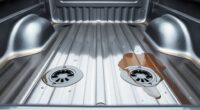
To stop mold and mildew in your covered truck bed, regularly clear out debris, keep drainage holes open, and dry everything thoroughly after rain or dew. Use breathable covers and clean your bed with vinegar or mold cleaner to prevent buildup. Ventilate the area by airing out covers and mats, and inspect for standing water or moisture. Staying consistent with these practices will help you maintain a fresh, mold-free truck bed—discover more tips to keep the funk at bay.
Key Takeaways
- Regularly clean and dry the truck bed and cover to prevent moisture buildup and mold growth.
- Ensure drainage holes are clear to avoid standing water and promote proper moisture escape.
- Use breathable, mold-resistant covers and liners to reduce humidity and organic debris accumulation.
- Remove wet covers promptly after rain or dew and dry them in sunlight to inhibit mold spores.
- Conduct routine inspections for signs of mold, moisture, or debris, and address issues promptly.

Adam's Polishes Bed Liner Restorer 16oz Truck Bed Cleaner with UV Protection | Safely Works On Automotive Exterior Plastics
FAST DRYING: Oftentimes, dressing products can be oily and greasy making your truck bed look and feel slick…
As an affiliate, we earn on qualifying purchases.
As an affiliate, we earn on qualifying purchases.
Understanding Why Mold and Mildew Form in Covered Truck Beds

Understanding why mold and mildew form in covered truck beds is essential to preventing their growth. Moisture is the main culprit, often coming from rain, dew, or condensation that collects inside the bed. Organic debris like leaves, dirt, and dust act as nutrients, fueling mold development. Poor ventilation under covers traps humidity, creating a damp environment perfect for mold spores to thrive. Blocked or clogged drainage holes cause standing water, increasing moisture levels. Warm temperatures and moderate light conditions accelerate mold and mildew growth. Recognizing these factors helps you pinpoint why mold appears and guides you in taking proactive steps. Addressing moisture sources and improving airflow are key to keeping your covered truck bed dry and mold-free. Additionally, incorporating energy-efficient ventilation systems can significantly reduce humidity levels and inhibit mold formation.

REEVAA Dog Truck Seat Cover for Back Seat, Hard Bottom Dog Hammock for Car, Pet Bed Extender for 2-4 Large Dogs, Waterproof Seat Protector, Universal XL Size Fits for Crew Cab Truck/SUV, Black
【XL Size – Perfect for Crew Cab Trucks & Large SUVs】 Specifically sized at 29" XL width, this…
As an affiliate, we earn on qualifying purchases.
As an affiliate, we earn on qualifying purchases.
Recognizing the Signs of Mold and Mildew Growth

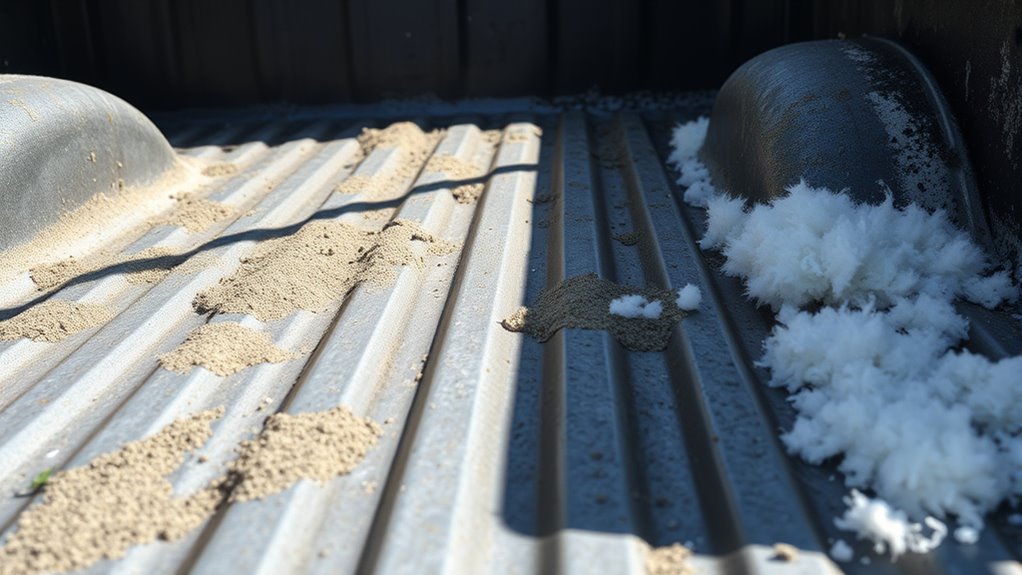
Detecting mold and mildew early is essential to preventing damage and health risks. Look for visible signs like fuzzy, discolored patches or slimy textures on your truck bed or cover. Unusual odors, such as a musty or earthy smell, also indicate mold presence. Moisture spots or dark streaks are common clues. Use this table to identify typical signs:
| Visual Signs | Odor Signs | Texture & Feel |
|---|---|---|
| Discolored patches (green, black, or gray) | Musty smell | Slimy or fuzzy surfaces |
| Stains or water spots | Earthy or moldy odor | Soft, damp areas |
| Mold growth on fabric or rubber | Unpleasant smell persists | Sticky or damp feeling |
Additionally, routine inspections can help catch mold growth early before it spreads or causes further damage.
![[High Visibility] Waterproof Truck Bed Bag with Orange Safety Trim, 26 CuFt Heavy Duty Cargo Carrier for Pickup Truck, Weatherproof Storage Bag for Camping & Road Trips](https://m.media-amazon.com/images/I/418NtHJLiuL._SL500_.jpg)
[High Visibility] Waterproof Truck Bed Bag with Orange Safety Trim, 26 CuFt Heavy Duty Cargo Carrier for Pickup Truck, Weatherproof Storage Bag for Camping & Road Trips
Enhanced Safety Design: Features high-visibility orange safety trim that makes your cargo stand out in low-light or night…
As an affiliate, we earn on qualifying purchases.
As an affiliate, we earn on qualifying purchases.
The Role of Moisture and Organic Debris in Mold Development
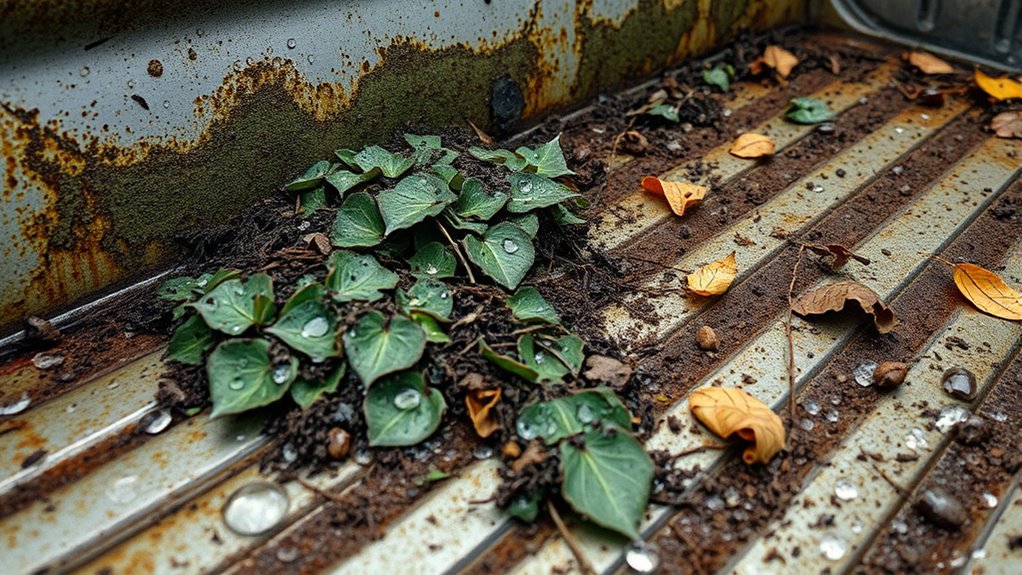
Moisture from rain, dew, or condensation creates the perfect environment for mold to grow in your truck bed. Organic debris like leaves and dirt act as food sources, fueling mold development. When moisture and debris combine, they quickly lead to persistent mold problems that can damage your truck. Incorporating luxurious fabrics in your cleaning routine can help prevent mold buildup on interior surfaces.
Moisture Sources and Impact
Moisture is a primary driver behind mold and mildew growth in covered truck beds, as it creates the damp environment mold spores need to thrive. Rain, dew, and condensation frequently introduce moisture, especially if drainage is blocked or covers trap humidity. Even small amounts of water from leaks or spills can sustain mold growth over time. Organic debris like leaves and dirt absorb moisture, providing nutrients that encourage mold to flourish. Additionally, poor ventilation under covers traps humidity, making it easier for mold spores to settle and grow. Warm temperatures and moderate light further accelerate this process. To prevent mold, you need to control moisture sources by ensuring proper drainage, removing debris, and maintaining good airflow inside your truck bed. Electric bikes can be a convenient tool for reaching maintenance spots or inspecting your truck bed area quickly.
Organic Material as Fuel
Organic debris such as leaves, dirt, and dust often accumulate in covered truck beds, creating a rich source of nutrients for mold to feed on. When moisture combines with this organic material, it forms an ideal environment for mold spores to thrive. The debris provides a food source that fuels mold growth, especially in shaded or poorly ventilated areas. Over time, mold can develop rapidly if these organic materials aren’t removed regularly. To prevent this, you should clear out leaves and dirt routinely and keep the truck bed dry. Using breathable covers and ensuring proper drainage helps minimize organic debris and moisture buildup. Staying proactive in cleaning and drying your truck bed disrupts mold’s fuel source, keeping it mold-free and your truck bed fresh. Implementing proper storage practices can further reduce the risk of mold growth over the long term.

RLB-HILON 2PCS Truck Bed Oval Drain Plug Cover Cap, Compatible with Ford F150 1998-2018, F250-F350 2017-2018, F450-F550 2017, 4L3Z99277B76AA, Black Plastic
RLB-HILON Truck Bed Oval Drain Plug Cover Cap for 4L3Z-99277B76-AA
As an affiliate, we earn on qualifying purchases.
As an affiliate, we earn on qualifying purchases.
Effective Strategies to Prevent Mold and Mildew Buildup

To effectively prevent mold and mildew buildup in your covered truck bed, you need to take proactive steps to manage moisture and airflow. Start by keeping drainage holes clear so water doesn’t pool. Use breathable, mold-resistant covers or liners that allow moisture to escape while blocking rain. Regularly clean and dry the bed and cover surfaces, especially after exposure to rain or dew. Avoid leaving wet covers or tarps in place, as they trap moisture. Store covers and mats completely dry. Ensure good ventilation by periodically airing out the bed and cover. Inspect weekly for signs of mold, debris, or standing water. Maintaining a dry, well-ventilated environment discourages mold spores from taking hold and keeps your truck bed fresh. Additionally, incorporating air purifiers designed to reduce mold spores can further enhance air quality and prevent mold growth in enclosed spaces.
Step-By-Step Guide to Cleaning Mold and Mildew From Truck Beds and Covers
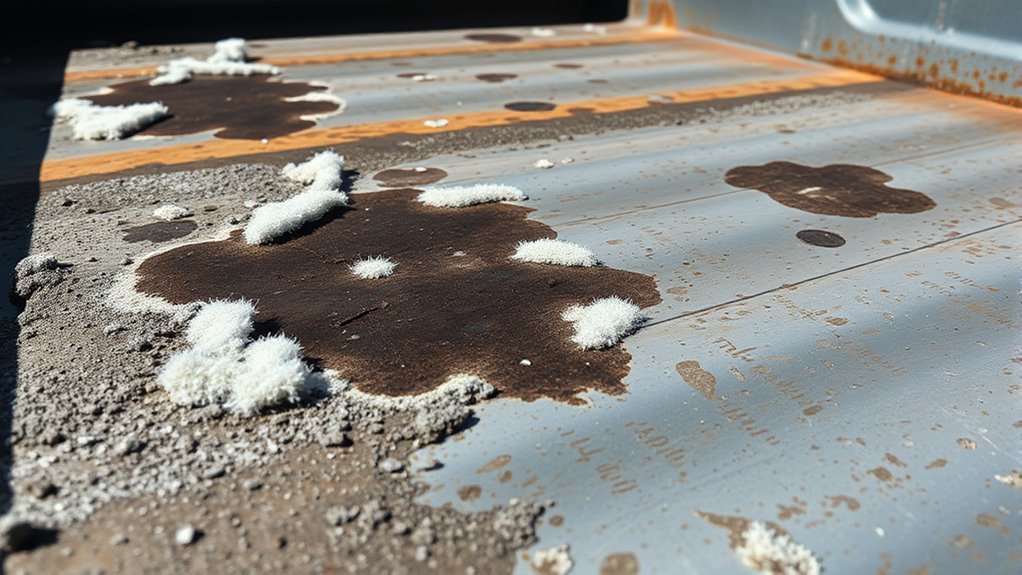
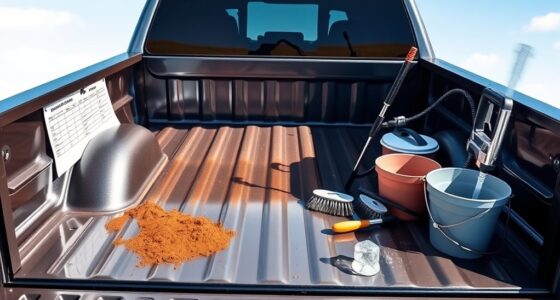
When mold and mildew start to appear on your truck bed or cover, it’s important to act quickly to prevent further damage. First, remove any loose debris and rinse the surface thoroughly with a high-pressure hose to wash away spores. Next, use a soft brush and a mild detergent or automotive cleaner to scrub affected areas gently. For stubborn mold, mix equal parts water and vinegar or apply a commercial mold cleaner, then scrub again. Rinse the area well to remove residue. Allow everything to dry completely in sunlight, as UV rays help kill remaining spores. Incorporating antimicrobial properties into your cleaning routine can further reduce the risk of mold regrowth. Repeat the process if mold persists. Regular inspection and prompt cleaning keep mold from returning and preserve your truck’s condition.
Choosing the Right Protective Products and Materials

Choosing the right protective products and materials is essential to effectively prevent mold and mildew in your covered truck bed. Opt for truck bed mats made from non-absorbent, quick-drying materials like rubber or specialized plastics—they resist mold and dry quickly if they get wet. Mold-resistant tonneau covers and tarps with breathable, water-shedding fabrics help reduce trapped moisture. Use bed liners with sealed seams to prevent water infiltration. Consider rust inhibitor sprays to protect metal surfaces from moisture and mold-friendly environments. Covers with micro-porous films allow trapped moisture to escape, lowering mold risk. When selecting products, check for mold-resistant properties and breathability features to ensure your truck bed stays dry and mold-free longer. Proper choices make maintenance easier and extend your truck bed’s lifespan. Additionally, incorporating ventilation strategies can significantly reduce indoor humidity levels and prevent mold growth inside your covered truck bed.
Routine Maintenance Practices to Keep Your Truck Bed Mold-Free

Maintaining your truck bed regularly is the best way to prevent mold and mildew from taking hold. Inspect it weekly for signs of moisture, debris, or mold growth. After it rains or you’ve driven through mud, clean and dry the bed thoroughly. Use a high-pressure hose to remove dirt and a soft brush with mild detergent to scrub surfaces. Pay special attention to drainage holes, making sure they’re clear and free-flowing. Always dry the bed completely before covering or storing your truck to prevent trapped moisture. Reapply protective coatings or mold-resistant sprays as recommended. Periodically air out covers and mats to prevent stagnation. Consistent upkeep keeps your truck bed dry, well-ventilated, and less hospitable to mold and mildew growth. Incorporating routine maintenance practices into your regular schedule ensures your truck bed remains mold-free and in good condition over time.
Common Mistakes That Can Accelerate Mold and Mildew Growth

One common mistake is neglecting to maintain drainage holes, which can lead to water pooling and mold growth. Leaving wet covers on your truck bed traps moisture, creating the perfect environment for mold and mildew. Ignoring these issues accelerates mold development and makes cleaning more difficult later on. Additionally, failing to utilize technological tools like specialized cleaning apps or digital maintenance checklists can result in overlooked problem areas that promote mold proliferation.
Ignoring Drainage Maintenance
When drainage holes in your covered truck bed become clogged or are ignored, standing water can accumulate quickly, creating an ideal environment for mold and mildew to thrive. If you neglect drainage maintenance, water pools and stays trapped, increasing moisture levels under the cover. To prevent this, make sure you:
- Regularly inspect drainage holes for debris or blockages.
- Clear any obstructions with a wire or compressed air.
- Test drainage flow by pouring water and ensuring it drains freely.
Ignoring these steps allows water to sit, fostering mold growth. Proper drainage maintenance is essential to keep your truck bed dry and mold-free. Don’t overlook it—your truck bed’s health depends on clear, functioning drainage.
Leaving Wet Covers On
Leaving wet covers on your truck bed creates a perfect environment for mold and mildew to develop quickly. When covers stay damp, moisture gets trapped against the surface, encouraging mold spores to thrive. This moisture provides the nutrients mold needs to grow, especially in warm temperatures or moderate light. If you don’t dry your covers thoroughly before storage, you risk fostering a mold-friendly environment. Additionally, wet covers block airflow, trapping humidity underneath. Over time, this persistent dampness can lead to stubborn mold and mildew problems that are difficult to remove. To prevent this, always remove covers after exposure to rain or dew, and allow them to dry completely in the sun before storing. Proper maintenance helps keep your truck bed clean, dry, and mold-free.
Frequently Asked Questions
Can Mold in Truck Beds Cause Health Issues?
Mold in truck beds can cause health issues like allergies, respiratory problems, and skin irritation. When you breathe in mold spores, you risk asthma attacks or worsening allergy symptoms. Touching moldy surfaces may lead to skin rashes or irritation. If you have existing respiratory issues or weakened immune systems, mold exposure can be more severe. It’s important you clean and dry your truck bed regularly to minimize these health risks.
Are There Eco-Friendly Options for Mold Prevention?
Like planting seeds of sustainability, you can choose eco-friendly mold prevention options. Opt for natural solutions like vinegar or baking soda to clean and inhibit mold growth, avoiding harsh chemicals. Use breathable, biodegradable covers, and guarantee proper drainage and ventilation. Regularly dry and inspect your truck bed and covers, embracing environmentally conscious practices that protect both your vehicle and the planet, keeping mold at bay naturally and responsibly.
How Often Should I Inspect for Mold in My Truck Bed?
You should inspect your truck bed weekly for mold and mildew. After exposure to rain, snow, or dirt, give it a thorough check. Look for any signs of mold, mildew, or debris buildup. Regular inspections help catch problems early, preventing extensive damage and odor. Make it a habit to clean and dry your truck bed after each use, especially if it’s been exposed to moisture, to keep mold at bay.
Do I Need Special Cleaning Products for Different Cover Materials?
If you want to keep the funk at bay, yes, you’ll need different cleaning products for various cover materials. Imagine your cover as a delicate shield—some are breathable fabric, others are waterproof vinyl. Use gentle, non-abrasive cleaners for fabric covers to prevent damage, and mild soaps for vinyl to preserve their water resistance. Avoid harsh chemicals that could weaken materials, ensuring your cover stays protective and mold-free.
Is It Safe to Use Bleach to Remove Mold From Truck Covers?
Yes, you can use bleach to remove mold from truck covers, but proceed carefully. Mix a solution of one part bleach to three parts water and test it on a small area first to avoid damage. Use a soft brush or cloth to apply, then rinse thoroughly with water. Make sure the cover dries completely in sunlight to prevent mold from returning. Never use harsh bleach on delicate or synthetic materials.
Conclusion
If you ignore mold and mildew in your covered truck bed, you’re risking a disaster that could turn your trusty vehicle into a moldy, stinky nightmare! Don’t let hidden moisture and organic debris sabotage your truck’s life. With simple preventive steps and regular cleaning, you can keep your truck bed pristine and mold-free. Act now—because a little effort today can save you from a moldy catastrophe tomorrow!