When inspecting a used truck bed, check for rust, cracks, and signs of past repairs on the frame, seams, and support areas. Tap on the metal to find thinning spots or weakness and open the tailgate to test its operation. Look for dents, corrosion, and loose hardware, and examine side panels and accessories for damage. For a thorough evaluation and tips on identifying hidden issues, keep exploring the detailed steps ahead.
Key Takeaways
- Check for rust, corrosion, dents, and signs of previous repairs on the bed surface, sides, and frame.
- Inspect welds, joints, and support structures for cracks, deterioration, or uneven beadwork indicating potential weaknesses.
- Test the tailgate, latch, and hardware for smooth operation, security, and signs of wear or damage.
- Examine mounting points and accessories for loose hardware, corrosion, or improper installation.
- Assess overall cleanliness, signs of neglect, and look for hidden damage or previous patchwork that could affect durability.

Bed Buddy Truck Tool,Cargo Grabber Pickup Truck Bed Thickened Stainless Steel Telescopic 33-74inch wear-Resistant complimentary Storage Bag Professional Cargo Grabber Reach Retriever Tool
Bed Buddy Truck Tool,Cargo Grabber Pickup Truck Bed Thickened Stainless Steel Telescopic 33-74inch wear-Resistant complimentary Storage Bag Professional…
As an affiliate, we earn on qualifying purchases.
As an affiliate, we earn on qualifying purchases.
Examine the Structural Integrity of the Bed Corners and Seams

To guarantee the truck bed can handle heavy loads and resist future damage, you should carefully examine the corners and seams for signs of structural issues. Look closely at where panels meet, checking for cracks, gaps, or misaligned sections that could indicate previous stress or damage. Feel for any loose or wobbly areas, which may suggest weakened welds or compromised support. Inspect for rust or corrosion around seams, as these weaken the metal’s integrity over time. Pay special attention to high-stress points, such as the corners where the bed connects to the frame. If seams appear to be poorly welded or show signs of patchwork, it might be a sign of past repairs or underlying problems. Addressing these issues now helps ensure the truck bed’s durability and safety. Recognizing signs of structural wear can help you make a more informed purchase decision.

Dorman 926-881 Weld-In Bed Floor Rust Repair Panel Compatible with Select Ford Models (OE FIX)
Cost-effective replacement – this low-cost solution enables fixing the worn truck bed floor, rather than replacing the entire…
As an affiliate, we earn on qualifying purchases.
As an affiliate, we earn on qualifying purchases.
Inspect Support Structures and Frame for Rust, Bends, or Cracks
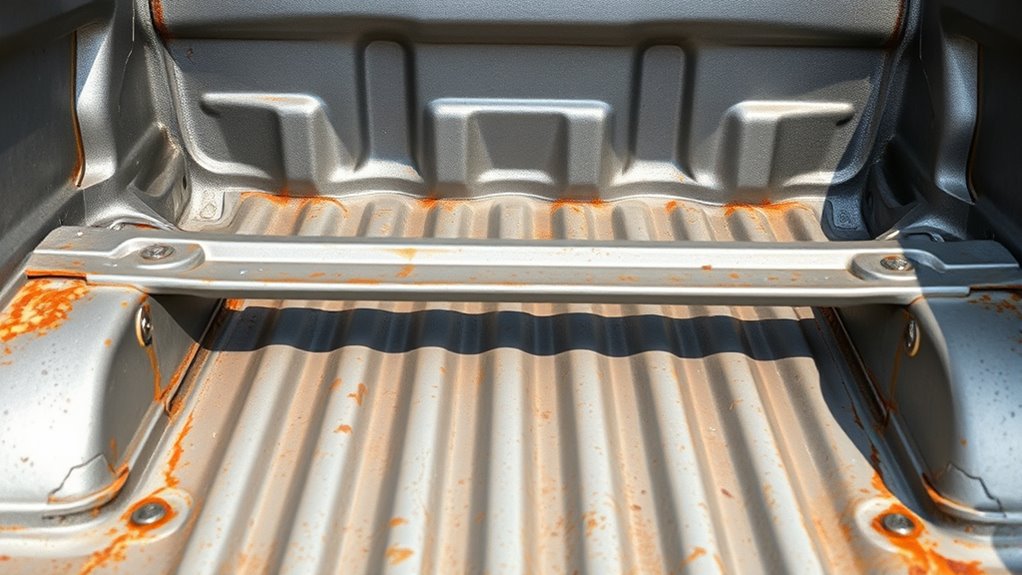
Start by carefully inspecting the frame and support structures for any signs of rust or corrosion, which can weaken the overall integrity. Look for bends or misalignments that might indicate previous impacts or heavy loading. Also, check for cracks or splits that could cause future failure under stress. Additionally, examine the welds and joints for any signs of deterioration or poor workmanship, as these are critical points in the vehicle’s structure that ensure safety and durability.
Check for Rust Damage
Inspecting the support structures and frame for rust damage is essential because rust can weaken the truck bed’s overall integrity. Look closely at all metal surfaces, especially around joints, seams, and hidden areas. Use a flashlight to spot rust patches or bubbling paint that indicate corrosion beneath the surface. Tap suspicious spots gently with a screwdriver or hammer; a dull sound may suggest thinning metal. Check for flaking rust or powdery residue, which signals advanced deterioration. Pay special attention to high-stress areas like support brackets and mounting points. Rust in these areas can compromise the bed’s strength and safety. If you find significant rust, cracks, or weakened areas, consider negotiating the price or moving on to a better-conditioned truck. Additionally, understanding corrosion prevention techniques can help you identify trucks with better maintenance history.
Examine Frame Bends
Examine the frame and support structures carefully for any signs of bends, cracks, or warping, as these can compromise the truck bed’s strength. Look closely at the main frame rails and crossmembers, checking for any irregularities. Misaligned or bent support components indicate possible damage from heavy loads or impacts. To ensure integrity, consider these key points:
- Visually inspect for any noticeable bends or distortions in the metal, especially near welds or joints.
- Tap along the frame and supports with a small hammer or screwdriver; dull or hollow sounds can reveal hidden cracks or rust.
- Check for uneven gaps or misalignments around welds, seams, or mounting points that could suggest previous repairs or structural issues.
- Support structure integrity is essential for the overall safety and durability of the truck bed.
Addressing these concerns helps you avoid future safety and durability problems.
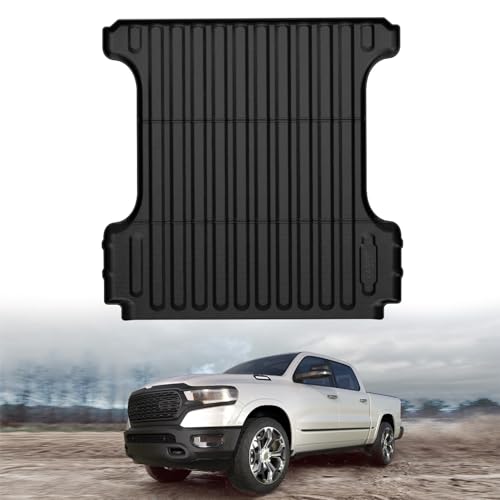
LASFIT 5.7FT Truck Bed Mat for Ram 1500/1500 RHO 2019-2026 & RAM 1500 New Body 2019-2024 Short Bed (5FT7 / 67.4inches) Not for Rambox, All Weather Custom Fit Truck Cargo Bed Liner, Black
CUSTOM FIT – LASFIT bed liner for 2019-2026 Ram 1500 / 1500 RHO & 2019-2024 RAM 1500 New…
As an affiliate, we earn on qualifying purchases.
As an affiliate, we earn on qualifying purchases.
Check for Signs of Past Repairs or Patchwork in High-Stress Areas
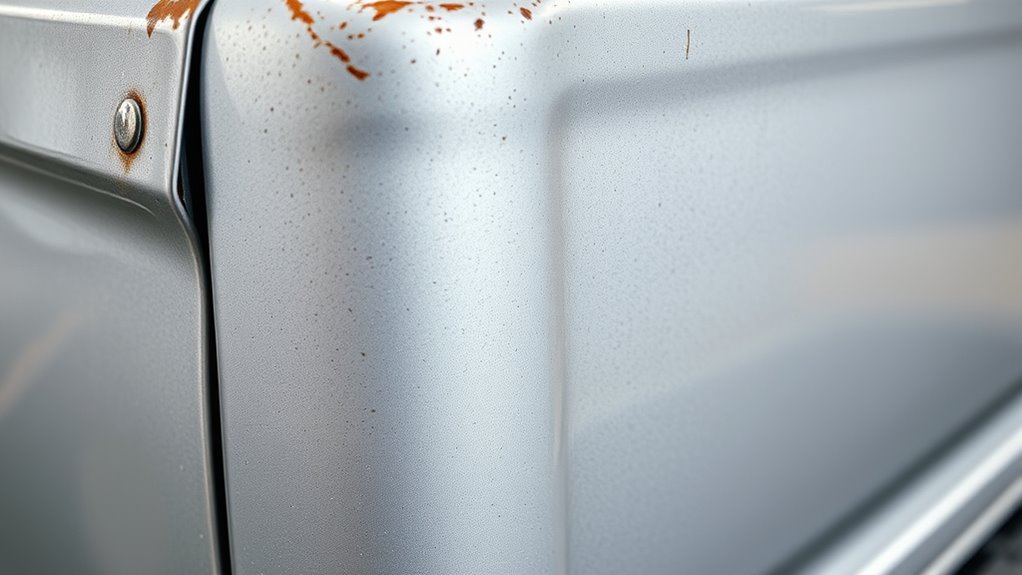
Because high-stress areas like the corners, seams, and support structures bear the brunt of heavy loads and impacts, you should look for signs of past repairs or patchwork there. These spots often reveal hidden issues if patched poorly. Check for uneven welds, mismatched paint, or new metal patches. Look closely at seams for cracks or inconsistent gaps. Past repairs can weaken the bed’s integrity and lead to future failure. To help visualize, consider this:
| Area | Signs to Watch For | Potential Risks |
|---|---|---|
| Corners | Fresh welds, uneven patches | Cracks, weakness |
| Seams | Mismatched paint, gaps | Leaks, rusting |
| Support Structures | Bubbles, dents | Structural failure |
Identifying these signs ensures you’re not buying a bed hiding past damage.

APPERFiT Locking Tailgate Handle Latch w/Bezel & Lock Cylinder 22755305 Compatible with 2007-2014 Chevrolet Chevy Silverado GMC Sierra 1500 2500 3500 Truck Bed Tail Gate Door Panel
Over time the original factory lockable tailgate handle latch with bezel & lock cylinder comes with the vehicle…
As an affiliate, we earn on qualifying purchases.
As an affiliate, we earn on qualifying purchases.
Evaluate Welds and Overall Rigidity of the Bed
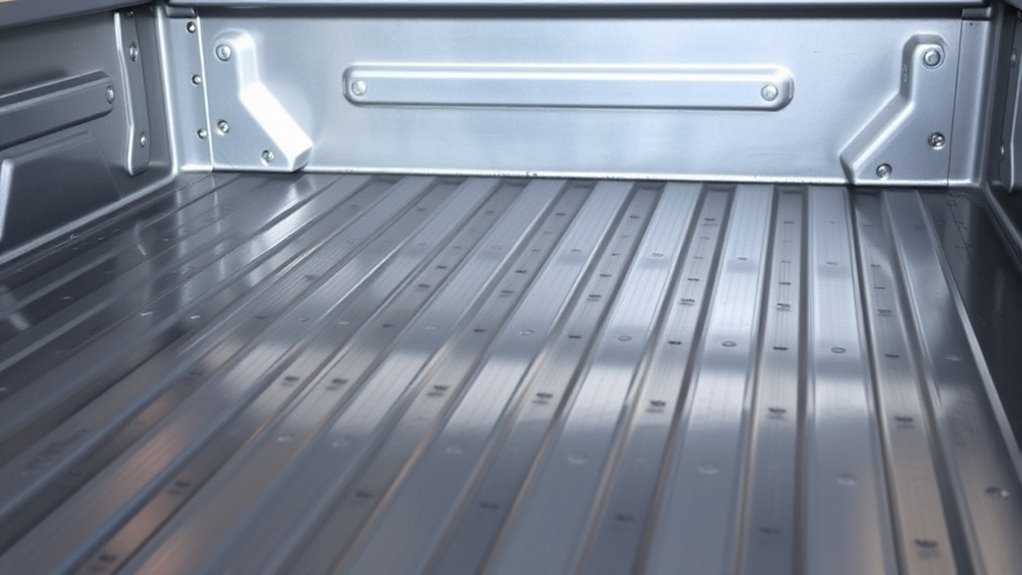
Weld quality and the bed’s overall rigidity are crucial indicators of its structural soundness. Poor welds or a rattling bed can signal underlying issues. To evaluate this, start by examining welds for cracks, porosity, or uneven bead application. Next, gently press on the bed sides and floor to test for flex or movement—excessive give suggests compromised rigidity. Finally, look for signs of previous weld repairs, such as inconsistent weld patterns or discoloration. Additionally, assessing the structural integrity of the bed helps ensure safety and durability over time.
Assess Bed Attachment Points, Hardware, and Mounting Conditions
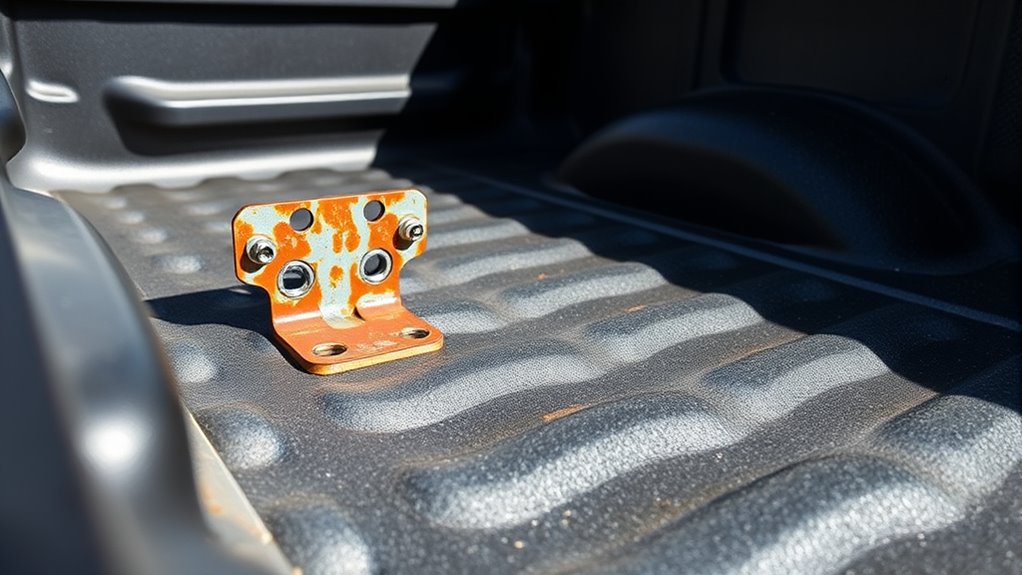
Start by checking all mounting points, bolts, and brackets for looseness or signs of wear. Look closely for stripped threads, missing hardware, or damaged components that could compromise the bed’s stability. Confirm everything operates smoothly and locks securely to prevent issues during use. Additionally, inspect for proper documentation, such as maintenance records or warranties, that can provide insight into the bed’s history and condition.
Secure Hardware and Bolts
When inspecting the truck bed’s hardware, it’s essential to carefully examine all mounting points, bolts, brackets, and hinges for signs of wear or looseness. Loose or missing hardware can compromise the bed’s stability and safety. Look for rust, corrosion, or stripped threads that indicate deterioration. Pay close attention to areas where the bed attaches to the frame, ensuring bolts are tight and secure. Check for any visible cracks or stress around mounting points, which could signal past damage. Also, verify that all fasteners operate smoothly and lock into place without resistance. Proper maintenance can help prevent unexpected failures and prolong the lifespan of the truck bed. Here are three key things to focus on:
- Tighten all bolts and verify they’re properly threaded.
- Replace any stripped or damaged hardware.
- Ensure hinges and brackets move freely and lock securely.
Inspect for Looseness or Damage
To guarantee the truck bed is securely attached, carefully examine all mounting points, bolts, brackets, and hinges for signs of looseness or damage. Wiggle the bed slightly at each attachment to check for excessive play or movement. Look closely for stripped threads, rust, or cracks around bolts and welds. Inspect hinges and latches for wear, corrosion, or difficulty operating. Check that all hardware is tight, properly aligned, and functioning smoothly. Pay attention to any signs of stress, such as hairline cracks or bending around attachment areas. If you notice loose or damaged components, it could compromise the bed’s stability and safety. Address these issues before purchasing, as properly secured hardware ensures the truck bed’s durability and your safety during use. Additionally, verifying the security of the bed attachment is crucial, especially since security zone info highlights the importance of reliable hardware for safety and durability.
Examine the Bed Floor for Rust, Dents, and Thinning Metal

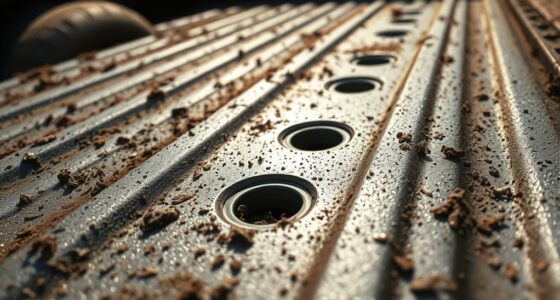
Examining the bed floor for rust, dents, and thinning metal is essential to assess its durability and safety. Rust can weaken the structure, while dents and thin spots indicate past damage or heavy use. Carefully inspect the entire surface, especially near the tailgate and corners, for signs of corrosion or corrosion holes. Look for areas where the metal feels soft or appears thinner than the surrounding material. Dents and gouges may suggest previous impacts that could compromise strength. Also, check for areas with paint bubbling or flaking, which often signals rust underneath. To get a clear picture, run your hand over the surface to feel for inconsistencies. Here are key points to contemplate:
- Look for rust patches or holes
- Check for dents, gouges, or deep scratches
- Assess metal thickness and softness
Inspect Bed Sides for Damage, Rust, or Signs of Repair
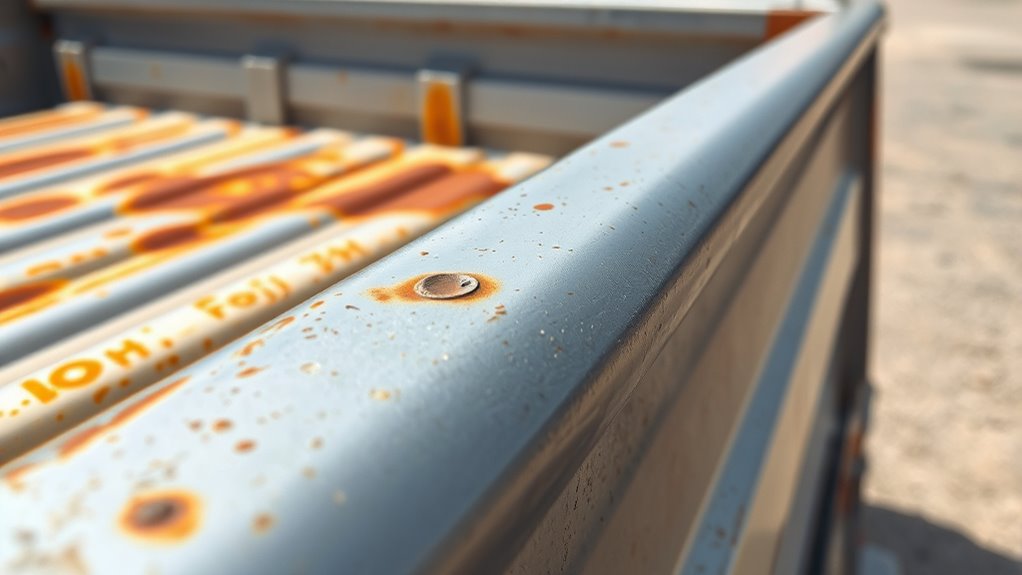
Check the condition of the bed sides carefully, as they are essential to the truck’s overall durability. Look for signs of rust, especially along seams, corners, and beneath paint. Rust indicates exposure to moisture and potential structural weakness. Examine the metal surface for dents, deep scratches, or gouges that could compromise strength. Inspect for any signs of previous repairs, such as mismatched paint, uneven welding, or patchwork, which may suggest past damage. Check for misalignment, warping, or bubbling paint that could signal underlying issues. Gently press along the sides to feel for soft spots or weakness. Also, look closely at welds and seams for cracks or corrosion. A solid, damage-free bed side ensures the truck’s longevity and reliable performance. Evaluating metal integrity is crucial for assessing the overall condition of the truck bed.
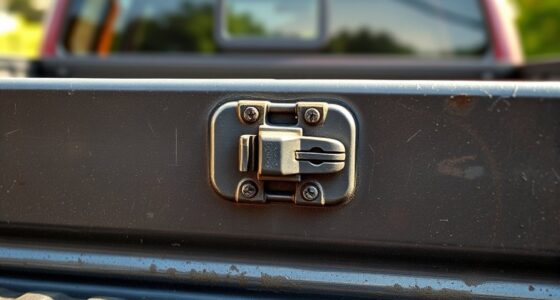
Test the Tailgate and Latch Mechanism for Proper Operation and Security

Testing the tailgate and latch mechanism guarantees they operate smoothly and securely, which is essential for safe hauling. You want confidence that the tailgate stays closed during transport and opens easily when needed.
To verify proper function, consider these key checks:
- Open and close the tailgate multiple times, feeling for smooth movement and secure latching.
- Inspect the latch for corrosion, wear, or damage that could prevent it from locking properly.
- Check alignment between the tailgate and bed to avoid gaps or misfit, and verify it locks firmly in place.
- Ensuring the latch mechanism maintains its color accuracy over time helps preserve the safety and integrity of the truck bed.
If the tailgate feels loose, sticks, or the latch doesn’t catch securely, it could be a sign of underlying damage or wear. Addressing these issues now prevents safety hazards later.
Review Installed Accessories and Customizations for Safety and Condition
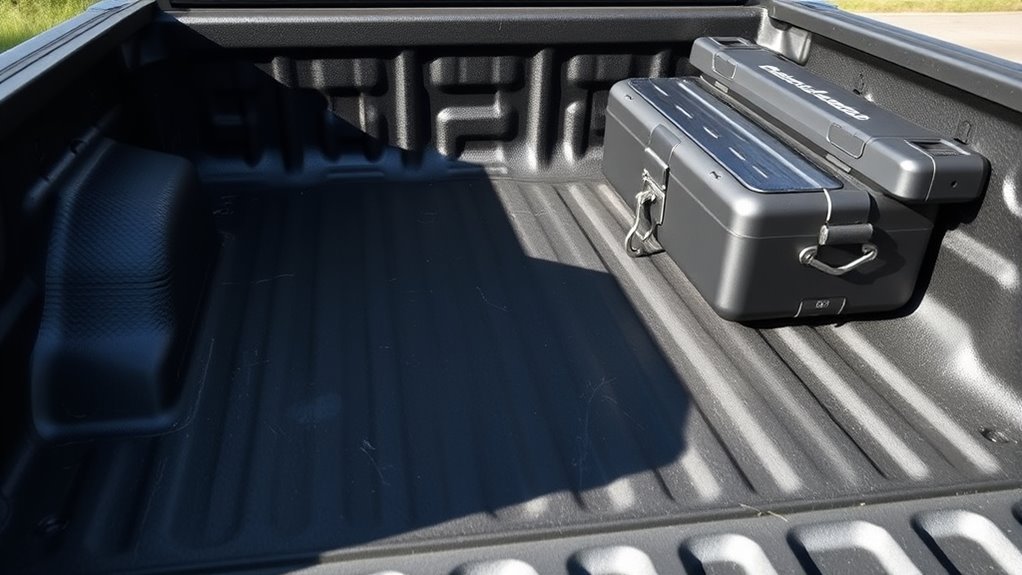
Start by inspecting the bed liner for cracks, tears, or signs of wear that could compromise its protective function. Next, check that any installed toolboxes are securely mounted with no loose hardware or signs of tampering. Finally, evaluate custom mountings or racks to ensure they’re properly attached and don’t interfere with the bed’s structural integrity or safety.
Inspect Bed Liner Condition
When inspecting the bed liner and installed accessories, focus on their security and condition to guarantee safety and proper function. Look for cracks, tears, or warping in the liner that could compromise protection or indicate damage. Check that all mounting points are secure and free of rust or corrosion. Ensure accessories like racks or storage units are firmly attached without excessive movement or signs of wear. Examine the edges and seams for any signs of deterioration or improper installation. Pay attention to areas around bolts and fasteners for rust or looseness. Confirm the liner and accessories don’t interfere with tailgate operation or bed access. Properly maintained liners and accessories enhance durability and safety; damaged or loose parts could pose hazards or reduce utility.
Check Toolbox Security
To guarantee your toolbox and other installed accessories are secure and safe to use, carefully examine their mounting points and overall condition. Check that all brackets, bolts, and hinges are tight, free of rust, and show no signs of wear or damage. Look for any looseness or wobbling that could indicate poor installation or compromised hardware. Inspect the toolbox for dents, cracks, or rust, and ensure its lock functions properly. Verify that any custom modifications, like racks or additional supports, are securely attached and don’t interfere with bed integrity. Be alert for signs of improper installation, such as gaps or misalignment, which could cause safety issues or damage during transit. Ensuring these accessories are solidly mounted helps prevent accidents and protects your investment.
Evaluate Custom Mountings
Carefully examine all installed accessories and custom modifications to guarantee they are securely mounted and in good condition. Loose or damaged accessories can compromise safety and indicate poor maintenance. To assess this, check the following:
- Inspect bed liners, toolboxes, racks, or other add-ons for secure attachment and signs of wear or damage.
- Look for cracks, tears, or corrosion on mounted accessories that could weaken their structure.
- Verify proper installation by testing stability—try gently rocking or applying pressure to see if anything shifts or feels loose.
Ensure all customizations serve their purpose without risking damage or safety issues. Damaged or improperly installed accessories not only lower the truck’s value but can also be hazardous during use.
Assess Overall Cleanliness and Maintenance Condition of the Truck Bed
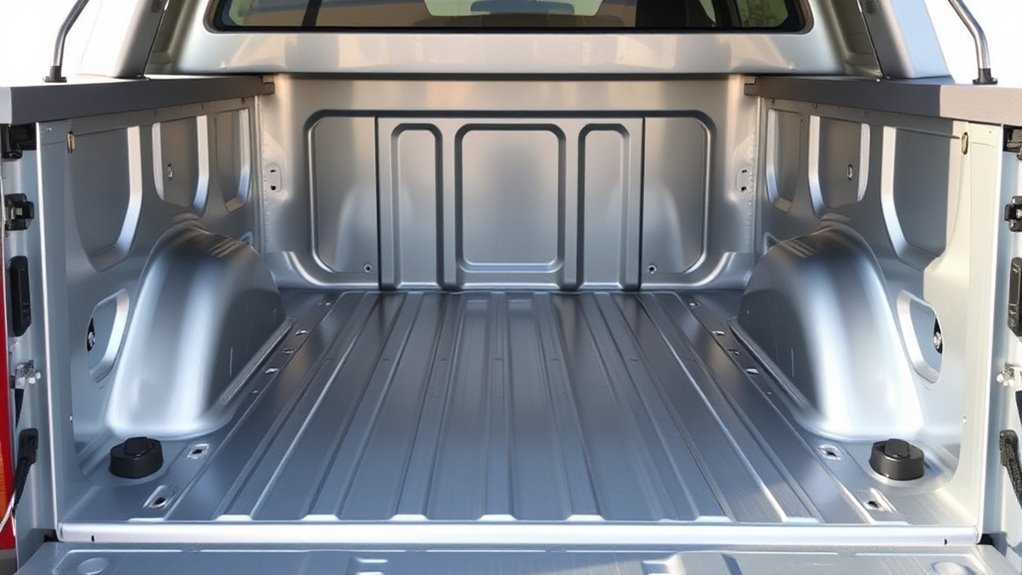
A clean, well-maintained truck bed often indicates regular upkeep and responsible use. Check for dirt, debris, or bad odors that might suggest neglect. Look for chemical or oil stains, which could point to leaks or spills. Inspect for signs of pests or rodents, like droppings or chewed wiring. A tidy bed shows the owner cared for it, reducing the risk of hidden issues. Use the table below to guide your assessment:
| Aspect | What to Look For |
|---|---|
| Cleanliness | Dirt, debris, odors, stains |
| Water Damage | Evidence of pooling or trapped moisture |
| Pest Signs | Droppings, chewed materials |
| Damage or Missing Parts | Damaged trim, broken protective coatings |
| Overall Maintenance | Well-kept appearance, absence of neglect |
Frequently Asked Questions
How Can I Detect Hidden Rust or Corrosion Inside the Bed?
To detect hidden rust or corrosion inside the bed, you should tap around the surface with a small hammer or screwdriver. Listen for any hollow or thin spots that indicate rust. Shine a flashlight into seams, corners, and support areas, looking for discoloration or flaking paint. Feel for softness or rough patches, and use a mirror if needed to see hard-to-reach spots. These steps help uncover hidden corrosion.
What Signs Indicate Previous Structural Repairs or Patchwork?
Studies show that over 30% of used trucks have hidden repairs. You’ll spot signs of previous patchwork by looking for uneven or mismatched paint, overspray, or inconsistent welds. Check for misaligned seams, uneven surface textures, or areas with different metal thicknesses. Feel for irregularities when running your hand over the bed. Pay attention to any cracks or repairs that look out of place, as these can compromise the truck’s durability.
How Do I Verify the Integrity of Welds and Support Beams?
You check welds by looking for cracks, gaps, or inconsistent bead lines that suggest poor quality. Gently tap or press on support beams to see if they feel solid and don’t flex or creak. Look for signs of rust or previous repairs around welds and supports. Use a flashlight to spot hairline cracks or missed weld areas, ensuring everything feels sturdy and properly joined.
What Should I Look for Regarding Water Damage or Trapped Moisture?
You should gently lift and press on the bed floor and sides to detect any subtle softness or movement, which can hint at trapped moisture. Look for discoloration, dark spots, or signs of rust beneath the surface. Check corners and seams for water stains or mineral deposits, and inspect for areas where paint or coating may be peeling, indicating past water intrusion that could compromise the metal’s strength over time.
How Can I Assess the Long-Term Durability of Bed Accessories?
You can assess the long-term durability of bed accessories by inspecting their mounting points for signs of wear, corrosion, or looseness. Check that all bolts and brackets are secure and properly aligned. Look for cracks or damage in the accessories themselves, and test their stability by gently applying pressure. Confirm they’re well-installed, with no gaps or improper fittings, to verify they’ll withstand regular use over time.
Conclusion
Before buying a used truck bed, take your time to thoroughly inspect every detail. Did you know that over 60% of used trucks have hidden rust or previous repairs that could cause problems later? By checking for structural integrity, rust, repairs, and proper operation, you can avoid costly surprises. A careful inspection not only ensures safety but also helps you get the best value for your money. Don’t rush—your careful eye can save you thousands in the long run.