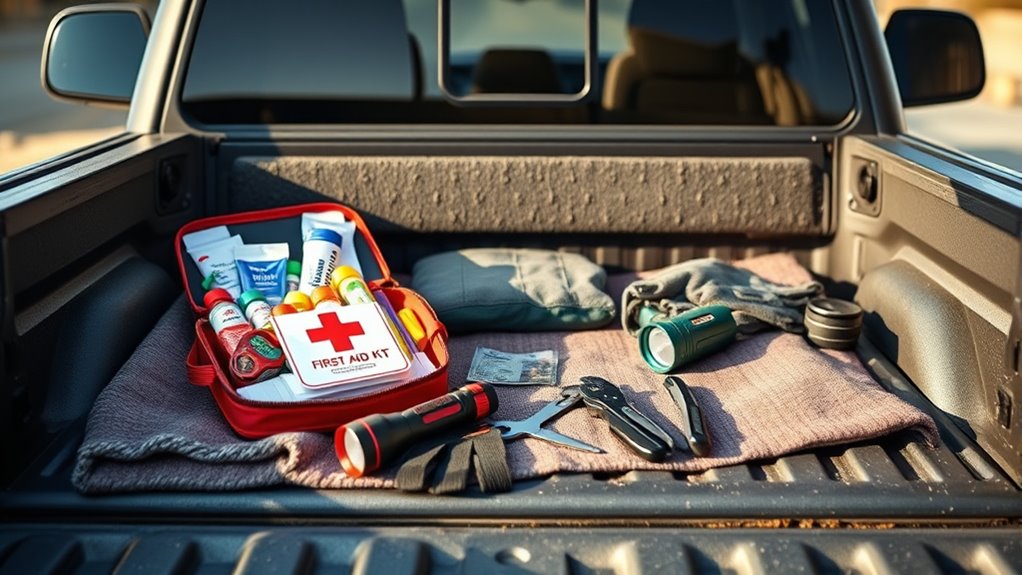

To handle on-the-road emergencies, you need a well-organized truck bed first aid kit with essentials like bandages, antiseptic wipes, pain relievers, and trauma supplies such as tourniquets and chest seals for serious injuries. Include over-the-counter medications and tools like screwdrivers and jumper cables for vehicle issues. Don’t forget climate gear and reflective items to stay safe in bad weather. Preparing carefully guarantees you’re ready for any situation—learn more to stay fully equipped and confident on the road.
Key Takeaways
- Keep a well-organized, comprehensive first aid kit with wound care supplies, medications, and advanced trauma tools accessible in your truck bed.
- Include vehicle safety essentials like jumper cables, fuses, and reflective gear to handle mechanical issues and improve visibility.
- Prepare for environmental conditions with thermal blankets, waterproof clothing, and lighting tools to stay warm, dry, and visible.
- Regularly inspect and restock supplies, verify tool functionality, and practice emergency procedures for quick, confident responses.
- Organize documentation and communication devices, such as medical contacts and portable chargers, to ensure fast coordination during emergencies.

First Aid Only 91248 OSHA-Compliant First Aid Kit, All-Purpose 50-Person Emergency First Aid Kit for Business, Worksite, Home, and Car, 260 Pieces
OSHA-Compliant Emergency Kit: Includes supplies including bandages, gauze, butterfly closures, burn cream packets, antibiotic ointment, BZK antiseptic towelettes,…
As an affiliate, we earn on qualifying purchases.
As an affiliate, we earn on qualifying purchases.
Essential First Aid Kit Components for Truck Bed Safety

Having a well-stocked first aid kit in your truck bed is vital for quick response to injuries on the road or at a work site. You’ll want basic supplies like Band-Aids to cover minor cuts and gauze pads for larger wounds or bleeding control. Hand sanitizer and antibacterial wipes help prevent infection after cleaning wounds. Keep pain relievers such as aspirin, acetaminophen, and ibuprofen, along with Benadryl, for allergic reactions. Tweezers, trauma shears, and cotton balls are indispensable for wound care, splinter removal, and dressing. These components guarantee you can handle minor injuries promptly and effectively, reducing the risk of complications. Having these essentials on hand keeps you prepared for common incidents and supports quick, confident action until further help arrives or the situation escalates. Proper first aid knowledge is also essential for effective response and treatment.
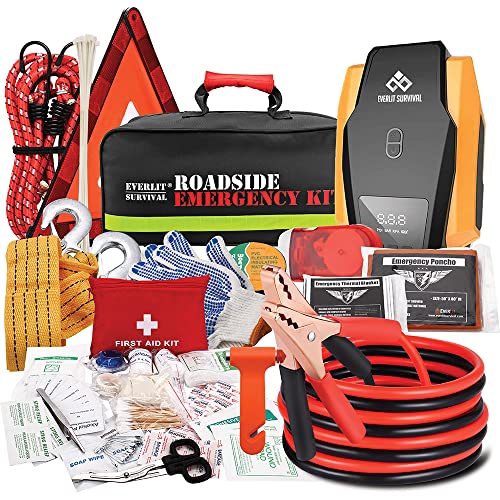
Everlit Survival Car Emergency Kit, Roadside Safety Tool Kit with Gloves,Digital Auto Air Compressor Tire Inflator, First Aid Kit, 12 Feet Jumper Cable, Tow Strap, Flashlight for Women, Men, Teenagers
The Road Guardian- The portable roadside assistance kit is designed and hand picked by a group of experienced…
As an affiliate, we earn on qualifying purchases.
As an affiliate, we earn on qualifying purchases.
Advanced Trauma Supplies for Serious Incidents

When a serious injury occurs on the road or at a work site, basic first aid supplies might not be enough to stabilize the victim. You need advanced trauma gear to handle severe bleeding, airway issues, or penetrating wounds. Essential items include a CAT Gen 7 Tourniquet, trauma dressings, and a chest seal. These tools help control life-threatening bleeding and prevent shock. A nasopharyngeal airway and burn dressings are also crucial for airway management and burn injuries. Keep these supplies organized and easily accessible. Here’s a quick overview: Free Floating

Safety and Trauma Supplies DOT OSHA Compliant Kit with 2lb 5BC Fire Extinguisher
*Bag Color May Vary
As an affiliate, we earn on qualifying purchases.
As an affiliate, we earn on qualifying purchases.
Over-the-Counter Medications and Wipes for Quick Relief

Having the right OTC medications and wipes in your truck bed can help you manage common injuries quickly. Pain relievers and fever reducers provide fast relief, while insect bite treatment keeps discomfort at bay. Wound cleaning essentials guarantee you can properly care for cuts and scrapes before seeking further help. Incorporating wound care products like antiseptic wipes and ointments can further prevent infection and promote healing.
Pain and Fever Relief
Are you prepared to quickly manage pain and reduce fever during an emergency? Having OTC medications like acetaminophen, ibuprofen, and aspirin in your truck bed can make a big difference. These meds help relieve minor aches, pains, and fevers, providing quick relief when you can’t access a pharmacy. Keep them in a sturdy, clearly labeled container for easy access. Benadryl can also help if allergic reactions cause discomfort. Wipes designed for pain relief or cooling, like burn gel wipes, are useful for soothing minor burns or skin irritations. Always follow dosing instructions carefully, and check expiration dates regularly. Proper color accuracy in your supplies can ensure you correctly identify medications and their effects. With these medications and wipes on hand, you can effectively manage discomfort until further help arrives or you reach professional medical care.
Insect Bite Treatment
Insect bites can cause immediate discomfort and potential allergic reactions, but quick relief is possible with the right over-the-counter medications and wipes. You should carry sting relief wipes, which soothe itching and reduce swelling quickly. These wipes often contain ingredients like lidocaine or hydrocortisone. For more persistent symptoms, antihistamines like Benadryl can help control allergic reactions. Always read instructions before use. Here’s a quick reference:
| Medication/Wipe | Purpose | Key Ingredient |
|---|---|---|
| Sting relief wipe | Relieves itching | Lidocaine, hydrocortisone |
| Antihistamine | Reduces allergic response | Diphenhydramine |
| Topical cream | Calms inflammation | Hydrocortisone |
| Oral medication | Controls severe reactions | Diphenhydramine, loratadine |
Having these on hand guarantees you can manage insect bites swiftly and comfortably. Understanding plant ecosystems can help in avoiding areas with higher insect activity.
Wound Cleaning Essentials
When dealing with a wound, quick and effective cleaning is essential to prevent infection and promote healing. Keep antiseptic wipes, iodine, or alcohol pads on hand to thoroughly disinfect the area. These wipes help eliminate bacteria and dirt that can cause complications later. If available, triple antibiotic ointment can be applied after cleaning to reduce infection risk. For minor cuts and scrapes, over-the-counter antiseptic wipes are convenient and easy to use. Sting relief wipes are helpful for insect bites nearby. Always dry the wound gently before applying dressings or ointments. Using the right cleaning essentials guarantees the wound stays clean and reduces the chance of complications. Proper wound care is crucial for infection prevention and faster healing. Remember, clean wounds heal faster and with fewer issues, so prioritize proper cleaning whenever possible.

Mini First Aid Kit – 150 Piece Small Waterproof Hard Shell Medical Kit for Home, Car, Travel, Camping, Truck, Hiking, Sports, Office, Vehicle & Outdoor Emergencies- Small First Aid Medical Kit (Red)
ESSENTIALS FOR EMERGENCY: Everything you need is in this first aid kit! Our kit includes over 150 professional-grade…
As an affiliate, we earn on qualifying purchases.
As an affiliate, we earn on qualifying purchases.
Basic Tools and Accessories for Vehicle-Related Emergencies

Having the right basic tools and accessories on hand is essential for handling vehicle-related emergencies effectively. Pliers, screwdrivers, and wrenches let you perform quick repairs or loosen parts if needed. A box knife helps cut materials or zip ties, while duct tape offers temporary fixes for leaks or securing loose items. Spare bulbs and fuses ensure your vehicle’s lights stay operational, especially at night. Jumper cables are crucial for battery issues, and tow straps assist with recovery if you’re stuck. Flat-fold duct tape and an emergency blanket have multiple uses, from patching holes to staying warm. Additionally, understanding how to use vehicle safety devices correctly can prevent accidents and injuries. These tools empower you to address minor mechanical problems, prevent further damage, and stay safe until professional help arrives. Always check your tools regularly to ensure they’re in good condition.
Climate and Visibility Gear to Handle Weather Challenges

Weather conditions can change suddenly on the road, making it essential to carry climate and visibility gear that keeps you safe and comfortable. Cold temperatures, rain, snow, or fog can impair your driving and your safety. To stay prepared, pack items like thermal blankets and sub-zero sleeping bags to retain heat during emergencies. Wear warm clothing, waterproof gloves, a winter hat, and extra socks to protect against the elements. Use an emergency blanket for heat retention or signaling if needed. For visibility, carry flashlights, strobe lights, and reflective items to alert others of your presence in low-light or foggy conditions. These items ensure you stay warm, dry, and visible, reducing risks during sudden weather changes. Understanding the science behind LED masks, radio-frequency wands, microcurrent devices can help you choose the right gadgets to support your skincare routine even when on the road.
Documentation and Preparedness Items for Seamless Response

Keeping your documentation and preparedness items organized guarantees you can respond quickly and effectively in emergencies. You should keep medical emergency contact forms updated and easily accessible, so help can be summoned without delay. Carry a supply of prescription medications for long trips, guaranteeing you’re covered if refills aren’t immediately available. A comprehensive first aid manual serves as a quick reference for unfamiliar situations, reducing confusion. Additionally, pack spare prescription glasses or contact lenses to maintain clear vision if your primary pair gets damaged or lost. Don’t forget a portable cell phone charger to keep communication lines open and navigation tools functioning. Organizing these items in a dedicated, easily reachable area ensures you won’t waste time searching when every second counts. Proper documentation and preparedness streamline your response and enhance safety on the road. Lesser-known camping spots can also serve as reliable emergency shelters in unforeseen situations, providing additional safety options.
Organizing Your Truck Bed First Aid Station

Organizing your truck bed first aid station guarantees you can access essential supplies quickly during emergencies. Proper setup ensures you’re ready when seconds count. Start by designating a specific container or bin for your first aid gear, keeping it clean and dry. Arrange supplies by category—wounds, medications, tools—so you can find what you need instantly. Use clear labels or color-coded tags for quick identification. Keep frequently used items, like bandages and antiseptics, at the top. Store less urgent supplies at the bottom or in separate compartments. Regularly check expiration dates and restock as needed. Maintain a list of contents nearby so you can quickly verify your kit’s completeness. This organized approach saves vital time and keeps your gear in top shape. Incorporating simple, effective systems can make your setup even more efficient and easier to maintain over time.
Tips for Using First Aid Supplies Effectively on the Road

To use first aid supplies effectively on the road, you need to act quickly and confidently. First, familiarize yourself with each item in your kit before an emergency occurs. Know how to use gauze pads for bleeding control or apply burn gel for burns. Keep your supplies organized so you can access them swiftly. Always clean wounds with antiseptic wipes before dressing them to prevent infection. Use the tourniquet only for severe bleeding when direct pressure isn’t enough. Follow proper procedures from your first aid manual, and don’t hesitate to call for help if needed. Remember, your calm and clear actions can make a significant difference in an emergency. Practice using your supplies regularly to ensure you’re prepared for real situations.
Preventative Measures and Safety Tips for Truck Drivers

Being prepared on the road starts with taking proactive steps to prevent injuries and accidents before they happen. You can do this by staying alert, following safe driving practices, and planning ahead. Regularly inspecting your vehicle helps catch issues early, reducing the risk of breakdowns or accidents. Keep your load secured properly to avoid shifting cargo that could cause loss of control. Additionally, stay well-rested and avoid driving when tired or distracted, especially in bad weather or high-traffic areas.
Proactively stay alert, maintain your vehicle, and drive cautiously to prevent accidents before they happen.
- Maintain a safe following distance to give yourself time to react
- Use proper signaling and lane changes to communicate intentions
- Check weather conditions and adjust your driving accordingly
- Keep your vehicle well-maintained with regular inspections
Maintenance and Regular Checks of Your Emergency Gear

You need to regularly inspect your emergency gear to guarantee it’s ready when you need it. Schedule routine checks to identify any worn or missing items and restock supplies immediately. Always verify that all equipment functions properly so you’re prepared for any situation on the road.
Schedule Routine Inspections
Regularly inspecting your emergency gear guarantees that all supplies are ready and functional when needed. You should set a schedule to check your kit at least once a month. Look for expired items, damaged packaging, or missing supplies. Confirm that flashlights have fresh batteries, and test any electronics to ensure they work. Check your first aid supplies for wear and tear, and restock any used or expired items promptly. Verify that tools like jumper cables and duct tape are intact and in good condition. Keep documentation updated and accessible, such as emergency contacts and manuals. Staying consistent with inspections minimizes surprises during emergencies, so make it a routine part of your vehicle maintenance.
- Examine batteries and electronics for proper function
- Restock expired or used supplies immediately
- Ensure tools and equipment are in good condition
- Update important documents and contact info
Restock Supplies Promptly
Promptly restocking your emergency supplies guarantees your kit remains effective when every second counts. Regularly check expiration dates on medications, antiseptics, and dressings, replacing expired items immediately. Make sure your bandages, gauze, and trauma supplies are available and undamaged. Keep your OTC medications, like pain relievers and allergy tablets, stocked in sufficient quantities. Don’t forget to refill wipes, antiseptics, and burn gels to maintain their effectiveness. Confirm that tools such as scissors, pliers, and flashlights are in working order and easily accessible. Store supplies in a dedicated, organized container for quick access. Making these quick checks and restocks keeps your kit ready for emergencies, preventing shortages or unusable items when you need them most. Stay proactive to ensure your safety on the road.
Verify Equipment Functionality
Maintaining your emergency gear involves more than just stocking supplies; it requires consistent checks to guarantee everything works properly when you need it most. Regularly test your equipment to ensure functionality and reliability. This includes inspecting medical supplies for expiration dates and replacing outdated items, checking that flashlights and batteries are working, and verifying that tools like pliers and screwdrivers are in good condition. You should also test any electronic devices, such as chargers and warning lights, to confirm they operate correctly. Keeping a checklist helps you stay organized and ensures nothing gets overlooked.
- Test flashlights and replace dead batteries
- Check first aid supplies for expiration dates
- Inspect tools for rust or damage
- Verify electronic devices are functional
Frequently Asked Questions
How Often Should I Restock My Truck Bed First Aid Supplies?
You should restock your truck bed first aid supplies at least every six months, or sooner if you use any items. Check expiration dates regularly, especially for medications and ointments, and replace used or expired items immediately. After long trips or rough conditions, review your kit and restock any supplies that are low. Keeping your kit up-to-date guarantees you’re prepared for emergencies on the road.
Can I Customize My First Aid Kit for Specific Vehicle Types?
You can absolutely customize your first aid kit for specific vehicle types, and it’s wise to do so. Think of your vehicle’s unique needs like a tailored suit—adding gear for off-road adventures, winter driving, or long hauls. Include items like extra warm clothing for winter or specialized tools for off-road repairs. Tailoring your kit guarantees you’re prepared for whatever comes your way, no matter the terrain or weather.
What Training Is Recommended for Effectively Using Trauma Supplies?
You should take a certified first aid and CPR course, which covers essential skills for trauma care. Look for programs like OSHA or American Red Cross courses that teach wound management, bleeding control, airway assistance, and proper use of trauma supplies. Hands-on training builds confidence, guarantees correct techniques, and helps you respond effectively during emergencies, potentially saving lives until professional help arrives.
How Do I Prevent Contamination of My Emergency Gear?
You prevent contamination of your emergency gear by regularly cleaning and disinfecting all supplies with antiseptic wipes or alcohol. Keep everything in sealed, waterproof containers to avoid dirt and moisture. Store the kit in a cool, dry place, and check it periodically for expired items or damage. Always wash your hands before handling supplies, and replace any used or compromised items promptly to guarantee safety and effectiveness.
Are There Legal Regulations for Carrying First Aid Kits in Trucks?
Imagine your truck’s bed as a mobile safety station. Legally, you’re generally required to carry a basic first aid kit, especially if you’re transporting hazardous materials or commercial goods. Regulations vary by state and industry, so check local laws. Keep your kit accessible, well-organized, and up-to-date. Doing so guarantees you’re prepared and compliant, ready to respond swiftly to emergencies on the road.
Conclusion
Think of your truck bed first aid kit as your trusty co-pilot—ready to steer you through emergencies. Just like a well-maintained vehicle keeps you moving smoothly, a prepared kit guarantees you’re ready for unexpected bumps in the road. Regular checks and organization turn chaos into control, giving you confidence. Remember, being prepared isn’t just smart—it’s your safety net, turning roadside surprises into manageable moments so you can keep going no matter what.