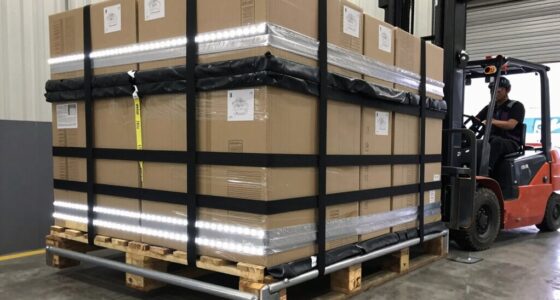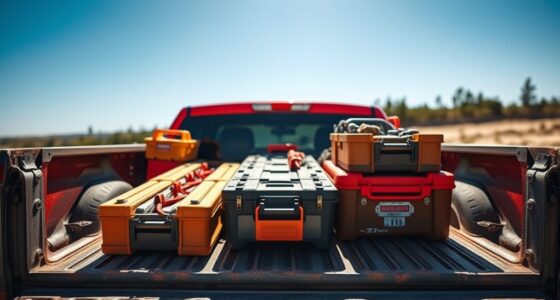
On the jobsite, it’s important to remember unspoken truck bed etiquette, like always securing loads properly with straps or chains and covering loose materials. Don’t ride in the truck bed—use safe alternatives—and make sure you’re wearing PPE. Stay aware of your surroundings, communicate clearly with spotters, and follow designated routes and signage. If you want to know more about these safety norms and how to keep yourself and others safe, keep going.
Key Takeaways
- Never ride in the truck bed; always use proper restraints or designated safety equipment.
- Secure loads thoroughly with straps, chains, or tarps to prevent shifting or falling during transport.
- Communicate clearly with spotters and colleagues using deliberate signals to avoid accidents.
- Ensure the truck is on level ground, brakes engaged, and equipment is in good condition before loading or unloading.
- Follow site signage, traffic controls, and safety protocols to maintain a safe and efficient work environment.

Rhino USA Integrated Cargo Magic Bed-Mounted Retractable Ratchet Straps for Ford Trucks (2015+ F-150 & 2017+ F-250) – BoxLink Compatible, Removable, 360° Swivel, Heavy-Duty Tie Downs
FORD BOXLINK COMPATIBLE (2015+ TRUCKS) Designed specifically for 2015+ Ford F-150 and 2017+ F-250 pickup trucks, this system…
As an affiliate, we earn on qualifying purchases.
As an affiliate, we earn on qualifying purchases.
Understanding OSHA Regulations and Site Safety Expectations
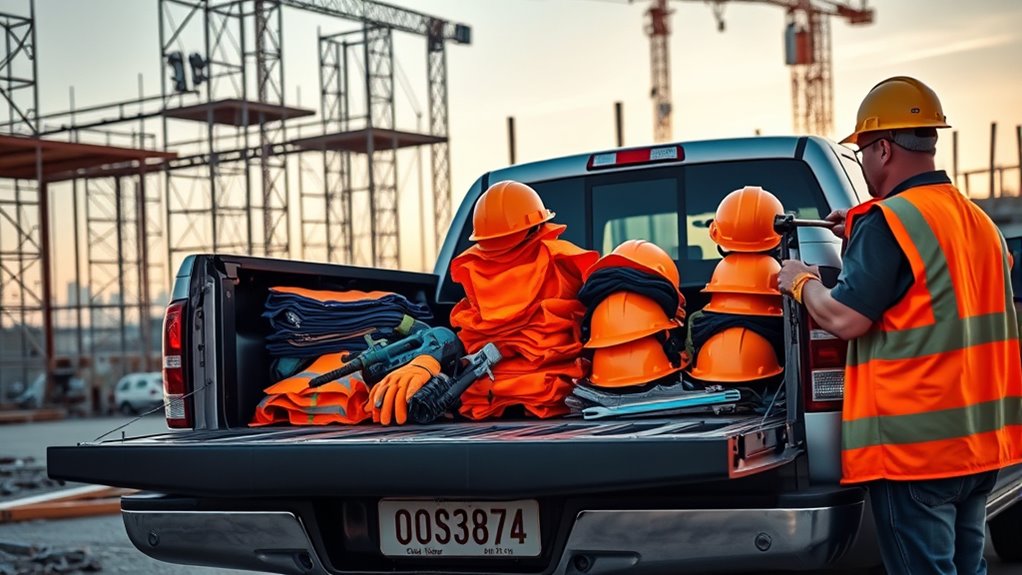
Understanding OSHA regulations and site safety expectations is essential for maintaining a safe work environment when operating or working near truck beds on jobsites. You must wear high-visibility clothing, hard hats, and steel-toed boots to stay protected and compliant. Employers are responsible for following standards like 29 CFR 1926 Subpart O, which mandates vehicle inspections, operator training, and safe loading and unloading procedures. Securing loads properly with straps, chains, or tarps prevents shifting and falling materials. Using spotters and clear signage helps prevent collisions and protects pedestrians. OSHA also requires reporting all truck-related accidents to improve safety protocols. Staying informed about these regulations guarantees you minimize risks, avoid citations, and contribute to a safer, more organized worksite. Understanding load calculations and proper securing techniques is crucial to prevent accidents and ensure compliance.

JKSafety 9 Pockets Class 2 High Visibility Zipper Front Safety Vest With Reflective Strips,Meets ANSI/ISEA Standard (Large, 150-Yellow)
MATERIALS: 100% Polyester H-Vis Reflective Material, Durable, Breathable, Lightweight and Machine Washable. Customers who prefer a Loose Fit…
As an affiliate, we earn on qualifying purchases.
As an affiliate, we earn on qualifying purchases.
The Risks of Riding in Pickup Truck Beds and Alternatives
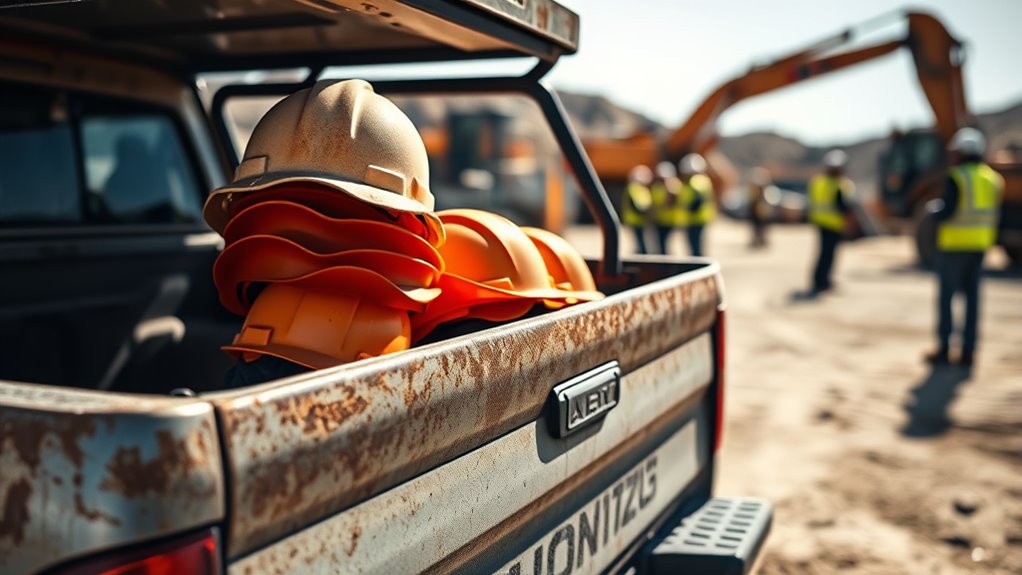
Riding in pickup truck beds might seem like a quick solution to transport workers or equipment, but it poses serious safety risks that can lead to severe injuries or fatalities. Without proper restraints, you’re vulnerable to falls, especially when hitting bumps or making sharp turns. Additionally, in the event of a crash, cargo areas offer no crash protection, increasing injury risk. Studies show that safety standards in vehicle design emphasize the importance of enclosed cabins to protect occupants.
Riding in truck beds risks falls and severe injuries without proper safety measures.
Consider these safer alternatives:
- Use specialized fall protection baskets or work platforms designed for elevated work.
- Always ride inside the cab with seat belts securely fastened.
- Employ auxiliary equipment, like trailers with built-in safety features, for transporting personnel or tools safely.
Choosing these options helps prevent accidents and complies with OSHA safety standards.

Timberland PRO Men's Pit Boss 6 Inch Steel Safety Toe Industrial Work Boot, Brown-2024 New, 10.5
Timberland PRO 24/7 Comfort System: A unique comfort system that meets the most rigorous worksite demands- 24 hours…
As an affiliate, we earn on qualifying purchases.
As an affiliate, we earn on qualifying purchases.
Proper Use of Personal Protective Equipment Around Trucks
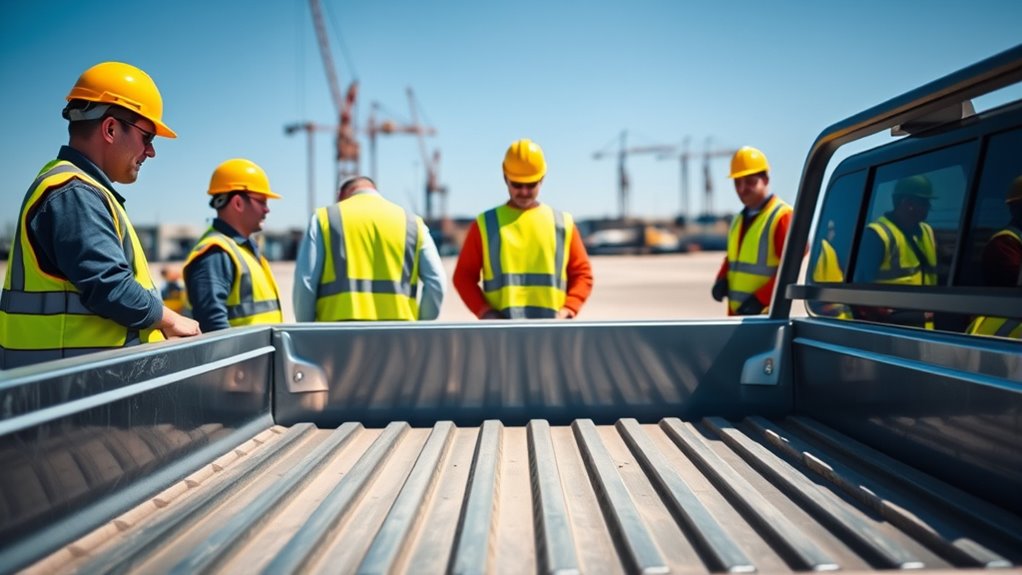
Are you aware of the essential personal protective equipment (PPE) you need when working around trucks? PPE protects you from impact, debris, and chemicals. Always wear a hard hat to shield your head from falling objects, high-visibility clothing to stay seen, and steel-toed boots for foot protection. Gloves and eye protection are vital when handling materials or working near moving parts. Proper PPE use reduces injury risks and guarantees compliance with safety standards. Additionally, understanding safety checklists can help ensure all necessary gear and precautions are in place before starting work.

MOSTPLUS 5.5FT Roll-Up Soft Vinyl Truck Bed Tonneau Cover Compatible for 2009-2025 2026 Ford F150 F-150 Short Bed On Top (67Inch)
Truck bed Compatible for 2009 2010 2011 2012 2013 2014 2015 2016 2017 2018 2019 2020 2021 2022…
As an affiliate, we earn on qualifying purchases.
As an affiliate, we earn on qualifying purchases.
Maintaining Situational Awareness to Prevent Accidents

Maintaining situational awareness is essential to preventing accidents when working around trucks on jobsites. You need to stay alert to your surroundings and anticipate hazards. Focus on these key areas:
- Regularly check mirrors and blind spots to identify nearby workers, equipment, or obstacles.
- Observe posted speed limits and control your vehicle’s movements carefully, especially in tight spaces.
- Stay attentive to site signage, signals, and communication from spotters or colleagues.
- Be aware of free floating hazards that may not be immediately visible but can still impact safety.
Secure Loading and Unloading Procedures for Safety

Secure loading and unloading procedures are essential to keeping worksites safe and preventing accidents during material transfer. Before loading, double-check that the truck is on level ground and the brakes are engaged. Use the appropriate equipment, like forklifts or cranes, to handle heavy or bulky items safely. Always secure loads with straps, chains, or tarps to prevent shifting or falling during transport. Cover loose materials to avoid debris on the road or jobsite. When unloading, ensure the area is clear of personnel and obstacles. Communicate clearly with spotters and other workers to coordinate movements. Never overreach or rush during loading or unloading—stay alert and follow established procedures. Proper securing and careful handling keep everyone safe and prevent costly accidents. Additionally, understanding navigation and mapping techniques helps in planning efficient routes and avoiding hazards during material transfer.
Safe Practices When Approaching and Maneuvering at Loading Docks
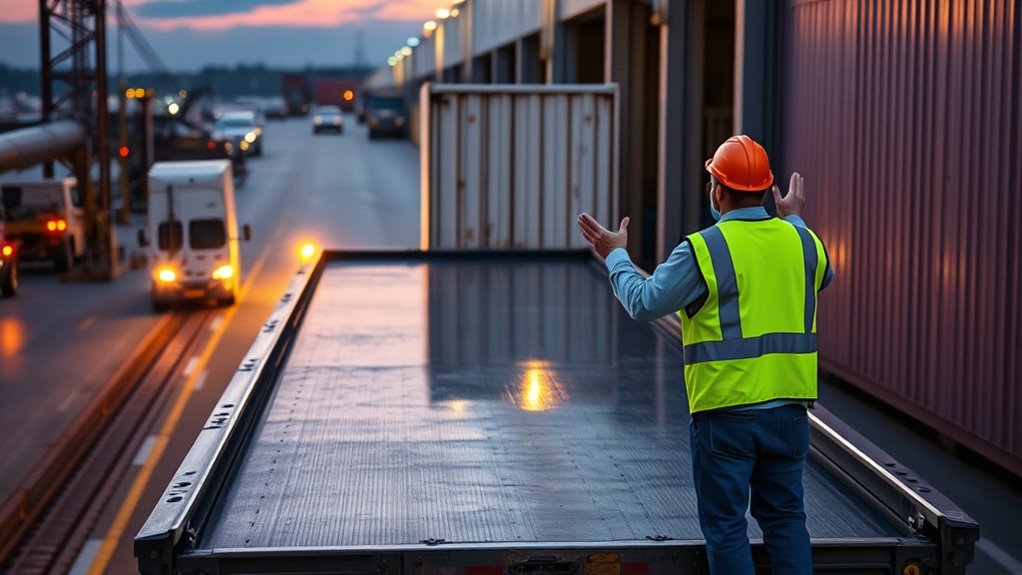
Before approaching the loading dock, you should perform thorough safety checks of your surroundings to identify any hazards or obstacles. As you maneuver, use clear signals and maintain eye contact with spotters or workers to make certain everyone stays informed. Effective communication and careful checks help prevent accidents and keep everyone safe during loading and unloading. Additionally, understanding Gold IRA Markets can be beneficial for future financial planning related to your investments.
Pre-Maneuver Safety Checks
Approaching a loading dock requires careful pre-maneuver safety checks to prevent accidents and damage. Before moving, verify the area is clear of workers, equipment, and obstacles. Conduct a quick visual scan of your surroundings and check for potential hazards. Then, follow these steps:
- Inspect your truck’s mirrors and windows, ensuring visibility is unobstructed.
- Confirm that brakes are engaged and the parking brake is set on level ground.
- Communicate with spotters or dock personnel using clear signals or radios to coordinate your approach.
- Be aware of European cloud solutions and how they can enhance safety and operational efficiency in modern logistics environments.
These checks help you identify blind spots, secure your vehicle, and establish effective communication, reducing the risk of collisions or injuries. Always prioritize safety, even during quick maneuvers.
Effective Communication Signals
Effective communication is essential when maneuvering trucks at loading docks to guarantee everyone’s safety. Always use clear signals with hand gestures, such as waving or pointing, to indicate when you’re ready to move, stop, or turn. Make eye contact with spotters and workers to confirm intentions before proceeding. Use standardized signals, like a raised hand for stopping or a thumbs-up to confirm readiness, to avoid confusion. Keep a radio or other communication device handy for real-time updates, especially in noisy environments. Maintain a steady voice and visible signals to prevent misunderstandings during complex maneuvers. Check mirrors frequently and alert others if your movement may affect their safety. Consistent, unambiguous signals ensure smooth coordination and reduce the risk of accidents. Utilizing airless paint sprayers appropriately can also minimize delays and miscommunications during prep work or surface treatments.
Communicating Effectively With Spotters and Other Workers

Clear communication with spotters and other workers is essential for maintaining safety and efficiency on the jobsite. To do this effectively, you should:
- Use clear, standardized hand signals or radio communication to convey your intentions.
- Confirm understanding with spotters before moving or lifting loads to avoid misinterpretation.
- Maintain eye contact and ensure your signals are visible, especially in noisy environments.
- Be familiar with networking hardware and infrastructure to better understand the importance of clear communication signals in complex environments.
Always be aware of your surroundings and listen actively to instructions. Keep your signals concise and deliberate, avoiding ambiguous gestures. Regularly check in with spotters, especially when approaching blind spots or tight spaces. By following these practices, you reduce risks, improve coordination, and foster a safer, more productive work environment.
Respecting Traffic Control Measures and Site Signage

Respecting traffic control measures and site signage is vital for maintaining safety and smooth operations on the jobsite. You must always follow posted signs, barricades, and designated routes to prevent accidents and confusion. Slow down in areas marked for caution, and yield to pedestrians and other vehicles as indicated. Using signals and communicating clearly with spotters helps coordinate movements and avoid collisions. Never ignore or bypass signage, even when in a hurry—disregarding these instructions can lead to injuries or OSHA violations. Stay attentive to temporary signs and changeable conditions, adjusting your speed and route accordingly. Recognizing the importance of proper equipment maintenance and understanding its role in preventing mechanical failures can help ensure your vehicle operates safely and efficiently. By respecting traffic control measures and site signage, you contribute to a safer environment for everyone and ensure efficient workflow on the jobsite.
Ensuring Your Vehicle and Gear Are in Proper Working Condition
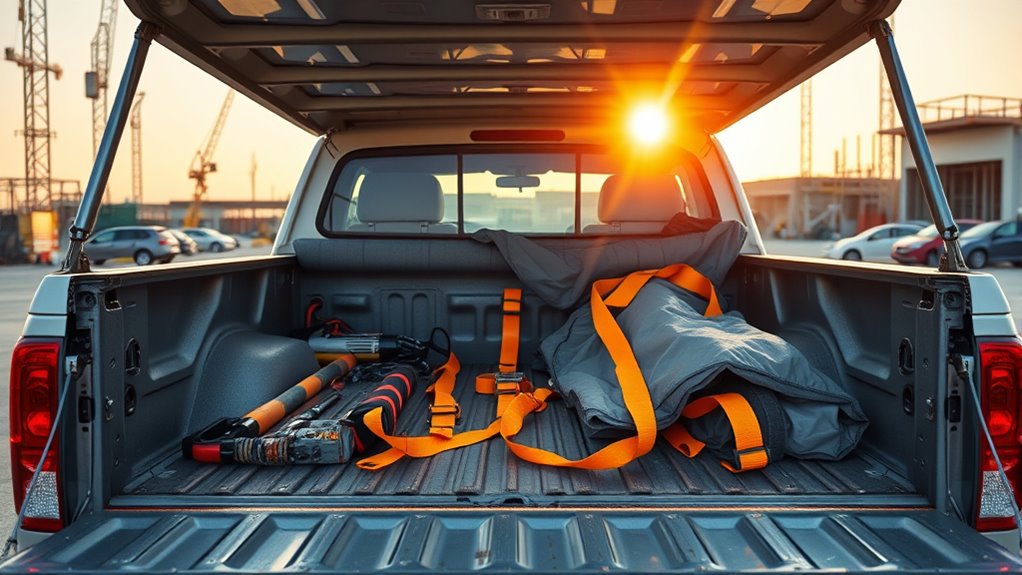
To guarantee safety and efficiency on the jobsite, you need to regularly check that your vehicle and gear are in proper working condition. A well-maintained truck prevents breakdowns and accidents.
Regular vehicle and gear checks ensure safety, prevent breakdowns, and promote efficient jobsite operations.
Here’s what to focus on:
- Inspect tires for proper inflation, tread wear, and damage before each shift.
- Verify fluid levels—oil, coolant, brake fluid—and top off as needed.
- Test brakes, lights, and signals to ensure everything functions correctly.
- Regularly review vehicle maintenance schedules to stay ahead of potential issues and extend your vehicle’s lifespan.
Additionally, examine your load securement equipment, like straps and chains, for wear or damage. Keep safety gear like helmets, gloves, and reflective vests in good condition. Regular checks help avoid costly delays and keep everyone safe on the jobsite.
Frequently Asked Questions
Are There Legal Penalties for Riding in Truck Beds on Construction Sites?
Yes, there are legal penalties for riding in truck beds on construction sites. OSHA can issue citations and fines to employers who allow or require workers to ride in cargo areas without proper protection. You might also face safety violations that could lead to increased liability or job site shutdowns. To avoid penalties, always follow safety regulations, use proper seating, and wear the required PPE.
What Are the Best Alternative Methods for Workers to Perform Tasks at Height?
You should use proper fall protection systems like scaffolding, lifts, or safety baskets instead of riding in truck beds. Many think riding is quick and easy, but it’s unsafe and against OSHA rules. These alternatives provide stability, guardrails, and proper harnessing, keeping you protected at height. Employing approved equipment diminishes fall risks, ensures compliance, and keeps everyone safe while completing tasks efficiently.
How Often Should Vehicle Safety Inspections Be Conducted to Remain Compliant?
You should conduct vehicle safety inspections daily before starting work, especially for trucks involved in loading, hauling, or transporting workers. Regular checks help identify issues like tire wear, brake function, and load securement, ensuring compliance with OSHA regulations. Also, perform detailed inspections after any incident or rough usage. Staying proactive with daily inspections minimizes risks, prevents accidents, and keeps your jobsite compliant with safety standards.
What Specific PPE Is Mandatory When Working Near Moving Trucks?
You must wear hard hats, high-visibility reflective clothing, safety boots, gloves, and eye protection when working near moving trucks. These PPE items safeguard you from impact, debris, and other hazards on the jobsite. Always verify your PPE fits properly and is in good condition. Stay alert to your surroundings, communicate clearly with truck operators and coworkers, and avoid distractions like headphones to maintain safety in active work zones.
How Can Workers Improve Communication With Spotters During Complex Maneuvers?
You can improve communication with spotters by establishing clear hand signals and verbal cues before starting complex maneuvers. Make sure both of you agree on standard signals and keep eye contact whenever possible. Use radios or whistles for added clarity in noisy environments. Stay attentive and responsive to each other’s cues, ensuring your movements are predictable. This synchronized effort creates a safer, more efficient workspace where everyone feels confident and protected.
Conclusion
Think of your jobsite as a well-oiled machine—every part needs to work in harmony. Following truck bed etiquette keeps the gears turning smoothly, preventing accidents and keeping everyone safe. When you respect safety rules, communicate clearly, and stay aware, you’re the oil that keeps the operation running seamlessly. Remember, safety isn’t just a rule; it’s the lubricant that guarantees everyone goes home safely at the end of the day.