To transport appliances without damage, start by packing them carefully using sturdy boxes, bubble wrap, and foam padding, especially around corners and protruding parts. Lift appliances properly and get help for heavy items, securing them on dollies with straps. In the vehicle, guarantee enough space and use straps to prevent shifting. Keep appliances upright and avoid stacking fragile items. For more detailed tips, you’ll find helpful strategies that make your move safer and simpler.
Key Takeaways
- Use sturdy, appropriately sized boxes and wrap appliances thoroughly with bubble wrap or foam padding.
- Lift appliances properly with assistance, using dollies or hand trucks to prevent dropping or shifting.
- Secure appliances with straps or ropes in the vehicle to prevent movement during transit.
- Keep appliances upright and avoid stacking fragile items to prevent internal and external damage.
- Double-check all packing and securing steps before loading to ensure safe transport.
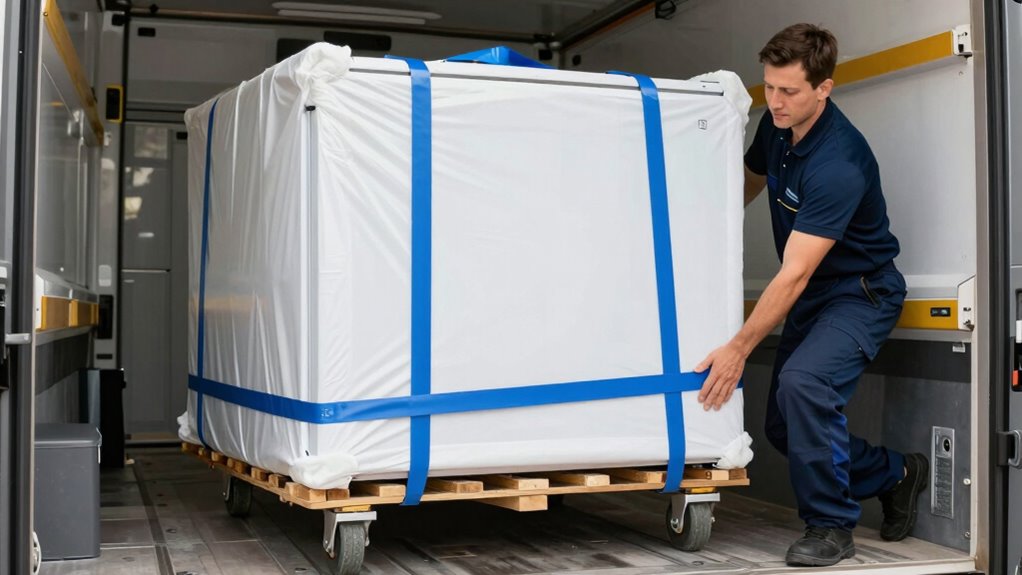
Ever wondered how to move your appliances without causing damage? The key lies in proper preparation, especially when it comes to packing materials and handling techniques. First, you need to gather the right packing materials. Use sturdy boxes, bubble wrap, packing paper, foam padding, and packing tape. These items protect your appliances from bumps and scratches during transit. Wrap appliances thoroughly in bubble wrap or foam padding, focusing on corners and protruding parts that are most vulnerable. Secure the wrapping with packing tape to keep everything in place. For larger appliances like refrigerators or washing machines, consider using specialized moving blankets or furniture pads that provide extra cushioning.
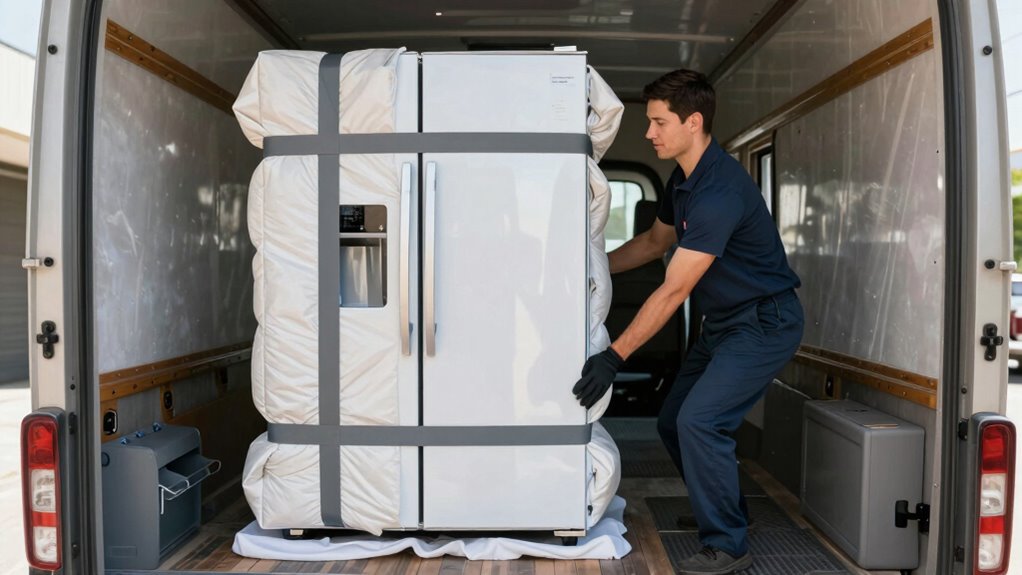
Handling techniques are equally essential. Always lift appliances properly to avoid injury or damage. Bend at your knees, keep your back straight, and lift with your legs, not your back. When moving heavy appliances, get help from others—never try to do it alone. Use dollies or hand trucks designed for moving heavy objects. Secure the appliance to the dolly with straps to prevent shifting during transport. When loading appliances into a vehicle, make sure they are upright whenever possible, as laying certain appliances on their sides can cause internal damage. Use ramps or lift gates to carefully slide appliances into the truck, minimizing shocks and jolts.
Make certain there’s enough space in the moving vehicle to prevent appliances from shifting during transit. Use straps or ropes to secure appliances to the sides of the truck or the floor, so they stay stable and don’t bump into each other. When stacking appliances, place heavier items at the bottom and lighter ones on top. Avoid stacking delicate appliances that might be crushed or damaged. Additionally, understanding the importance of proper appliance handling techniques helps prevent internal damage during transit. Proper packing materials and handling techniques are crucial in ensuring your appliances arrive in perfect condition. It is also beneficial to familiarize yourself with regional packaging preferences or specific handling guidelines for certain types of appliances, especially if you’re moving across regions with different standards. Moreover, being aware of multi-unit setups can help you plan for the safest transport of multiple appliances together.
Throughout the entire process, keep in mind that patience and careful planning make all the difference. Never rush when handling appliances; rushing increases the risk of damage or injury. Double-check that all appliances are properly packed, secured, and supported before moving. Taking the time to do it right will pay off by ensuring your appliances arrive at their destination in perfect condition. Remember, the goal is to protect your appliances from scratches, dents, or internal damage, and that requires attention to detail in packing materials and handling techniques. With the right approach, you can move your appliances safely and efficiently, avoiding unnecessary repairs or replacements down the line.
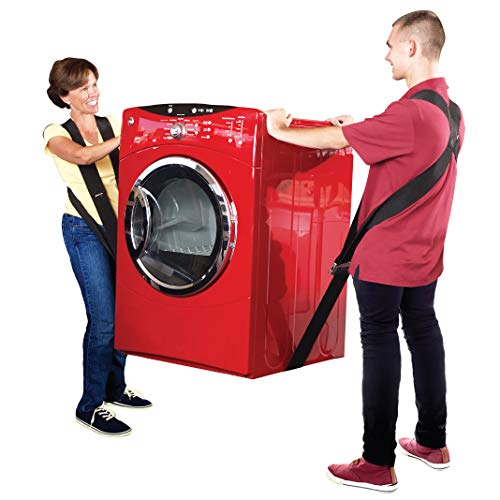
Shoulder Dolly Moving Straps – Lifting Strap for 2 Movers – Move, Lift, Carry, And Secure Furniture, Appliances, Heavy, Bulky Objects Safely, Efficiently, More Easily Like The Pros – LD1000
Keep arms/hands free -The Shoulder Dolly recognized the need for your arms to be unconstrained. The need for…
As an affiliate, we earn on qualifying purchases.
As an affiliate, we earn on qualifying purchases.
Frequently Asked Questions
What Tools Are Essential for Appliance Transportation?
You need packing materials like bubble wrap, blankets, and padding to protect appliances during transport. Moving straps are essential for securing heavy appliances and preventing shifting. Use these tools to stabilize items in the truck, reducing the risk of damage. Carefully wrap and secure your appliances with packing materials, then tighten moving straps to hold everything in place. This guarantees safe, damage-free transportation from start to finish.
How to Handle Fragile Appliance Components During Transit?
To handle fragile appliance components during transit, you should prioritize proper appliance packaging. Use bubble wrap or foam padding around delicate parts, and secure them firmly inside sturdy boxes. Carefully label the packaging as fragile, so handlers know to exercise caution. During loading and unloading, support fragile components with your hands, avoiding sudden movements. This careful fragile component handling minimizes the risk of damage and guarantees your appliance arrives safely.
What Is the Best Way to Secure Appliances in a Moving Truck?
Think of your appliances as delicate treasures; securing them is like wrapping a priceless artifact. Use ample appliance padding to cushion each item, preventing shocks. Then, tighten moving straps around the appliances and the truck’s anchor points, ensuring they stay put. Properly securing appliances in a moving truck minimizes shifting, reduces damage, and makes your move smoother — just like a well-packed treasure chest protects its contents during a voyage.
How to Disconnect Appliances Safely Before Moving?
You should start by unplugging the appliances to guarantee electrical disconnection safely. Next, turn off the water supply if applicable, like for a dishwasher or refrigerator. Use appliance labeling to identify and organize each unit, making reassembly easier. Carefully disconnect hoses and cables, using appropriate tools. Always follow manufacturer instructions for disconnection, and handle delicate parts gently to prevent damage during the move.
Are Special Permits Needed for Transporting Large Appliances?
Permitting permits? Yes, for oversized equipment, you must get special permits. Permitting regulations vary depending on your location and the size of your appliance. You’ll need to check local laws to avoid delays and dangerous detours. Planning and paperwork pave the path for smooth shipping. Secure the correct permits, and your large, bulky appliance moves with minimal mishaps, making your move memorable for all the right reasons.

PONGHEI 2 Moving Blankets 40"x 72" Heavy Duty Packing Blankets for Moving Shipping Thick Furniture Wrapping for Moving Supplies Professional Quilted Shipping Blankets
Professional Moving Blanket — 40" x 72" moving & packing blankets that provide exceptional damage protection from scratches,…
As an affiliate, we earn on qualifying purchases.
As an affiliate, we earn on qualifying purchases.
Conclusion
Think of each appliance as a delicate treasure, and your hands as the steady, caring guardian. With the right precautions, you’re not just moving objects—you’re guiding them safely through a storm, shielding their fragile cores from harm. Visualize your effort as a gentle cradle, holding each piece with respect and caution. When you treat your appliances like precious cargo, you guarantee they arrive intact, ready to serve in your new space, unscathed and full of promise.

Strongway Industrial Hand Truck – 1200 lb Capacity Heavy-Duty Appliance Dolly, Convertible 2/4-Wheel Design, 8" Rubberized Wheels, Auto-Rewind Ratchet Belt & Stair-Climbing Capability
Heavy-Duty 1,200 lb Load Capacity Built to handle your toughest jobs — this industrial appliance hand truck supports…
As an affiliate, we earn on qualifying purchases.
As an affiliate, we earn on qualifying purchases.

Foam Wrap Roll 10 Inch Wide x 50 FT Length Packing Foam Roll for Moving Supplies and Protection for Fragile, Cushioning Foam Packing Sheets for Wrapping Dish Packing Material
PERFECT CHOICE – Come with 1 Roll Dish Cushion Foam Roll. Dimensions: 10 inches width x 590 inches…
As an affiliate, we earn on qualifying purchases.
As an affiliate, we earn on qualifying purchases.