
To prevent load shift during emergency braking, focus on proper cargo stabilization by securely fastening items with tie-downs and distributing weight evenly, especially over axles. Maintain your vehicle regularly to guarantee responsive brakes and proper handling. Practice smooth, controlled braking to minimize sudden shifts, and avoid overloading your vehicle. Keeping these precautions in mind improves stability and safety in urgent stops. For more tips on maintaining balance and safety, keep exploring the essential strategies ahead.

Get business pricing on garage and car supplies
- Business-only prices and quantity discounts
- Tax-exempt purchasing
- Multiple users, one account, clear invoices
Key Takeaways
- Secure cargo tightly with appropriate tie-downs and restraints to prevent shifting during sudden stops.
- Distribute weight evenly across the vehicle, placing heavier items over axles for stability.
- Maintain proper vehicle maintenance, especially braking systems, for predictable and controlled stopping power.
- Practice smooth, gradual braking to reduce sudden load shifts and maintain vehicle balance.
- Use anti-lock braking systems (ABS) and steering control techniques to prevent skidding and rollover during emergencies.

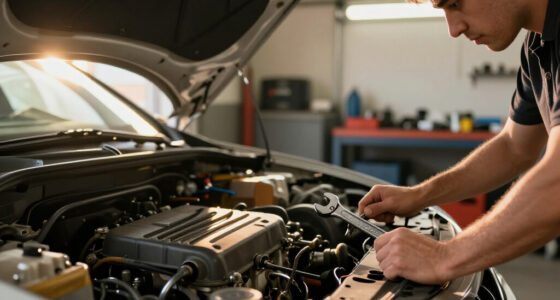
When emergency braking is necessary, your primary goal is to stop safely without causing a load shift that could compromise vehicle stability. To achieve this, you need to understand how your braking system works and how it influences cargo stabilization. A well-maintained braking system ensures that you can apply force evenly and predictably during sudden stops. If your brakes are worn or malfunctioning, they may lock up or apply uneven pressure, increasing the risk of load shifting. Regular inspections and proper maintenance are essential to keep your braking system responsive and reliable, especially when quick reactions are needed. Additionally, understanding the braking system’s mechanics can help you anticipate how your vehicle will respond in emergency situations, further aiding in load management. Knowing how your braking components function can help you identify early signs of wear and prevent potential failures. Incorporating knowledge of vehicle dynamics can also improve your ability to control the vehicle during abrupt stops, further reducing the likelihood of load shifts. Properly adjusting your driving habits based on your vehicle’s load capacity can further enhance safety during emergency braking. Moreover, being aware of load distribution can help you optimize cargo placement to minimize shifting risks. Cargo stabilization plays a critical role in preventing load shifts during emergency braking. Securing your load correctly helps distribute forces evenly across the vehicle, reducing the chance that cargo will shift forward, sideways, or backward. Use appropriate tie-downs, straps, and barriers to lock everything in place. Pay attention to weight distribution; heavier items should be positioned over the axles and secured tightly to prevent movement. When the brakes are applied suddenly, an unstable load can shift abruptly, causing the vehicle to become unbalanced or even rollover. Proper cargo stabilization techniques act as a safeguard, absorbing the forces generated during braking and maintaining overall vehicle stability.
A well-maintained braking system ensures safe, predictable stops and reduces load shifting risks during emergency braking.
Your driving technique also impacts how well you manage emergency stops. When you realize you need to brake hard, apply the brakes gradually instead of slamming them. This controlled approach allows your braking system to work more effectively and reduces the chances of wheel lockup. If your vehicle has anti-lock braking system (ABS), press the brake pedal firmly and hold it; ABS will automatically modulate brake pressure to prevent skidding. This technique helps keep the tires gripping the road, which is essential for maintaining steering control and preventing load shifts caused by sudden, uncontrolled stops. Practicing smooth, controlled braking can significantly improve your safety and vehicle handling during emergencies.
Additionally, always operate your vehicle within its safe limits. Overloading or improper loading increases the risk of load shift during braking. Be mindful of your vehicle’s maximum weight capacity and distribute the cargo evenly to maintain balance. When you combine proper cargo stabilization, a well-maintained braking system, and smooth driving practices, you significantly reduce the chances of load shifts during emergency braking. Staying vigilant and prepared ensures that you can respond swiftly and safely, protecting both your vehicle and its cargo from potential damage or accidents caused by instability.
Products Worth Considering

DEWALT 20V MAX 1/4-Inch Impact Driver Kit with Battery and Charger (DCF787D1)

VIOFO A229 Plus 2K Front and Rear Dash Cam with Dual STARVIS 2 Sensors and HDR

DEWALT 20V MAX XR 1/2-Inch Cordless Impact Wrench Kit (DCF900P1)
As an affiliate, we earn on qualifying purchases.
Frequently Asked Questions
What Are the Signs of Load Shift During Emergency Braking?
You’ll notice load shift signs during emergency braking if the cargo appears unstable or shifts noticeably, causing a change in vehicle handling. Look for uneven weight distribution, which can lead to swaying or pulling, and check if cargo securing is compromised. Such signs indicate that the load isn’t properly balanced or secured, increasing the risk of accidents. Always make certain of proper cargo securing and balanced weight distribution to prevent these issues during sudden stops.
How Does Vehicle Type Affect Load Shift Prevention?
You’re riding a fine line when it comes to preventing load shift during emergency braking, especially because vehicle type markedly influences this. Different vehicle dynamics and weight distribution play vital roles; for example, trucks with higher centers of gravity are more prone to load shift. Knowing your vehicle’s specifics helps you adopt better braking techniques, ensuring stability. Adjust your approach accordingly—what works for a sedan might not suit an SUV or a heavy-duty truck.
Are There Specific Materials That Better Resist Load Shift?
Certain materials excel at resisting load shift during emergency braking due to their durability and load stability. You should opt for high-strength composites, reinforced metals, or dense polymers, as these materials maintain their shape and strength under stress. Using durable materials helps prevent deformation or shifting of cargo, ensuring safety. Prioritizing materials with proven load stability can markedly reduce the risk of load shift during sudden braking scenarios.
Can Load Shift Occur During Non-Emergency Braking?
Absolutely, load shift can happen even during gentle, everyday braking, not just emergency stops. When you brake, cargo stability is compromised, and load redistribution occurs, risking imbalance. You might think only sudden stops cause issues, but steady braking can gradually shift loads, especially if your cargo isn’t secured properly. So yes, load shift isn’t exclusive to emergencies; it quietly sneaks in during routine driving, reminding you to always secure your cargo tightly.
What Training Is Recommended for Drivers on Load Management?
You should undergo training focused on load securing and driver awareness to effectively manage loads. This training teaches you how to properly secure cargo, recognize signs of load shift, and respond promptly. By understanding load management principles, you minimize risks during emergency braking and other driving situations. Regular refreshers keep your skills sharp, ensuring you consistently prioritize load stability and safety, ultimately reducing the chances of load shift incidents.
Conclusion
To keep your load steady during emergency braking is like anchoring a ship amidst stormy seas—you must secure every plank and tighten every rope before the tempest hits. By understanding load distribution and employing proper securing techniques, you’re shielding your cargo from the chaos of sudden stops. Remember, a well-prepared vessel navigates rough waters with grace—your vehicle’s stability depends on foresight and precision. Stay vigilant, and let safety be your steadfast anchor.