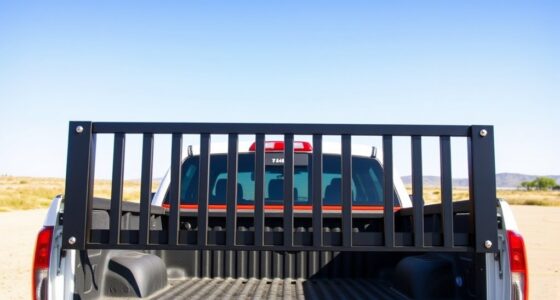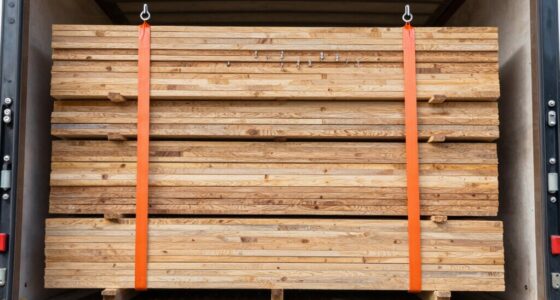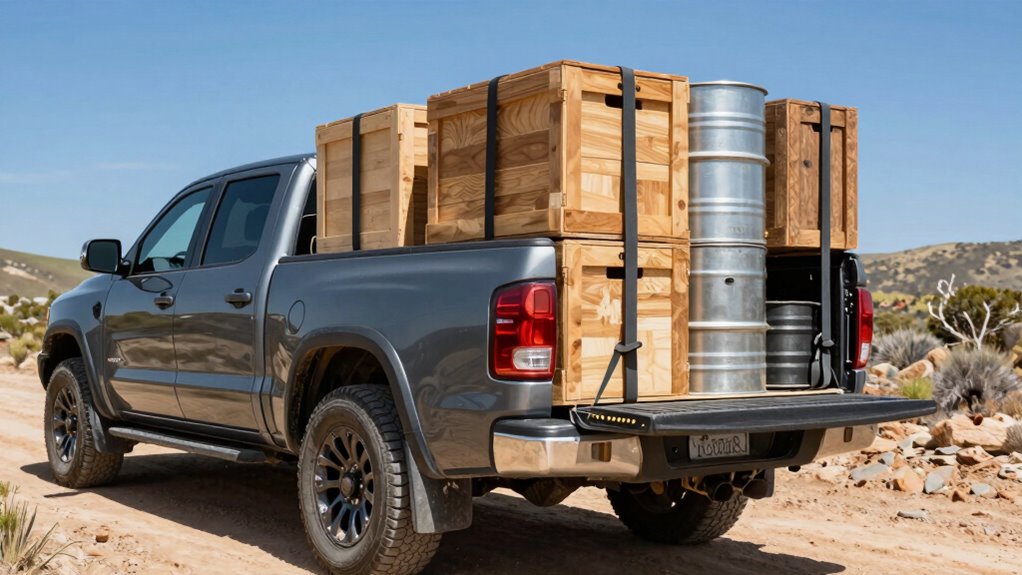

To load heavy items without stressing your truck, start by properly distributing the weight, placing the heaviest items over the axles and keeping everything balanced side to side. Secure the cargo tightly using straps or tie-downs anchored to strong points on the truck, and check them regularly during transit. Use padding to protect both the cargo and your truck, and never overload beyond the vehicle’s capacity. For more tips on safe loading, keep exploring the details below.

Get business pricing on garage and car supplies
- Business-only prices and quantity discounts
- Tax-exempt purchasing
- Multiple users, one account, clear invoices
Key Takeaways
- Distribute weight evenly, placing heavy items over axles and near the center of gravity.
- Use proper securing techniques with straps and anchor points to prevent shifting during transit.
- Avoid stacking heavy objects too high to maintain stability and low center of gravity.
- Regularly check and tighten restraints to prevent cargo movement and stress on the truck.
- Know your vehicle’s weight limits and do not exceed recommended load capacities.

Loading heavy items can be challenging, but with the right techniques, you can do it without putting unnecessary stress on your truck. The key is to focus on proper cargo securing and effective weight distribution. When you’re handling heavy loads, you want to make sure everything stays in place during transit, preventing accidents or damage to your vehicle. Secure your cargo tightly using straps, ropes, or tie-downs designed for heavy-duty use. Make sure these restraints are anchored to strong points on your truck’s bed or frame, not just the sides or corners that might give way under pressure. This way, your load remains stable, even on bumpy roads or sharp turns.
Equally important is managing weight distribution. You should aim to keep the load balanced from front to back and side to side. Place the heaviest items as close to the truck’s center of gravity as possible, ideally over the axles. This reduces strain on your suspension and tires, helping your truck handle better and last longer. Avoid stacking heavy objects too high, as this can raise your center of gravity and increase the risk of tipping over. Instead, distribute weight evenly across the bed, filling gaps with lighter items to maintain stability. Proper weight distribution can significantly improve your vehicle’s handling and safety during transport.
As you load, continuously check your cargo securing efforts and adjust as needed. Tighten straps and tie-downs to eliminate any slack, which could cause shifting during transit. Use padding or blankets between items if they might scratch or damage each other. If you’re using a ramp to load heavy items, make sure it’s securely anchored and at the correct angle to prevent slipping or sudden shifts as you move objects onto the truck. Being aware of your truck’s weight capacity is essential to avoid overloading and potential damage. Additionally, understanding your vehicle’s load limits can help prevent costly repairs and ensure compliance with safety regulations. Remember that understanding your vehicle’s load capacity and adhering to it can save you from future mechanical issues or fines.
Be mindful of your truck’s weight capacity, which varies depending on the make and model. Overloading can cause significant damage to your suspension, brakes, and tires, and it might even be illegal. Always consult your vehicle’s manual to stay within safe limits. Before hitting the road, double-check your cargo securing and weight distribution one last time. Test the stability by gently pushing or rocking the load to see if it shifts. If it does, readjust your tie-downs and placement until everything feels solid.
heavy-duty cargo straps for trucks
As an affiliate, we earn on qualifying purchases.
As an affiliate, we earn on qualifying purchases.
Frequently Asked Questions
What Tools Are Best for Heavy Item Loading?
You’ll want sturdy tools like manual lifting devices, such as dollies and hand trucks, to make heavy item loading easier. Loading straps are essential for securing loads safely. Use manual lifting techniques to reduce strain and avoid injury. Always guarantee your straps are strong and properly tightened to prevent shifting during transit. Combining these tools helps you load efficiently without stressing your truck or risking damage.
How Do I Secure Heavy Items Properly?
Ever wonder how to keep heavy items secure? You should start by using proper lifting techniques to avoid injury, then fasten everything with strong straps or ratchet tie-downs. Make certain to tighten safety gear essentials like gloves and harnesses for added safety. Do a quick check once everything’s secured to ensure no movement during transit. Properly securing your load keeps it safe and prevents accidents on the road.
What’s the Ideal Weight Distribution for My Truck?
The ideal weight distribution for your truck involves balancing the load to maintain proper weight balance and stay within your load capacity. Place heavier items over the axles, not the cab or tailgate, to guarantee even weight distribution. Keep the load centered and secure to prevent shifting. This approach helps protect your truck’s suspension, brakes, and tires, while reducing stress and enhancing safety during transit.
How Often Should I Inspect My Truck During Loading?
You should inspect your truck regularly during loading, ideally every 15 to 20 minutes. Follow a maintenance schedule and use an inspection checklist to guarantee safety and proper weight distribution. Check tire pressure, load securement, and overall vehicle condition. Consistent inspections help identify issues early, preventing stress on your truck. Staying vigilant during loading keeps your truck in top shape and ensures a safe, efficient journey.
Can I Use Ramps for All Heavy Items?
Like a trusty knight with a modern twist, you can use ramps for many heavy items, but not all. Equipment safety and proper loading techniques matter most. Ramps work well for wheeled or manageable loads, yet bulky or awkward pieces might need a different approach. Always assess the item’s weight and shape first, ensuring your ramps are sturdy and secure. When in doubt, consult your truck’s weight limits to prevent unnecessary stress.
truck tie-downs and anchor points
As an affiliate, we earn on qualifying purchases.
As an affiliate, we earn on qualifying purchases.
Conclusion
By following these tips, you’ll gently guide your truck through even the heaviest loads, ensuring it remains a loyal and reliable partner. Think of it as giving your vehicle a soothing embrace, allowing it to carry your burdens without strain. With a little care and attention, your truck will thank you by performing smoothly and standing the test of time. After all, a gentle touch often leads to the most rewarding journeys.
As an affiliate, we earn on qualifying purchases.
As an affiliate, we earn on qualifying purchases.
Fall Picks
fall essentials
As an affiliate, we earn on qualifying purchases.