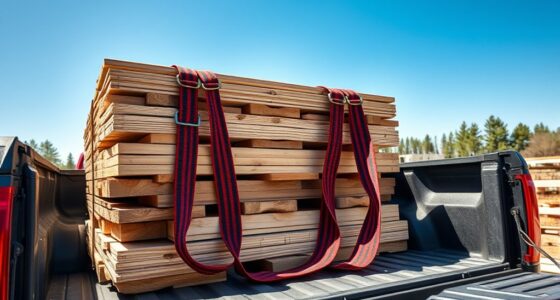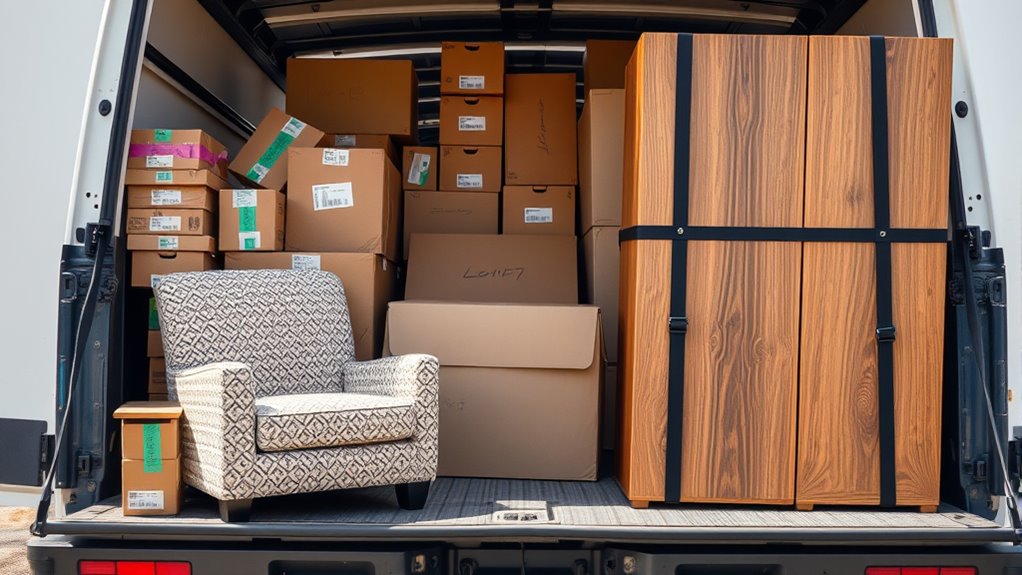

On moving day, start by placing your heaviest items, like large appliances and heavy furniture, at the front of the truck near the cab to keep the load stable. Distribute weight evenly side to side, disassemble furniture whenever possible, and fill gaps with blankets or towels to prevent shifting. Secure everything tightly with straps or ropes, and arrange large items along the sides to maximize space. Keep these tips in mind, and you’ll master load management with ease.
Key Takeaways
- Load heavy items at the front near the cab and on the floor for stability and balance.
- Disassemble large furniture and appliances to save space and prevent damage during transit.
- Fill gaps with padding like blankets or towels, and secure everything with straps or ropes.
- Distribute weight evenly side to side and from front to back to ensure a balanced load.
- Stack lighter boxes on top of heavier items and check tie-downs regularly during the move.
Prioritize Heavy Items for a Stable Base
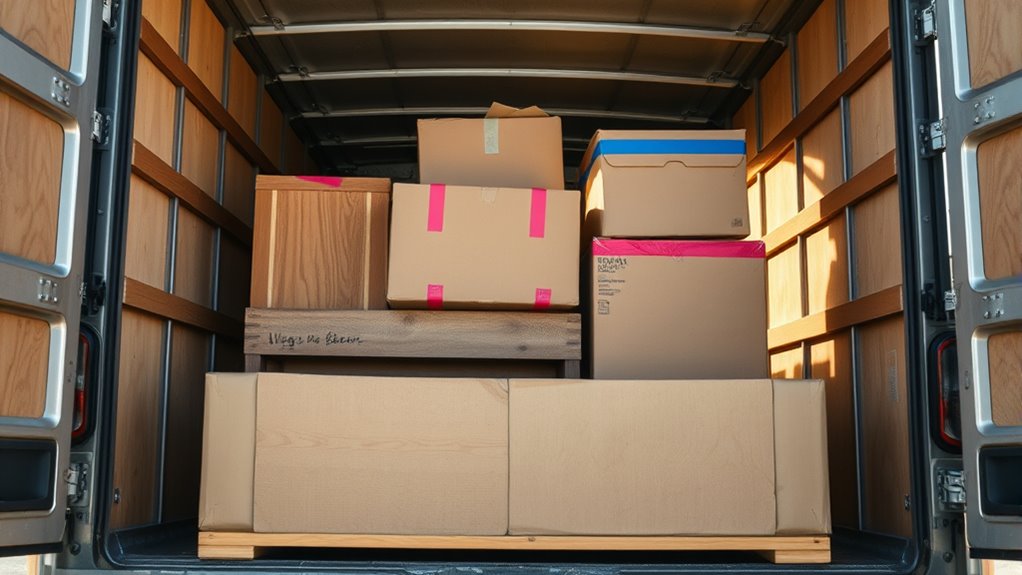
Prioritize placing the heaviest items at the front of the truck, close to the cab. This anchors the load and prevents shifting during transit. Large appliances like refrigerators, washers, and dryers should be loaded first, followed by heavy furniture such as beds and sofas. Keep these items on the truck floor to avoid crushing lighter belongings stacked on top. Positioning heavy objects near the front also helps maintain vehicle balance, especially during turns or sudden stops. Additionally, using durable, high-quality materials in your packing can help prevent damage during transport. Proper ventilation considerations can also reduce moisture buildup and protect your belongings. Understanding weight distribution is essential for a safe and efficient move, ensuring stability and minimizing stress on your vehicle. Recognizing the importance of cargo securement techniques can further enhance safety during transit. By establishing this solid base, you reduce the risk of tipping or uneven weight distribution. Incorporating appropriate packing methods can also optimize space and protect items from damage during the move. Remember, a strong foundation is key to a safe, efficient move and protects your belongings from damage.
Strategically Distribute Weight Across the Truck
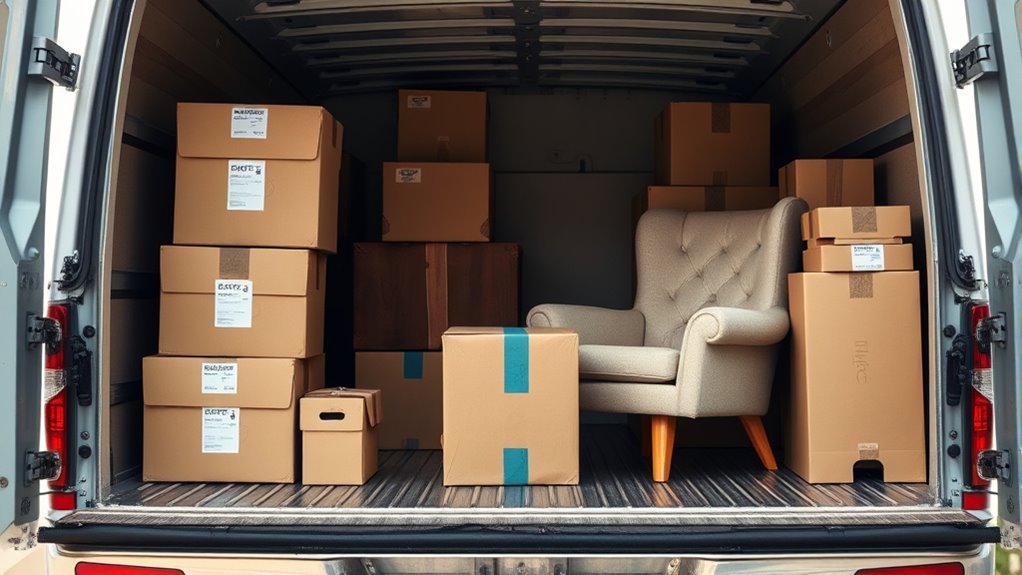
To keep your truck stable, you need to distribute weight evenly from side to side. Position heavy items so they balance between the driver and passenger sides, preventing tilting during transit. Properly balancing the load guarantees safe driving and protects your belongings from shifting or damage. Incorporating natural filtration systems can also help maintain water quality in backyard pools, ensuring a healthier environment during your landscaping projects. Additionally, understanding nanotechnology principles can assist in developing innovative solutions for load stabilization and material strength, which can further enhance cargo safety during transport. Exploring smart load management tools can provide real-time feedback to optimize weight distribution and improve overall safety.
Balance Load Side-to-Side
Achieving a balanced load side-to-side is essential for safe and stable transportation. You want to make certain that weight is evenly distributed across the truck’s width, preventing leaning or tipping during transit. Start by placing heavier items on both sides, roughly matching their weight, to keep the truck level. Use your eye or a simple level tool to check for side-to-side imbalance as you load. Fill gaps with soft items like blankets or pillows to stabilize lighter belongings and avoid shifting. Secure everything with straps or ropes after positioning to prevent movement. Remember, an uneven side-to-side load can cause handling issues, especially during turns or sudden stops. Aim for symmetrical weight distribution to maintain control and safety throughout your move. Ensuring your load has a proper weight balance is crucial for safe driving and vehicle longevity, and consulting loading techniques can further improve stability. Additionally, understanding cargo securing practices helps prevent accidents caused by shifting loads during transit, especially when considering vetted vacuum cleaners for cleaning up after the move.
Position Heavy Items Strategically
Strategically placing heavy items across the truck guarantees balanced weight distribution and safe transit. Position the heaviest belongings, like appliances and large furniture, at the front near the cab to anchor the load. Keep these items on the floor to prevent crushing lighter belongings and to maintain stability. Spread the weight evenly from side to side, ensuring appliances are balanced between driver and passenger sides. Use an “I” shaped pattern, with heavy items along the walls and boxes centered. Position tall, bulky furniture vertically along the sides, and disassemble pieces whenever possible. Fill gaps with soft items like blankets and pillows for cushioning. Secure everything with straps or ropes to prevent shifting. Proper placement minimizes the risk of tipping or damage during transit.
Build Vertical Tiers for Space Efficiency and Stability

Building vertical tiers in your moving truck maximizes space and enhances stability by stacking items from floor to ceiling. Start with heavy, sturdy boxes or furniture at the bottom of each tier to create a solid base. Ascertain these are well-balanced and evenly distributed across the floor to prevent shifting. Stack lighter items on top of the heavier ones, maintaining a consistent heavy-to-light pattern. Use strong furniture pieces or appliances as anchors for each tier, which helps keep everything stable. Keep each vertical column tight and organized, filling gaps with soft items like blankets or pillows to prevent movement. Building these tiers efficiently allows you to utilize vertical space fully while maintaining a balanced load, reducing the risk of shifting or collapsing during transit. Incorporating proper load distribution techniques ensures your items stay secure and minimizes damage during transportation, especially when considering the center of gravity of your load. Additionally, understanding weight distribution principles can further improve the safety and stability of your packed truck. Applying load stability strategies can further prevent items from shifting during transit, providing peace of mind throughout your move. Moreover, regularly checking and adjusting the load during transit can help maintain optimal balance and security.
Position Furniture Vertically and Disassemble When Possible
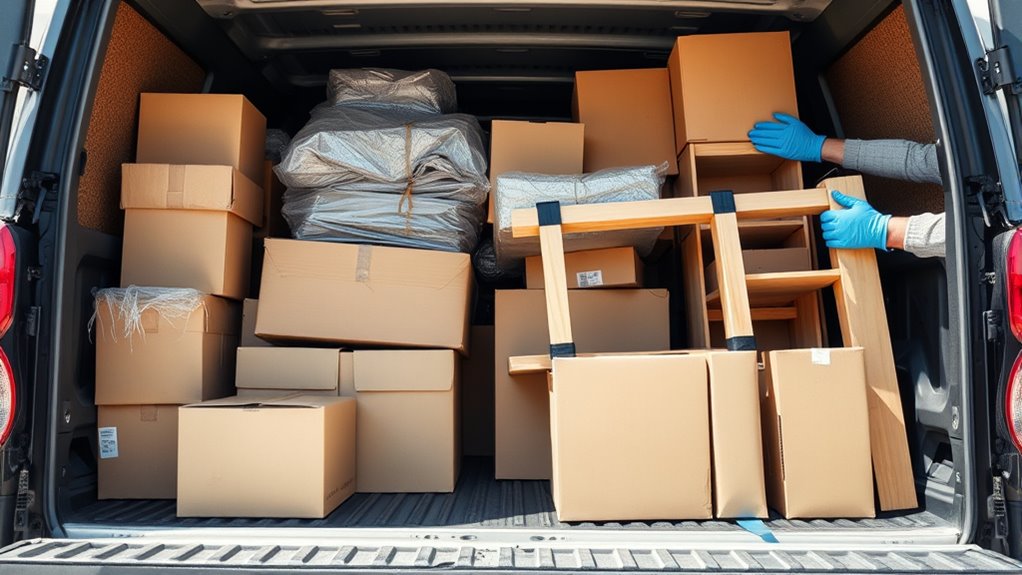
Positioning furniture vertically and disassembling it when possible can considerably improve your load efficiency. Standing items like couches, headboards, and tables upright uses less space and makes stacking easier. Disassemble beds, tables, and dressers to reduce their bulk and prevent damage. Removing legs, drawers, and tabletops creates flatter, more manageable pieces. This approach allows you to maximize vertical space and keeps the load organized. Additionally, following a space-saving technique can help optimize your truck bed layout and protect your belongings during transit. Incorporating smart organization methods can further enhance your packing efficiency and safeguard your items on the move. Using proper packing materials like blankets and padding further minimizes the risk of damage during transport.
Fill Gaps With Soft Items and Secure Everything in Place

Filling gaps with soft items is essential to keep your load stable and prevent shifting during transit. Use blankets, pillows, towels, or bags of clothes to pack around furniture and boxes. These soft fillers absorb shocks and cushion your belongings, minimizing damage. As you load, place soft items in every available space between larger items, especially in corners and along edges. Secure everything with moving straps or ropes once each section is in place, ensuring nothing can move during turns or sudden stops. Regularly tighten ties to maintain stability. Filling all gaps prevents your load from shifting, which reduces the risk of damage and makes unloading smoother. Keep soft items accessible for quick adjustments and additional padding as needed throughout the process.
Follow a Logical Loading Sequence From Heavy to Light
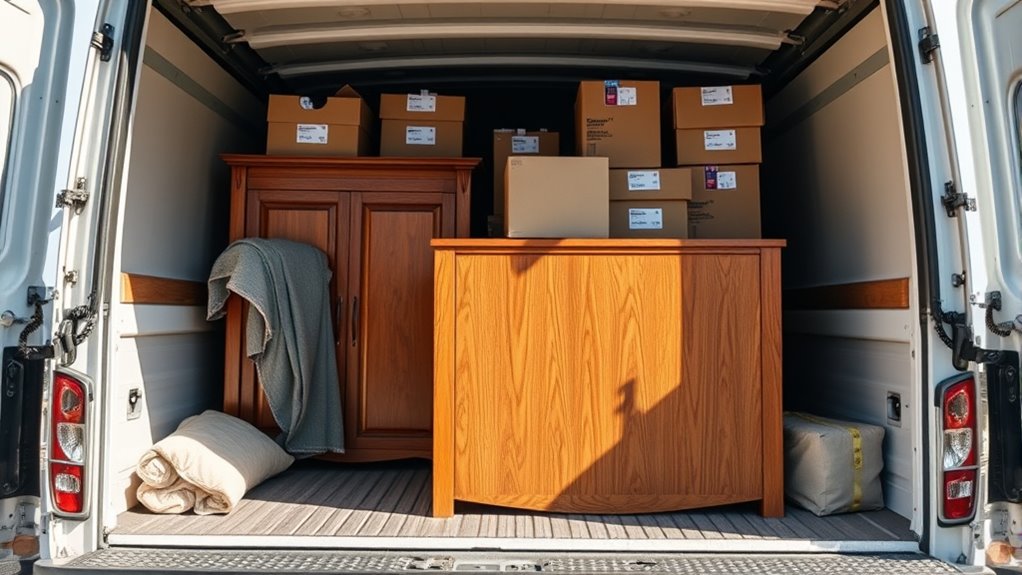
Once you’ve filled gaps with soft items and secured everything in place, the next step is to follow a logical loading sequence from heavy to light. Start by placing the heaviest items at the front of the truck, near the cab, creating a solid base. Load large appliances like refrigerators, washers, and heavy furniture first, ensuring they sit on the floor to prevent crushing lighter belongings. Distribute weight evenly side to side to maintain balance and stability. Stack lighter boxes and smaller items on top of or around these heavy pieces, keeping fragile items toward the top and toward the rear. This order helps prevent shifting and makes unloading easier, ensuring your load stays secure during transit.
Maximize Space by Arranging Large Items Along the Sides

Arranging large items along the sides of the truck is an effective way to maximize space and maintain balance. By lining up furniture like couches, beds, and tables vertically against the truck walls, you free up central space for boxes and smaller items. This method also helps keep the load stable during transit. To optimize, consider the following arrangement:
| Item Type | Positioning Strategy | Benefits |
|---|---|---|
| Long furniture | Stand upright along sides | Saves space, easy access |
| Large appliances | Place against side walls | Stable, distributes weight |
| Disassembled parts | Store in gaps or corners | Keeps items organized |
| Soft fillers | Fill gaps around large items | Prevent shifting, cushion |
This setup balances the load and creates a clear, organized load.
Finalize With Securing and Padding to Prevent Shifting

After you’ve carefully loaded and secured your large items along the truck’s sides, the final step is to guarantee everything stays in place during transit. Start by filling all gaps with soft padding like blankets, pillows, or towels. These act as shock absorbers, preventing items from shifting or colliding. Use moving straps or ropes to tightly secure each section of your load, especially around heavy furniture and appliances. Regularly check and tighten tie-downs as you go. Make sure nothing is loose or wobbly before hitting the road. Double-check that all items are snug and immobilized. Proper padding and securing will protect your belongings from damage, reduce shifting, and ensure a safe, smooth move.
Frequently Asked Questions
How Do I Prevent Heavy Items From Damaging Lighter Belongings?
To prevent heavy items from damaging lighter belongings, place the heavy items on the bottom and against the walls of the truck, creating stable tiers. Use soft padding like blankets or towels to cushion lighter items and fill gaps between objects. Secure everything with straps or ropes to prevent shifting during transit. Distributing weight evenly and building vertical layers also helps protect fragile items from impact or crushing.
What Tools Are Best for Securing Items During Transit?
Did you know that properly secured loads reduce the risk of accidents by up to 80%? To secure your belongings during transit, use moving straps, ratchet tie-downs, and bungee cords. These tools keep items stable and prevent shifting. Wrap fragile items with blankets or padding for extra protection. With the right tools, you’ll guarantee your load stays intact and safe during the entire trip.
How Can I Balance the Load if the Truck Is Uneven?
To balance an uneven truck load, start by identifying the heavier side. Shift heavier items like appliances or furniture toward the lighter side to even out the weight distribution. Use small boxes or soft fillers to fill gaps and add stability. Adjust the placement of items as needed, ensuring the load is centered and balanced from front to back and side to side. Secure everything tightly with straps to prevent shifting during transit.
Is Disassembling Furniture Necessary for All Types of Furniture?
Disassembling furniture isn’t always necessary, but it’s highly recommended for larger or bulky pieces to save space and prevent damage. If you skip disassembly, you might struggle to fit everything securely, increasing the risk of breakage or shifting during transit. Plus, disassembled furniture is easier to load, unload, and store, making your move smoother and less stressful. You’ll appreciate the effort when everything fits perfectly and arrives intact.
How Do I Identify Which Gaps Need Filling for Safety?
To identify gaps needing filling, look for spaces between furniture and boxes that could cause shifting during transit. Push items gently to see if they wobble or move; these areas need padding. Fill empty spots with soft materials like blankets or pillows to stabilize everything. Secure all items with straps or ropes afterward. Filling these gaps prevents shifting, protects your belongings, and keeps your load safe throughout the move.
Conclusion
By following these tips, you’ll guarantee your belongings stay safe and organized during your move. Did you know that properly loading a truck can reduce shifting by up to 50%, saving you time and effort? Prioritizing heavy items, distributing weight evenly, and securing everything properly make a huge difference. With a strategic approach, your move will be smoother, safer, and less stressful — so you can focus on settling into your new home.