To haul a motorcycle securely without panic, start by preparing sturdy ramps rated for your bike’s weight and attaching them firmly to your truck bed. Practice guiding the bike smoothly onto the bed, using help if needed, and secure it with multiple straps attached to stable points. Check everything periodically during transit to prevent shifting. Staying calm and methodical makes the process easier—continue to discover key safety tips and techniques to make your motorcycle haul safer and stress-free.
Key Takeaways
- Prepare and securely attach ramps rated for your motorcycle’s weight before loading.
- Have assistance guide the motorcycle to maintain balance and prevent tipping during loading and unloading.
- Secure the motorcycle with multiple straps attached to stable points, tightening to prevent shifting during transit.
- Regularly check strap tension and bike stability during the trip, especially after rough roads or long distances.
- Conduct a post-transport inspection to ensure straps are tight, the bike is stable, and no damage occurred.

MAXIVMAN Aluminum Motorcycle Ramp with Handle – 750 Lbs Capacity, 7.5ft Folding Ramp with Load Straps for Pickup Trucks, Dirt Bikes, Motorcycles | 89" L x 12" W | 1 Pc
Heavy Duty 750 Lbs Capacity:This aluminum motorcycle ramp with a handle is designed to safely load motorcycles, dirt…
As an affiliate, we earn on qualifying purchases.
As an affiliate, we earn on qualifying purchases.
Preparing Your Equipment and Truck Bed
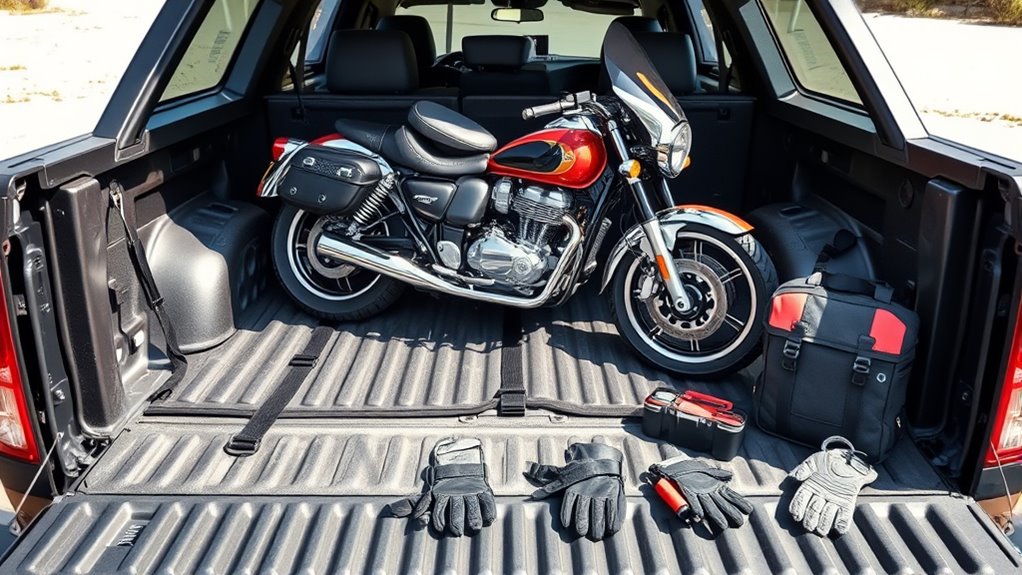
Before hauling your motorcycle, you need to prepare your equipment and truck bed to guarantee a safe and secure load. Start by choosing sturdy motorcycle ramps rated for your bike’s weight, ensuring they won’t bend or slip. Secure the ramps to the truck bed or tailgate with straps to prevent movement during loading. Use ratchet or cam straps to tie down your motorcycle, and make sure your truck bed has anchor points or D-rings for attaching straps securely. Consider using a wheel chock for extra stability during transit. Double-check all equipment for damage or wear before use. Proper equipment such as secure straps and stable ramps are essential for a safe haul. Proper preparation minimizes risks, makes loading easier, and helps keep your motorcycle stable throughout the trip. Being thorough now reduces the risk of accidents and saves time and trouble later. Additionally, inspecting your truck bed setup ensures that all components are in optimal condition for the journey. Always verify that your safety gear is in place and ready to prevent any unforeseen issues during transit.

Keeper Ratchet Tie Down Straps Kit, 4 Pack – 1in. x 15ft. Heavy Duty Cargo Straps for Motorcycle, ATV, UTV & Moving – 1800 lb Break Strength – Includes 4 Soft Loops, 4 Hook & Loop Straps & Storage Bag
Load & Secure: Heavy-duty ratchet tie down straps rated at 1,800 lbs break strength (600 lbs working load…
As an affiliate, we earn on qualifying purchases.
As an affiliate, we earn on qualifying purchases.
Properly Positioning Your Truck for Loading

Positioning your truck correctly sets the foundation for a safe and smooth motorcycle loading process. First, park on a level surface to prevent the truck from tipping. If possible, back it toward a slight incline to reduce the ramp’s angle, making it easier to load. Drop the tailgate securely or remove it if the motorcycle’s weight exceeds its limit. Align the truck bed straight with the ramp to ensure a balanced approach. Ensure the truck is stable and the parking brake engaged. Clear the area of obstacles or debris that could interfere with loading. Confirm the ramps are securely attached and centered on the truck bed. Proper positioning minimizes risks and facilitates a controlled, safe loading experience. Understanding field‑of‑view and proper setup can also help in planning the best approach for your specific vehicle and equipment. Being aware of loading techniques can further ensure a safe and efficient process. Additionally, inspecting your prepping gear before loading can prevent unexpected issues during the process. Paying attention to weight distribution can help maintain vehicle stability during loading and transport.

MaxxHaul Motorcycle Wheel Chock Heavy‑Duty Steel Front Tire Stand Fits 15" to 22" Wheels Self Locking Cradle for Trailers Garages and Shops 1800 lb Capacity Black Powder Coat (70271)
Impressive Weight Capacity: With a robust capacity of 1,800 pounds, this adjustable motorcycle wheel chock stand confidently supports…
As an affiliate, we earn on qualifying purchases.
As an affiliate, we earn on qualifying purchases.
Safely Loading Your Motorcycle Onto the Truck Bed

To load your motorcycle safely onto the truck bed, start by ensuring the ramps are securely aligned and firmly attached to the truck. Check that the ramps are rated for your bike’s weight and are stabilized with straps or hooks to prevent slipping. Position the ramp straight with the truck bed, avoiding angles that could cause instability. Have a second person assist if possible, to guide and steady the motorcycle during the climb. Keep the motorcycle upright and balanced to prevent tipping. When pushing or riding up, do so slowly and steadily, maintaining control. Never rush or attempt to bypass safety steps. Take your time to ensure the motorcycle moves smoothly and securely onto the truck bed, reducing the risk of accidents or damage. Additionally, understanding center of gravity can help you better manage balance and stability during loading. Proper technique and awareness of weight distribution are essential for safe and efficient loading. Paying attention to weight distribution can also help prevent the motorcycle from shifting or tipping during transit.
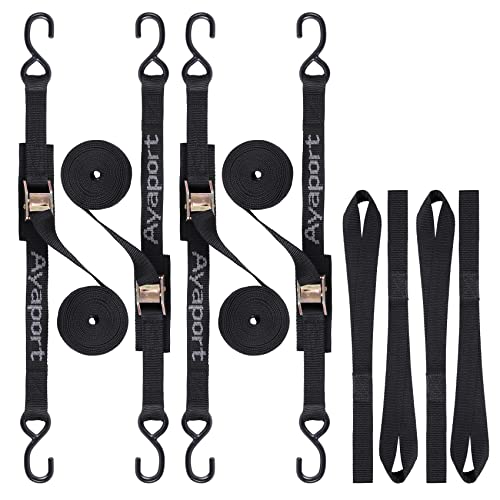
Ayaport Cam Buckle Tie Down Straps 6 feet 2200lbs Break Strength Securing Straps with S Hooks for Motorcycle, Kayak, Car, Truck, Dirt Bike, Pack of 4
HEAVY DUTY TIE DOWN STRAPS: Our cam buckle straps are made of features brine yarn that offers a…
As an affiliate, we earn on qualifying purchases.
As an affiliate, we earn on qualifying purchases.
Securing Your Motorcycle for Transport
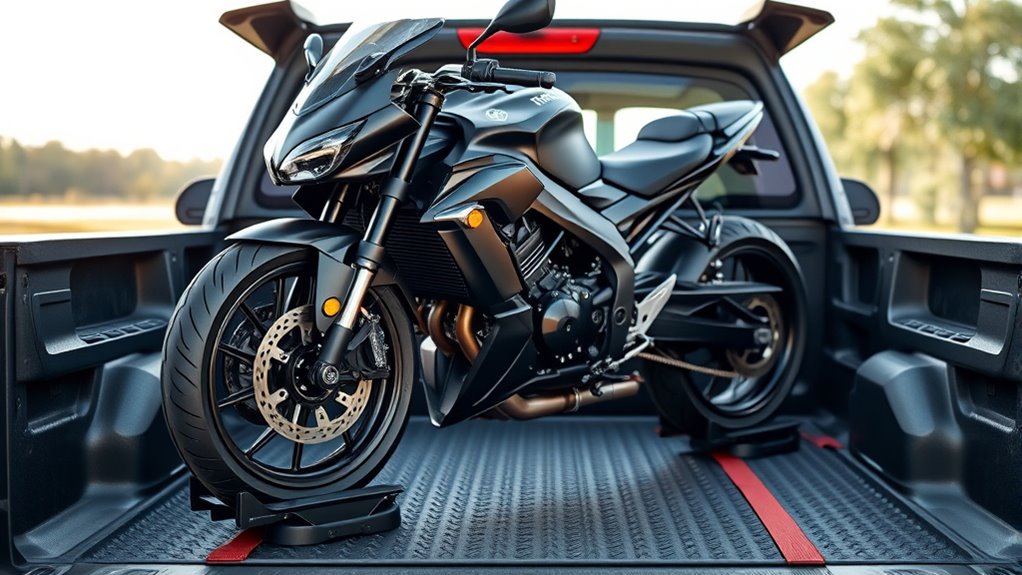
Securing your motorcycle properly is essential to guarantee it stays stable and safe during transit. You want to prevent movement that could cause damage or accidents. Here are key steps to secure it effectively:
- Attach straps to stable points like the motorcycle’s frame, crash bars, or lower triple clamp. Use at least two front and two rear straps for balance.
- Angle straps at roughly 45 degrees, pulling downward and toward the anchor points. This keeps the bike steady and prevents shifting.
- Tighten straps just enough to eliminate slack without over-tightening, which could damage components. Regularly check and re-tighten straps during transit to ensure continued security.
- Consider using a load‑planning tool to help distribute weight evenly across the pickup bed, enhancing stability during transport. Properly tensioning tie-downs is also crucial to avoid slack that could compromise safety. Additionally, inspecting the vehicle’s bed for any sharp edges or loose hardware can prevent strap damage and ensure a secure hold.
Tips for Unloading the Motorcycle Safely
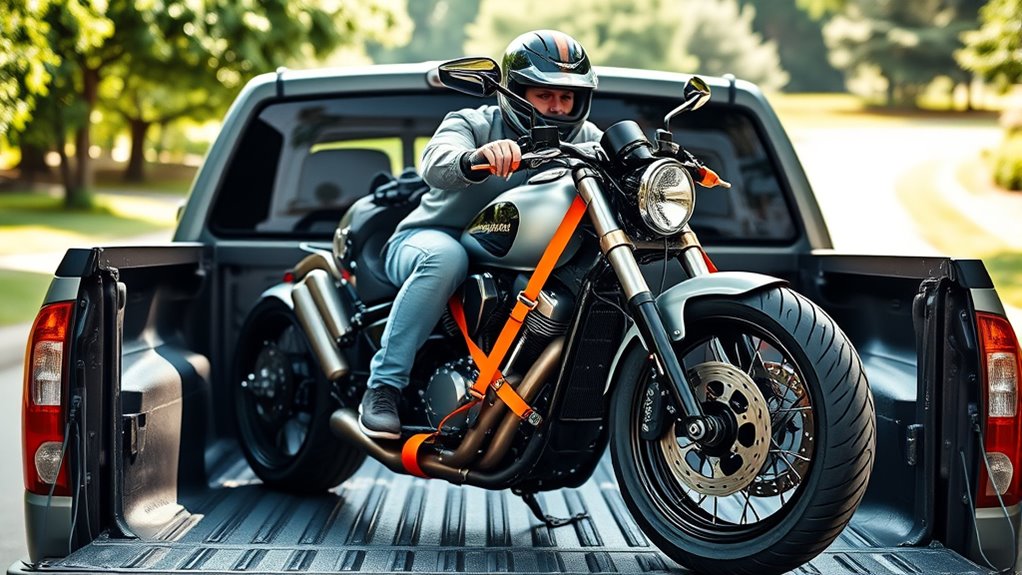
Start by ensuring the ramp is secured firmly before you begin unloading. Carefully remove the straps, one at a time, to keep the motorcycle balanced. Keep a steady hand on the bike to prevent tipping and maintain control throughout the process. Practicing proper safety procedures can help prevent accidents during unloading. Additionally, checking the water chemistry and equipment stability can further reduce the risk of mishaps. Incorporating visual cues into your unloading routine can also improve spatial awareness and safety. Paying attention to the application of safety gear such as gloves and helmets adds an extra layer of protection during the process. Being familiar with home charging safety practices ensures your equipment remains secure and reduces risks during setup and unloading.
Prepare Ramp Securely
Ensuring the ramp is prepared securely is essential for a safe and smooth motorcycle unloading process. You want to prevent any slips or shifts that could cause accidents. Here’s what you need to do:
- Check the ramp’s weight rating to match or exceed your motorcycle’s weight.
- Secure the ramp tightly to the truck bed or tailgate using straps, ensuring it won’t move during unloading.
- Place the ramp on a flat, stable surface and ensure it’s at a safe angle—usually less than 30 degrees—for easy riding off.
- Confirm that the slope angle is appropriate, as a steeper incline can make the motorcycle harder to control during descent.
- Always double-check the connection points before beginning your unload to ensure everything stays secure during the process.
- Additionally, inspect the surface condition of the ramp to avoid slips caused by slick or uneven surfaces. Properly assessing the ramp’s stability can prevent accidents during unloading.
Double-check all connections before starting. A stable, secure ramp provides the foundation for a controlled, safe unload, reducing the risk of accidents or damage.
Remove Straps Carefully
When it’s time to remove the straps, proceed slowly and deliberately to prevent the motorcycle from tipping or shifting. First, loosen the straps gradually, starting with the rear ones, then the front. Keep a firm hand on the motorcycle to steady it as you release tension. Avoid rushing, as sudden moves can cause instability or damage. After loosening each strap, carefully unclip or unbuckle it, keeping the strap under control. Once all straps are removed, gently support the motorcycle’s weight as you set it onto its kickstand. Make sure to keep your hands on the bike during this process to prevent unexpected shifts. Finally, double-check that all straps are fully removed and stored properly for future use.
Maintain Motorcycle Balance
Maintaining the motorcycle’s balance during unloading is essential to prevent tipping or falling. To do this effectively, you should:
- Keep a firm hand on the motorcycle, especially as it begins to move off the ramp.
- Approach the ramp at a slow, steady pace, avoiding sudden movements that could cause instability.
- Use your legs and core to support the bike’s weight, preventing side-to-side wobbling.
Before starting, ensure the ramp is secure and straight. As the motorcycle moves off the truck, stay alert for any shifts or sways. Keep your eyes on the bike, and be ready to steady it if needed. Proper control and attention will help unload safely without risking damage or injury.
Essential Safety Precautions During Hauling
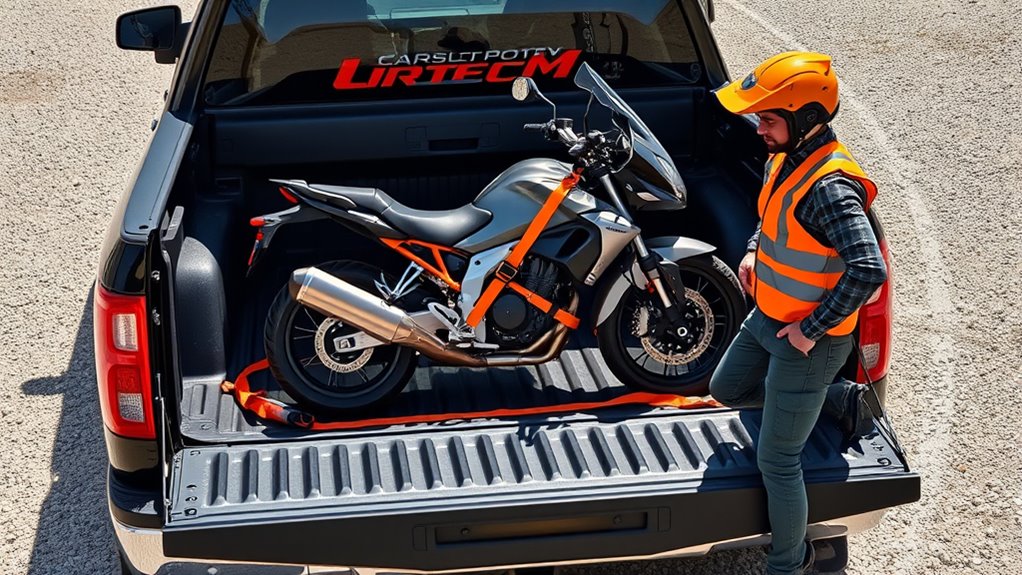
Safety precautions are crucial each time you haul a motorcycle in a pickup bed to prevent accidents and damage. Always double-check that your straps are tight and secure before starting your trip. Make certain the motorcycle remains upright and stable, with no shifting during transit. Use sturdy anchor points or D-rings to attach your straps firmly, avoiding mufflers or mirrors that could break. Wear gloves when tightening straps to prevent injury. Confirm the truck is parked on a level surface, and the load is balanced properly. Keep an eye on your rearview mirrors for any signs of movement. Avoid sudden stops or sharp turns, and drive cautiously at all times. Regularly inspect your straps and motorcycle during the journey, re-tightening if necessary, to maintain safety.
Checking and Adjusting Straps Throughout the Journey
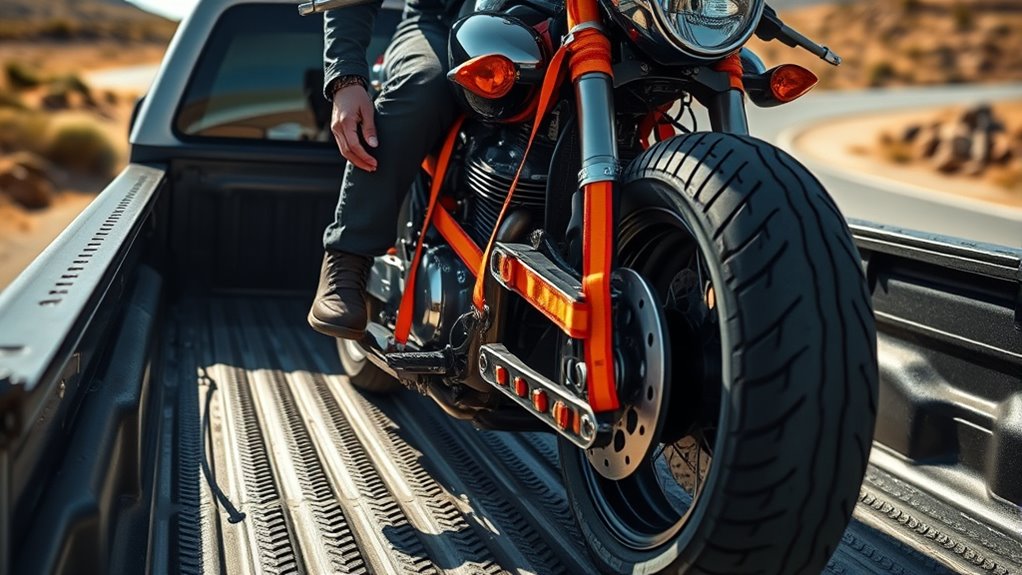
Since straps can loosen or shift during transit, it’s essential to check and adjust them regularly throughout your journey. This prevents the motorcycle from moving or tipping, guaranteeing safety. Here are three key steps:
Regularly check and tighten straps during transit to ensure safety and prevent motorcycle shifting.
- Inspect tension every 50-100 miles, tightening straps if you notice slack.
- Look for shifting or movement of the motorcycle, especially after rough roads or sharp turns.
- Re-secure straps if they’ve loosened, ensuring they maintain a 45-degree angle for maximum hold.
Always stop in a safe spot to verify strap tightness, especially after crossing bumps or potholes. Consistent checks keep your motorcycle secure and reduce panic during the trip. Staying vigilant minimizes risks and guarantees a smooth, safe haul.
Final Inspection and Post-Transport Care
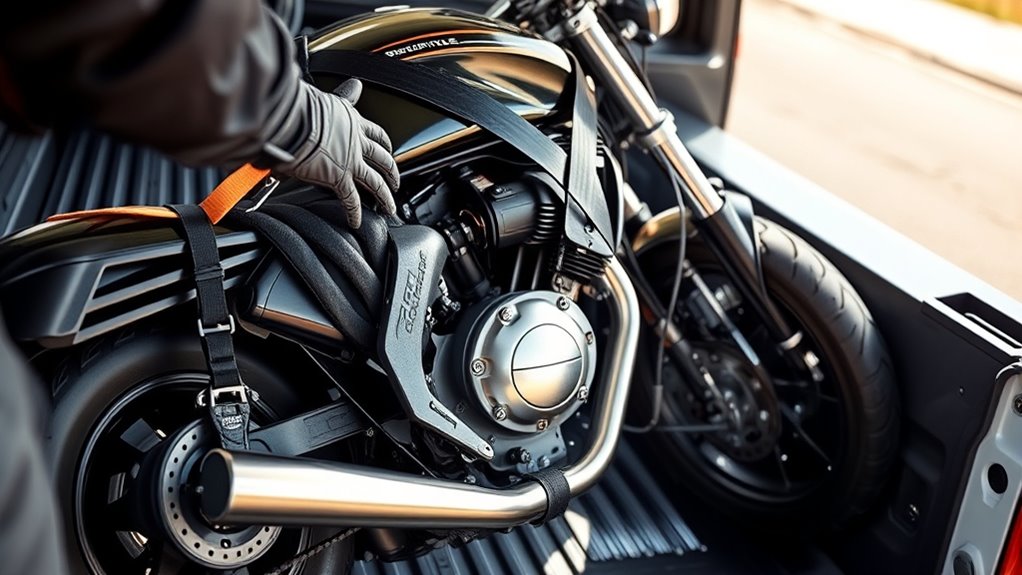
After unloading your motorcycle, it’s essential to conduct a thorough final inspection to guarantee everything remains secure and in good condition. Check the straps and anchor points for signs of slack or damage, ensuring all are tight and intact. Look for any scratches, dents, or other damage that may have occurred during transport. Inspect the motorcycle’s tires, brake lines, and lights to confirm they’re functioning properly. Examine the frame and critical components for stress or looseness. Remove any remaining debris or packing materials. Confirm that the motorcycle’s kickstand is stable and that the bike is parked securely. Finally, review your transport setup to identify any adjustments needed for future trips. Proper post-transport care helps maintain your motorcycle’s condition and ensures safety on the road.
Frequently Asked Questions
How Do I Prevent My Motorcycle From Shifting During Transit?
To prevent your motorcycle from shifting during transit, you should securely strap it down using at least four straps—two in the front and two in the rear—angled at about 45 degrees. Attach straps to sturdy points on the motorcycle’s frame, avoiding mufflers or mirrors. Tighten the straps enough to eliminate slack but don’t over-tighten. Double-check all straps before you hit the road to guarantee everything stays in place.
What Is the Ideal Strap Tension for Secure Hauling?
You should tighten straps until there’s firm tension, but not so tight that you risk damaging the motorcycle or the straps. Aim for snugness that removes slack, ensuring the motorcycle doesn’t move side to side or fore and aft. You’ll know it’s secure when the straps hold the bike firmly in place without causing deformation. Regularly check the tension during transit and tighten if you notice any slack.
Can I Haul a Motorcycle in a Truck With a Bed Liner?
You absolutely can haul a motorcycle in a truck with a bed liner. Bed liners don’t interfere with securing straps or anchoring points, so your motorcycle stays stable. Just guarantee you’re using proper tie-downs and anchor points, and avoid over-tightening straps to prevent damage. Regularly check strap tension during transit. A bed liner provides extra protection for your truck bed, making transportation safer and more secure.
How Do I Handle Uneven or Inclined Surfaces During Loading?
When handling uneven or inclined surfaces during loading, you should first position your truck on a level, stable spot to prevent slipping. Use ramps with a gentle incline rated for your motorcycle’s weight, and secure them tightly. If possible, back the truck onto a slight incline to reduce ramp angle. Have a second person assist with balancing and pushing the motorcycle, ensuring it stays upright and steady throughout the process.
What Should I Do if My Straps Loosen During the Trip?
If your straps loosen during the trip, stop safely and immediately. Carefully check each strap for slack or signs of loosening. Re-tighten them, ensuring they’re snug but not over-tightened. Reassess your motorcycle’s position to confirm it’s secure and stable. Regularly stop to recheck straps during long trips. Proper tension prevents movement and keeps your motorcycle safe throughout transport, giving you peace of mind on the road.
Conclusion
By following these steps, you’ll turn what seems like an impossible task into a smooth ride—like guiding a mighty beast into safekeeping. Stay calm, double-check your straps, and trust your prep work. With a little patience and focus, you’ll have that motorcycle securely stashed in your pickup bed, ready for the journey ahead. Remember, a confident rider makes for a safe trip—so keep your cool and enjoy the ride like a true pro!