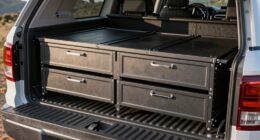
To haul loose materials safely in a pickup, evenly distribute weight, placing heavier items over the axles for balance. Use tarps or nets to secure loose materials, preventing spills or shifting during transit. Regularly check your vehicle’s maintenance—including tire pressure, brakes, and lights—to guarantee safety. Avoid overloading by sticking to your vehicle’s capacity guidelines. Properly loading and maintaining your truck reduces accidents and keeps your cargo secure—continue for more tips on safe hauling techniques.
Key Takeaways
- Distribute weight evenly across the truck bed, placing heavier items over axles for balance.
- Use tarps or nets to secure loose materials and prevent spills during transit.
- Avoid overloading the truck beyond its specified capacity to maintain stability and safety.
- Regularly inspect tire pressure, brakes, and suspension for optimal vehicle performance.
- Conduct pre-loading vehicle checks to identify and fix any maintenance issues before hauling.

Hauling loose materials in a pickup can be straightforward, but safety should always come first. When you’re dealing with materials like gravel, soil, or debris, how you load your truck matters just as much as how you drive it. Proper loading techniques help prevent spills, shifting, and accidents, making your trip safer and more efficient. Start by evenly distributing the weight across the truck bed. Place heavier items directly over the axles to maintain balance and avoid stressing your suspension. Use tarps or nets to secure loose materials, preventing them from blowing out during transit. If you’re working with bulkier materials, consider using a bed liner or sides to contain everything securely. Never overload your truck beyond its specified capacity; check the manufacturer’s guidelines to keep your vehicle safe and functional. Overloading not only risks damage to your truck but also also increases the chance of losing control or causing accidents on the road. Ensuring proper weight distribution is crucial for maintaining stability during transit. Additionally, being aware of your vehicle’s load capacity helps prevent accidental overloading and the potential hazards it entails.
Vehicle maintenance plays a vital role in safe hauling. Before you load up, inspect your pickup thoroughly. Check tire pressure and tread wear, as properly inflated tires provide better grip and stability. Ensure your brakes are in good condition—effective braking is essential when hauling heavy or loose materials. Also, examine your suspension system; a worn or damaged suspension can make handling difficult and unsafe. Regularly maintaining your vehicle isn’t just about longevity; it directly impacts safety during transportation. Properly maintained vehicle parts contribute to a safer and more reliable hauling experience. Additionally, verify that your lights and signals are functioning correctly, so other drivers can anticipate your movements. Keeping your pickup in top shape minimizes the risk of mechanical failures that could lead to accidents while hauling. Being proactive with maintenance can prevent unexpected issues that compromise safety on the road. Moreover, understanding proper load securing techniques can significantly reduce the risk of load shifts or accidents during transit.

Tranqun Cargo Net for Pickup Truck Bed, XXL Waterproof Truck Bed Tarp Cover & Net Kit, 4' x 6' Stretches to 8' x 12', Complete Cargo Securing Set with D-Rings, Hooks & Rope
All-Weather Protection: This all-in-one kit not only keeps your cargo securely in place but also provides reliable protection…
As an affiliate, we earn on qualifying purchases.
As an affiliate, we earn on qualifying purchases.
Frequently Asked Questions
What Types of Loose Materials Are Safest to Transport in a Pickup?
You should transport lightweight, non-hazardous materials like gravel, mulch, or soil, which are easier to contain securely. Use proper material containment methods such as tarps, mesh covers, or secure loading techniques to prevent spillage. Always guarantee your load is evenly distributed and firmly secured to avoid shifting during transit. By focusing on secure loading and effective containment, you minimize risks and keep your journey safe and compliant.
How Do Weather Conditions Affect Hauling Loose Materials?
Weather conditions considerably impact your safety when hauling loose materials. Rain and snow can cause materials to shift or spill, so always check weather safety forecasts before you load up. Seasonal hazards like icy roads or strong winds increase the risk of accidents. To stay safe, secure your load properly, drive cautiously, and avoid hauling during severe weather. Being aware of these conditions helps prevent accidents and keeps you safe on the road.
Are There Legal Weight Limits for Hauling Loose Materials?
Yes, there are legal weight limits for hauling loose materials. You need to follow legal regulations set by local, state, or federal authorities to guarantee weight compliance. Overloading your pickup can lead to fines, vehicle damage, or accidents. Always check your vehicle’s maximum payload capacity and load within those limits. Use a scale if needed to verify your load, making certain you stay within the legal weight limits for safe and compliant hauling.
What Are the Signs of an Overloaded Pickup?
You’ll notice signs of an overloaded pickup through uneven load distribution, which can cause sway or difficulty steering. Check if your truck feels excessively heavy or if the suspension sags more than usual. If your trailer isn’t compatible with your load, it could lead to instability or tire wear. Always monitor your gauges and the way your vehicle handles, ensuring your load is balanced and within your truck’s trailer compatibility limits for safe driving.
How Often Should I Inspect My Vehicle During Transport?
During transport, you should inspect your vehicle every 15-20 minutes. For example, imagine hauling gravel when you notice a loose tarp; stopping promptly prevents spillage and accidents. Regular vehicle maintenance guarantees safety precautions are in place, like checking tire pressure and brake function. Frequent inspections help catch issues early, reducing risks. Prioritize these checks to keep your load secure and your trip safe.

HERCULINER Roll-On Truck Bed Liner, 1 Gallon Can, Black, Textured, Suitable for All Truck Beds, 55-60 sq ft Coverage
J-B Weld Herculiner Truck Bed Liner: The Original Do-It-Yourself truck bed liner! Just 3 Easy Steps: Prep, Apply…
As an affiliate, we earn on qualifying purchases.
As an affiliate, we earn on qualifying purchases.
Conclusion
By following these safety tips, you guarantee your journey is smooth and secure, like a ship sailing through calm waters. Remember, your careful precautions are the anchor that keeps everything in place, preventing chaos and accidents. Hauling loose materials isn’t just about getting the job done—it’s about doing it responsibly. So, stay vigilant, secure your load, and drive with confidence—because safety isn’t just a choice, it’s your best route to success.

VEVOR Truck Straps, 4" x30' Heavy Duty Tie Down w/Flat Hooks 18,000lbs Break Strength, WLL# 6000lbs, Cargo Straps tie Down for Flatbeds, Trucks, Trailers, Farms, Rescues, Tree Saver, Yellow(10 Pack)
Hold On Tight: Our 4 in x 30 ft winch straps (10-pack) are incredibly resilient. They are made…
As an affiliate, we earn on qualifying purchases.
As an affiliate, we earn on qualifying purchases.

Truck Secure Truck Traction Organization System – Pickup Truck Bed Weight Organization for Enhanced Traction – Add Sand Bags or Other Weights to Help Improve Winter or Off-Road Driving
✅ Heavy-Duty Construction – Truck Secure is built to last, designed with durability in mind. Crafted from top-quality…
As an affiliate, we earn on qualifying purchases.
As an affiliate, we earn on qualifying purchases.