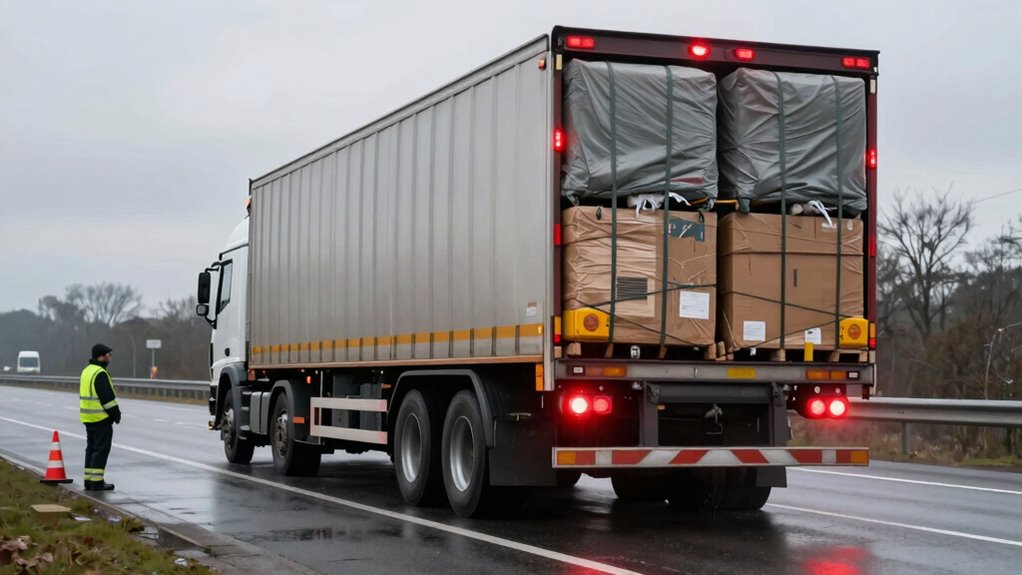

During an emergency stop, make certain your cargo is properly secured before the trip to prevent shifting or falling. Apply firm, consistent pressure on the brakes and use anti-lock braking systems if available to maintain control. Keep the vehicle straight and avoid sudden turns or swerves. After stopping, check that the cargo remains secure and undisturbed before resuming. Understanding these key steps helps you stay safe—continue to learn more about managing emergency stops with cargo.

Get business pricing on garage and car supplies
- Business-only prices and quantity discounts
- Tax-exempt purchasing
- Multiple users, one account, clear invoices
Key Takeaways
- Ensure cargo is properly secured with straps or tie-downs before starting the trip.
- Activate brakes promptly and apply firm, consistent pressure to avoid skidding.
- Keep the vehicle straight and avoid sudden turns or swerve during emergency braking.
- Immediately check cargo stability after stopping and address any shifting or damage.
- Maintain control and safety features awareness to prevent further accidents during the stop.

Have you ever wondered what to do if an emergency stop occurs while you’re carrying cargo? It’s a situation that demands quick thinking and proper action to prevent accidents or damage. When you suddenly need to brake, your first priority is to guarantee that the cargo remains secure. Proper cargo securement is essential because if your cargo shifts or falls, it can cause serious hazards for you and others on the road. Before hitting the road, you should always double-check that your cargo is tightly secured using appropriate straps, tie-downs, or other securement devices. During an emergency stop, the force of sudden braking can cause unsecured or improperly secured cargo to move, which could lead to loss of control or collisions. So, maintaining robust cargo securement is your first line of defense.
Once you realize you need to stop quickly, activate your brake system without delay. Modern vehicles are equipped with powerful brake systems designed for rapid response; knowing how to use them effectively is essential. When you press the brake pedal firmly, your brake system activates, converting kinetic energy into heat to slow your vehicle. Keep in mind that during an emergency stop, you should apply consistent and firm pressure rather than slamming the brakes abruptly, which can cause skidding or loss of control. If your vehicle has anti-lock braking systems (ABS), you’ll feel a pulsation in the brake pedal as the system prevents wheel lock-up, allowing you to steer while stopping. Additionally, understanding your vehicle’s braking technology, such as anti-lock braking systems, can significantly improve your response during urgent situations. Being familiar with these features can help you maintain better control during critical moments.
While braking, be aware of the cargo securement you’ve implemented. If your cargo isn’t properly secured, the sudden deceleration can cause it to shift or tip over, which may lead to jackknifing or rollover accidents. It’s also helpful to be familiar with vehicle safety features that assist in maintaining control during emergencies. Having knowledge of your vehicle’s braking technology can help you react more confidently in high-pressure situations. Remember that proper cargo securement techniques are crucial for preventing movement during sudden stops, so always ensure your cargo is correctly fastened before starting your trip. Try to maintain a straight, controlled stop, avoiding sudden turns or swerves, as these can exacerbate the risk of cargo shifting. Once your vehicle comes to a complete stop, assess the situation quickly. Check if the cargo is still secure and undisturbed. If you notice any movement or damage, it’s important to address it before continuing your journey or to seek assistance if necessary. Properly understanding and utilizing cargo securement techniques can greatly reduce the risk of accidents during emergency stops.
As an affiliate, we earn on qualifying purchases.
Frequently Asked Questions
How Do Emergency Stops Differ for Fragile Versus Heavy Cargo?
Emergency stops differ for fragile versus heavy cargo because you need to adapt your approach. For fragile cargo, you should perform a cargo inspection to guarantee nothing gets damaged during sudden braking, and you may need to adjust your brake system to avoid excessive force. With heavy cargo, you focus on controlled braking to prevent cargo shifting or damage, maintaining stability and safety throughout the stop.
What Training Is Required for Emergency Stop Procedures?
You need to undergo training that covers cargo inspection, safety protocols, and emergency stop procedures. You’ll learn how to assess cargo stability, follow safety protocols to prevent accidents, and execute emergency stops effectively. This training emphasizes quick decision-making, proper use of safety equipment, and clear communication. By practicing these skills regularly, you guarantee safety for yourself and others, and you’re prepared to handle emergency stops with confidence and competence.
How Should Cargo Be Secured Post-Emergency Stop?
After an emergency stop, you should immediately conduct a cargo inspection to identify any shifts or damage. Use proper securing techniques, like tightening straps, chains, or tie-downs, to re-secure the cargo. Confirm all restraints are intact and properly tensioned to prevent movement during transit. Regularly check the cargo’s security until you’re confident it’s stable, prioritizing safety and compliance throughout the process.
What Are the Legal Implications of Improper Emergency Stops?
Legal liability looms large if you mishandle emergency stops. Improper actions can breach safety regulations, leading to hefty fines and legal repercussions. You’re responsible for ensuring cargo remains secure and stops are executed properly. Failure to follow safety standards can result in lawsuits, penalties, and damage to your reputation. Always prioritize safety regulations and correct procedures, so you avoid legal liabilities and protect everyone on and around your vehicle.
How to Communicate Effectively During an Emergency Stop?
During an emergency stop, you should follow established communication protocols to guarantee clear, quick understanding. Use emergency signaling methods like horn blasts, hand signals, or radio calls to alert others efficiently. Speak calmly but firmly, giving concise instructions to your team. Confirm that everyone understands the signals, and keep communication steady until the situation stabilizes. Effective communication during this critical time helps prevent accidents and ensures everyone’s safety.
As an affiliate, we earn on qualifying purchases.
Conclusion
So, next time you face an emergency stop with cargo, remember—it’s not just about avoiding disaster, but about mastering the art of chaos. Ironically, your quick reflexes and careful planning might seem mundane until they’re truly tested. In such moments, staying calm and following procedure isn’t just safety—it’s your secret weapon, proving that even in chaos, a little preparation can turn a disaster into just another story to tell.
anti-lock braking system (ABS) for vehicles
As an affiliate, we earn on qualifying purchases.
As an affiliate, we earn on qualifying purchases.
As an affiliate, we earn on qualifying purchases.
Evergreen bestsellers Picks
bestsellers
As an affiliate, we earn on qualifying purchases.