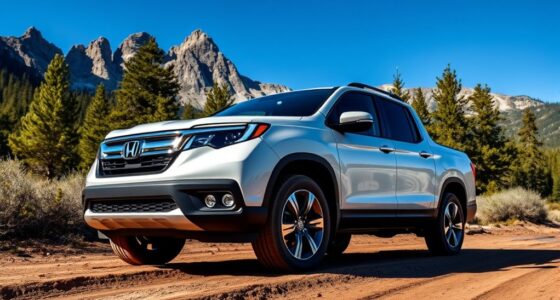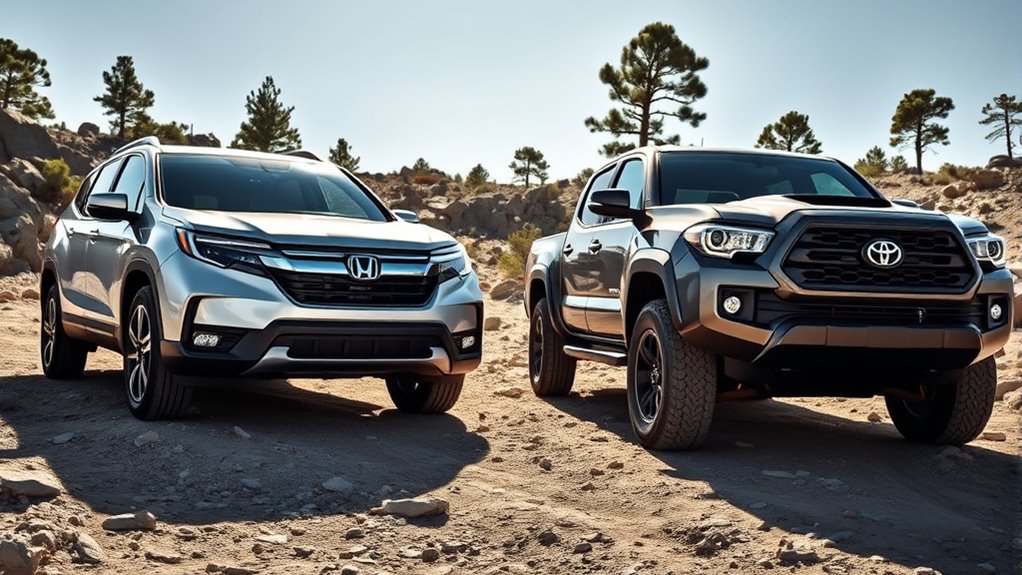

If you’re choosing between the Honda Ridgeline and Toyota Tacoma, think about what matters most to you. The Ridgeline offers a smooth, comfortable ride ideal for daily use with less towing capacity, while the Tacoma provides rugged off-road performance and higher payloads. The Ridgeline is better for comfort and versatility, and the Tacoma excels in durability and towing. Want to see which fits your needs best? Keep exploring to find out more.
Key Takeaways
- The Toyota Tacoma offers higher towing and payload capacities, suitable for rugged off-road and heavy-duty tasks.
- The Honda Ridgeline features a unibody design for smoother handling and a more comfortable, car-like ride.
- Tacoma provides multiple engine options, including hybrid versions, emphasizing performance and fuel efficiency; Ridgeline has a single V-6 engine.
- The Ridgeline prioritizes interior comfort and convenience, while Tacoma focuses on durability and utility for demanding environments.
- Pricing varies, with Tacoma generally more affordable and offering higher resale value; Ridgeline targets daily comfort and versatility.

Tyger Auto T3 Soft Tri-fold Truck Bed Tonneau Cover Compatible with 2017-2026 Honda Ridgeline | 5'4" (64") Bed | TG-BC3H1065
FITMENT – {{ Enter the LICENSE PLATE in the Amazon Confirmed Fit tool at the top of this…
As an affiliate, we earn on qualifying purchases.
As an affiliate, we earn on qualifying purchases.
Engine Performance and Power Differences

When comparing engine performance, the Toyota Tacoma and Honda Ridgeline offer distinct powertrains that cater to different driving needs. The Tacoma comes with a 2.4-liter turbocharged four-cylinder engine that delivers 278 horsepower, making it suitable for those who want solid off-road and towing capabilities. The hybrid version boosts power to 326 horsepower with 465 pound-feet of torque, offering better acceleration and efficiency. The Ridgeline is powered by a 3.5-liter V-6 engine producing 280 horsepower and 262 pound-feet of torque, emphasizing smoothness and reliability. It accelerates from 0 to 60 mph in about six seconds, slightly faster than the non-hybrid Tacoma. Unlike the Ridgeline, the Tacoma offers hybrid options, giving you more choices depending on your performance and efficiency priorities. Energy-efficient technology plays a role in modern engine designs, enhancing performance while reducing environmental impact. Additionally, advancements in fuel economy are crucial in today’s vehicle development, making these trucks more appealing for eco-conscious consumers. Incorporating advanced engineering features has further optimized the powertrains for better durability and performance over time. Furthermore, innovative engine technology continues to push the boundaries of what these trucks can achieve in terms of power and efficiency.

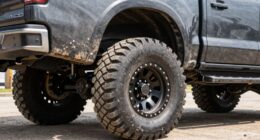
Set of 4 (FOUR) Evoluxx Rotator A/T Truck/SUV All-Terrain Off-Road Radial Tires-265/70R16 265/70/16 265/70-16 112T Load Range SL 4-Ply OWL Outlined White Letters
Treadlife: 55,000 miles
As an affiliate, we earn on qualifying purchases.
As an affiliate, we earn on qualifying purchases.
Towing and Payload Capabilities

The towing and payload capacities of the Honda Ridgeline and Toyota Tacoma reflect their different focuses and engineering designs. The Tacoma excels in towing, with a maximum capacity of 6,500 pounds on select models, and hybrid versions reaching 6,000 pounds. It also outperforms in payload, handling up to 1,709 pounds. In contrast, the Ridgeline maintains a steady 5,000-pound towing capacity across all trims and offers a payload capacity of 1,600 pounds. While the Tacoma’s higher towing and payload figures cater to heavier hauling needs, the Ridgeline emphasizes versatility and ease of use for lighter workloads. Your choice depends on whether you prioritize maximum towing strength or a balanced, user-friendly truck for everyday tasks. Wiring basics and other safety considerations also play a role in choosing the right truck for your needs. Additionally, understanding proper paint sprayer maintenance can help ensure your equipment performs reliably during any vehicle-related project. Moreover, vehicle safety features are essential factors to consider when selecting a truck that aligns with your safety preferences. Selecting the appropriate truck can also be influenced by the overall durability and long-term reliability of the vehicle. Considering lifevest advisors can provide helpful insights into making informed vehicle decisions.

ECOTRIC Class 5 Trailer Tow Hitch W/2-Inch Receiver Compatible with Chevrolet Silverado GMC Sierra 2500HD 3500HD 2001-2010 Replacement for 41944
Fitment: Class 5 Trailer tow hitch is compatible with 2001-2010 Chevrolet Silverado /GMC Sierra 2500HD/3500HD
As an affiliate, we earn on qualifying purchases.
As an affiliate, we earn on qualifying purchases.
Fuel Economy and Efficiency Comparison

When comparing fuel economy, you’ll notice the Tacoma generally pulls ahead with up to 26 MPG on highways and 20 MPG in the city. The Ridgeline offers respectable numbers too, especially with its hybrid model, which can reach 23 MPG city and 24 highway. If saving fuel is a priority, the Tacoma’s slightly better performance in standard ratings and hybrid efficiency could make a difference. Additionally, attention to detail in design choices can influence overall vehicle efficiency and performance. Considering lease options for these trucks might also impact your long-term costs and vehicle upgrade flexibility. Incorporating fuel-saving features and optimizing driving habits can further improve the overall efficiency of either vehicle. Being aware of factors like engine design can help identify which truck offers better efficiency based on your driving needs. Moreover, understanding aerodynamic improvements can help maximize fuel economy in both models.
MPG Performance Differences
Are you looking for a pickup that offers better fuel efficiency? The Toyota Tacoma outperforms the Honda Ridgeline in standard MPG ratings, achieving 20 city and 26 highway miles per gallon. In comparison, the Ridgeline returns 18 city and 24 highway miles per gallon. If you’re interested in hybrid options, the Tacoma hybrid boosts efficiency to an estimated 23/24 MPG, narrowing the gap. The Ridgeline, however, doesn’t offer a hybrid variant, so you’re limited to its traditional V-6 engine. Overall, the Tacoma provides slightly better fuel economy across all configurations, especially if you opt for the hybrid model. This makes the Tacoma a smarter choice if maximizing miles per gallon is a priority for your daily driving needs.
Hybrid Efficiency Gains
Curious about how hybrid technology impacts fuel efficiency? The Tacoma hybrid offers notable gains, boosting its EPA ratings to 23/24/23 MPG in city, highway, and combined driving. This makes it more efficient than the standard Tacoma and nearly matches the Ridgeline’s highway figures. The hybrid system provides several advantages:
- Better fuel economy, saving you money on gas
- Increased torque for improved towing and hauling
- Quicker acceleration thanks to combined power output
While the Ridgeline doesn’t offer a hybrid option, it still maintains respectable efficiency with up to 24 MPG highway. The hybrid Tacoma demonstrates how integrating electric power can optimize fuel use without sacrificing performance, giving you a more economical and responsive driving experience.

TRUNKCRATEPRO XL Heavy-Duty Trunk Organizer – Reinforced SUV & Truck Cargo Storage with 6 Adjustable Compartments, Non-Slip Base & Securing Straps (Foldable Design, Black)
SIMPLY THE BEST – LeClassiqueShop, presents the highly anticipated, unique and EXCLUSIVE extra large trunk organizer for suv…
As an affiliate, we earn on qualifying purchases.
As an affiliate, we earn on qualifying purchases.
Pricing and Overall Value

Pricing and overall value heavily favor the Toyota Tacoma, as it starts at about $31,590, considerably less than the Honda Ridgeline’s base price ranging from $40,150 to $41,645. You get more for your money with the Tacoma, which offers a lower entry point and better resale value, with 96 J.D. Power points compared to Ridgeline’s 86. Both trucks score equally on reliability, but the Tacoma’s affordability extends beyond initial cost, giving you more features and capability for less. If budget is a priority, the Tacoma’s lower price makes it a smarter investment, especially when considering its higher towing capacity and fuel efficiency. Additionally, the Tacoma’s reputation for durability and strong resale value makes it a more practical choice for long-term ownership. An important aspect to consider is the initial purchase price, which significantly influences overall affordability. A cost-effective approach highlights the long-term benefits of choosing the Tacoma over the Ridgeline. Overall, the Tacoma provides a stronger combination of affordability and value, making it the more economical choice for most buyers.
Transmission and Drive System Options
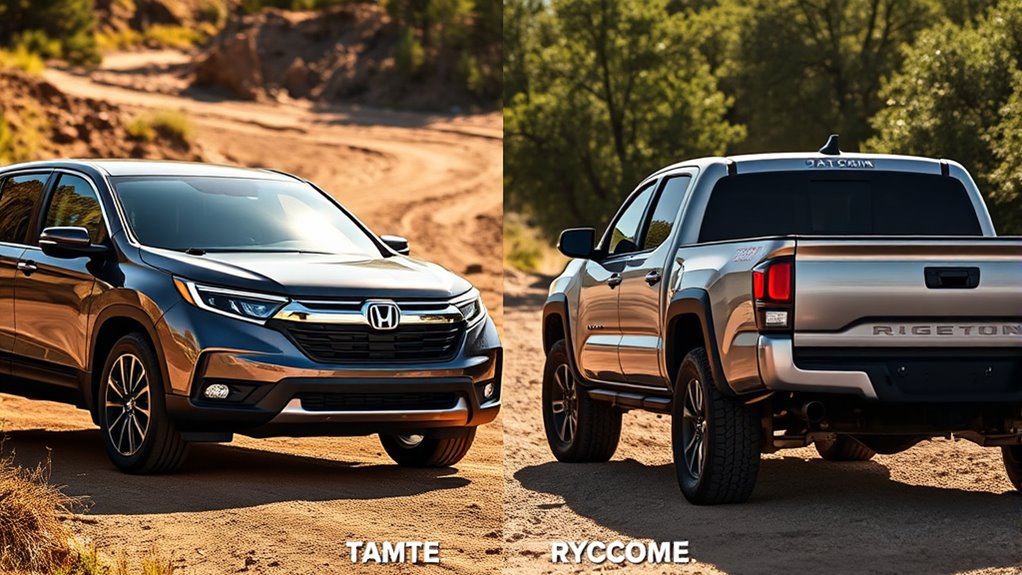
You’ll notice that the Tacoma offers both a six-speed manual and an eight-speed automatic transmission, giving you flexibility in how you drive. Transmission options can influence your driving experience and fuel efficiency. The Ridgeline comes with a nine-speed automatic and standard all-wheel drive, which simplifies choosing the right setup. Consider how gear shifting options and drivetrain configurations align with your driving style and needs. Integrating vehicle customization can further enhance your driving experience by providing real-time data and vehicle insights. Additionally, transmission technology plays a crucial role in optimizing performance and efficiency across different driving conditions. Staying informed about transmission systems can help you make the best choice for your lifestyle.
Transmission Types Offered
When comparing the transmission options of the Honda Ridgeline and Toyota Tacoma, you’ll notice that each offers different systems tailored to their design philosophies. The Tacoma provides both a six-speed manual transmission and an eight-speed automatic, giving you choices for engagement or convenience. Meanwhile, the Ridgeline features a nine-speed automatic transmission designed for smooth, efficient shifts. The transmission options highlight these key points:
- Tacoma emphasizes driver control with a manual option and multiple automatic gear ratios
- Ridgeline prioritizes ease of use with a lighter, more refined nine-speed automatic
- Both trucks focus on optimizing performance and fuel economy through their respective transmissions
These differences reflect their distinct approaches: Tacoma for versatility and engagement, Ridgeline for comfort and simplicity.
Drivetrain Configurations Available
Both the Honda Ridgeline and Toyota Tacoma offer a range of drivetrain configurations designed to meet different driving preferences and needs. The Tacoma provides a six-speed manual transmission with rear-wheel drive as standard, giving you more control and engagement. An eight-speed automatic transmission is available as an upgrade, along with optional all-wheel drive (AWD) for better traction in challenging conditions. The Tacoma’s hybrid variant pairs a 2.4-liter turbocharged engine with an electric motor, combining power with efficiency. In contrast, the Ridgeline features a nine-speed automatic transmission across all trims and standard all-wheel drive with Toyota’s i-VTM4 system, which enhances stability and grip. The Ridgeline relies solely on its AWD setup, emphasizing comfort and stability over the manual driving experience. Additionally, understanding the drivetrain configurations can help you choose the best truck for your specific needs.
Gear Shifting Options
The Honda Ridgeline comes exclusively with a nine-speed automatic transmission paired with its standard all-wheel-drive system, providing smooth shifts and stable handling in various conditions. This setup guarantees effortless acceleration and confident control on different terrains. In contrast, the Toyota Tacoma offers more variety, including a six-speed manual transmission and an eight-speed automatic, giving you flexibility based on your driving style. The Tacoma’s drive options include rear-wheel drive as standard, with all-wheel drive available as an upgrade. This diversity allows you to tailor your driving experience.
- Smooth gear changes with the Ridgeline’s nine-speed automatic
- Manual option for more driver engagement in Tacoma
- Tacoma’s multiple drive system choices for versatility
Interior Comfort and Design Features
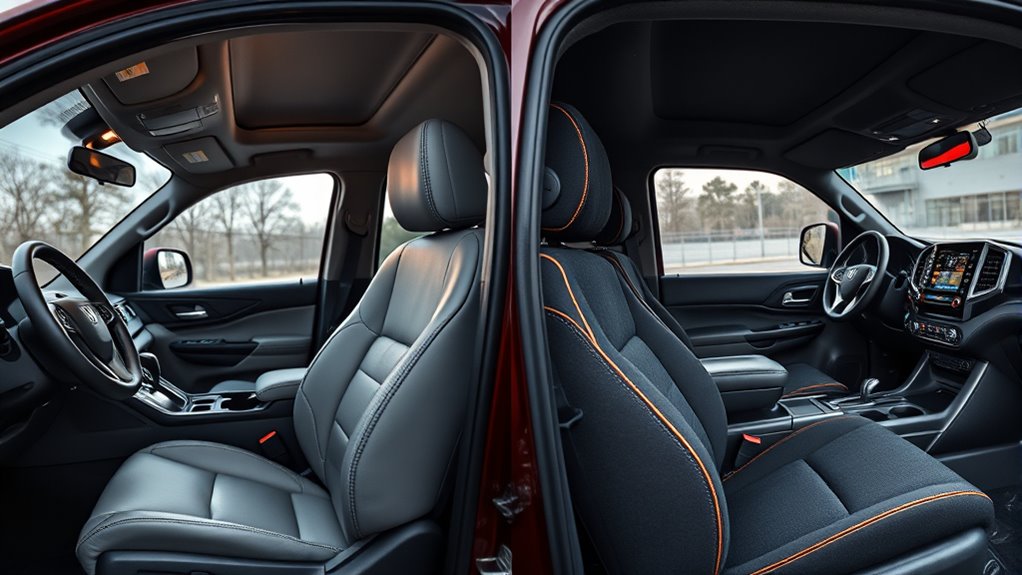
If interior comfort and design features matter to you, you’ll notice distinct differences between the Honda Ridgeline and Toyota Tacoma. The Ridgeline offers a more car-like experience with its unibody construction, providing a smoother ride and a spacious, comfortable cabin. It includes heated rear seats and greater rear legroom, making long trips more enjoyable. The interior layout is user-friendly, with a large touchscreen infotainment system and quality materials throughout. The Tacoma, on the other hand, has a more utilitarian interior focused on durability. It features a straightforward design with fewer luxury touches but offers practical storage solutions and easy-to-use controls. While the Tacoma’s cabin feels more rugged, the Ridgeline emphasizes comfort and convenience, catering to those who prioritize a refined driving experience.
Suitability for Different Types of Truck Users
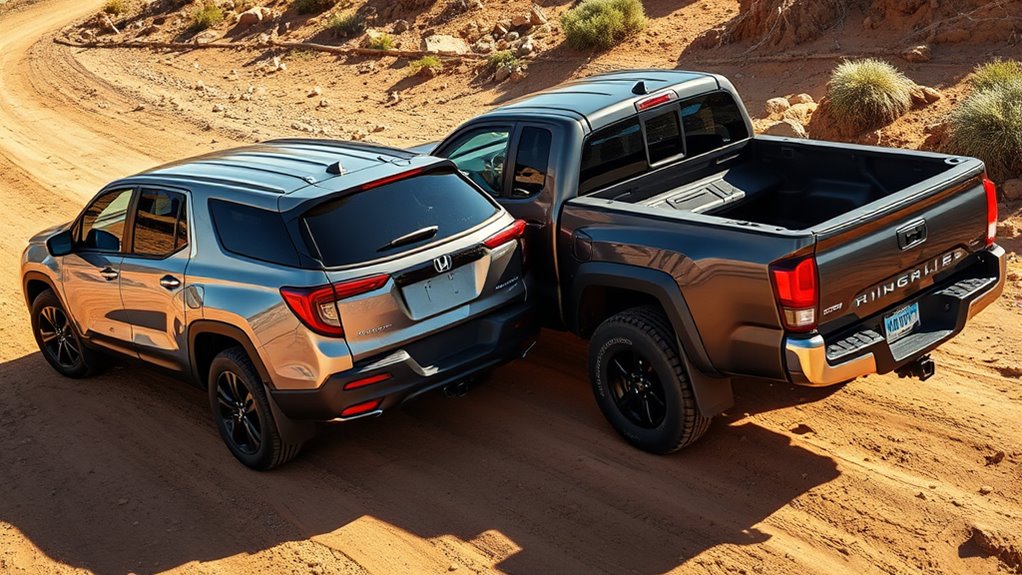
Choosing between the Honda Ridgeline and Toyota Tacoma depends largely on your specific truck needs. If you prioritize comfort and daily driving, the Ridgeline’s unibody design and car-like ride make it ideal. It’s perfect for those who value smooth handling and a versatile interior for family or work errands. On the other hand, if you need maximum towing, payload, or off-road capability, the Tacoma is better suited. Its traditional body-on-frame construction and higher towing capacity cater to heavy-duty tasks.
Choose the Ridgeline for comfort and daily driving; opt for the Tacoma for towing and off-road power.
- For family-oriented users who want comfort and convenience
- For off-road enthusiasts seeking durability and rugged performance
- For contractors or workers needing higher towing and payload capacity
Frequently Asked Questions
How Do Off-Road Capabilities Compare Between the Ridgeline and Tacoma?
You’ll find that the Tacoma is better suited for off-road adventures with its robust body-on-frame design, higher ground clearance, and available features like multi-terrain select and crawl control. The Ridgeline, designed more for on-road comfort, offers all-wheel drive but lacks specialized off-road features. If tackling trails is your priority, the Tacoma’s rugged build and off-road tech give it a clear advantage.
Which Truck Has Better Safety Features and Crash Test Ratings?
Think of safety features as your trusty shield on the road. The Ridgeline offers standard Blind Spot Information System and additional safety tech, while the Tacoma requires an upgrade for similar features. Crash test ratings favor the Tacoma, with higher scores from IIHS and NHTSA. You’ll feel more secure knowing both trucks perform well, but Tacoma’s advanced safety options give it an edge in protecting you and your loved ones.
What Are the Long-Term Maintenance Costs for Each Vehicle?
You’ll find that the Tacoma generally has lower long-term maintenance costs thanks to its simpler, rugged design and proven reliability, which means fewer repairs over time. The Ridgeline’s more complex unibody construction and additional features can lead to higher maintenance expenses, especially as it ages. Regular upkeep for both trucks includes oil changes and brake checks, but Tacoma’s durability tends to make it more cost-effective in the long run.
How Do Towing Electronics and Trailer Assist Features Differ?
Towing tech takes a toll on trailer trust. You’ll find the Ridgeline’s trailer assist features focus on straightforward, simplified support, including a standard rearview camera and trailer hitch guides. The Tacoma ramps up the tech with advanced electronic trailer sway control, integrated trailer brake controllers, and optional trailer backup assist. These features help you handle heavier loads with heightened safety, ensuring smoother, more secure towing trips every time you tow.
Which Truck Offers More Advanced Technology and Infotainment Options?
You’ll find that the Ridgeline offers more advanced technology and infotainment options. It comes with a standard 8-inch touchscreen, Apple CarPlay, Android Auto, and a Wi-Fi hotspot, making connectivity seamless. The Tacoma, while equipped with a capable infotainment system, typically features a smaller display and fewer standard features. If tech is a priority, the Ridgeline’s modern, user-friendly system gives you a more integrated and entertaining driving experience.
Conclusion
Ultimately, choosing between the Honda Ridgeline and Toyota Tacoma depends on what you need. If you value a smooth ride and comfort, the Ridgeline’s your best bet. But if rugged off-road capability and towing power are your priorities, the Tacoma might be the way to go. It’s like the old theory: sometimes, you get what you need, not what you want. Trust your priorities, and you’ll find the perfect truck for you.